
In This Article
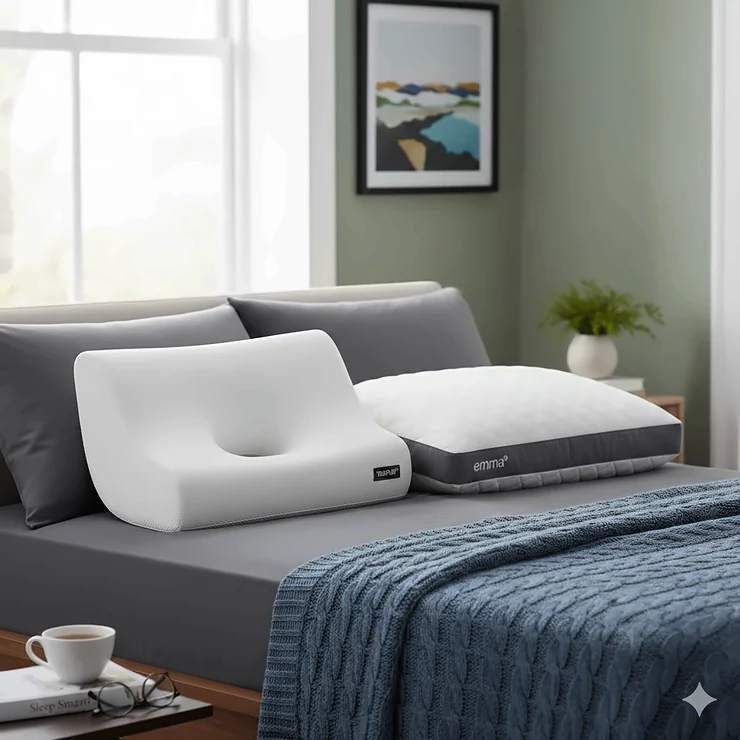
Choosing between a Tempur vs Emma pillow isn’t just about picking something fluffy to rest your head on—it’s about investing in quality sleep that genuinely transforms how you wake up each morning. I’ve spent countless nights testing premium pillows, and the reality is stark: whilst Tempur brings NASA-inspired technology and decades of heritage, Emma counters with clever adjustability and refreshing affordability.

boo covers offer natural temperature regulation, and hybrid designs combine the best of multiple worlds. Both Tempur and Emma represent premium end of this spectrum, but they approach sleep support from remarkably different angles. This comprehensive guide examines seven exceptional pillows available on Amazon.co.uk, helping you navigate specifications, pricing, and real customer experiences to find your perfect match. Whether you’re battling chronic neck pain, overheating at night, or simply seeking that elusive hotel-quality sleep at home, understanding the nuances between these premium options will save you considerable money and frustration.
Quick Comparison Table
| Feature | Tempur Original | Emma Original | Simba Hybrid | Panda Memory Foam |
|---|---|---|---|---|
| Price Range | £99-£129 | £49-£55 | £87-£109 | £36-£45 |
| Core Material | NASA viscoelastic | Airgocell foam | Nanocubes + down-like fill | 3rd gen memory foam |
| Adjustability | Fixed loft | Removable layers | Adjustable nanocubes | Fixed loft |
| Cover Material | Polyester blend | UltraDry technology | Stratos cooling | 70% bamboo |
| Guarantee | 3 years | 30 nights trial | 1 year | 10 years |
| Best For | Side/back sleepers | All positions | All positions (customisable) | Side/back sleepers |
| UK Availability | Amazon.co.uk | Amazon.co.uk | Amazon.co.uk | Amazon.co.uk |
💬 Just one click – help others make better buying decisions too! 😊
Top 7 Premium Pillows: Expert Analysis
1. TEMPUR Original Ergonomic Pillow
The TEMPUR Original Ergonomic Pillow represents the gold standard in memory foam technology, developed from materials originally created for NASA space shuttles in the 1960s. Available in multiple sizes (61 x 31 x 11.5 cm or 8.5 cm variations), this pillow features the distinctive dual-contour design that’s become synonymous with premium neck support.
Key Specifications:
- Dimensions: 61 x 31 x 11.5/8.5 cm
- Material: NASA-developed viscoelastic foam
- Price Range: £99-£129
Real UK Customer Feedback:
The reviews paint an interesting picture. One verified Amazon.co.uk purchaser praised their January 2025 purchase initially, noting it eliminated migraines caused by poor neck support. However, they reported the foam became too soft within months, prompting recommendations for cheaper alternatives at £25-£30. Conversely, another customer celebrated their pillow lasting over 20 years, arguing the £100 investment becomes negligible when divided across decades.
✅ Pros:
- Scientifically proven pressure-relieving technology
- OEKO-TEX Standard 100 certified (free from harmful chemicals)
- Washable cover up to 60°C
❌ Cons:
- Premium pricing (£99-£129)
- Some customers report softening over time
- Non-adjustable loft may not suit all preferences
2. TEMPUR Cloud Soft Pillow
The TEMPUR Cloud Soft Pillow takes a different approach with its innovative Adapt Material micro-cushions, offering traditional soft comfort with modern support technology. Measuring 74 x 50 cm, this pillow targets sleepers who find standard memory foam too firm but still crave personalised support.
Key Specifications:
- Size: 74 x 50 cm
- Filling: Adapt Material micro-cushions
- Price Range: £77-£99
This pillow divides opinion brilliantly. UK buyers appreciate the plush, cloud-like sensation and easy machine-washable cover (up to 40°C). The unique micro-cushion technology allows regular “plumping” to maintain loft, which some find refreshing compared to solid memory foam blocks. However, hot sleepers occasionally struggle with heat retention despite the breathable design.
✅ Pros:
- Exceptionally soft whilst maintaining support
- Adapts to all sleeping positions
- 3-year guarantee included
❌ Cons:
- May be too soft for side sleepers needing firmer support
- Higher price point (£77-£99)
- Some reports of initial chemical odour
3. Emma Original Pillow
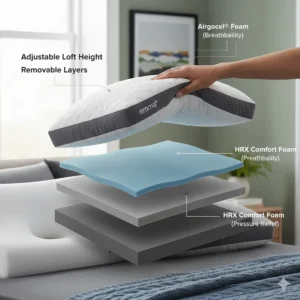
The Emma Original Pillow (70 x 40 cm) revolutionised the UK market by proving premium quality needn’t cost the earth. Its removable layer system allows customisation impossible with traditional memory foam, whilst Airgocell technology addresses common overheating complaints.
Key Specifications:
- Dimensions: 70 x 40 cm
- Three removable memory foam layers
- Price Range: £49-£55
Amazon.co.uk customers frequently mention the excellent value proposition. One reviewer compared it favourably against their Simba pillow, noting the Emma cost a third of the price whilst suiting their preferences better. The adjustable height system receives particular praise—simply remove layers until achieving perfect loft for your sleeping style. UK buyers consistently highlight the 30-night trial as removing purchase anxiety.
✅ Pros:
- Outstanding value for money (£49-£55)
- Hypoallergenic and suitable for allergy sufferers
- Genuinely adjustable height through removable layers
❌ Cons:
- Some find even the lowest setting too high
- Foam quality occasionally questioned versus premium rivals
- May require adjustment period
4. Emma Premium Microfibre Pillow
The Emma Premium Microfibre Pillow (70 x 50 cm) offers an entirely different proposition—no memory foam, just cloud-like AeroSoft microfibre that maintains its shape whilst feeling luxuriously soft. This targets sleepers who’ve tried memory foam and simply prefer traditional pillow sensations with modern engineering.
Key Specifications:
- Size: 70 x 50 cm
- Filling: AeroSoft microfibre technology
- Price Range: £35-£45
Customer experiences vary dramatically. Supporters celebrate the medium firmness and hypoallergenic properties, perfect for allergy sufferers. The removable layers allow customisation similar to the Original. However, critics argue it’s too soft, describing it as “full of air” without adequate support. One particularly frustrated buyer noted receiving multiple products duct-taped together, complicating returns.
✅ Pros:
- Very affordable (£35-£45)
- Cooling and breathable UltraDry technology
- 30-night guarantee reduces risk
❌ Cons:
- Inconsistent firmness—too soft for many
- Loses shape relatively quickly
- Not ideal for dedicated side sleepers
5. Simba Hybrid Pillow
The Simba Hybrid Pillow brings genuine innovation with its patented Nanocube technology—thousands of small foam cubes you can add or remove to achieve perfect height and firmness. The Stratos cooling layer addresses the perpetual “cool side of the pillow” quest, whilst the down-like inner sleeve delivers premium comfort.
Key Specifications:
- Adjustable nanocube filling system
- Stratos temperature-regulating technology
- Price Range: £87-£109 (often discounted)
According to research published in the National Center for Biotechnology Information, proper pillow height significantly affects cervical spine alignment during sleep—precisely what Simba’s adjustability addresses. UK customers frequently describe initially finding it too firm before removing nanocubes to achieve perfection. The breathable cotton cover with open mesh borders promotes excellent airflow, though some note it still retains more heat than bamboo alternatives.
✅ Pros:
- Truly customisable height and firmness
- B Corp certified sustainable practices
- Vegan and hypoallergenic
❌ Cons:
- Premium pricing (£87-£109)
- Adjustment learning curve
- Some report flattening in middle over time
6. Panda Memory Foam Bamboo Pillow
The Panda Memory Foam Bamboo Pillow combines orthopaedic-grade 3rd generation memory foam with sustainable bamboo fabric, creating an environmentally conscious option that doesn’t compromise performance. Measuring 60 x 40 x 12 cm, it’s slightly shorter than standard UK pillows but fits most pillowcases comfortably.
Key Specifications:
- Dimensions: 60 x 40 x 12 cm
- 70% bamboo, 30% polyester cover
- Price Range: £36-£45
This pillow garners passionate reviews. One Amazon.co.uk buyer detailed how it eliminated years of neck pain and earaches from earplugs, crediting the soft bamboo cover and perfect loft for side sleeping. The triple-layer construction provides initial softness whilst the firm core delivers essential support. However, adjustment takes time—several reviewers needed a week alternating with old pillows before fully adapting.
✅ Pros:
- Exceptional 10-year guarantee
- Naturally antibacterial and hypoallergenic bamboo
- Outstanding value (£36-£45)
❌ Cons:
- Firmer than expected initially
- Slight chemical smell requiring airing
- Shorter than standard UK pillow size
7. Emma Essentials Hybrid Pillow
The Emma Essentials Hybrid Pillow (40 x 70 cm) merges shredded memory foam with siliconised polyester hollow fibres (30% addition), creating the supportive “hug” of foam with the fluffy satisfaction of traditional pillows. This Made in Green by Oeko-Tex certified option represents Emma’s answer to customers wanting both worlds.
Key Specifications:
- 70% shredded memory foam, 30% polyester fibres
- Size: 40 x 70 cm
- Price Range: £45-£55
A French customer’s detailed review highlights the rectangular shape maintaining position throughout the night, eliminating morning cervical pain after a week’s adjustment. The medium-firm feel proves controversial—some consider it ideal for back and side sleeping, whilst stomach sleepers find it excessive. The completely machine-washable design (including filling) offers unprecedented convenience versus traditional memory foam.
✅ Pros:
- Unique hybrid design balances support and softness
- Fully machine washable
- Made in Green certification
❌ Cons:
- Mixed reviews on firmness suitability
- May be too high for some preferences
- Limited availability compared to mainstream options
✨ Don’t Miss These Exclusive Deals!
🔍 Take your sleep quality to the next level with these carefully selected premium pillows. Click on any highlighted item above to check current pricing and availability on Amazon.co.uk. These pillows will help you achieve the restorative sleep your body deserves!
Understanding Memory Foam Technology
Memory foam technology revolutionised sleep surfaces when NASA scientists developed it in the 1960s to cushion astronauts during launch. According to Spine Health research, proper pillow support maintains cervical spine alignment, preventing the muscle strain that causes morning stiffness and headaches.
Modern memory foam pillows employ viscoelastic polyurethane foam that responds to body heat and pressure, conforming to unique head and neck contours. This creates even pressure distribution impossible with traditional feather or polyester pillows. However, not all memory foam performs identically—generation matters enormously.
First-generation foam (1970s-1990s) suffered from excessive heat retention and slow response times. Second-generation improvements added gel infusions and open-cell structures for better breathability. Third-generation memory foam—found in premium brands like Panda and Emma—features advanced cell structures, faster response times, and superior temperature neutrality.
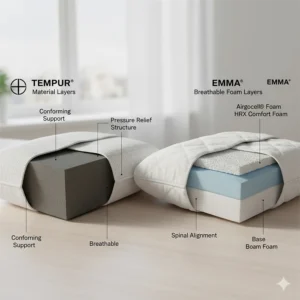
The key distinction in tempur vs emma pillow comparison centres on foam density and responsiveness. Tempur’s NASA-heritage material is denser and slower-responding, creating that signature “sinking” sensation. Emma’s Airgocell technology responds more quickly whilst maintaining support, appealing to sleepers who dislike the enveloping feeling.
Pillow Height and Sleep Position: The Science
Selecting appropriate pillow loft (height) based on sleeping position isn’t marketing fluff—it’s biomechanics. Research demonstrates that maintaining neutral cervical spine alignment during sleep significantly reduces neck pain, headaches, and shoulder tension.
Side Sleepers require the tallest pillows (typically 10-15 cm compressed) to fill the gap between shoulder and head. This prevents the head dropping toward the mattress, which strains neck muscles and compresses nerves. Both Tempur Original and Panda excel here with their substantial loft.
Back Sleepers need medium-height pillows (7-12 cm) supporting the natural cervical curve without pushing the head forward. Too high causes chin-to-chest positioning that restricts airways (hello, snoring!). Emma Original’s adjustable layers shine for this position—simply remove one or two layers.
Stomach Sleepers benefit from minimal loft (3-5 cm or none) preventing excessive neck rotation. Most premium memory foam pillows prove too high for this position, making Emma Premium Microfibre a better choice with its compressible filling.
Combination Sleepers face the trickiest challenge, requiring pillows that accommodate position changes without disrupting sleep. Adjustable options like Simba Hybrid or Emma Original provide flexibility impossible with fixed-loft designs.
Temperature Regulation: Hot Sleeper Solutions
Overheating remains memory foam’s Achilles heel, despite significant improvements. Understanding cooling technologies helps navigate marketing claims versus actual performance.
Bamboo Covers (Panda) offer natural thermoregulation through their hollow fibre structure, which wicks moisture efficiently whilst remaining breathable. According to textile research, bamboo proves 40% more absorbent than cotton, making it ideal for night sweats or hot flushes. The fabric naturally regulates temperature—cooling when hot, insulating when cold.
Stratos Technology (Simba) employs phase-change materials that actively absorb excess heat, maintaining consistently cool surface temperature. This NASA-inspired tech represents genuine innovation beyond passive breathability.
UltraDry Fabric (Emma) combines moisture-wicking properties with breathable weaves, though it’s essentially advanced polyester rather than revolutionary technology.
Open-Cell Foam structures in third-generation memory foam allow better airflow than traditional dense foam, though they’ll never match the cooling of natural materials.
For genuinely hot sleepers, bamboo-covered options (Panda) or actively cooling designs (Simba Hybrid) outperform standard polyester covers significantly. Tempur’s traditional covering proves problematic for temperature-sensitive individuals despite quality foam inside.
Allergy Considerations and Hypoallergenic Properties
UK allergy sufferers—estimated at 44% of adults according to research—need pillows that don’t exacerbate symptoms. The NHS recommends allergen-proof bedding for managing common allergies, making the tempur vs emma pillow debate include important hypoallergenic differences.
Memory foam itself naturally resists dust mites, mould, and common allergens due to its dense structure preventing colonisation. This gives all foam pillows advantage over traditional feather or down options.
OEKO-TEX Standard 100 certification (held by Tempur, Emma, and Simba) guarantees testing for over 1,000 harmful substances including heavy metals, pesticides, and allergenic dyes. This certification matters tremendously for sensitive skin and respiratory conditions.
Bamboo fabric (Panda) offers natural antibacterial and antimicrobial properties through a substance called bamboo kun. This reduces bacterial growth that causes odours and potential irritation—particularly valuable during summer months or for those with eczema.
Removable, washable covers prove essential for allergy management. Emma and Simba allow regular washing (crucial for removing allergen accumulation), whilst Tempur’s covers also detach easily for maintenance.
Asthma and severe allergy sufferers should prioritise OEKO-TEX certification combined with washable covers—making Emma Original or Panda standout choices in this category.
Durability and Longevity: True Cost Analysis
Premium pillows demand premium prices, but lifespan calculations reveal surprising value propositions in tempur vs emma pillow comparison.
Traditional pillows (feather, polyester) require replacement every 1-2 years as they lose loft and accumulate allergens. At £15-£30 each, that’s £75-£180 over five years.
Tempur pillows command £99-£129 but should last 5-7 years with proper care, averaging £14-£26 annually. Some customers report 20-year lifespans, though this proves exceptional.
Emma pillows at £49-£55 typically last 3-5 years, averaging £11-£18 annually—the most economical premium option.
Panda pillows offer remarkable 10-year guarantees at £36-£45, suggesting £3.60-£4.50 annual cost if warranty holds—extraordinary value.
Simba Hybrid at £87-£109 with 1-year guarantee presents higher risk, though customer reviews suggest 5+ year realistic lifespan (£17-£22 annually).
Quality foam shouldn’t lose significant support within three years. Warning signs include permanent indentations, uneven compression, or that “pancake” appearance. Proper care—regular fluffing, airing, and cover washing—extends lifespan considerably.
From pure cost-efficiency perspective, Panda’s 10-year guarantee represents outstanding value, whilst Tempur requires extended use to justify premium pricing.
Maintenance and Care Guidelines
Proper pillow care dramatically extends lifespan whilst maintaining hygiene and performance. Each material type requires specific attention.
Memory Foam Cores:
- NEVER machine wash solid foam blocks
- Spot clean stains immediately with damp cloth
- Air pillows monthly in well-ventilated area (avoid direct sunlight)
- Rotate regularly to ensure even compression
Removable Covers:
- Wash every 2-4 weeks (more frequently for allergy sufferers)
- Follow manufacturer temperature guidelines (typically 30-60°C)
- Air dry or low tumble heat to prevent shrinkage
- Iron on low setting if needed (check labels)
Bamboo Covers:
- Wash at maximum 40°C to preserve fibres
- Avoid bleach and fabric softeners (damage bamboo properties)
- Line dry preferred for longevity
- Naturally antimicrobial properties reduce washing frequency
Adjustable Pillows:
- Store removed nanocubes/layers in provided bags
- Fluff regularly to prevent clumping
- Redistribute filling if uneven compression develops
Odour Management: New memory foam often emits harmless off-gassing smells. Remove packaging, air for 24-72 hours in well-ventilated space, and the odour dissipates completely.
Environmental and Ethical Considerations
Sustainability increasingly influences UK purchasing decisions, with environmental consciousness growing across demographics. Research from UK universities demonstrates that consumers prioritise companies demonstrating genuine environmental commitment.
Simba holds B Corp certification—rigorous verification of environmental and social performance. Their foam uses CertiPUR standards (no heavy metals, ozone depleters, or PBDEs), whilst manufacturing occurs in zero-waste facilities. As founding British Retail Consortium climate action members, they demonstrate genuine commitment beyond greenwashing.
Panda emphasises bamboo’s environmental credentials: grows without pesticides, fertilisers, or irrigation; sequesters carbon whilst releasing oxygen; regenerates rapidly (up to 4 feet daily). Their REACH-compliant foam and FSC-certified bamboo from managed forests prioritises habitat protection.
Emma employs OEKO-TEX certification ensuring safer chemical usage, though specific sustainability initiatives receive less prominent marketing.
Tempur focuses primarily on product quality over environmental messaging, though OEKO-TEX certification guarantees basic environmental standards.
For eco-conscious buyers, Simba and Panda clearly lead this category with transparent, verified sustainability practices rather than vague green marketing.
Price vs Performance: Value Assessment
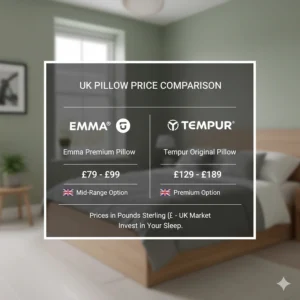
The tempur vs emma pillow price difference (£99-£129 versus £49-£55) raises obvious value questions. Does premium pricing deliver proportional benefits?
Tempur’s premium positioning justifies through:
- Decades of R&D creating proprietary foam formulas
- NASA heritage and scientific credibility
- Exceptional durability (potential 10-20 year lifespan)
- Superior pressure relief for chronic pain sufferers
However, Emma counters with:
- Adjustability addressing multiple sleeping styles
- Modern cooling technology matching or exceeding Tempur
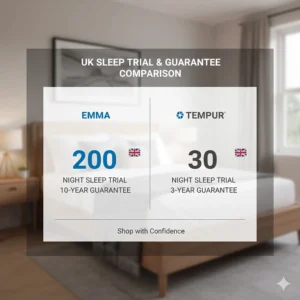
- 30-night trial reducing purchase risk
- Price point accessible to broader market
Middle-ground options like Simba (£87-£109) and Panda (£36-£45) offer compelling alternatives. Simba provides premium features (adjustability, cooling tech) at more accessible pricing, whilst Panda combines affordability with exceptional warranty.
The verdict? Tempur suits those prioritising maximum pressure relief and willing to invest significantly. Emma delivers outstanding value for money with modern features at half the price. Panda represents the budget-conscious choice without sacrificing quality, and Simba bridges premium and accessible pricing.
Your best choice depends on budget flexibility, specific sleep challenges, and whether adjustability or fixed premium foam better serves your needs.
⚡ Upgrade Your Sleep Tonight!
💤 Ready to transform your sleep experience? These premium pillows combine cutting-edge technology with proven comfort. Click any product name above to check live prices on Amazon.co.uk and take advantage of current offers. Your neck and spine deserve this investment!
UK-Specific Buying Considerations
Purchasing pillows in the UK involves unique factors versus other markets.
Sizing Standards:
UK “standard” pillows typically measure 50 x 75 cm, though European sizing (various dimensions) creates confusion. Tempur uses continental sizing (61 x 31 cm), Emma offers 70 x 40 cm, and Panda sits at 60 x 40 cm. Verify your existing pillowcases accommodate these variations before purchasing.
Delivery and Returns:
Amazon.co.uk typically provides free delivery on these premium pillows, with next-day options for Prime members. Trial periods vary:
- Emma: 30-night trial with free returns
- Panda: 30-night trial, free collection
- Simba: No official trial (rely on Amazon’s return policy)
- Tempur: Typically no trial via Amazon
VAT Inclusion:
All prices shown include VAT (20%), unlike some international sites. Budget accordingly.
Fire Safety Regulations:
UK pillows must comply with BS 7177 fire safety standards. Reputable brands (Tempur, Emma, Panda, Simba) meet these requirements, but verify before purchasing lesser-known alternatives.
Brexit Considerations:
Post-Brexit, ensure sellers ship from UK warehouses to avoid customs delays and unexpected charges. Amazon.co.uk listings generally ship domestically, but third-party sellers may not.
Common Mistakes When Choosing Pillows
Avoid these frequent errors that lead to disappointing purchases:
Mistake 1: Ignoring Sleep Position
Buying the “best” pillow regardless of whether you’re a side, back, or stomach sleeper guarantees poor results. Match loft to position religiously.
Mistake 2: Expecting Instant Comfort
Memory foam requires 3-7 nights adjustment. Your neck muscles need time adapting to proper alignment after years of poor support. Persevere unless experiencing genuine pain.
Mistake 3: Overlooking Cover Quality
Focusing solely on foam whilst neglecting cover material causes temperature issues, allergic reactions, and premature wear. Covers matter enormously.
Mistake 4: Skipping Trial Periods
Not using available trial periods means you’re stuck with unsuitable pillows. Always test the full trial duration before commitment.
Mistake 5: Neglecting Maintenance
Failing to wash covers regularly, air pillows, or rotate them reduces lifespan and comfort dramatically.
Mistake 6: Buying Based Solely on Price
The cheapest option rarely proves economical if it requires replacement annually. Calculate cost-per-year rather than purchase price.
Mistake 7: Ignoring Partner Compatibility
If sharing a bed, pillow height differences affect mattress movement. Consider similar loft ranges for minimal disturbance.
FAQ
❓ How long does a Tempur pillow last compared to Emma?
❓ Can you wash memory foam pillows in the UK?
❓ Which pillow is better for side sleepers in the UK?
❓ Do Tempur pillows sleep hot compared to Emma?
❓ Are premium pillows worth it for neck pain?
Conclusion
The tempur vs emma pillow decision ultimately depends on your specific sleep needs, budget, and personal preferences rather than one being objectively superior. Tempur delivers unmatched pressure relief through NASA-heritage technology, justifying premium pricing for those battling chronic neck pain or seeking maximum durability. However, Emma counters with intelligent adjustability, modern cooling features, and value pricing that democratises premium sleep quality.
For most UK sleepers, I’d recommend starting with Emma Original at £49-£55—the adjustable layers accommodate various positions, the 30-night trial removes risk, and the performance rivals options costing twice as much. If budget allows and you’re certain about your preferences, Tempur’s superior foam quality and potential 10+ year lifespan make it worthwhile investment.
Don’t overlook Panda’s remarkable value proposition at £36-£45 with a 10-year guarantee—genuinely hard to beat economically. Meanwhile, Simba Hybrid’s innovative nanocube system brilliantly serves combination sleepers or those unsure about ideal loft.
Whatever you choose, prioritise matching loft to sleeping position, ensure adequate trial periods, and invest in proper maintenance. Your pillow influences roughly 2,920 hours of sleep annually—choosing wisely transforms not just nights, but every waking moment that follows.
Recommended for You
- Shredded Pillow vs Solid Memory Foam: 7 Surprising Differences 2026
- Cooling Pillow Gel vs Bamboo: 7 Best UK Options 2026
- Down vs Microfibre Pillow: 7 Best UK Options Reviewed 2026
Disclaimer: This article contains affiliate links. If you purchase products through these links, we may earn a small commission at no additional cost to you. Prices shown are approximate and may vary.
✨ Found this helpful? Share it with your mates! 💬🤗
