
In This Article
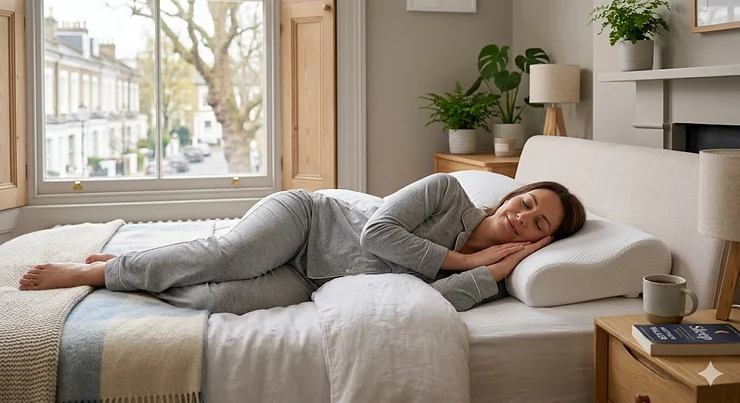
Neck pain before breakfast. That specific, grinding stiffness that greets you before you’ve even reached the kettle — it’s one of Britain’s most unglamorous everyday complaints, and yet almost nobody addresses the obvious culprit sitting right there on their bed. Your pillow.

According to the NHS, back and neck pain affects around one in three UK adults every single year, and poor sleeping posture is consistently flagged as a significant contributing factor. If you’ve been waking up feeling like you’ve slept in a drainage ditch rather than a bed, this orthopaedic pillow buying guide is for you.
What is an orthopaedic pillow buying guide, exactly? Think of it as a roadmap through a market flooded with marketing jargon, vague specifications, and suspiciously identical products. An orthopaedic pillow is specifically engineered to support the natural curvature of your cervical spine — keeping your head, neck, and shoulders in neutral alignment while you sleep. Not tilted. Not craned. Neutral.
I’ve spent weeks researching products available on Amazon.co.uk, from budget options under £30 to premium pillows approaching £100, and the differences in real-world performance are rather more significant than the price tags alone suggest. This guide cuts through the waffle and tells you what actually works for British sleepers — whether you’re in a compact Manchester flat, a draughty Victorian terrace in Sheffield, or a converted barn somewhere in the Cotswolds.
Quick Comparison: Top 7 Orthopaedic Pillows at a Glance
| Product | Type | Loft | Best For | Price Range |
|---|---|---|---|---|
| Elviros Cervical Memory Foam Pillow | Contoured memory foam | 10–12 cm | Side & back sleepers on a budget | £26–£35 |
| UTTU Sandwich Pillow | Adjustable memory foam | 8–13 cm (adjustable) | All sleep positions, indecisive buyers | £40–£55 |
| TEMPUR Original Medium Pillow | High-density TEMPUR foam | 10/7 cm dual-zone | Chronic neck pain, committed back sleepers | £85–£100 |
| Simba Hybrid Pillow | Adjustable microfibre + Nanocubes | Customisable | Hot sleepers, combination sleepers | £55–£80 |
| Groove Original Pillow | Contoured memory foam | 11 cm | Neck/upper back pain, snorers | £45–£60 |
| Panda Hybrid Bamboo Pillow | Memory foam + bamboo cover | 13 cm | Allergy sufferers, eco-conscious buyers | £50–£65 |
| Winthome Memory Foam Pillow | Dual-sided flat memory foam | 10 cm | Budget-conscious back sleepers | £28–£40 |
From the table above, a clear pattern emerges: budget buyers get genuine therapeutic function from Elviros and Winthome, but they sacrifice adjustability. The middle ground — UTTU, Groove, and Panda — offers the best overall value for most British sleepers. If you’re a chronic sufferer with persistent neck issues, the TEMPUR’s longevity maths work in its favour over time; a £90 pillow lasting 15 years costs roughly £6 per year, whilst a £30 pillow compressed to uselessness in 18 months costs £20 per year. Worth a moment’s thought.
💬 Just one click — help others make better buying decisions too! 😊
✨ Don’t Miss These Exclusive Deals!
🔍 Take your sleep to the next level with these carefully selected orthopaedic pillows. Click on any highlighted product below to check current pricing and availability on Amazon.co.uk. Your neck will thank you in the morning.
Top 7 Orthopaedic Pillows: Expert Analysis
1. Elviros Cervical Memory Foam Pillow
The Elviros is quietly one of the most impressive budget entries in the entire UK orthopaedic pillow market. Deceptively simple in concept — a butterfly-shaped contoured memory foam block with a central hollow — it delivers therapeutic support that costs considerably more to replicate elsewhere.
The dual-height design is its party piece: the higher loft (approximately 12 cm) suits side sleepers who need to bridge the shoulder-to-ear gap, while the lower side (approximately 10 cm) works well for back sleepers with gentler cervical curves. Medium-density memory foam means it cradles without that unsettling sensation of slowly sinking into something with no structural intentions. The OEKO-TEX certified cover is machine washable at 40°C, which matters more than people realise — particularly in the UK where damp bedrooms and dust mite populations are, shall we say, enthusiastic.
One important caveat: the butterfly shape doesn’t fit a standard UK pillowcase (50 × 75 cm). You’ll need to use the included cover and wash it regularly. A mild inconvenience, but worth knowing before it arrives.
UK buyers consistently report that morning neck stiffness reduces noticeably within the first week. That’s a fairly significant claim, and the volume of positive verified reviews bears it out.
✅ Dual-height design for different positions
✅ OEKO-TEX certified, machine washable cover
✅ Exceptional value at this price point
❌ Non-standard shape won’t fit UK pillowcases
❌ Heat retention can be noticeable in summer
Price range: £26–£35 on Amazon.co.uk | Prime-eligible for next-day delivery. A brilliant entry point — particularly for first-time orthopaedic pillow buyers not yet ready to commit to a higher spend.
2. UTTU Sandwich Pillow
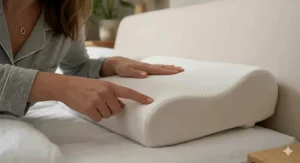
If you’ve ever stared at a pillow display and thought “but how do I know what height I actually need?”, the UTTU is the answer to that reasonable question. Its defining feature is a removable middle insert — essentially a sandwich layer of foam — that allows you to adjust the overall height from around 8 cm to 13 cm without buying a second pillow.
This is especially useful for combination sleepers (those who shift positions throughout the night, which is most people in the real world). The medium-high density foam sits in the 4.5–5 lb/ft³ range, giving it both durability and solid pressure relief. Expect a lifespan of three to five years with normal use — notably better than most budget alternatives.
For British buyers specifically, the UTTU’s resistance to cold-weather stiffening is worth highlighting. Standard memory foam can turn uncomfortably rigid in cold winter bedrooms — a genuine issue in older, less-insulated UK properties. The UTTU’s dynamic foam compound handles temperature fluctuation more gracefully.
UK reviewers frequently mention that the pillow arrived compressed in a tight roll, expanded fully within 24 hours, and required about a week of use before hitting its optimal firmness. Give it time before judging.
✅ Adjustable height — removes all the guesswork
✅ Handles cold UK bedrooms better than standard foam
✅ Suits combination sleepers
❌ Takes a week to break in properly
❌ Slightly bulkier than standard pillows
Price range: £40–£55 on Amazon.co.uk | Prime-eligible. The best all-rounder in this guide for buyers who genuinely don’t know their preferred loft yet.
3. TEMPUR Original Medium Pillow
Here’s where we enter premium territory, and it’s worth being upfront: the TEMPUR Original is expensive by any reasonable measure of the word. But dismissing it purely on price is the kind of thinking that leads to buying six mediocre pillows over a decade and spending more in total than you would have on one TEMPUR.
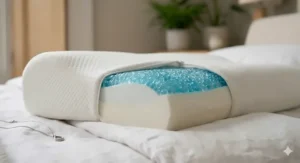
The TEMPUR material itself is fundamentally different from standard memory foam — developed originally by NASA and refined over decades for the consumer market. It moulds to your specific head and neck shape with a precision that cheaper foams simply cannot replicate, distributing pressure across a larger surface area and eliminating the hard pressure points that cause morning pain. The dual-zone design (10 cm on the sleeping side, 7 cm base) is specifically engineered for spinal alignment, not merely comfort.
The Original Medium suits smaller-to-medium frames — roughly up to 5’8″ — and works best for back sleepers or those with moderate cervical issues. The TEMPUR Cloud variant (74 × 50 cm) offers a softer, more traditional pillow feel for those who find the Original too structured.
One honest note: TEMPUR pillows retain heat. The SmartCool technology in newer ranges helps, but if you’re a notoriously hot sleeper in a British summer that occasionally remembers to be warm, the Simba Hybrid below is worth comparing.
NHS physiotherapy guidance on neck pain consistently recommends maintaining proper cervical alignment during sleep — and this is the gold standard for doing exactly that.
✅ Unmatched contouring precision and longevity (10–15 years)
✅ Dual-zone design for genuine spinal alignment
✅ Washable cover included
❌ Price point requires a committed budget
❌ Warmth retention in summer
Price range: £85–£100 on Amazon.co.uk | Check Prime availability. Genuinely worth considering as a long-term investment rather than a purchase — the maths become rather compelling over five or more years.
4. Simba Hybrid Pillow
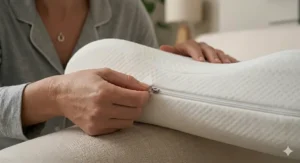
The Simba Hybrid takes a fundamentally different approach to orthopaedic support — and it works brilliantly for the right type of sleeper. Rather than rigid foam contouring, it uses a combination of microfibre clusters and hollow Nanocubes that can be added or removed through a zip opening to dial in your preferred height and firmness. It’s the most adjustable pillow in this guide.
The temperature management here is genuinely impressive. The Stratos technology (present in the CustomFlex variant) actively regulates heat exchange, keeping the sleeping surface cooler than standard foam. For a country where bedrooms can swing from 8°C in December to 24°C in the occasional heatwave, that adaptability is more than a marketing feature — it’s practical.
Side sleepers with broader shoulders will find the Nanocube-filled sections compress under lateral pressure and reform, providing support that moves with you rather than holding one static position. This distinction matters enormously for combination sleepers who move between positions throughout the night.
The Simba Hybrid doesn’t provide the precise cervical contouring of the Elviros or TEMPUR for specific neck conditions — it’s more of an intelligent comfort pillow with strong orthopaedic qualities than a dedicated therapeutic device. For chronic sufferers, the TEMPUR offers more clinical precision. For everyone else, the Simba is rather excellent.
✅ Fully adjustable height with Nanocube system
✅ Best-in-class temperature regulation
✅ Great for combination sleepers
❌ Less precise cervical contouring than dedicated foam options
❌ Higher price for the full adaptive version
Price range: £55–£80 on Amazon.co.uk | Prime-eligible. Best suited to hot sleepers, those who shift positions frequently, and anyone who’s had analysis paralysis choosing a pillow height.
5. Groove Original Pillow
The Groove Original is a proudly British product with an earnest mission: eliminate the neck pain and morning stiffness that affects millions of UK sleepers by correcting posture during sleep rather than simply cushioning bad posture. It’s a subtle but important distinction.
The contoured memory foam design features a central channel that cradles the cervical spine, paired with raised outer sections that support the head at the correct angle for both side and back sleeping. The result is a pillow that gently guides your neck into neutral alignment rather than letting it drift wherever gravity decides. For side sleepers suffering from upper back tension as well as neck stiffness, the shoulder-support zones on the lateral edges make a noticeable difference.
The Groove is endorsed by physiotherapists and has accumulated a significant number of UK reviews praising its effectiveness for snoring reduction — when your airways are properly aligned, they’re simply less obstructed. It’s not a cure for sleep apnoea, but for positional snoring, it’s worth a try.
With over 300,000 customers and a money-back guarantee if you don’t experience pain relief, it’s one of the lower-risk orthopaedic pillow purchases available to UK buyers. The Sleep Foundation’s research on sleep position and spinal health supports the core principle behind contoured designs: neutral alignment consistently correlates with reduced morning pain.
✅ Specifically designed for neck and upper back pain
✅ Snoring reduction benefit for positional snorers
✅ Money-back pain relief guarantee
❌ Not suitable for stomach sleepers
❌ Single height — no adjustment possible
Price range: £45–£60 on Amazon.co.uk | Prime delivery available. A solid mid-range pick, particularly for those who share a bed with a snorer and need a discreet way to raise the subject.
6. Panda Hybrid Bamboo Pillow
The Panda Hybrid takes a different angle into the orthopaedic pillow conversation: it pairs a supportive memory foam core with a bamboo-derived cover and markets itself firmly at eco-conscious buyers who don’t want to sacrifice therapeutic quality for sustainability credentials. The reassuring thing is that it actually delivers on both counts.
The ActiveFoam+ memory foam core (60 × 40 × 12 cm) provides medium-firm support with a comfortable degree of contouring, suitable for side and back sleepers. The bamboo cover is genuinely breathable — more so than standard polyester pillow covers — which matters in the UK’s unpredictable bedroom temperatures. It’s also hypoallergenic, OEKO-TEX certified, and machine washable at 40°C, making it a particularly sound choice for allergy sufferers or households with pets.
The 10-year guarantee is, frankly, remarkable for a product at this price point. It suggests confidence in the foam’s long-term resilience — and for British buyers in older properties where dampness and dust mite concerns are ever-present, that kind of durability commitment is genuinely reassuring.
One thing to note: at 13 cm, this is one of the tallest pillows in this guide. Petite frames or those with narrow shoulders sleeping on their back may find the loft slightly excessive. Medium-to-large frames and side sleepers will likely find it ideal.
✅ Bamboo cover — genuinely breathable and hypoallergenic
✅ Impressive 10-year guarantee
✅ OEKO-TEX and eco-certified materials
❌ 13 cm loft may be too high for petite back sleepers
❌ Memory foam core is not adjustable
Price range: £50–£65 on Amazon.co.uk | Prime-eligible. The best option for allergy sufferers, eco-minded buyers, and anyone who wants a decade of guaranteed support.
7. Winthome Memory Foam Pillow
The Winthome earns its place in this guide by doing something admirable: keeping things simple, glue-free, and genuinely effective at a budget price point. Marketed as a zero-glue construction (meaning the foam isn’t held together with potentially off-gassing adhesives), it’s an underrated choice for buyers with chemical sensitivities or those simply tired of new-pillow odour.
The dual-sided design offers a soft side and a firm side in a single 60 × 40 × 10 cm pillow — flip it over and you effectively have two different firmness experiences without buying twice. The slow-rebound foam (roughly 3–4 second return time) provides adequate pressure distribution for back sleepers in particular, maintaining cervical curve support without the aggressive contouring of dedicated orthopaedic shapes.
It’s worth being honest about the limitations: the Winthome won’t compete with the UTTU or TEMPUR for longevity or precision. At this price, you’re looking at a realistic lifespan of two to three years before compression becomes noticeable. For budget-conscious buyers or those trying orthopaedic pillows for the first time and not yet certain they’ll prefer firm foam support, that’s a perfectly reasonable trade-off.
UK buyers note that it fits standard British pillowcases (50 × 75 cm) — a small but genuinely appreciated detail compared to the non-standard shapes of some orthopaedic alternatives.
✅ Dual-sided soft/firm design in one pillow
✅ Zero-glue construction — minimal off-gassing
✅ Fits standard UK pillowcases
❌ Shorter lifespan than mid-range alternatives
❌ Less precise cervical contouring
Price range: £28–£40 on Amazon.co.uk | Prime-eligible. The smartest entry-level choice for first-time orthopaedic pillow buyers, particularly back sleepers.
How to Choose the Right Orthopaedic Pillow in the UK: 6 Essential Criteria
Choosing between seven well-reviewed options shouldn’t feel like defusing a bomb. Here’s a clear, practical framework for the decision.
1. Identify your dominant sleeping position. This is the single most important factor. Side sleepers need higher loft (10–15 cm) to bridge the shoulder-to-ear gap. Back sleepers need moderate loft (8–11 cm) that maintains the cervical curve without pushing the chin towards the chest. Stomach sleepers (the physiotherapy community would gently prefer you didn’t) need very low loft or a very soft, compressible pillow. If you’re genuinely unsure, choose an adjustable model like the UTTU.
2. Consider your frame. Body size directly affects ideal loft height. Broader shoulders create a larger gap in side sleeping, requiring taller pillows. Petite frames — roughly under 163 cm — often find 10 cm pillows more than adequate. The spec sheet alone won’t tell you this; it’s why trial periods matter.
3. Factor in the British climate. This sounds trivial and absolutely isn’t. Standard memory foam turns noticeably rigid in cold bedrooms — a real consideration in older UK properties without central heating in every room. The UTTU’s dynamic foam and the Simba’s Nanocube system handle temperature fluctuation more gracefully than budget foam alternatives.
4. Account for allergies and washability. According to Allergy UK, approximately 44% of UK adults suffer from at least one allergy, with dust mites a primary indoor trigger. Machine-washable covers at 60°C kill dust mites effectively. OEKO-TEX certification ensures the materials themselves aren’t introducing chemical irritants. This matters considerably in the damp conditions common to British homes.
5. Think long-term cost, not purchase price. A £90 TEMPUR lasting 15 years costs £6 per year. A £28 budget pillow lasting 18 months costs roughly £18.67 per year. The maths aren’t complicated. If your pain is chronic and persistent, the premium investment pays for itself fairly quickly in improved sleep quality alone — to say nothing of reduced physio appointments.
6. Use the Consumer Rights Act 2015. UK buyers purchasing from Amazon.co.uk have 14 days to return any online purchase for any reason under the Consumer Contracts Regulations. For orthopaedic pillows — which often require a week or two to properly assess — always verify that you’re buying from Amazon Fulfillment rather than a third-party marketplace seller with different return terms.
Real-World Scenarios: Which Pillow Suits Your Life?
Rather than abstract recommendations, let’s put some real British context around these choices.
The London Commuter with Desk Neck. You spend eight hours a day looking at a screen, your neck aches by 3pm, and you’re sleeping in a Zone 2 flat where the bedroom isn’t exactly cavernous. You need firm, reliable cervical support — nothing adjustable or fussy. The Groove Original or Elviros suits you well; both prioritise neutral alignment without requiring complex setup. Budget: £30–£60.
The Couple in a Semi in Birmingham. One of you runs hot, one runs cold. You’ve had three pillows in two years and you’re both mildly irritated. The Simba Hybrid is your answer — adjustable height, temperature-regulating Nanocubes, and a single product that can be dialled differently for each of you if you buy two. It’s worth the slightly higher spend to stop arguing about the bedroom temperature.
The Retired Professional in the Cotswolds. You have a draughty stone cottage with single-glazed windows, persistent neck pain from decades of office work, and no interest in replacing your pillow again anytime soon. The TEMPUR Original is the right answer here: long lifespan, clinical-grade support, and a warm washable cover for the October-to-April period. A genuine investment that will outlast most other things in the room.
The First-Time Buyer on a Tight Budget. You’re not entirely sure whether you’ll adapt to firm foam support, and you don’t want to spend £80 on something you might not like. Start with the Winthome — its dual-sided design lets you experiment with firmness, it fits standard pillowcases, and the lower price point means switching if it’s not right won’t sting.
Orthopaedic Pillow vs Traditional Pillow: The Real Comparison
| Feature | Orthopaedic Pillow | Traditional Pillow |
|---|---|---|
| Spinal alignment | Engineered for neutral alignment | Incidental — depends on position |
| Material | Memory foam / latex / structured hybrid | Polyester, down, hollow fibre |
| Lifespan | 3–15 years depending on quality | 1–3 years (typically) |
| Price range (UK) | £26–£100 | £8–£40 |
| Pain relief | Targeted therapeutic benefit | Minimal, largely comfort-focused |
| Best for | Neck/back pain, therapeutic need | General comfort, no specific issues |
The comparison above tells a clear story: orthopaedic pillows cost more upfront but serve a fundamentally different function. A traditional polyester pillow from the high street does the job of elevating your head. An orthopaedic pillow actively works to maintain healthy cervical alignment throughout eight hours of sleep. If you have any recurring neck, shoulder, or upper back pain, the choice between these two categories essentially makes itself.
✨ Don’t Miss These Exclusive Deals!
🔍 Ready to upgrade your sleep? Click any highlighted product above to check current pricing and availability on Amazon.co.uk — Prime members get free next-day delivery, and all purchases are protected under the Consumer Rights Act 2015’s 14-day return guarantee.
Common Mistakes When Buying an Orthopaedic Pillow in the UK
Even well-intentioned buyers make the same errors repeatedly. Here’s how to avoid the most expensive ones.
Choosing by price alone. The British instinct toward value is admirable, but in this category, the cheapest option frequently costs more in the medium term — both financially (replacement purchases) and physically (continued pain, physio appointments). Use the cost-per-year calculation before making a decision.
Ignoring your sleeping position entirely. “Orthopaedic” is not a universal descriptor — a pillow engineered for side sleepers can actively make things worse for back sleepers, and vice versa. The loft height that bridges one person’s shoulder-to-ear gap will crane another person’s neck at an uncomfortable angle.
Expecting overnight results and returning too soon. Most memory foam orthopaedic pillows require a break-in period of five to ten nights before they reach optimal firmness and conform properly to your shape. Returning a pillow after two nights because it “feels different” is like returning a pair of leather shoes because they aren’t yet broken in. Give it a fortnight.
Buying from third-party Amazon sellers without checking returns policy. Amazon.co.uk’s standard returns policy applies to items fulfilled by Amazon. Third-party marketplace sellers have their own policies, which may be more restrictive. Check the “Sold by / Fulfilled by” line before purchasing — your rights under the Consumer Rights Act 2015 are strongest when purchasing from a UK-registered seller.
Neglecting pillow hygiene. British bedrooms can be damp, and an orthopaedic pillow left in a poorly ventilated room accumulates moisture, dead skin cells, and dust mites at a meaningful rate. Wash covers at 40–60°C regularly. Air the pillow core itself monthly. A £60 pillow improperly maintained becomes a £60 dust mite hotel within six months.
Price vs Quality: Understanding What You’re Actually Paying For
| Price Band | What You Get | Realistic Lifespan | Best Option |
|---|---|---|---|
| Budget (£20–£35) | Basic contouring, standard foam density | 12–24 months | Elviros / Winthome |
| Mid-Range (£35–£65) | Adjustability, better density, premium covers | 3–5 years | UTTU / Groove / Panda |
| Premium (£65–£100+) | Clinical-grade materials, decade-long lifespan | 10–15 years | TEMPUR / Simba Hybrid |
Note that all prices on Amazon.co.uk include 20% VAT — unlike US prices, which typically exclude sales tax. When comparing UK and US pricing online, factor this in: a £60 UK pillow is roughly equivalent to a $50 US pre-tax price, which makes the premium options look considerably more competitive than a naive currency conversion suggests.

Frequently Asked Questions About Orthopaedic Pillows
❓ Are orthopaedic pillows recommended by the NHS for neck pain?
❓ How often should I replace my orthopaedic pillow in the UK?
❓ Will an orthopaedic pillow help with snoring?
❓ Do orthopaedic pillows work for side sleepers in the UK?
❓ Can I buy an orthopaedic pillow on Amazon.co.uk with free delivery?
Conclusion: The Bottom Line on Orthopaedic Pillows
The decision to invest in a proper orthopaedic pillow is, at its core, a decision about sleep quality — and therefore about everything that depends on sleep quality. Focus. Energy. Pain levels. Mood. The list is rather long.
For most UK buyers, the sweet spot sits in the mid-range: the UTTU for adaptability, the Groove Original for targeted pain relief, or the Panda Hybrid for eco-conscious shoppers wanting longevity. If you’re a first-time buyer with a cautious budget, the Elviros delivers remarkable value at under £35. If you’re a chronic sufferer who’s tried everything else, the TEMPUR Original is the premium option that genuinely earns its price.
Whatever you choose: give it two weeks before judging. Buy from an Amazon Fulfillment seller. Wash the cover regularly. And remember that research from the British Sleep Society consistently links poor sleep quality to a cascade of health consequences that make an orthopaedic pillow look like a rather modest investment.
Your neck has been patient long enough.
✨ Don’t Miss These Exclusive Deals!
🔍 Click any product in this guide to check current pricing and availability on Amazon.co.uk. Prime members get free next-day delivery — check current deals and make your choice today. Sleep well starts tonight.
Recommended for You
- Best Pillow for Scoliosis UK 2026: 7 Expert Picks for Spinal Relief
- 7 Best Pressure Point Pillow Fibromyalgia UK 2026
- Best Pillow for Fibromyalgia UK 2026 – 7 Expert Choices
Disclaimer: This article contains affiliate links. As an Amazon Associate, I earn from qualifying purchases. If you purchase products through these links, we may earn a small commission at no additional cost to you.
✨ Found this helpful? Share it with your mates! 💬🤗
