
In This Article
Nobody chooses to wake up at 3am gasping, elbowing their partner awake, or reaching for a fourth pillow that’s gone flat within an hour. If you’re here, chances are broken sleep, snoring, or that horrible burning creep of acid reflux has sent you looking for something better than a stack of bed pillows sliding around all night. A wedge pillow for sleep apnoea won’t replace medical treatment, but for many people it’s a genuinely useful piece of the puzzle.
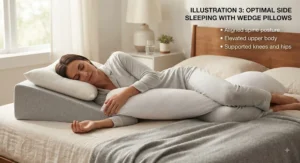
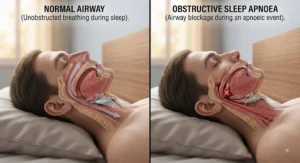
The theory isn’t just marketing. Elevating the upper body reduces the pull of gravity on the tongue and soft throat tissues that cause airway blockages, and a 2017 clinical study found even a modest 7.5-degree head-of-bed tilt measurably reduced obstructive sleep apnoea severity in study participants. That’s not a cure, and it’s certainly not a substitute for CPAP therapy if that’s what’s been prescribed — but it’s a reasonable, low-risk addition to a sleep routine.
This guide covers seven real, currently available wedge pillows, ranging from budget foam wedges around £35 to a clinically studied reflux system nearer £200. You’ll get honest analysis grounded in real specs and aggregated review sentiment, practical guidance on choosing the right incline, and a dedicated look at CPAP compatibility — because fitting a mask over a steep wedge isn’t always as simple as manufacturers suggest.
Quick Comparison Table
| Pillow | Price Range | Incline | Best For |
|---|---|---|---|
| Putnams Bed Wedge | £45-75 | Gentle slope | Snoring relief, award-winning |
| MedCline Reflux Relief System | £150-220 | 15-20° | Side sleepers, chronic reflux |
| Coop Home Goods Adjustable Wedge | £70-100 | Up to 12″ adjustable | Custom incline needs |
| Kolbs Bed Wedge Pillow | £45-65 | 7.5″ | Budget sleep apnoea support |
| Bedluxe Wedge Pillow | £40-60 | 10″ | Cooling, hot sleepers |
| Vekkia Extra-Long Wedge | £35-55 | 7.5″ | Back and shoulder coverage |
| Brentwood Home Zuma Wedge | £60-90 | 7″/10″/12″ options | Firm back-sleeper support |
A few things jump out here. Incline height varies far more than price does — the Coop Home Goods Adjustable Wedge can be reconfigured from a gentle lift to a full 12 inches, while most fixed wedges commit you to one angle from the outset. Notice too that the MedCline Reflux Relief System sits well above the rest on price, reflecting that it’s a full three-piece positional therapy system rather than a single foam wedge.
💬 Just one click — help others make better buying decisions too!😊
Top 7 Wedge Pillows for Sleep Apnoea: Expert Analysis
1. Putnams Bed Wedge — best award-winning pick for snoring relief
The Putnams Bed Wedge leads this list on reputation as much as design — its standout feature is a Good Housekeeping-tested score of 91 out of 100, with the publication naming it best anti-snore pillow in an independent sleep trial. That’s a rare, verifiable endorsement in a category full of vague marketing claims.
The design uses a gentle, gradual slope intended to sit on top of your existing mattress rather than replace your regular pillow entirely, targeting acid reflux, heartburn, GERD, and snoring through gravity-assisted elevation. What that gentler gradient means in practice is a less jarring transition for people who’ve never slept inclined before, compared with steeper 12-inch wedges that can feel dramatic on night one.
Based on the spec comparison with steeper alternatives, what most buyers overlook about the Putnams Bed Wedge is that a gentler slope, while more comfortable to adjust to, may offer less pronounced relief for severe reflux or apnoea than a steeper incline — it’s a trade-off between comfort and intensity rather than a straightforward upgrade.
Reviewers in the Good Housekeeping panel consistently reported reduced snoring and fewer night wakings, with both users and their partners noticing the difference — a genuinely useful data point since snoring reduction is notoriously hard to self-assess.
Pros:
- ✅ Independently tested with a verified 91/100 score
- ✅ Gentle slope suits first-time wedge sleepers
- ✅ UK-based brand with clear returns support
Cons:
- ❌ Gentler incline may under-deliver for severe symptoms
- ❌ Sits on the mattress rather than replacing bedding
Typically priced in the £45-75 range, the Putnams Bed Wedge is a sensible starting point for anyone new to inclined sleep who wants evidence behind the claims.
2. MedCline Reflux Relief System — best for side sleepers with chronic reflux
Where most entries on this list are a single foam triangle, the MedCline Reflux Relief System stands apart as a full three-piece positional therapy system — its standout feature is a patented design validated across seven independent clinical trials, a level of evidence rarely seen in this category.
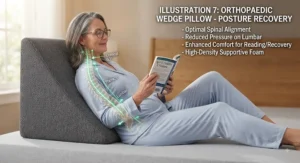
The system combines a wedge, an insert pillow, and a body pillow to hold you at a doctor-recommended 15 to 20-degree incline while keeping you positioned on your left side, complete with an arm pocket designed to relieve shoulder pressure. What that combination means practically is the system does two jobs at once: it elevates you and it stops you rolling onto your back overnight, which is when reflux and airway collapse both tend to worsen.
Here’s what to weigh honestly: MedCline states this system is not recommended for people with herniated discs, hip injuries, or arthritis, since the incline and side-lying position can be genuinely difficult to tolerate with those conditions. It’s also worth knowing that user discussions around CPAP use with the accompanying body pillow are mixed — some report it works fine, others find the body pillow interferes with mask positioning, so this isn’t a guaranteed CPAP pairing.
Aggregated sentiment cites that 93% of patients reported reduced nighttime reflux symptoms in company-cited research, though independent forum discussion suggests results with CPAP specifically are more inconsistent than the reflux claims alone.
Pros:
- ✅ Backed by seven independent clinical trials
- ✅ Combines incline with side-sleeping positioning
- ✅ Arm pocket reduces shoulder pressure discomfort
Cons:
- ❌ CPAP mask fit with the body pillow isn’t guaranteed
- ❌ Unsuitable for certain back and hip conditions
At roughly £150-220, the MedCline Reflux Relief System is a premium investment best suited to people whose reflux is chronic enough to justify a dedicated positional therapy system.
3. Coop Home Goods Adjustable Wedge Pillow — best for a fully custom incline
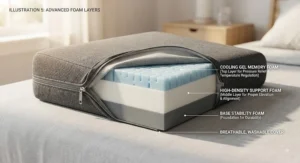
The Coop Home Goods Adjustable Wedge Pillow solves the biggest complaint about fixed wedges — its standout feature is a genuinely adjustable height, built from three interchangeable foam inserts that stack up to 12 inches, so you’re not locked into a single guess of an angle.
Specification-wise, you get 2-inch, 3-inch, and 5-inch foam layers plus a plush memory foam and microfiber top layer, all wrapped in a dual-zipper cover for easy reconfiguration, and the whole thing is CertiPUR-US and GreenGuard Gold certified. What that certification means practically is the foam has been independently tested for harmful emissions and chemicals, which matters for something you’ll breathe close to for eight hours a night.
Based on the spec comparison, the genuine appeal here is trial and error without buying multiple pillows — if a gentle 5-inch lift doesn’t touch your reflux, you stack in the additional layers rather than returning the whole product and starting again with a different fixed-height wedge.
Reviewers consistently praise the adjustability as the standout feature over fixed alternatives, with a recurring theme being how much softer and more “cloud-like” the top layer feels compared with the firmer, denser foam typical of budget wedges.
Pros:
- ✅ Genuinely adjustable from gentle to steep incline
- ✅ CertiPUR-US and GreenGuard Gold certified foam
- ✅ Soft, plush top layer unlike firmer budget foam
Cons:
- ❌ Higher price than most fixed-height wedges
- ❌ Foam insert isn’t machine washable, only spot-clean
Priced around £70-100, the Coop Home Goods Adjustable Wedge Pillow rewards buyers who genuinely don’t know their ideal incline yet.
4. Kolbs Bed Wedge Pillow — best budget pick for sleep apnoea support
The Kolbs Bed Wedge Pillow earns its place as an accessible entry point, its standout feature being a 7.5-inch incline specifically marketed for sleep apnoea, acid reflux, and back pain relief, wrapped in a smarter-looking jacquard cover than most budget wedges bother with.
On the spec sheet, the 7.5-inch height sits in a genuinely useful middle ground — steep enough to meaningfully change your sleeping angle, without the adjustment shock of a full 12-inch incline. What that middling height means practically is most first-time users find it comfortable within a few nights rather than needing weeks to adapt.
Based on the spec comparison, the Kolbs Bed Wedge Pillow is honestly positioned as the value option here rather than the premium pick — it lacks the adjustable height of the Coop wedge or the clinical validation of MedCline, but it does the fundamental job of elevation at a fraction of the price.
Reviewers commonly note the jacquard cover feels noticeably nicer than plain cotton alternatives at this price point, though some mention the foam is firmer than expected, which back sleepers with sensitive shoulders may want to factor in.
Pros:
- ✅ Genuinely affordable entry into inclined sleep
- ✅ Smart jacquard cover above typical budget quality
- ✅ 7.5-inch height suits most first-time users
Cons:
- ❌ Firmer foam than some buyers expect
- ❌ No adjustable height once purchased
At around £45-65, the Kolbs Bed Wedge Pillow is a solid low-risk way to test whether inclined sleep helps before spending more.
5. Bedluxe Wedge Pillow — best cooling option for hot sleepers
The Bedluxe Wedge Pillow targets a specific frustration with foam wedges — its standout feature is a dual-layer, gel-infused memory foam top designed to sleep cooler than standard foam, which matters enormously if you’ve ever woken up sweating on a dense foam incline.
Available in a 10-inch height, the design pairs a responsive gel-infused top layer with a firmer high-density base for durability, aiming to avoid the sagging that cheaper single-layer wedges develop after a few months. What that dual-layer construction means practically is you get some of the pressure-relieving softness of gel memory foam without it collapsing flat under sustained weight.
Based on the spec comparison, the Bedluxe Wedge Pillow sits well for reflux and snoring relief at a mid-range incline, though it’s worth noting gel-infused foam, while cooler than standard memory foam, still won’t feel as breathable as an all-latex or fibre-fill alternative for genuinely hot sleepers.
Aggregated review sentiment is generally positive on the cooling claim relative to standard memory foam wedges, with the removable, washable cover frequently mentioned as a practical bonus for anyone prone to night sweats.
Pros:
- ✅ Gel-infused top layer sleeps cooler than standard foam
- ✅ Dual-layer build resists sagging over time
- ✅ Removable, washable cover included
Cons:
- ❌ Still warmer than non-foam alternatives
- ❌ 10-inch height may feel steep for first-time users
Generally priced between £40-60, the Bedluxe Wedge Pillow is the sensible pick for anyone who’s ruled out other wedges purely because they sleep hot.
6. Vekkia Extra-Long Wedge Pillow — best for full back and shoulder coverage
The Vekkia Extra-Long Wedge Pillow solves a problem most triangular wedges ignore — its standout feature is an unusually generous 34-inch length, giving your whole back and shoulders support rather than just your head and upper chest.
At a 7.5-inch incline with double side pockets built into the design, this wedge is genuinely practical for evening use, letting you tuck a phone, remote, or reading glasses within reach without them sliding off the mattress. What that extra length means in practice is less awkward bunching at the shoulders, a common complaint with shorter wedges that end abruptly mid-back.
Based on the spec comparison, the Vekkia Extra-Long Wedge Pillow suits back sleepers particularly well, since the extended surface supports the whole upper body rather than creating a hard edge partway down your spine — a subtle but genuinely noticeable difference after a few nights.
Reviewers frequently highlight the side pockets as a small but appreciated convenience feature, with the removable washable cover also drawing consistent praise for making upkeep straightforward.
Pros:
- ✅ Extra-long design supports the full back and shoulders
- ✅ Practical side pockets for phone or glasses
- ✅ Removable, washable cover for easy care
Cons:
- ❌ Larger footprint may not suit smaller beds
- ❌ Fixed 7.5-inch incline, no height adjustment
Sitting around £35-55, the Vekkia Extra-Long Wedge Pillow is a smart, affordable choice for back sleepers who’ve found shorter wedges uncomfortably abrupt.
7. Brentwood Home Zuma Foam Wedge Pillow — best firm support for back sleepers
The Brentwood Home Zuma Foam Wedge Pillow rounds out this list on firmness — its standout feature is a genuinely firm foam construction specifically designed to suit back sleepers who need real structural support rather than a soft, sinking incline.
The cover uses a 4-way stretch knit made from bamboo-derived rayon, which helps draw heat away from the body, and the pillow is available in 7-inch, 10-inch, or 12-inch height options across a consistent 24 x 24-inch base. What that range of heights means practically is you can choose your incline upfront based on symptom severity, rather than committing to one fixed option across the whole product line.
Based on the spec comparison, the firmness here is a deliberate design choice rather than an oversight — reviewers who prefer a plush, cloud-like feel (like the Coop wedge’s top layer) may find the Zuma noticeably more rigid, while back sleepers who dislike sinking into softer foam tend to prefer exactly this firmness.
Aggregated review sentiment consistently praises the breathable bamboo-rayon cover as a genuine improvement over plain polyester alternatives, with the removable, washable design adding practical long-term value.
Pros:
- ✅ Firm support genuinely suited to back sleepers
- ✅ Breathable bamboo-rayon cover aids temperature
- ✅ Available across three incline height options
Cons:
- ❌ Firmness may feel too rigid for side sleepers
- ❌ Higher heights may need an adjustment period
Typically priced from £60-90 depending on incline height chosen, the Brentwood Home Zuma Foam Wedge Pillow suits back sleepers wanting genuine structural firmness over plush softness.
Full Spec Comparison: Wedge Pillows Side by Side
| Pillow | Incline | Cover Material | CPAP-Friendly | Best For |
|---|---|---|---|---|
| Putnams Bed Wedge | Gentle slope | Standard cover | Generally yes | Snoring relief |
| MedCline Reflux Relief System | 15-20° | Washable covers | Mixed reports | Side-sleeping reflux |
| Coop Home Goods Adjustable Wedge | Up to 12″ | Dual-zipper cover | Generally yes | Custom incline |
| Kolbs Bed Wedge Pillow | 7.5″ | Jacquard | Generally yes | Budget support |
| Bedluxe Wedge Pillow | 10″ | Removable/washable | Generally yes | Hot sleepers |
| Vekkia Extra-Long Wedge | 7.5″ | Removable/washable | Generally yes | Back sleepers |
| Brentwood Home Zuma | 7″/10″/12″ | Bamboo-rayon | Generally yes | Firm back support |
Reading across this table, one point stands out clearly: simple, fixed-angle foam wedges tend to pair more predictably with a CPAP mask than multi-piece positional systems, since there’s no body pillow or arm pocket to navigate around the mask straps. If CPAP compatibility is your top priority, the flexibility of the Coop Home Goods Adjustable Wedge or the straightforward shape of the Kolbs Bed Wedge Pillow are safer bets than a complex system like MedCline.
✨ Don’t Miss These Exclusive Deals!
🔍 Take your sleep routine to the next level with these carefully selected wedge pillows. Click on any highlighted item to check current pricing and availability. These respiratory support pillow options could help you breathe easier and wake up genuinely refreshed!
What Is a Wedge Pillow for Sleep Apnoea?
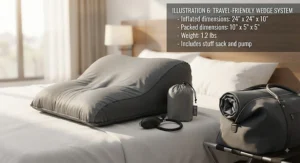
A wedge pillow for sleep apnoea is a triangular foam support that elevates your upper body at an angle, typically between 7 and 20 degrees, to reduce airway collapse and gravity-driven throat tissue obstruction during sleep. It’s a supportive aid, not a replacement for diagnosed treatment such as CPAP.
The NHS explains that obstructive sleep apnoea happens when the walls of the throat relax and narrow during sleep, interrupting normal breathing repeatedly through the night. Elevating the upper body works by using gravity to keep the tongue and soft palate from collapsing backward into the airway — the same basic mechanism that makes side sleeping helpful, just achieved through positioning rather than posture alone.
It’s worth being clear-eyed here: a wedge pillow is a complementary tool, most useful for mild symptoms or as a comfort addition alongside prescribed treatment, not a standalone cure for moderate or severe sleep apnoea diagnosed by a sleep clinic.
How to Choose a Wedge Pillow for Sleep Apnoea
- Start with a moderate incline if you’re new to this. A 7 to 7.5-inch wedge like the Kolbs Bed Wedge Pillow is easier to adapt to than jumping straight to 12 inches.
- Check CPAP compatibility before buying if relevant. Simple, single-piece wedges generally pair more predictably with masks than multi-part systems.
- Match the length to your sleeping position. Back sleepers benefit from full-back coverage like the Vekkia Extra-Long Wedge Pillow; side sleepers may prefer a system built specifically for that position.
- Consider firmness against your usual pillow preference. If you like a plush pillow, a rigid foam wedge like the Zuma may feel like an unwelcome change.
- Factor in temperature regulation. Hot sleepers should prioritise gel-infused or breathable covers over dense standard memory foam.
- Look for evidence, not just marketing claims. Independent testing, like the head-of-bed elevation research published via the National Library of Medicine, supports the underlying mechanism even when individual product claims can’t be independently verified.
- Decide between adjustable and fixed height. If you genuinely don’t know your ideal incline, an adjustable option like the Coop wedge avoids costly trial and error.
CPAP Compatibility: What You Need to Know
CPAP compatibility is one of the most common questions around wedge pillows, and honestly, the answer varies more than most retailers admit. Simple, single-piece foam wedges without attached body pillows or headrests generally leave enough clearance for a CPAP mask and hose to sit comfortably, since there’s nothing obstructing the sides of your face.
Multi-piece systems are where things get more complicated. The MedCline Reflux Relief System‘s arm pocket and body pillow design is genuinely excellent for reflux and side-sleeping positioning, but real user discussion suggests mask fit with the accompanying body pillow is inconsistent — some users manage it fine, others find the pillow interferes with strap positioning around the head. If CPAP use is non-negotiable for you, test any multi-piece system’s return policy before committing, and consider starting with a simpler fixed wedge instead.
Wedge Pillows vs Sleeping Flat with Standard Pillows
| Factor | Wedge Pillow | Standard Stacked Pillows |
|---|---|---|
| Stability overnight | Stays in place | Slides, flattens, shifts |
| Spine alignment | Consistent single incline | Uneven, bends neck sharply |
| Reflux/snoring benefit | Gravity-assisted, consistent | Inconsistent, often too steep at neck only |
| Best For | Sustained, repeatable elevation | Occasional, short-term propping |
The core problem with stacking ordinary pillows isn’t comfort, it’s consistency. A wedge holds one steady angle across your whole back and shoulders, while stacked pillows tend to bend sharply at the neck alone, which research on head-of-bed elevation specifically warns against as it can worsen rather than improve airway positioning. For genuinely sustained relief night after night, a proper wedge simply outperforms whatever pillows you already own, even before comparing foam quality or covers.
Common Mistakes When Buying a Pillow for Breathing Problems at Night
The most frequent mistake is buying based on incline height alone without considering sleeping position — a steep 12-inch wedge suits back sleepers far better than side sleepers, who often need a differently shaped system entirely, like MedCline’s approach. Second is ignoring CPAP compatibility until after purchase, only to discover a multi-piece system doesn’t leave enough clearance for a mask and straps.
A third common error is expecting a wedge pillow to replace medical treatment rather than complement it — for anyone with a formal sleep apnoea diagnosis, a wedge is a helpful addition, not a substitute for CPAP or other prescribed therapy. Finally, many buyers underestimate the adjustment period; jumping straight into a 12-inch incline after years of sleeping flat can feel jarring for the first week, leading some to give up before their body has adapted.
Respiratory Support Pillows for Different Sleepers
If you’re a back sleeper dealing with mild snoring, a firm, structured option like the Brentwood Home Zuma Foam Wedge Pillow provides the consistent support this position benefits from most. Back sleeping is also where wedge pillows generally perform best, since the incline works with your natural position rather than against it.
Side sleepers managing chronic acid reflux are the clear audience for the MedCline Reflux Relief System, since its arm pocket and body pillow design specifically accommodates the position doctors most often recommend for reflux relief. If you’re newly exploring inclined sleep and unsure what angle suits you, the Coop Home Goods Adjustable Wedge Pillow removes the guesswork entirely by letting you dial in your incline gradually.
For anyone managing both reflux and general breathing discomfort without a formal diagnosis yet, a moderate, well-reviewed option like the Putnams Bed Wedge offers a genuinely evidence-backed starting point before considering more specialised, pricier systems.
Practical Usage Guide: Getting Started with a Wedge Pillow
Set realistic expectations for the first week — most people need three to seven nights to adjust to sleeping at an incline, and giving up after one uncomfortable night is the single biggest reason people abandon wedge pillows prematurely. Start with your wedge positioned so your shoulders, not just your head, rest on the raised surface; propping only your head creates the same sharp neck bend that stacked pillows cause.
In the first month, experiment with pillow placement alongside your wedge — many people find a slim, low pillow on top of the wedge improves neck comfort without cancelling out the incline’s benefits. A common early mistake is choosing too steep an incline immediately; if you’re unsure, start with a 7 to 7.5-inch option and work upward only if symptoms persist.
Maintain your wedge by rotating and airing the foam occasionally, and always check the cover’s washing instructions before the first wash, since some jacquard and gel-infused covers require gentler cycles than plain cotton. If you use CPAP, test mask fit and hose routing with your new wedge during the day before relying on it overnight, so any adjustment issues surface when you’re not trying to sleep.
Problem → Solution: Common Wedge Pillow Issues Solved
Problem: I keep sliding down the wedge during the night. Choose a wedge with a wider base and non-slip underside, and consider tucking a fitted sheet corner underneath to add friction against the mattress.
Problem: My neck feels strained in the morning. Ensure your shoulders, not just your head, are supported by the incline, and try a thinner top pillow rather than your usual full-loft one.
Problem: The CPAP mask doesn’t sit right on the incline. Switch to a simple single-piece wedge without an attached body pillow, and route the hose over rather than under the wedge’s edge to avoid pulling at the mask.
Problem: The foam feels too firm or too soft after a few weeks. Firmness genuinely varies by product — if you’ve chosen a rigid option like the Zuma and find it uncomfortable, a dual-layer gel design like the Bedluxe may suit you better.
Problem: I’m not sure the incline is actually helping. Track your nights for two weeks, noting wake-ups, morning grogginess, and any partner-reported snoring, since gradual improvements are easy to miss without comparing notes over time.
Long-Term Cost, Care & Safety Considerations
Beyond the upfront price range, wedge pillows are genuinely low-maintenance. Most covers are removable and machine washable, and foam cores typically last two to three years of nightly use before noticeably losing their shape, longer if the pillow is aired regularly and kept away from direct moisture.
If you’re using a wedge pillow alongside CPAP therapy or managing a formal sleep apnoea diagnosis, it’s worth remembering that certain health conditions, including untreated sleep apnoea, can carry driving-related legal considerations in the UK — the rules around driving with health conditions are worth a quick check if diagnosis or treatment status changes. None of the products in this guide are medical devices, so always follow your GP or sleep clinic’s specific guidance over general product marketing claims.
Frequently Asked Questions
❓ Can a wedge pillow actually help with sleep apnoea?
❓ What incline height is best for acid reflux?
❓ Are wedge pillows compatible with CPAP machines?
❓ Is a wedge pillow better than an adjustable bed for breathing problems at night?
❓ How long does it take to get used to sleeping on a wedge pillow?
Conclusion
Choosing the right wedge pillow for sleep apnoea really comes down to your specific symptoms and sleeping position rather than chasing the tallest incline available. Back sleepers with mild snoring often do well with something firm and structured like the Brentwood Home Zuma Foam Wedge Pillow, while side sleepers managing chronic reflux are better served by a purpose-built system like MedCline.
What matters most across every option here is honesty about what a wedge pillow can and can’t do — it’s a genuinely useful, low-risk tool for many people, but it isn’t a replacement for diagnosed treatment or professional medical advice. If snoring, breathing pauses, or reflux are seriously disrupting your sleep, a conversation with your GP remains the essential first step, with a wedge pillow as a sensible complement rather than a substitute. Prices and availability may vary, so always check current listings before purchasing.
Recommended for You
- Adjustable Bed Wedge Pillow: 7 Best Multi-Position Picks 2026
- Leg Elevation Pillow for Swelling: 7 Proven Picks for 2026
- Wedge Pillow for GERD: 7 Best UK Picks for Reflux Relief 2026
Disclaimer: This article contains affiliate links. As an Amazon Associate, I earn from qualifying purchases. If you purchase products through these links, we may earn a small commission at no additional cost to you. This article is for general informational purposes only and is not a substitute for professional medical advice. Please consult your GP or a qualified sleep specialist before making changes to the treatment of any diagnosed condition.
✨ Found this helpful? Share it with your friends! 💬🤗
