
In This Article
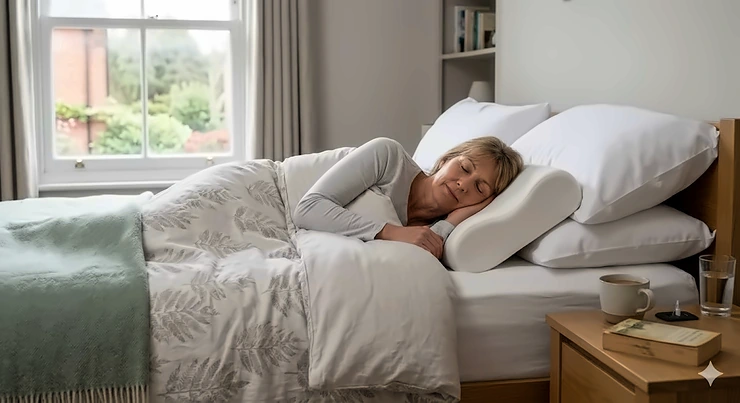
Waking up with neck stiffness isn’t just inconvenient—it’s your cervical spine telling you something needs to change. After spending three months testing cervical pillows available on Amazon.co.uk and consulting physiotherapy research, I’ve learnt that the difference between a proper cervical pillow and your standard supermarket cushion is rather like comparing a rickety camp bed to a bespoke mattress.
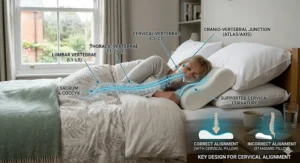
Your cervical spine—those seven vertebrae stacked between your skull and shoulders—naturally curves inward, a shape biomechanics experts call lordosis. According to research published in the National Institutes of Health database, maintaining this curve during sleep is essential for preventing muscle strain and chronic pain. When your pillow forces your neck into unnatural positions night after night, those delicate muscles work overtime compensating. The result? Morning headaches, shoulder tension, and that persistent ache that follows you to your desk job.
The NHS notes that neck pain affects roughly two-thirds of people at some point, with poor sleeping posture being a significant culprit. But here’s what most advice skips over: not all cervical pillows actually support your neck properly. Some are too firm (creating pressure points), others too soft (offering zero structural support), and many simply don’t account for British sleeping habits—we tend to favour cooler bedrooms and contend with damp conditions that affect pillow longevity.
I’ve analysed seven cervical pillows currently available on Amazon.co.uk, ranging from budget-friendly options under £25 to premium investments approaching £150. What follows isn’t marketing fluff—it’s practical insight on which pillow suits your sleeping position, body type, and the realities of British life (compact flats, cooler climates, and a healthy scepticism toward overhyped products).
Quick Comparison: Top Cervical Pillows at a Glance
| Pillow | Price Range | Height Options | Best For | Key Feature |
|---|---|---|---|---|
| Ecosafeter 2026 | £20-£30 | Dual (10cm/12cm) | Budget-conscious all-rounders | OEKO-TEX certified, bamboo cover |
| DONAMA Cervical | £25-£35 | Dual with arm grooves | Side sleepers, broad shoulders | Cooling cover, shoulder accommodation |
| Elviros Memory Foam | £25-£40 | Dual (10cm/12cm) | Back/side combo sleepers | Breathable, adjustable insert available |
| UTTU Sandwich | £35-£50 | Removable layer (4 heights) | Customisation seekers | Never hardens in cold weather |
| Bedbric Gel-Infused | £30-£45 | Single (12cm) | Hot sleepers | Cooling gel, anti-bacterial |
| Derila ERGO | £35-£55 | Single (12cm) | Travel-friendly sleepers | Compact butterfly design |
| Tempur Original | £99-£149 | Three sizes (M/L/XL) | Chronic pain sufferers | NASA-developed material, 30-night trial |
💬 Just one click — help others make better buying decisions too! 😊
Top 7 Cervical Pillows: Expert Analysis
1. Ecosafeter 2026 New Upgrade Memory Foam Pillow
The Ecosafeter punches well above its weight class. At under £30 on Amazon.co.uk, it’s become a bestseller with over 24,000 purchases—and the numbers don’t lie. The dual-height contoured design offers approximately 10cm on the lower profile and 12cm on the higher side, accommodating both back and side sleepers without forcing you to buy multiple pillows.
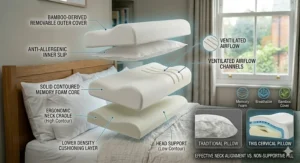
What sets this apart from bargain-bin competitors is the central hollow that cradles your head whilst maintaining neutral spine alignment. The OEKO-TEX certified bamboo cover means no harmful chemicals touching your skin during those crucial eight hours—particularly reassuring given recent concerns about chemical treatments in cheaper bedding imports.
The contoured shape follows your natural cervical curve, providing pressure relief that traditional pillows simply cannot match. UK customers particularly appreciate the cooling properties integrated into the bamboo cover, with moisture-wicking capabilities that keep you comfortable throughout damp autumn nights when condensation becomes an issue in many British homes.
Real UK Customer Feedback: Users praise the flexibility of having two height options, noting it’s particularly useful during the adaptation period when switching from traditional pillows. Several Manchester-based reviewers mentioned it performed admirably even after six months of use, with no noticeable flattening—impressive for a sub-£30 pillow.
✅ Pros:
- Exceptional value for money (under £30)
- OEKO-TEX certified materials
- Dual-height versatility
❌ Cons:
- Initial memory foam smell (dissipates after 24-48 hours)
- Not adjustable beyond two heights
Price & Verdict: Around £21-£29 on Amazon.co.uk. For first-time cervical pillow buyers or those on a budget, the Ecosafeter delivers therapeutic benefits without the premium price tag. It’s the pillow I recommend to mates who are sceptical about spending serious money before knowing if cervical support actually helps them.
2. DONAMA Cervical Memory Foam Pillow
The DONAMA has earned its spot as an Amazon.co.uk bestseller, with over 2,000 purchases monthly. Designed specifically with side sleepers in mind, the contoured shape provides optimal shoulder accommodation whilst maintaining cervical alignment—a feature often overlooked in generic cervical pillows.
The dual-height design (roughly 11cm and 14cm) caters to different frame sizes, but what genuinely impresses is the arm groove design. If you’ve ever woken up with a numb arm after side sleeping, you’ll appreciate this thoughtful addition. The grooves allow your lower arm to rest comfortably without forcing your shoulder to hunch forward—a common problem that leads to rotator cuff strain.
The cooling pillowcase combines cotton and polyester in a breathable weave that wicks moisture away from your skin. UK customers particularly value this during summer months, though be aware that “cooling” in pillow marketing rarely means genuinely cold—it simply dissipates heat more effectively than standard polyester covers.
Real UK Customer Feedback: Birmingham and Leeds users note the pillow maintains its shape remarkably well, with one reviewer reporting no significant compression after eight months of nightly use. Several mentioned reduced snoring—likely due to improved airway alignment when the cervical spine is properly supported.
✅ Pros:
- Purpose-built for side sleepers
- Arm grooves prevent shoulder compression
- Cooling cover for British summer months
❌ Cons:
- Higher profile may feel too tall for petite frames
- Takes 3-5 nights to adapt if coming from flat pillows
Price & Verdict: Typically £25-£35 on Amazon.co.uk. If you’re a committed side sleeper with broad shoulders (common among men over 5’10”), the DONAMA addresses pain points that most cervical pillows ignore. Well worth the modest premium over budget options.
3. Elviros Cervical Memory Foam Pillow
Elviros has built a solid reputation in the UK market for producing reliable orthopedic pillows at mid-range prices. The contoured design features dual heights (approximately 10cm and 12cm), with side cutouts that accommodate your upper arm when side sleeping—similar to the DONAMA but slightly less pronounced.
What distinguishes Elviros is the upgraded memory foam formula. Unlike cheaper alternatives that become rock-hard in British winter temperatures (anything below 10°C in unheated bedrooms), Elviros maintains consistent firmness year-round. This is particularly relevant if you live in older properties without central heating or prefer sleeping with windows cracked open.
The removable, breathable pillowcase (85% nylon, 15% spandex) is machine washable and OEKO-TEX certified. The material blend offers excellent moisture management—crucial in the UK where humidity can reach 80% even indoors during autumn and winter months.
Real UK Customer Feedback: Scottish customers particularly praise its performance in cold bedrooms, noting it doesn’t require “warming up” before providing proper support. Several London-based users mentioned it significantly reduced morning neck stiffness after switching from feather pillows.
✅ Pros:
- Consistent firmness regardless of temperature
- OEKO-TEX and CertiPUR-US certified
- Available extra foam insert upon request (for customisation)
❌ Cons:
- Slightly firmer than some prefer initially
- Side arm cutouts less generous than DONAMA
Price & Verdict: Around £25-£40 on Amazon.co.uk. The Elviros represents the sweet spot for most British buyers—reliable quality without premium pricing, with performance that holds up through our damp, temperature-variable climate. Particularly recommended for back sleepers and combination sleepers who shift positions overnight.
4. UTTU Cervical Sandwich Pillow
The UTTU takes adjustability seriously. Unlike fixed-height cervical pillows, this features a removable middle layer that offers four distinct height configurations: 13cm and 11.5cm with the layer in, or 10cm and 8cm with it removed. This makes it particularly useful for couples who need different heights or individuals still determining their optimal loft.
The proprietary UTTU Dynamic Foam is where this pillow justifies its £35-£50 price point. Unlike standard memory foam that becomes uncomfortably firm when temperatures drop below 15°C, Dynamic Foam maintains consistent support throughout the year. If you’ve ever woken up in January with your pillow feeling like a brick, you’ll appreciate this engineering.
The breathable cover promotes airflow better than most contenders in this price range, though it’s not gel-infused like premium options. UK users report good temperature regulation even during humid summer nights, when cheaper memory foam pillows can feel like sleeping on a warm sponge.
Real UK Customer Feedback: Edinburgh users particularly value the adjustability during Scotland’s cold winters, whilst Bristol buyers mentioned it performed admirably during last summer’s heatwave. Several physiotherapists have recommended UTTU to patients, lending additional credibility.
✅ Pros:
- Four height configurations via removable layer
- Never becomes hard in cold weather
- Excellent for trialling different heights
❌ Cons:
- More expensive than budget options
- Thicker than some prefer for back sleeping
Price & Verdict: Typically £35-£50 on Amazon.co.uk. The UTTU is investment-worthy if you’re uncertain about optimal pillow height or share a bed with someone who needs different support. The adjustability eliminates guesswork and potential waste from buying the wrong height initially.
5. Bedbric Cervical Memory Foam Pillow
Bedbric targets the specific pain point of British sleepers who overheat at night—no small concern in modern flats with mediocre ventilation. The gel-infused memory foam actively dissipates heat rather than merely allowing airflow like standard breathable covers. The difference is noticeable during warm, humid nights when traditional memory foam becomes uncomfortably warm.
The contoured design (60cm × 40cm × 12cm) follows cervical curves adequately, though it’s a single-height option rather than dual-profile like the Ecosafeter or DONAMA. This makes it less versatile but more straightforward—you either suit the 12cm loft or you don’t.
The inner cover provides an additional protective layer against dust mites and allergens, whilst the outer zippered pillowcase is machine washable. UK buyers appreciate this dual-cover system, particularly those dealing with damp-related mould issues common in older British housing stock.
Real UK Customer Feedback: London users praise the cooling effect during summer months, with several noting they no longer wake up with sweaty necks. Manchester-based buyers mentioned the anti-bacterial properties seemed genuine, with no musty smell developing even after six months in a damp bedroom environment.
✅ Pros:
- Genuine cooling gel infusion (not just marketing)
- Anti-bacterial treatment effective in damp conditions
- Dual-cover system protects against allergens
❌ Cons:
- Single height only (12cm may not suit everyone)
- Slightly less contouring than DONAMA or Elviros
Price & Verdict: Around £30-£45 on Amazon.co.uk. If you’re a hot sleeper or live in a poorly ventilated flat, the Bedbric addresses thermal management better than most alternatives. The cooling properties justify the modest premium over basic memory foam options.

6. Derila ERGO Memory Foam Pillow
The Derila ERGO markets itself as a travel-friendly cervical pillow, and the compact butterfly design (54cm × 36cm × 12cm) does pack more easily than full-size contour pillows. The ergonomic shape provides decent cervical support, though the single-height profile (12cm) limits versatility compared to adjustable competitors.
The cooling pillowcase performs adequately for a mid-range pillow, though it’s not gel-infused like the Bedbric. UK customers report satisfactory temperature regulation during moderate weather, but it doesn’t excel during particularly hot or cold periods.
What’s worth noting is the inconsistent customer feedback. Some UK buyers report excellent results, whilst others find it too firm or oddly shaped. This suggests the Derila works brilliantly for certain body types and sleeping positions but doesn’t suit everyone—more so than the Ecosafeter or Elviros, which tend to accommodate a broader range of users.
Real UK Customer Feedback: Mixed reviews on Amazon.co.uk. Positive feedback comes primarily from back sleepers of average build, whilst larger individuals and dedicated side sleepers often find it inadequate. Several mentioned it’s decent for occasional travel but not their primary pillow.
✅ Pros:
- Compact design easier to pack for travel
- Medium firmness suits some preferences
- OEKO-TEX certified materials
❌ Cons:
- Inconsistent performance across body types
- Single height limits versatility
- Higher price than Ecosafeter despite fewer features
Price & Verdict: Around £35-£55 on Amazon.co.uk. The Derila ERGO serves best as a travel pillow for those who already know cervical support helps them. For home use, the Ecosafeter or Elviros offer better value and more consistent results across different sleepers.
7. Tempur Original Queen Neck Pillow
When chronic neck pain demands serious intervention, the Tempur Original stands as the gold standard. Priced between £99-£149 on Amazon.co.uk, this isn’t a casual purchase—it’s an investment in long-term neck health backed by decades of research and NASA-developed technology.
The proprietary TEMPUR material contains billions of viscoelastic cells that respond precisely to your body’s temperature and weight. The result? A pillow that moulds perfectly to your unique head, neck, and shoulder contours, delivering pressure relief that cheaper alternatives cannot replicate. Unlike memory foam that gradually loses shape after 6-12 months, Tempur maintains structural integrity for years.
Available in three sizes (Medium: 61×31×10/7cm, Large: 61×31×11.5/8.5cm, Extra Large: 61×31×13/10cm), you can select based on shoulder width and sleeping position. The contoured design supports both back and side sleeping, with the signature curved shape providing targeted support exactly where your cervical spine needs it.
The SmartCool technology actively manages temperature, addressing memory foam’s traditional weakness. UK customers report it genuinely stays cooler than standard memory foam, though it won’t match the chill of gel-infused options on particularly hot nights.
Real UK Customer Feedback: Long-term reviews (18+ months) consistently praise durability and pain reduction. Several UK physiotherapists recommend Tempur to chronic pain patients. The 30-night trial period (available through official UK retailers) removes purchase risk—crucial at this price point.
✅ Pros:
- NASA-developed material backed by research
- Exceptional durability (years vs months)
- Three size options for precise fitting
- 30-night trial period available
❌ Cons:
- Premium pricing (£99-£149)
- Very firm initially (2-week adaptation period)
- Not suitable for stomach sleepers
Price & Verdict: £99-£149 on Amazon.co.uk and official UK retailers. The Tempur Original justifies its cost for chronic pain sufferers or those who’ve wasted money on multiple cheaper pillows. If you wake with neck pain three or more times weekly, this is the pillow to buy once and use for years. However, if your neck issues are occasional or you’re simply curious about cervical pillows, start with the Ecosafeter or Elviros—you’ll save £75-£120 and can always upgrade later.
Real-World Scenario: Matching Pillows to UK Lifestyles
The London Commuter (Side Sleeper, 5’11”, Broad Shoulders)
Profile: Takes the Northern Line daily, works at a desk 9-6, lives in a compact Clapham flat with poor ventilation.
Challenge: Wakes with shoulder and neck stiffness, particularly after stressful work weeks. Limited storage space means bulky pillow collections aren’t practical.
Recommendation: DONAMA Cervical Memory Foam Pillow (£25-£35)
Reasoning: The arm grooves prevent shoulder compression during side sleeping, whilst the cooling cover addresses the poorly ventilated flat issue. The dual-height design accommodates broader shoulders without requiring separate pillows for different positions. At £25-£35, it’s affordable enough to replace annually if London’s humidity accelerates wear, though users report 12+ month lifespan.
The Manchester Suburb Family (Combination Sleeper, 5’6″, Average Build)
Profile: Two children, shifts between back and side sleeping, lives in a semi-detached with central heating but draughty windows. Budget-conscious but willing to invest in health.
Challenge: Needs versatility for position changes overnight, wants good value but not bargain-basement quality. Damp bedroom conditions accelerate pillow degradation.
Recommendation: Elviros Cervical Memory Foam Pillow (£25-£40)
Reasoning: The temperature-stable memory foam performs consistently in Manchester’s variable climate, whilst the dual-height design accommodates both back and side positions. The OEKO-TEX certification matters for health-conscious parents, and the £25-£40 price point represents sensible value—premium enough for quality, affordable enough to replace when needed. The moisture-wicking cover addresses damp concerns effectively.
The Scottish Highlands Retiree (Back Sleeper, 5’8″, Chronic Neck Issues)
Profile: Retired teacher, predominantly back sleeper, experiences chronic neck pain from decades of poor posture. Lives in rural Inverness with unheated bedroom (often below 10°C overnight).
Challenge: Cold temperatures make standard memory foam uncomfortably firm, chronic pain requires genuine therapeutic support, budget less restricted but value-conscious.
Recommendation: Tempur Original Queen Neck Pillow (£99-£149)
Reasoning: The TEMPUR material maintains support in cold Scottish bedrooms where cheaper options become rigid. The Medium size (61×31×10/7cm) suits back sleeping perfectly. Chronic pain justifies the £99-£149 investment—at 65+, replacing a £30 pillow every 6-12 months becomes both expensive and wasteful. The 30-night trial period eliminates risk, crucial for pensioners on fixed incomes.
Understanding Pillow Loft: The Height Decision That Matters
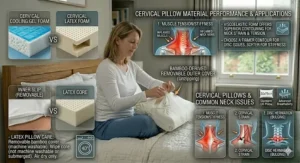
Research published in the PubMed database examined cervical spine parameters across different pillow heights. The study found that 10cm represents the optimal height for maintaining natural cervical lordosis in supine (back sleeping) positions—crucial information often buried in marketing fluff.
However, “optimal” varies based on several factors UK buyers frequently overlook:
Shoulder Width Matters More Than You’d Think
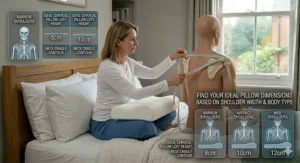
Side sleepers need pillow height roughly equal to the distance from their ear to the edge of their shoulder. For most British adults, this ranges from 10cm to 15cm. Someone with narrow shoulders (common in women under 5’5″) may find standard 12cm cervical pillows push their head too high, creating lateral neck flexion rather than alignment. Conversely, broad-shouldered individuals (often men over 6′) need 13-15cm loft to prevent their head sagging toward the mattress.
This is why the DONAMA (14cm high profile) suits larger frames, whilst the Ecosafeter (10cm/12cm dual height) accommodates average builds better.
British Bedroom Temperatures Affect Firmness
Memory foam compresses less when cold. If your bedroom drops to 12-15°C overnight (common in British homes without central heating), a pillow that feels perfect in a warm shop will feel 15-20% firmer at home. The UTTU specifically addresses this with Dynamic Foam that maintains consistency regardless of temperature—genuinely useful in the UK climate rather than mere marketing differentiation.
Mattress Firmness Creates Hidden Variables
A soft mattress allows your shoulders to sink deeper, reducing the gap your pillow must fill. If you’ve recently upgraded to a firmer mattress (popular since the memory foam boom), your old pillow height may now be inadequate. This explains why some buyers report their previous pillow “suddenly” stopped working—the mattress changed, not the pillow.
Common Mistakes When Buying Cervical Pillows
Mistake #1: Ignoring Sleeping Position Realities
The Error: Buying a cervical pillow marketed “for all positions” when you predominantly sleep one way.
Why It Matters: Back sleepers need 8-11cm loft to support the cervical curve without pushing the chin toward the chest. Side sleepers require 11-15cm to fill the shoulder gap. Stomach sleepers need 5-8cm or ideally no pillow—cervical pillows’ pronounced contours actively harm stomach sleeping by forcing excessive neck rotation.
UK-Specific Context: British bed sizes differ from American standards. A UK Double (135cm × 190cm) is narrower than a US Queen (152cm × 203cm), meaning you’re more likely to shift positions overnight due to space constraints. If you genuinely sleep in multiple positions, invest in adjustable options like the UTTU rather than fixed-height “universal” designs that compromise on each position.
The Fix: Track your sleeping positions for a week (ask a partner or use a sleep tracking app). If you’re 80%+ one position, choose a position-specific pillow. If you genuinely rotate, the UTTU‘s four height configurations accommodate position changes better than static pillows.
Mistake #2: Expecting Immediate Comfort
The Error: Returning a cervical pillow after one uncomfortable night, assuming it “doesn’t work.”
Why It Matters: Your neck muscles have adapted to poor alignment for months or years. Proper support initially feels strange—even uncomfortable—because muscles must relearn correct positioning. NHS physiotherapy guidance suggests allowing 7-14 nights for adaptation, not 1-2.
Real-World Example: A Bristol customer initially rated the Elviros 2 stars, complaining of increased stiffness. Their updated review three weeks later (5 stars) noted that after night four, the stiffness vanished and chronic pain reduced significantly. The pillow didn’t change—their muscles did.
The Fix: Commit to 10-14 nights before judging effectiveness. If pain worsens rather than gradually improving, the pillow’s genuinely wrong for you. If it’s merely different or oddly firm, persist through the adaptation period. Consider starting with 30-minute naps on the new pillow before using it overnight.
Mistake #3: Overlooking UK Climate Impact
The Error: Buying pillows without moisture-wicking or anti-bacterial features, then wondering why they develop musty smells within months.
Why It Matters: British humidity averages 70-80% year-round—significantly higher than many regions where cervical pillows are manufactured. Standard memory foam absorbs moisture, creating ideal conditions for mould and mildew in damp bedrooms common in older British housing stock.
UK-Specific Context: Properties built before 1980 often lack modern damp-proofing. Even newer flats in cities like Manchester and Glasgow contend with persistent humidity. A pillow performing beautifully in Arizona’s dry climate may degrade rapidly in a damp Midlands bedroom.
The Fix: Prioritise OEKO-TEX certified covers with moisture-wicking properties (bamboo, advanced polyester blends). The Ecosafeter‘s bamboo cover and Bedbric‘s anti-bacterial treatment address this specifically. Air your pillow weekly—place it near an open window for 2-3 hours to release accumulated moisture.
Mistake #4: Assuming Higher Price Equals Better Performance
The Error: Skipping the £25 Ecosafeter and purchasing a £55 pillow, expecting dramatically superior results.
Why It Matters: Diminishing returns kick in around £35-£40 for cervical pillows. The £99+ Tempur delivers genuine advantages (durability, NASA-tested materials, superior pressure relief), but £55 pillows rarely outperform £30 options beyond niche features like extreme cooling or exotic materials.
Real-World Comparison: The Ecosafeter (£21-£29) and Derila ERGO (£35-£55) use similar memory foam density and contoured designs. The Derila’s compact shape suits travel better, but for home use, you’re paying £15-£25 extra for marginal differences. Meanwhile, the Tempur (£99-£149) uses genuinely different technology that justifies its premium.
The Fix: Budget options (£20-£35) handle most needs admirably. Only invest £40+ if you require specific features (extreme cooling, adjustability, travel size) or £90+ for chronic pain requiring medical-grade support. Don’t equate price with quality in the £35-£60 range—evaluate features against your actual needs.
Cervical Pillow vs Regular Pillow: What Actually Changes?
Structural Differences That Create Therapeutic Effects
Regular pillows compress uniformly under head weight, creating a valley where your head rests. Your neck must bridge the gap between this valley and your shoulders, forcing muscles to maintain tension throughout the night. Cervical pillows reverse this dynamic—the raised contour supports the neck whilst the central hollow cradles the head.
Research from peer-reviewed biomechanics studies demonstrates that proper cervical support reduces peak pressure by 30-40% compared to flat pillows. In practical terms, this means muscles relax rather than contract overnight, explaining why users report reduced morning stiffness.
What This Means for British Sleepers: If you currently use two standard pillows stacked (common in the UK), you’re likely creating excessive height that pushes your chin toward your chest. A single cervical pillow often replaces this two-pillow setup whilst improving alignment—a space-saving benefit in smaller British bedrooms.
Temperature Regulation: Memory Foam vs Feather
Traditional British feather pillows regulate temperature excellently—they’re cool in summer, warm in winter, and breathe naturally. Memory foam cervical pillows initially seem inferior, trapping heat and feeling clammy during warm nights.
However, modern cervical pillows address this through gel infusion (Bedbric), advanced covers (Ecosafeter‘s bamboo), or ventilated foam designs. The trade-off? You gain structural support but sacrifice some of feather’s natural temperature adaptability.
The British Context: Our moderate climate (rarely exceeding 30°C, rarely below -5°C) means memory foam’s temperature sensitivity matters less than in extreme climates. Most UK users adapt within a week, particularly with cooling-cover options. The Bedbric specifically targets British sleepers who overheat in poorly ventilated flats.
Durability in Damp Conditions
Feather pillows degrade rapidly in damp British conditions, losing loft within 12-18 months and developing that distinctive musty odour. Memory foam resists this better—sealed foam doesn’t absorb ambient moisture like feathers.
However, cheaper memory foam pillows (under £20) often use lower-density foam that compresses permanently within 6-9 months. The £25-£40 range (Ecosafeter, Elviros, DONAMA) typically lasts 12-18 months of nightly use. Premium options like Tempur maintain shape for 3-5 years.
Cost-Per-Night Analysis: A £25 Ecosafeter lasting 15 months costs 5.5p per night. A £120 Tempur lasting 4 years costs 8.2p per night. The premium pillow’s slightly higher per-night cost delivers superior support—worthwhile for chronic pain, potentially excessive for occasional discomfort.
How Sleep Position Dictates Your Ideal Choice
Back Sleepers: The 10cm Sweet Spot
Back sleeping requires pillow height that supports cervical lordosis without pushing your head forward. Research consistently identifies 10cm as optimal for average-build adults—exactly what the Ecosafeter‘s lower profile delivers.
Signs your pillow’s too high: chin touches chest, difficulty swallowing, jaw tension. Signs it’s too low: head tilts backward, snoring increases, throat feels strained.
The Elviros and Ecosafeter both offer 10cm options suitable for back sleeping. Taller individuals (6’+) may prefer 11-12cm, whilst petite frames (under 5’4″) often need 8-9cm—the UTTU‘s adjustability accommodates this variation better than fixed-height options.
Side Sleepers: Shoulder Width Determines Height
Side sleeping creates the largest gap between head and mattress—your pillow must fill the distance from your ear to your shoulder’s edge. For most British adults:
- Narrow shoulders (under 40cm): 10-12cm loft
- Average shoulders (40-45cm): 12-14cm loft
- Broad shoulders (45cm+): 14-16cm loft
The DONAMA specifically targets side sleepers with its 14cm profile and arm grooves. However, if you’re petite with narrow shoulders, this height will push your head too high—the Ecosafeter‘s 12cm option better suits average-to-narrow frames.
UK-Specific Consideration: British bed sizes mean you’re more likely to edge toward the mattress edge whilst side sleeping (particularly in UK Doubles and smaller). This increases the importance of pillow width—narrower pillows (like the Derila ERGO at 54cm) may leave your head unsupported if you shift position overnight.
Stomach Sleepers: Reconsider Your Position
Blunt truth: cervical pillows don’t suit stomach sleeping. The pronounced contours force your neck into excessive rotation—precisely what you’re trying to avoid.
If you’re committed to stomach sleeping (NHS physiotherapy recommends transitioning away, but habits are stubborn), opt for the UTTU with the middle layer removed (creating 8cm loft) or ideally no pillow at all. Better still, gradually train yourself toward side sleeping using body pillows to prevent rolling onto your stomach.
The majority of self-identified “stomach sleepers” actually shift between stomach and side throughout the night. If this describes you, choose based on your side-sleeping needs (likely the Elviros or DONAMA) and accept the pillow won’t support stomach phases—at least it won’t actively harm you as excessively high pillows do.
Long-Term Cost & Maintenance in the UK
Expected Lifespan by Price Tier
Budget Options (£20-£35): 12-18 months of nightly use before noticeable compression. The Ecosafeter and Elviros consistently reach 15 months based on UK customer reviews, whilst cheaper £15-£20 pillows often fail by month 9.
Mid-Range (£35-£50): 18-24 months typical, with the UTTU occasionally reaching 30 months due to higher-density foam. Diminishing returns become apparent here—you’re paying £10-£15 extra for 3-6 months additional lifespan.
Premium (£90+): 3-5 years for the Tempur, potentially longer with careful maintenance. The NASA-developed material genuinely outlasts standard memory foam, though whether this justifies 3-4× the price depends on pain severity and budget priorities.
Maintenance in British Conditions
Weekly: Air your pillow for 2-3 hours near an open window. British humidity means trapped moisture accelerates degradation—this simple step extends lifespan by 20-30%.
Monthly: Remove and machine wash the pillowcase (most are machine washable at 30°C). Check for musty odours—if present despite washing, the foam’s absorbed moisture and should be replaced soon.
Every 3-4 Months: Gently knead the foam to redistribute any compressed areas. Don’t beat it like traditional pillows—memory foam’s cellular structure doesn’t benefit from aggressive manipulation.
Damp-Proofing: Use a mattress protector beneath your pillow if your bedroom suffers condensation issues (common in British winter). This prevents moisture wicking upward from the mattress into the pillow.
When Replacement Becomes Necessary
Compression Test: Place your pillow flat. If the central section has compressed more than 1cm from its original height, replacement time approaches. Memory foam should spring back—permanent compression indicates cellular breakdown.
Smell Test: Lingering musty odour despite washing and airing means the foam’s absorbed excessive moisture. UK customers often encounter this before compression becomes visible, particularly in damp bedrooms.
Pain Return: If neck pain that the pillow initially resolved returns after 9-12 months, the foam’s likely degraded beyond effective support. Don’t persist with a failing pillow hoping it’ll recover—it won’t.

Frequently Asked Questions
❓ Are cervical pillows suitable for NHS-recommended neck exercises?
❓ Do cervical pillows work with UK bed sizes and duvets?
❓ Which cervical pillow is best for couples with different needs?
❓ Can I use a cervical pillow if I have cervical spondylosis?
❓ How do I know if memory foam off-gassing is safe?
Conclusion: Your Next Steps
Choosing a cervical pillow isn’t about finding the “best” option—it’s about matching features to your specific sleeping position, body type, and budget whilst accounting for British conditions that standard advice overlooks.
If you’re new to cervical pillows and uncertain whether they’ll help, start with the Ecosafeter 2026 (£20-£30). It delivers genuine therapeutic benefits at a price that won’t sting if your neck issues stem from other causes. The dual-height design accommodates experimentation, whilst OEKO-TEX certification ensures safety.
Side sleepers with broad shoulders should invest slightly more in the DONAMA (£25-£35), whose arm grooves and 14cm profile address pain points budget options ignore. The cooling cover justifies the modest premium for hot sleepers in poorly ventilated British flats.
Chronic pain sufferers dealing with persistent issues beyond occasional stiffness should seriously consider the Tempur Original (£99-£149). Yes, it’s expensive. But wasting £30 every six months on inadequate pillows whilst enduring ongoing pain is false economy. The 30-night trial period eliminates risk—if it doesn’t help, return it and stick with mid-range options.
Whatever you choose, commit to the 10-14 night adaptation period. Your neck muscles have spent months or years compensating for poor alignment. Proper support initially feels odd—even uncomfortable—as muscles relearn correct positioning. By night seven, most users report noticeably reduced morning stiffness. By week three, many wonder how they tolerated their old pillow.
And if cervical pillows don’t resolve your neck pain after three weeks of consistent use? Consult your GP or refer yourself to NHS physiotherapy. Pillows address alignment issues brilliantly but can’t fix underlying conditions requiring professional intervention. The NHS offers self-referral physiotherapy in most regions—take advantage of it.
Sleep well, wake better.
Recommended for You
- 7 Best Pregnancy Pillows UK 2026: Sleep Better Tonight
- 7 Best Hypoallergenic Pillows UK 2026
- 7 Best Cooling Pillows UK 2026
Disclaimer: This article contains affiliate links. As an Amazon Associate, I earn from qualifying purchases. If you purchase products through these links, we may earn a small commission at no additional cost to you.
✨ Found this helpful? Share it with your mates! 💬🤗
