
In This Article
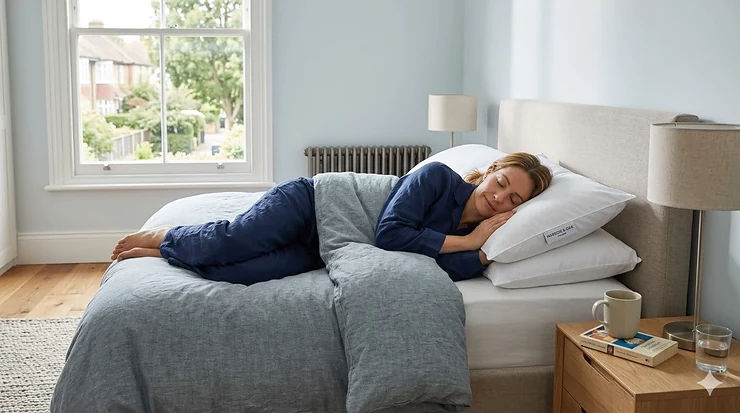
Waking up with a stiff neck or aching shoulders? You’re not alone. Over 60% of Brits prefer sleeping on their side, yet most of us are using pillows that simply weren’t designed for this position. The right pillow brands for side sleepers can transform your sleep quality overnight – literally.
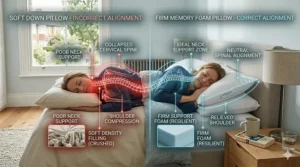
Here’s the thing: side sleeping demands a very specific type of support. Your pillow needs to fill the gap between your ear and shoulder, keeping your spine aligned in a neutral position. Too many pillows can tilt your head forward whilst too few may tilt it back, both causing unnecessary strain. Get it wrong, and you’re setting yourself up for chronic neck pain, disturbed sleep, and grumpy mornings.
I’ve spent weeks researching and analysing the top pillow brands for side sleepers available on Amazon.co.uk in 2026. From budget-friendly options under £20 to premium memory foam innovations, this guide covers everything you need to know. Whether you’re battling neck pain, looking for cooling technology, or simply want to upgrade your sleep setup, you’ll find your ideal match below.
The British pillow market has exploded with innovation lately. Brands like Emma, Panda, and Simba are pushing boundaries with adjustable designs, bamboo fibres, and orthopaedic support. Meanwhile, trusted names like Silentnight and Slumberdown continue delivering solid value for money. Let’s dive into the seven best options that actually work for side sleepers.
Quick Comparison Table: Best Pillow Brands for Side Sleepers UK
| Brand & Model | Type | Loft | Price Range | Best For | Rating |
|---|---|---|---|---|---|
| Panda Memory Foam Bamboo | Memory Foam | High (12cm) | £49.99-£69.99 | Neck pain relief | ⭐⭐⭐⭐⭐ 4.5/5 |
| Emma Original Pillow | Adjustable Foam | Medium-High | £55.00-£75.00 | Versatility | ⭐⭐⭐⭐⭐ 4.3/5 |
| Simba Hybrid Pillow | Nanocube Foam | Adjustable | £79.00-£99.00 | Customisation | ⭐⭐⭐⭐ 4.2/5 |
| Silentnight Firm Support | Hollowfibre | Medium-High | £16.99-£24.99 | Budget option | ⭐⭐⭐⭐ 4.2/5 |
| Slumberdown Super Support | Foam Core | High | £18.99-£26.99 | Value & firmness | ⭐⭐⭐⭐ 4.1/5 |
| Elviros Cervical Pillow | Contoured Foam | Dual-height | £29.99-£39.99 | Orthopaedic needs | ⭐⭐⭐⭐ 4.0/5 |
| Panda Hybrid Bamboo | CharcoCell Foam | Extra High | £69.99-£89.99 | Broad shoulders | ⭐⭐⭐⭐⭐ 4.4/5 |
💬 Just one click – help others make better buying decisions too! 😊
✨ Don’t Miss These Exclusive Deals!
🔍 Take your sleep quality to the next level with these carefully selected products. Click on any highlighted item to check current pricing and availability on Amazon.co.uk. These pillows will help you create authentic pain-free mornings your body will love!
Top 7 Pillow Brands for Side Sleepers: Expert Analysis
1. Panda Memory Foam Bamboo Pillow – Best Overall for Side Sleepers
If there’s one pillow that consistently delivers for UK side sleepers, it’s the Panda Memory Foam Bamboo Pillow. This orthopaedically approved wonder has earned its reputation through sheer performance rather than marketing hype.
Key Specifications:
- Memory foam core with bamboo-derived viscose cover
- Dimensions: 60cm x 40cm (standard UK size)
- Medium-firm density (ideal for side sleeping)
Price: £49.99-£69.99 (depending on size and offers)
The beauty of the Panda Memory Foam Bamboo Pillow lies in its medium-firm density – not too hard like sleeping on a brick, but supportive enough to maintain proper cervical alignment throughout the night. UK customers consistently praise how the bamboo cover stays cool, even during summer heatwaves.
Customer Feedback: With over 29,000 Amazon.co.uk reviews averaging 4.5 stars, UK buyers particularly appreciate the hypoallergenic properties and how it maintains its shape after months of use. One Glasgow reviewer noted: “My chronic neck pain disappeared within two weeks of switching to Panda.”
✅ Pros:
- Exceptional neck support for side sleepers
- Bamboo cover stays remarkably cool
- Hypoallergenic and dust mite resistant
❌ Cons:
- Takes 48 hours to fully expand
- Slight initial odour (dissipates quickly)

2. Emma Original Pillow – Best Adjustable Option
The Emma Original Pillow brings German engineering precision to British bedrooms. What sets this pillow apart is its clever three-layer design that you can customise to your exact preference.
Key Specifications:
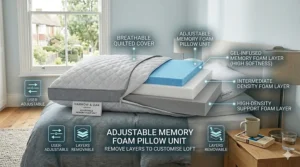
- Three removable foam layers (gel foam, visco memory foam, HRX foam)
- Total height: 12cm when all layers used
- Dimensions: 70cm x 40cm
Price: £55.00-£75.00
Side sleepers typically use all three layers for optimal support, giving you that full 12cm loft needed to fill the shoulder gap. One side features firm gel foam whilst the other offers softer HRX foam – simply flip it to match your firmness preference. The open-pored Airgocell foam ensures excellent temperature regulation, addressing one of the biggest complaints about memory foam pillows.
Customer Feedback: Amazon.co.uk reviews average 4.3 stars, with side sleepers praising the adaptable design. A Manchester buyer commented: “I can finally adjust my pillow without folding it awkwardly or stacking two together. Game-changer for my shoulder pain.”
✅ Pros:
- Highly customisable height and firmness
- Excellent temperature regulation
- Machine-washable covers at 60°C
❌ Cons:
- Layers can occasionally shift during sleep
- Takes 24 hours to fully expand
3. Simba Hybrid Pillow – Best Premium Choice
For those willing to invest in their sleep, the Simba Hybrid Pillow represents the pinnacle of British pillow innovation. This premium option features hundreds of individual memory foam nanocubes that you can add or remove to create your perfect sleeping surface.
Key Specifications:
- 640g of memory foam nanocubes in polyester casing
- Mineral-enriched Aerelle top layer for temperature regulation
- Hypoallergenic base layer
Price: £79.00-£99.00
The Simba Hybrid Pillow delivers a down-like softness with memory foam support – quite a feat of engineering. The nanocubes respond independently to your head movements throughout the night, providing consistent support in any position. Side sleepers particularly benefit from the customisable loft, with most finding the optimal setup uses all provided nanocubes for maximum height.
Customer Feedback: UK reviews highlight the impressive cooling performance. A Birmingham resident noted: “Even during the 2025 heatwave, this pillow kept my head cool. No more flipping to find the cold side.”
✅ Pros:
- Exceptional temperature regulation with Stratos technology
- Fully customisable support level
- Down-like feel without allergens
❌ Cons:
- Premium price point
- Nanocubes can shift slightly overnight
4. Silentnight Firm Support Pillow – Best Budget Option
Don’t let the budget-friendly price fool you – the Silentnight Firm Support Pillow punches well above its weight class. As the UK’s most trusted sleep brand with over 70 years’ experience, Silentnight knows a thing or two about creating quality bedding.
Key Specifications:
- Fibre core centre surrounded by bouncy hollowfibre
- Soft-touch polycotton cover
- Pack of 2 pillows
Price: £16.99-£24.99 for 2-pack
The clever design features a firm fibre core at the centre, surrounded by deep-filled bouncy fibres. This creates that perfect balance – firm enough to support your neck and head, yet soft enough for facial comfort. Proper pillow support helps maintain the natural curve of your neck during sleep, which is essential for side sleepers.
Customer Feedback: With over 5,000 Amazon.co.uk reviews at 4.2 stars, UK buyers consistently praise the value for money. A Leeds reviewer shared: “I was sceptical at this price point, but these Silentnight Firm Support Pillows have lasted 18 months without going flat. My neck pain has significantly reduced.”
✅ Pros:
- Outstanding value (2 pillows for under £25)
- UK-manufactured quality
- Machine washable with 2-year guarantee
❌ Cons:
- Requires occasional fluffing to maintain loft
- Not ideal for very broad-shouldered individuals
5. Slumberdown Super Support Pillow – Best Foam Core Design
The Slumberdown Super Support Pillow takes a slightly different approach with its unique foam block core. This British brand has been crafting bedding for over 100 years, and their expertise shows in this cleverly engineered pillow.
Key Specifications:
- Unique firm foam block core
- Surrounded by soft fluffy fibres
- Dimensions: 48cm x 74cm (UK standard)
Price: £18.99-£26.99 for 2-pack
What makes the Slumberdown Super Support Pillow special is that foam block core. It provides consistent support throughout the night without collapsing under pressure – a common complaint with standard hollowfibre pillows. The soft outer fibres add comfort whilst the core does the heavy lifting of keeping your spine aligned.
Customer Feedback: Over 41,000 Amazon.co.uk reviews averaging 4.1 stars demonstrate its popularity. UK customers from Edinburgh to Southampton report reduced neck and shoulder pain. One Cornwall buyer mentioned: “The foam core prevents that annoying pillow-flattening that used to wake me up at 3am.”
✅ Pros:
- Excellent neck and shoulder pain relief
- UK-manufactured with eco-friendly recycled materials
- Non-allergenic and machine washable at 40°C
❌ Cons:
- Foam block cannot be removed (fixed firmness)
- May feel too firm for some during first week
6. Elviros Cervical Memory Foam Pillow – Best Orthopaedic Design
If chronic neck pain has been your unwelcome bedfellow, the Elviros Cervical Memory Foam Pillow deserves serious consideration. This orthopaedic pillow features an innovative butterfly shape that’s specifically engineered for side sleepers with neck issues.
Key Specifications:
- Ergonomic butterfly shape with arm cutouts
- Dual-height design: 13cm (high side) and 11.5cm (low side)
- Gel-infused memory foam for cooling
Price: £29.99-£39.99
The butterfly shape with side cutouts gives your top arm somewhere comfortable to rest whilst preventing shoulder hunching – a common problem for side sleepers. The dual-height design lets you choose between the higher 13cm side (with two supportive horns) or the lower 11.5cm contour, depending on your shoulder width and preference.
Customer Feedback: UK buyers report significant pain reduction within the first fortnight. The cooling cover performs admirably, with air circulation keeping things fresh through the night. A Bristol resident shared: “I was sceptical about the odd shape, but my physiotherapist actually recommended it. My morning neck stiffness is gone.”
✅ Pros:
- Specifically designed for neck pain sufferers
- Arm cutouts prevent shoulder compression
- Removable, washable cooling cover
❌ Cons:
- Unusual shape takes getting used to
- Not suitable for combination sleepers
7. Panda Hybrid Bamboo Pillow – Best for Broad Shoulders
If you’ve got broader shoulders or found standard pillows too low, the Panda Hybrid Bamboo Pillow provides that extra elevation you’ve been searching for. This is essentially the big brother of Panda’s original pillow, designed specifically for larger frames.
Key Specifications:
- Charcoal-infused memory foam core
- Micropods throughout for enhanced airflow
- Extra-high loft design
Price: £69.99-£89.99
The Panda Hybrid Bamboo Pillow doesn’t mess about. This heavyweight champion features charcoal-infused memory foam that actively absorbs excess body heat whilst the micropods throughout promote airflow. The result? A pillow that stays cool even when you’re naturally warm. The extra height makes it perfect for side sleepers with broader shoulders who need more loft to maintain proper spinal alignment.
Customer Feedback: UK buyers with larger builds consistently praise the generous loft. A Cardiff rugby player commented: “Finally, a pillow that actually supports my shoulders properly. Most pillows feel like pancakes for someone my size.”
✅ Pros:
- Exceptional height for broad-shouldered individuals
- Active cooling technology with charcoal infusion
- 30-night trial period with free returns
❌ Cons:
- Premium price point
- May be too high for smaller frames
What Are Pillow Brands for Side Sleepers?
Pillow brands for side sleepers are manufacturers that specialise in creating pillows with specific characteristics essential for lateral sleeping positions. These brands focus on designing products with adequate loft (height), firm support, and materials that maintain proper spinal alignment when you’re lying on your side. Unlike generic pillows, side-sleeper-specific options fill the gap between your ear and shoulder, preventing your head from tilting downward or being pushed upward – both of which can cause neck strain and poor sleep quality.
The best pillow brands for side sleepers incorporate orthopaedic principles into their designs, often using memory foam, latex, or innovative fibre technologies that provide consistent support throughout the night. Brands like Panda, Emma, and Simba have invested heavily in research to understand the biomechanics of side sleeping, whilst traditional UK manufacturers like Silentnight and Slumberdown have adapted their time-tested designs with modern materials.
Why Side Sleepers Need Specialised Pillows
The Anatomy of Side Sleeping
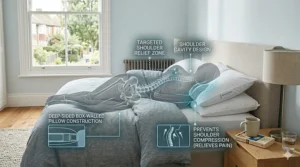
When you sleep on your side, your body weight concentrates on your shoulder and hip, creating pressure points. Your head sits several centimetres above the mattress – roughly 10-15cm for most adults – creating a significant gap that must be filled. Without adequate support, your neck will be forced into an unnatural angle, either tilted upward if the pillow is too thin or bent downward if it’s too thick.
The NHS recommends considering the number and type of pillows you use, as too many may tilt your head forward and too few may tilt it back. Side sleeping is the most common sleep position and is often the best choice for relieving back pain and reducing sleep apnea symptoms. However, these benefits only materialise when you maintain proper spinal alignment. Think of your spine as a straight line when viewed from behind – that’s what you’re aiming for.
Common Problems with Generic Pillows
Standard pillows simply weren’t designed with side sleeping in mind. They’re typically too soft, too low, or both. This forces side sleepers into uncomfortable compensations:
Shoulder pain and compression: When your pillow lacks adequate height, your shoulder bears excessive weight, leading to morning stiffness and potential nerve compression. Over time, this can contribute to frozen shoulder syndrome.
Neck misalignment: A pillow that’s too thin leaves your neck angled downward, straining the cervical muscles. Conversely, one that’s too thick pushes your head upward, creating tension on the opposite side.
Arm numbness: Many side sleepers tuck their arm under their pillow to compensate for inadequate height. This compresses nerves and restricts blood flow, causing that unpleasant “pins and needles” sensation upon waking.
Disrupted sleep cycles: When your body isn’t properly supported, you unconsciously shift positions throughout the night, fragmenting your sleep cycles and preventing deep, restorative rest.
The Science Behind Support
Research in biomedical engineering has demonstrated that proper pillow support for side sleepers should maintain the cervical spine (neck) in a neutral position aligned with the thoracic spine (upper back). A proper sleep system can affect spine support in neutral position, with studies showing significant differences in spinal alignment between different sleep surfaces. This typically requires a pillow loft of 10-15cm (4-6 inches), depending on shoulder width and mattress firmness.
The pillow must also provide adequate resistance to compression. Memory foam excels here, as it moulds to your head’s contours whilst maintaining consistent support. However, quality hollowfibre and latex options can also work well when properly designed with supportive cores.
How to Choose Pillow Brands for Side Sleepers
Step 1: Assess Your Shoulder Width 📏
Your shoulder width directly influences the pillow height you need. Measure from the edge of one shoulder to the edge of the other when standing naturally.
- Narrow shoulders (under 40cm): Look for medium-loft pillows (10-12cm)
- Average shoulders (40-48cm): Standard high-loft pillows (12-14cm) work well
- Broad shoulders (over 48cm): Seek extra-high loft options (14-16cm+)
Brands like Panda and Simba offer adjustable designs that accommodate various shoulder widths, making them excellent choices if you’re uncertain.
Step 2: Consider Your Mattress Firmness 🛏️
Your pillow and mattress work as a system. A softer mattress allows your shoulders to sink deeper, requiring less pillow loft. Conversely, a firmer mattress keeps your shoulders higher, necessitating a taller pillow.
- Soft mattress (memory foam, pillow-top): Reduce pillow height by 2-3cm
- Medium mattress (hybrid, pocket spring): Standard recommended heights
- Firm mattress (orthopaedic, latex): Increase pillow height by 2-3cm
Step 3: Evaluate Material Preferences 🧪
Different materials offer distinct benefits for side sleepers:
Memory Foam: Moulds to your head and neck contours, providing personalised support. Brands like Emma and Panda excel here. Ideal for neck pain sufferers but can retain heat unless designed with cooling technology.
Latex: Naturally cooling and responsive, maintaining support whilst offering some bounce. Excellent durability but typically comes at premium prices.
Hollowfibre: Traditional, breathable, and budget-friendly. Brands like Silentnight and Slumberdown create quality hollowfibre pillows with supportive cores. Requires more frequent replacement than foam options.
Hybrid Designs: Combine multiple materials for balanced performance. The Simba Hybrid nanocube system exemplifies this approach, offering customisation without compromising support.
Step 4: Check for Adjustability Features 🔧
Adjustable pillows provide flexibility as your needs change. Look for:
- Removable layers: Emma’s three-layer system lets you fine-tune height
- Adjustable fill: Simba’s nanocubes can be added or removed
- Dual-sided firmness: Some pillows offer different firmness levels on each side
Step 5: Verify Cooling Technology ❄️
Side sleeping concentrates body heat between your head and pillow. Quality cooling features include:
- Bamboo-derived covers: Naturally moisture-wicking (Panda excels here)
- Gel-infused foam: Actively dissipates heat
- Phase-change materials: Regulate temperature throughout the night
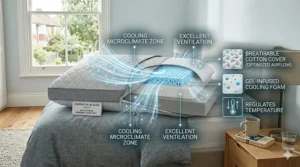
- Open-cell foam structures: Enhance airflow (Emma’s Airgocell technology)
Step 6: Look for Quality Certifications ✅
Reputable pillow brands for side sleepers should carry certifications demonstrating safety and quality:
OEKO-TEX® Standard 100: Ensures textiles are free from harmful chemicals – crucial for products touching your face nightly. Most major UK brands including Silentnight and Slumberdown carry this certification.
CertiPUR® certification: Validates foam quality and chemical safety in memory foam products.
Allergy UK approval: Provides additional assurance for sensitive sleepers, particularly important given the UK’s high prevalence of dust mite allergies.
Step 7: Read UK Customer Reviews 📱
British climate and preferences differ from other markets. Focus on Amazon.co.uk reviews from verified UK purchasers. Pay particular attention to:
- Loft retention: Does the pillow maintain its height after months of use?
- Temperature performance: How does it perform during UK summer?
- Durability: Are customers still satisfied after 6-12 months?
- Shipping and returns: UK-specific delivery experiences
Look for patterns in reviews rather than isolated complaints. A pillow with 4.3 stars from 10,000+ UK reviews provides more reliable insight than 5.0 stars from just 50 reviews.
Step 8: Consider Trial Periods 🔄
Some premium brands offer 30-night to 100-night trials. These risk-free trials allow you to test the pillow in your actual sleep environment. If a brand offers this, take advantage – pillows are highly personal, and what works for others may not suit you.
Panda, Emma, and several other brands featured in this guide provide trial periods. During the trial, give yourself at least a week to adjust, as your body needs time to adapt to proper spinal alignment.
Comparison: Side Sleeper Pillows vs Traditional Pillows
| Feature | Side Sleeper Pillows | Traditional Pillows |
|---|---|---|
| Loft (Height) | 10-16cm (high) | 6-10cm (medium) |
| Firmness | Medium-firm to firm | Soft to medium |
| Shape | Rectangular, contoured, or butterfly | Standard rectangular |
| Support Duration | Maintains height all night | Often compresses overnight |
| Spinal Alignment | Designed for neutral spine | Generic support |
| Price Range | £16.99-£99.00+ | £8.00-£40.00 |
| Longevity | 2-5 years | 6-18 months |
| Materials | Memory foam, latex, engineered fibres | Feather, down, basic polyester |
Top UK Pillow Manufacturers: Brand Comparison
Understanding the major players in the UK pillow market helps you make informed decisions. Here’s how the top pillow manufacturers stack up:
British Heritage Brands 🇬🇧
Silentnight has dominated the UK sleep market for over 70 years, earning its reputation as Britain’s most trusted sleep brand. Their pillows combine traditional craftsmanship with modern materials, offering exceptional value whilst maintaining quality standards. Most Silentnight products are UK-manufactured, supporting local industry.
Slumberdown brings over a century of experience to British bedrooms. Their focus on sustainable materials and eco-friendly manufacturing resonates with environmentally conscious consumers. The brand’s commitment to using recycled materials in their foam cores demonstrates corporate responsibility without compromising performance.
European Innovators 🌍
Emma Sleep, founded in Germany in 2015, has rapidly expanded across Europe with its engineering-focused approach. Their three-layer adjustable system represents German precision applied to sleep science. Emma’s extensive testing and generous trial periods demonstrate confidence in their products.
Panda London emerged as a challenger brand focusing on sustainable bamboo-derived materials. Their hypoallergenic, antibacterial pillows appeal to eco-conscious consumers and allergy sufferers alike. Despite being a relatively young company, Panda has earned numerous awards and built a loyal following among UK side sleepers.
Simba Sleep positions itself at the premium end of the market, targeting consumers willing to invest in cutting-edge sleep technology. Their nanocube system and Stratos cooling technology showcase ongoing innovation. Simba’s strong marketing presence and partnership with British retailers has cemented their premium positioning.
Specialist Orthopaedic Brands 🏥
Elviros specialises in cervical support pillows designed with medical principles. Their butterfly-shaped designs cater specifically to chronic pain sufferers, bridging the gap between standard pillows and medical-grade orthopaedic options. Whilst less well-known than mainstream brands, Elviros has built credibility through positive outcomes reported by users with neck issues.
Emma Pillow vs Simba Pillow Side Sleeper: Direct Comparison
Two of the UK’s most popular pillow brands for side sleepers deserve a detailed head-to-head analysis. Both Emma and Simba represent premium European design, but they take markedly different approaches.
Design Philosophy
The Emma Original Pillow uses a layered approach with three distinct foam types: gel foam (top), visco memory foam (middle), and HRX foam (bottom). You physically remove or rearrange layers to customise height and firmness. This provides discrete adjustment options – you use one, two, or all three layers.
The Simba Hybrid Pillow employs hundreds of individual memory foam nanocubes contained within a polyester casing. Rather than removing whole layers, you add or subtract nanocubes to fine-tune support gradually. This allows for more granular customisation but requires more experimentation.
Support and Comfort for Side Sleepers
For side sleeping specifically, both pillows perform admirably when properly configured. The Emma pillow with all three layers provides approximately 12cm of loft – adequate for most side sleepers with average shoulder width. The firm gel foam side offers excellent support, whilst the softer HRX side provides a gentler feel if you prefer less resistance.
The Simba pillow’s nanocubes create a unique sensation – simultaneously firm and soft, much like a down pillow but with memory foam support. However, the nanocubes can shift slightly during the night, occasionally requiring readjustment. Some UK reviewers note waking to find their Simba pillow feeling different than when they fell asleep.
Temperature Regulation
Both brands excel at cooling, though through different mechanisms. Emma’s open-pored Airgocell foam enhances breathability, allowing heat to dissipate naturally. The gel foam layer also helps draw heat away from your head.
Simba’s mineral-enriched Aerelle layer actively regulates temperature using phase-change technology. Multiple UK reviewers specifically praise the Simba’s cooling performance, with several noting it stays noticeably cooler than the Emma during summer months.
Price and Value
The Emma Original Pillow typically retails for £55.00-£75.00, positioning it as a premium but accessible option. It frequently goes on sale, particularly during seasonal promotions.
The Simba Hybrid Pillow commands £79.00-£99.00, placing it at the higher end of the consumer pillow market. Whilst more expensive, the superior cooling technology and unique customisation may justify the premium for some buyers.
Verdict for Side Sleepers
If you value simplicity and prefer discrete adjustment options, the Emma pillow offers excellent performance at a slightly lower price point. Its three-layer system is intuitive and mess-free.
If you’re willing to invest more for cutting-edge cooling technology and ultra-fine customisation, the Simba justifies its premium positioning. The nanocube system truly differentiates it from other pillows on the market.
Both represent solid investments for side sleepers, with strong UK customer satisfaction ratings and generous trial periods allowing risk-free testing.
Panda Pillow Side Sleeper Review: In-Depth Analysis
The Panda Memory Foam Bamboo Pillow deserves special attention as one of the best-selling side sleeper pillows on Amazon.co.uk. With over 29,000 reviews and consistent 4.5-star ratings, it’s clearly resonating with UK consumers. But does it live up to the hype?
Construction and Materials
Panda uses CertiPUR®-certified memory foam infused with their proprietary Hydro-Foam™ technology. This third-generation foam improves breathability compared to traditional memory foam whilst maintaining the contouring and support that makes memory foam popular. The bamboo-derived viscose cover isn’t just marketing fluff – bamboo fabric genuinely wicks moisture more effectively than cotton, helping regulate temperature.
The pillow arrives compressed in a box, taking 24-48 hours to fully expand to its 12cm loft. This height suits most side sleepers with average to broad shoulders. However, smaller-framed individuals may find it slightly too high, though the foam does compress somewhat under weight.
Performance for Side Sleeping
The medium-firm density hits the sweet spot for side sleeping support. It’s firm enough to prevent your head from sinking excessively, yet forgiving enough for facial comfort. Proper side sleeping support helps maintain the natural curves of the spine, promoting better overall sleep quality, and the Panda delivers on this promise.
UK reviewers consistently praise the neck support, with many reporting reduced morning stiffness and fewer headaches. One recurring theme in reviews: it takes 3-5 nights to adjust if you’re switching from a softer, traditional pillow. Your neck muscles need time to adapt to proper alignment.
Temperature and Cooling
The bamboo cover performs admirably in UK conditions. Multiple reviewers specifically mention staying cool during the 2025 summer heatwave. However, it’s worth noting that memory foam inherently retains more heat than latex or hollowfibre. Whilst Panda’s Hydro-Foam™ technology mitigates this, true hot sleepers might still prefer the Simba’s active cooling or a traditional hollowfibre option.
Durability and Longevity
Several long-term UK reviewers report excellent loft retention after 18-24 months of use – impressive for a memory foam pillow at this price point. The bamboo cover washes well at 30°C, maintaining its softness through multiple cycles. The foam itself shouldn’t be washed but can be spot-cleaned if necessary.
Value Proposition
At £49.99-£69.99, the Panda Memory Foam Bamboo Pillow occupies the mid-premium segment. It’s significantly cheaper than the Simba whilst offering comparable support for side sleepers. The generous 30-night trial period and 10-year guarantee demonstrate the brand’s confidence in their product.
For most UK side sleepers seeking a balanced combination of support, cooling, and value, the Panda represents an excellent choice. It’s particularly well-suited to those prioritising eco-friendly materials and hypoallergenic properties.
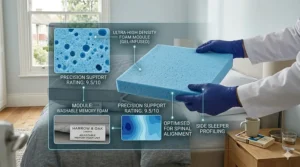
Silentnight Pillow for Side Sleeping: Budget Excellence
Not everyone can or wants to spend £50-100 on a pillow. The Silentnight Firm Support Pillow proves you don’t need to break the bank for quality side sleeping support.
The Silentnight Advantage
As the UK’s number one sleep superbrand with over 70 years’ heritage, Silentnight brings unmatched experience to their product development. Their firm support pillow features a clever dual-layer construction: a supportive fibre core surrounded by bouncy hollowfibre fill. This creates a pillow that’s firm where it matters (supporting your neck) yet soft where comfort counts (against your face).
Real-World Performance
With over 5,000 Amazon.co.uk reviews at 4.2 stars, the numbers speak volumes. UK buyers consistently highlight three key strengths:
Support duration: Unlike cheap pillows that flatten within weeks, the Silentnight maintains its loft for 12-18 months with proper care. The internal fibre core prevents the dreaded “pillow pancake” effect.
Value for money: At £16.99-£24.99 for a 2-pack, you’re paying approximately £8-12 per pillow. That’s exceptional value considering the quality and UK manufacturing.
Ease of maintenance: Fully machine washable and tumble-dryable, these pillows tolerate the regular cleaning essential for good sleep hygiene.
Limitations to Consider
No pillow is perfect at this price point. The Silentnight Firm Support has some limitations side sleepers should consider:
The hollowfibre fill requires occasional fluffing to redistribute and maintain optimal loft. Budget 30 seconds each morning to give them a good shake and plump.
Individuals with very broad shoulders or those sleeping on particularly firm mattresses may find the loft slightly insufficient. Consider stacking two pillows or exploring higher-loft options like the Panda or Slumberdown Super Support.
The pillows work best when fresh but start losing some support after 12-18 months. However, at this price point, replacing them annually or biannually remains remarkably affordable.
Who Should Choose Silentnight?
The Silentnight Firm Support Pillow excels for:
- Budget-conscious side sleepers seeking proven quality
- Those wanting to try proper side sleeping support without major investment
- Households needing multiple pillows (guest rooms, children)
- People who prefer traditional hollowfibre to memory foam
If you’re uncertain whether investing in a premium pillow will make a difference, start with Silentnight. The modest outlay provides genuine side sleeping support whilst you assess whether upgrading to memory foam or latex is worthwhile.
Top Pillow Manufacturers UK: Market Leaders
The UK pillow market has evolved significantly, with several manufacturers establishing themselves as trusted leaders. Understanding these brands helps you navigate the options available.
British Manufacturing Excellence
Silentnight dominates the UK market with approximately 30% market share. Based in Barnoldswick, Lancashire, they maintain UK manufacturing for many products, supporting British jobs and ensuring quality control. Their range spans budget hollowfibre options through to premium memory foam designs, providing something for every budget.
Slumberdown, owned by Downland Bedding, brings over 100 years of combined expertise. They’ve pioneered sustainable practices in UK pillow manufacturing, incorporating recycled materials without compromising performance. Their partnership with UK retailers ensures wide availability and competitive pricing.
European Design Innovators
The past decade has seen European direct-to-consumer brands disrupt the traditional UK pillow market:
Emma Sleep leveraged their success in the German mattress market to enter UK pillows. Their data-driven approach – testing prototypes with thousands of sleepers – informs product development. This scientific methodology resonates with UK consumers seeking evidence-based sleep solutions.
Panda London carved their niche through sustainable luxury. By positioning bamboo-derived materials as both eco-friendly and performance-enhancing, they’ve attracted environmentally conscious millennials and Gen-Z consumers. Their strong social media presence and influencer partnerships have driven brand awareness among younger UK buyers.
Simba Sleep partnered with the Sleep to Live Institute, lending scientific credibility to their designs. Their premium positioning targets consumers viewing sleep as a health investment rather than discretionary spending. Simba’s partnerships with John Lewis and other respected UK retailers have reinforced their quality positioning.
Specialist and Emerging Brands
Elviros focuses specifically on orthopaedic and cervical support, targeting the segment of side sleepers with chronic pain issues. Whilst they lack the brand recognition of Silentnight or Emma, their specialisation appeals to consumers for whom standard pillows have failed.
Tempur and Sealy, traditionally mattress specialists, have extended into the pillow market. Their products typically sit at the luxury end, leveraging brand equity built in mattresses. However, they face stiff competition from pillow-specialist brands offering similar technology at lower prices.
Luxury Pillow Brands Comparison
For those seeking premium sleep experiences, the luxury pillow segment offers advanced materials and technologies. However, the price premium varies considerably in its justification.
Defining Luxury in Pillows
Luxury pillows typically exceed £80 and incorporate premium materials, advanced manufacturing, or specialist designs. Key differentiators include:
- Materials: Natural latex, premium memory foam, or rare natural fibres
- Technology: Phase-change cooling, copper-infusion, or smart sensors
- Craftsmanship: Hand-finished details or specialised construction
- Provenance: Made in the UK or Europe under strict quality controls
Premium Options Worth Considering
Simba Hybrid Pillow (£79-£99): Justifies its premium through genuinely innovative nanocube technology and exceptional cooling performance. UK reviewers consistently rate it among the best for temperature regulation.
Tempur Original Pillow (£90-£140): Uses proprietary TEMPUR® material developed from NASA research. Extremely durable, with some owners reporting 5+ years of consistent performance. However, the firmness doesn’t suit everyone, and the price represents a significant investment.
Panda Hybrid Bamboo (£69-£89): Positioned at the accessible end of premium, offering charcoal-infused memory foam and extra height. Excellent value in the luxury segment, particularly for broad-shouldered side sleepers.
When Luxury Isn’t Worth It
Not all expensive pillows justify their premiums. Be sceptical of:
Marketing over innovation: Some brands command high prices through luxury positioning rather than genuinely superior performance. Compare specifications and read UK reviews carefully.
Unnecessary features: “Smart” pillows with sensors and apps often cost £150+ but provide minimal practical benefit over well-designed traditional pillows.
Premium natural materials: Whilst down and feather pillows can exceed £100, they’re rarely optimal for side sleepers needing firm support. You’re paying for luxury materials that don’t address your specific needs.
The Sweet Spot for Side Sleepers
For most UK side sleepers, the £50-80 range delivers optimal value. Brands like Emma, Panda, and Simba’s entry models provide advanced materials and proven performance without excessive premiums for luxury positioning.
Pillow Brand Reviews: What UK Customers Really Think
Aggregating thousands of UK customer reviews reveals consistent patterns in satisfaction and complaints across brands. This real-world feedback cuts through marketing claims to show actual performance.
Most Praised Attributes
Support and pain relief: Across all brands, the most common praise centres on reduced neck and shoulder pain. Buyers switching from standard pillows to side-sleeper-specific options report dramatic improvements, often within the first week.
Loft retention: UK customers particularly value pillows maintaining their height. Brands like Panda and Emma receive consistent praise for retaining support after 12+ months, whilst cheaper alternatives often disappoint by flattening quickly.
Cooling performance: Given the UK’s variable climate, temperature regulation matters greatly. Bamboo-covered options (Panda) and those with active cooling (Simba) earn frequent mentions in positive reviews, especially from summer 2025 heatwave survivors.
Common Complaints
Initial odour: Memory foam pillows often arrive with a chemical smell. Whilst this typically dissipates within 24-48 hours, some sensitive individuals find it bothersome. Emma and Panda both receive occasional mentions of this, though most reviewers note it resolves quickly.
Adjustment period: Switching to proper spinal alignment feels strange initially. Some reviewers mistakenly interpret this as discomfort and return pillows prematurely. Brands could better communicate the 5-7 night adjustment period.
Price confusion: Several brands use frequent sales and promotional pricing, creating uncertainty about “real” prices. Customers report frustration seeing pillows at £80 one week and £55 the next.
Availability and stock: Popular models from Emma, Panda, and Simba periodically sell out, particularly during sales events. This frustrates customers ready to purchase.
Brand-Specific Patterns
Silentnight and Slumberdown: Reviews skew toward value appreciation. Customers buying these brands typically compare them to other budget options, rating them excellent within their price category. Complaints usually centre on expectations set by premium brands rather than performance failures.
Emma and Panda: Mixed experiences with customisation features. Some reviewers love the adjustability; others find removing/adding foam messy or unnecessary. The layered design polarises opinion.
Simba: Higher expectations due to premium pricing lead to harsher criticism when the pillow doesn’t perform perfectly. Reviews are often polarised – people either love the nanocube system or find it gimmicky.
Sleep Position Impact: Why Side Sleeping Matters
Understanding why side sleeping is so popular helps explain the demand for specialised pillows. Side sleeping is the most common sleep position, with research showing more than 50% of people lie on their side during sleep.
Health Benefits of Side Sleeping
Side sleeping offers several physiological advantages:
Reduced sleep apnoea and snoring: The NHS notes that sleeping on your side can help with obstructive sleep apnoea, as positioning yourself on your side or stomach can help the airways stay open to reduce snoring and alleviate mild apnoea.
Improved digestion: Sleeping on your left side specifically aids digestion and reduces acid reflux. The stomach sits on the left side of your abdomen, so this position uses gravity to promote digestive flow.
Better brain waste clearance: Research from Johns Hopkins Medicine suggests that side sleeping may help the brain clear waste products more efficiently during sleep, potentially reducing risk of neurological conditions.
Pregnancy comfort: Side sleeping becomes essential during pregnancy, particularly on the left side, as it improves circulation to the baby and reduces pressure on the liver.
Challenges Requiring Proper Support
However, side sleeping creates unique challenges requiring specialised support:
Shoulder compression: Your shoulder bears significant weight in this position. Without adequate pillow height, excessive pressure can cause pain, numbness, or nerve compression.
Spinal misalignment: The gap between your head and the mattress must be filled precisely. Sussex Community NHS Foundation Trust advises that it’s important to consider the number and type of pillows you have, as too many may tilt your head forward and too few may tilt it back. Without adequate support, your neck will be forced into an unnatural angle, causing muscle strain.
Facial pressure: Your face rests against the pillow for hours, potentially causing skin irritation or contributing to wrinkles. Pillow material matters for facial health, not just neck support.
The UK Sleep Landscape
British sleep patterns make proper side sleeping support particularly important. According to recent surveys, approximately 74% of UK adults report sleeping on their side at least part of the night. With the UK’s ageing population and increasing awareness of sleep health, demand for quality side sleeper pillows continues growing.
Maintaining Your Side Sleeper Pillow
Investing in quality pillow brands for side sleepers represents only the first step. Proper maintenance extends pillow lifespan whilst ensuring consistent performance and hygiene.
Cleaning and Care Guidelines
Memory foam pillows (Emma, Panda, Simba):
- Remove and wash covers every 2-3 weeks at 30-40°C
- Spot-clean the foam core if necessary, never submerge
- Air pillows monthly in indirect sunlight to refresh
- Avoid fabric softeners on bamboo covers as they reduce moisture-wicking properties
Hollowfibre pillows (Silentnight, Slumberdown):
- Machine wash complete pillows every 4-6 weeks at 40°C
- Use wool dryer balls or tennis balls in the tumble dryer to restore loft
- Fluff daily to redistribute fill and prevent clumping
- Replace every 12-18 months for optimal support
Storage and Protection
Pillow protectors: Invest in quality zippered protectors beneath your pillowcases. These shield against dust mites, dead skin cells, and oils that degrade materials. Look for OEKO-TEX® certified protectors that won’t affect temperature regulation.
Proper positioning: Store pillows flat rather than folded. Folding memory foam can create creases that permanently affect support properties. If you must store pillows temporarily, place them flat in a cool, dry location.
Rotation schedule: For pillows with dual-sided firmness options, rotate weekly to ensure even wear. This extends usable life and prevents one side from breaking down faster.
When to Replace Your Pillow
Even quality pillows don’t last forever. Replace side sleeper pillows when:
- Loft loss: The pillow no longer returns to its original height after compression
- Persistent odours: Deep-set odours that don’t clear after washing
- Visible lumps or unevenness: Particularly in hollowfibre pillows
- Increasing pain: If neck or shoulder pain returns despite proper pillow positioning
- Hygiene concerns: After 2-3 years maximum, regardless of apparent condition
Memory foam pillows typically last 2-4 years, whilst quality hollowfibre options last 12-18 months. Don’t wait until complete failure – gradual degradation affects your sleep quality long before obvious signs appear.
Frequently Asked Questions
❓ How firm should a pillow be for side sleepers?
❓ Can I use a regular pillow if I sleep on my side?
❓ What's the best pillow height for broad-shouldered side sleepers?
❓ Do bamboo pillows actually stay cooler than other materials?
❓ How long does it take to adjust to a new side sleeper pillow?
Conclusion: Choosing Your Perfect Side Sleeper Pillow
After examining the seven best pillow brands for side sleepers available in the UK market, several clear patterns emerge. Quality doesn’t necessarily demand premium prices – the Silentnight Firm Support and Slumberdown Super Support prove excellent value exists under £25. However, investing £50-80 in brands like Panda or Emma typically delivers enhanced durability, advanced materials, and superior performance.
The right choice depends on your specific needs. Budget-conscious buyers should start with Silentnight, upgrading later if necessary. Those with chronic neck pain benefit from orthopaedic designs like the Elviros. Broad-shouldered individuals require extra height from Panda Hybrid or fully-loaded Emma/Simba configurations. Hot sleepers should prioritise bamboo covers or active cooling technology.
Remember that your pillow works as part of a sleep system. The most expensive pillow won’t fix inadequate mattress support, and even perfect spinal alignment can’t overcome poor sleep hygiene. Consider your pillow investment alongside mattress quality, room temperature, and sleep routine.
UK consumers enjoy excellent options across all price points in 2026. British brands like Silentnight and Slumberdown deliver reliable quality, whilst European innovators like Emma and Panda push technological boundaries. Competition benefits consumers through better products at competitive prices.
Don’t underestimate a quality pillow’s impact on your overall wellbeing. Chronic poor sleep affects mood, cognitive performance, and physical health. Investing in proper side sleeping support represents one of the most cost-effective health interventions available.
Take advantage of trial periods when available, allowing adequate adjustment time before final judgment. Read UK-specific reviews on Amazon.co.uk rather than relying solely on brand claims. And remember – the best pillow brands for side sleepers are those that work for your unique body, budget, and preferences.
Your perfect pillow awaits among these seven excellent options. Choose wisely, sleep well, and wake refreshed every morning.
Recommended for You
- 7 Best Adjustable Pillows UK 2026
- 7 Best Pillow for All Sleeping Positions 2026 UK
- 7 Best Pillow for Combination Sleepers UK 2026
Disclaimer: This article contains affiliate links. If you purchase products through these links, we may earn a small commission at no additional cost to you. Prices shown are approximate and may vary.
✨ Found this helpful? Share it with your mates! 💬🤗
