

In This Article
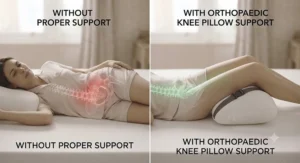
There’s a particular kind of frustration that comes from lying in bed, exhausted, and feeling a dull ache building in your hip the moment you settle onto your side. You shift, it eases for a moment, then creeps back within minutes. A pillow for hip pain sleeping is designed to break that cycle — a shaped cushion, usually placed between or under the knees, that keeps your hips, pelvis and spine in a more neutral position throughout the night rather than letting your upper leg roll forward and twist your lower back.

This guide reviews seven real, currently available pillows aimed at hip pain, and goes further than a simple product round-up: it looks specifically at how these pillows interact with sciatica, hip bursitis and the wider category of orthopaedic sleep aids, since the right choice genuinely depends on which of these is driving your discomfort. As Bupa’s guidance on sleeping positions and pain makes clear, posture during sleep matters just as much as posture during the day, and a well-placed pillow is one of the simplest ways to influence that posture without any effort on your part.
In short: a pillow for hip pain sleeping is a contoured or wedge-shaped support, typically made from memory foam or shredded foam, positioned between the knees, under the top leg, or along the length of the body to reduce hip rotation and pressure on the joint while you sleep.
Quick Comparison Table: Pillows for Hip Pain Sleeping at a Glance
| Product | Format | Best For |
|---|---|---|
| Putnams Knee Pillow | Contoured knee pillow | UK-made quality and long-term durability |
| Everlasting Comfort Memory Foam Knee Pillow | Hourglass knee pillow with strap | Sciatica-related hip and leg pain |
| Groove Knee Pillow | Strapped contour knee pillow | Hip bursitis flare-ups |
| Coop Home Goods Adjustable Body Pillow | Full-length adjustable body pillow | Side sleepers wanting total-body support |
| Contour Legacy Leg & Knee Foam Support Pillow | Compact knee wedge | Budget-conscious first-time buyers |
| DMI Contoured Body Pillow | U-shaped contoured body pillow | Combined back, hip and neck support |
| Restorology Extra Large Wedge Pillow | Multi-position foam wedge | Versatile elevation and hip cushioning |
Scanning across the table, the clearest divide is between dedicated knee pillows, which sit specifically between the legs to stop the top knee dropping forward, and full-length body pillows, which support the whole side of the body at once. The Putnams Knee Pillow and Everlasting Comfort Memory Foam Knee Pillow represent the focused, knee-specific approach, while the Coop Home Goods Adjustable Body Pillow and DMI Contoured Body Pillow take the broader, whole-body route that many side sleepers find more comfortable over a full night. The Restorology Extra Large Wedge Pillow sits apart from both, since a wedge can be repositioned under the hip, knees or lower back depending on which spot needs relief on a given night. None of this is a strict hierarchy — the right pick depends heavily on whether your discomfort is localised to one joint or spreads across your back and legs, which is explored in more depth in the individual reviews below.
💬 Just one click — help others make better buying decisions too!😊
Top 7 Pillows for Hip Pain Sleeping: Expert Analysis
1. Putnams Knee Pillow — UK-handmade orthopaedic craftsmanship
The Putnams Knee Pillow stands out because it’s handmade in the brand’s UK factory rather than mass-produced overseas, a detail that shows up in the noticeably larger, more generously filled shape compared with many budget alternatives. Its fibre-and-foam contour construction cradles the top knee and lower leg, holding the pelvis in a more neutral rotation and taking pressure off the hip joint itself rather than simply cushioning it. Based on the spec comparison, this pillow suits buyers who’ve already tried a cheaper knee pillow and found it too small or too quick to flatten, since Putnams has built its reputation over more than four decades specifically on orthopaedic sleep aids rather than general bedding. Genuine customer feedback for the Putnams range consistently highlights its size relative to competing knee pillows, with several buyers specifically recommending it after finding smaller pillows inadequate, and the brand’s wider orthopaedic pillow range is frequently paired with other positioning aids such as wedge pillows for people managing more complex hip or spinal conditions. The main honest caveat is that the larger size and higher price point make it a bigger commitment than a simple foam wedge, so it suits people confident that a knee pillow format works for them rather than first-time buyers still experimenting.
Pros:
- ✅ Handmade in the UK with generous, durable filling
- ✅ Contour shape reduces top-leg roll and pelvic twist
- ✅ Backed by a specialist orthopaedic pillow brand
Cons:
- ❌ Higher price than most knee pillow alternatives
- ❌ Larger size may feel bulky for petite frames
Typically priced in the £30-£40 range, it represents strong long-term value for anyone who has already confirmed a knee pillow suits their sleep position and wants one built to last.

2. Everlasting Comfort Memory Foam Knee Pillow — best-selling strap-secured design
The Everlasting Comfort knee pillow uses a dual-concave hourglass shape specifically designed to cradle both knees and lower legs at once, paired with an adjustable strap intended to stop the pillow shifting away during the night. What most buyers overlook about this shape is that the double curve does more than just sit between the knees — it reduces hip and spine rotation directly, which is precisely the mechanism thought to aggravate sciatic nerve irritation when the top leg drops forward unsupported. High-density memory foam holds its form far better over time than basic fibre-fill alternatives, and the breathable cover is designed to prevent the overheating that can make foam knee pillows uncomfortable in a warm room. Aggregated customer feedback for this pillow is genuinely extensive and consistently positive on comfort and sciatic pain relief, with numerous reviewers specifically crediting it with reducing nighttime hip and lower back discomfort; the most frequently repeated criticism is that the securing strap can work loose or detach during a restless night, though most reviewers note the pillow tends to stay reasonably in place even without it.
Pros:
- ✅ Dual-concave shape supports both knees and legs together
- ✅ High-density foam holds its shape over repeated use
- ✅ Extensive, largely positive review base specific to sciatica relief
Cons:
- ❌ Adjustable strap frequently reported as prone to loosening
- ❌ Not adjustable in firmness or loft
Priced around £15-£25, this is one of the strongest value picks in the whole list for anyone whose hip pain is linked to sciatic nerve irritation rather than a purely localised joint problem.
3. Groove Knee Pillow — purpose-built for hip bursitis flare-ups
The Groove Knee Pillow is marketed specifically at hip bursitis sufferers rather than hip pain in general, and its contoured shape with secure straps is built around the specific advice given for bursitis: sleep on the unaffected side with a pillow between the knees to keep the hips aligned and stop the top leg pressing weight onto the inflamed bursa. Because bursitis pain is well documented as flaring more at night, when inflammatory markers in the body peak during early sleep, a knee pillow that actually stays in position through a restless night matters more here than in some other causes of hip discomfort. Based on the spec sheet, the strap system is designed to be more secure than a simple pillow-between-the-legs approach, addressing the exact complaint that surfaces with less structured knee pillows. It’s worth being transparent that most of the specific product testimonials available for this pillow come from the brand’s own website rather than fully independent retailers, so while the underlying positioning advice is well supported by orthopaedic sources, verifying performance claims against independent Amazon reviews before buying is a sensible extra step.
Pros:
- ✅ Designed specifically around bursitis positioning advice
- ✅ Secure strap system aimed at overnight stability
- ✅ Compact enough for easy repositioning between sides
Cons:
- ❌ Independent review evidence is thinner than for bigger brands
- ❌ Premium framing pushes it above generic knee pillow pricing
Sitting around £20-£30, it’s a sensible, targeted pick specifically for confirmed bursitis pain, though the underlying design principle — a supportive pillow between the knees — is shared with several cheaper alternatives in this guide.
4. Coop Home Goods Adjustable Body Pillow — customisable full-body support
Rather than a compact knee pillow, the Coop Home Goods option is a full 20×54-inch body pillow filled with shredded memory foam that you can add or remove to adjust firmness and loft. That adjustability is the standout feature here: unlike fixed-density knee pillows, you can genuinely tune this pillow’s feel over time as your needs change, which matters if your hip pain fluctuates in severity from night to night. Positioned along the full length of the body, it supports the back, shoulder, hip and knee simultaneously rather than isolating the knee area alone, which suits side sleepers who find a small knee pillow shifts away or leaves the upper body unsupported. On paper, this is the most versatile pick in the guide, doubling as a pregnancy support pillow or a general side-sleeper comfort aid beyond hip pain specifically. Aggregated customer sentiment around Coop’s adjustable pillow range consistently praises the CertiPUR-US certified foam and the ability to customise firmness, with the most common practical note being that new users need a short break-in period to get the fill level right for their body shape and preferred sleep position.
Pros:
- ✅ Fully adjustable fill for personalised firmness
- ✅ Supports the whole side of the body, not just the knees
- ✅ CertiPUR-US certified foam construction
Cons:
- ❌ Considerably bulkier than a dedicated knee pillow
- ❌ Requires trial and error to find the right fill level
Expect to pay in the £45-£65 range; it’s a genuinely strong investment for side sleepers who want comprehensive support rather than a hip-only fix.
5. Contour Legacy Leg & Knee Foam Support Pillow — most affordable dedicated knee pillow
The Contour Legacy pillow is a compact, moulded foam knee support that keeps things deliberately simple: no adjustable straps, no shredded fill, just a fixed contoured shape designed to slot between the knees. Independent buying guides, including Healthline’s knee pillow round-up, specifically flag this as a budget pick for leg and hip pain, which lines up with what the spec sheet suggests — a straightforward, no-frills support rather than a premium orthopaedic product. What most buyers overlook about this style of pillow is that the fixed moulded shape, while less adjustable than foam-fill alternatives, actually holds its contour more consistently over time than looser fill formats, since there’s nothing to compress unevenly. This suits buyers who want to test whether a knee pillow helps their hip pain at all before committing to a pricier option, or who need a straightforward travel-friendly support that doesn’t need adjusting each night. Because it sits at the budget end of the category, the available independent review volume is smaller than for market leaders like Everlasting Comfort, so it’s fairer to describe it as a reasonably well-regarded entry-level option than to claim a large, verified consensus.
Pros:
- ✅ Lowest price point of the dedicated knee pillows here
- ✅ Fixed moulded shape holds its contour reliably
- ✅ Compact and easy to travel with
Cons:
- ❌ No adjustability in firmness or size
- ❌ Smaller independent review base than leading brands
Typically found in the £15-£20 range, making it a sensible first step for anyone testing whether a knee pillow eases their hip pain before spending more.

6. DMI Contoured Body Pillow — budget-friendly full-length sciatica support
The DMI contoured body pillow takes a U-shaped, full-length approach at a price point well below most other body pillows in this category, with the ear pocket and curved design intended to support the neck, back and hip simultaneously for side sleepers. Its firm polyester fill and cooling cotton-blend cover aim to provide reasonably consistent support without the premium pricing of adjustable foam alternatives. Based on the spec sheet, this pillow is pitched directly at people managing neck, back, hip, joint and sciatica-related discomfort together rather than isolating hip pain alone, which suits buyers whose pain genuinely spans multiple areas rather than sitting in one specific joint. It’s worth being upfront about the review picture here: aggregated ratings for this pillow sit at a more moderate level than the strongest performers in this guide, with a meaningful minority of buyers reporting the fill flattens faster than expected under regular use, alongside a larger group who find it a genuinely comfortable, compact, travel-friendly support at a low price. That mixed but broadly workable picture is worth weighing honestly against the very low cost of entry.
Pros:
- ✅ Full U-shaped design supports neck, back and hip together
- ✅ Compact enough for travel use as well as home
- ✅ Among the lowest-priced full-length options available
Cons:
- ❌ Fill reported to flatten faster than premium alternatives
- ❌ Review sentiment is more mixed than top performers here
Priced around £20-£30, it’s a reasonable budget entry point for combined sciatica and hip support, provided expectations are set around its price bracket rather than premium longevity.
7. Restorology Extra Large Wedge Pillow — most versatile multi-position design
Unlike the knee-specific and full-body pillows elsewhere in this guide, the Restorology wedge takes an entirely different shape: a large, high-density foam incline that can be repositioned under the knees, behind the back, or under the hip depending on what needs support on a given night. That flexibility is genuinely the standout feature here — rather than committing to one fixed use case, a wedge pillow adapts to whichever position is aggravating your hip on a particular night, whether that’s elevation to improve circulation, support under bent knees while lying on your back, or a gentle prop to reduce direct pressure on the affected hip while side sleeping. Marketed explicitly around post-surgery recovery, circulation and back, hip, neck and knee pain, its intended use case overlaps meaningfully with hip pain management even though it isn’t a dedicated knee pillow. The removable, washable zip cover is a practical touch that dedicated foam knee pillows sometimes skip. Because this product spans several use cases rather than one narrow niche, independently verifiable review data specific to hip pain alone is harder to isolate from its broader post-surgery and acid-reflux audience, so it’s more accurate to describe its hip-support benefit as a reasonable extension of well-established wedge positioning advice than a narrowly proven, hip-specific result.
Pros:
- ✅ Genuinely multi-position — knees, back or hip support
- ✅ Removable, washable zip cover
- ✅ High-density foam resists flattening under regular use
Cons:
- ❌ Bulkier and less portable than a dedicated knee pillow
- ❌ Hip-specific review evidence is harder to isolate from its wider use cases
Sitting around £25-£35, it’s a strong value pick for anyone wanting one product that flexes across several sleep positions rather than a single fixed use.
Practical Usage Guide: Getting the Most from Your Pillow
A hip pain pillow only works if it’s positioned correctly, and the most common first mistake is placing a knee pillow too low, near the ankles, rather than snugly between the knees where it actually influences hip and pelvic alignment. For side sleepers, draw the knees up slightly toward the chest in a gentle, relaxed fetal position and slot the pillow between them so it sits in contact with both the top and bottom knee — a pillow that’s merely resting nearby without contact does very little. Back sleepers get a different benefit entirely: placing a knee pillow or a small wedge under the knees, rather than between them, helps flatten the lower back gently into the mattress and reduces strain across the hip flexors. During the first thirty days, expect an adjustment period rather than instant relief — foam pillows in particular take a few nights to break in, and it’s worth persisting through minor repositioning frustration rather than abandoning the approach after one uncomfortable night. If you’re combining a knee pillow with an existing mattress topper or a firmer mattress, check that the added elevation doesn’t overcorrect and push the hip too far out of alignment in the opposite direction. Washable covers should be laundered regularly, since these pillows sit in direct, prolonged contact with skin every night, and most foam inserts themselves should never be machine washed directly — check the specific care label before attempting to clean the foam core.

Real-World Scenarios: Which Pillow Suits Which Situation
Picture three different people struggling with hip pain at night. The first has been diagnosed with sciatica after a herniated disc irritated the nerve running down her leg, and finds the pain worst when her top leg rolls forward and twists her lower spine — for her, the Everlasting Comfort Memory Foam Knee Pillow‘s dual-concave shape, specifically designed to reduce that rotational strain, is the more targeted fit than a generic cushion. The second is managing confirmed trochanteric bursitis on his right hip, waking repeatedly whenever he rolls onto the affected side, and needs a pillow that reliably stays positioned through a restless night rather than sliding away — the Groove Knee Pillow‘s strap system and the Putnams Knee Pillow‘s larger, more stable shape both suit that specific need better than a smaller, unsecured cushion. The third is an older adult with more generalised hip and lower back discomfort who tosses between back and side sleeping throughout the night and finds a small knee pillow constantly needs repositioning — for her, the Coop Home Goods Adjustable Body Pillow or the Restorology Extra Large Wedge Pillow offer support that adapts across multiple positions rather than requiring precise, repeated placement. None of these scenarios are rigid prescriptions, since individual comfort varies considerably, but matching the pillow’s specific mechanism to your actual pain pattern, rather than buying whichever option has the most five-star reviews, produces far better real-world results.
Problem → Solution: Fixing Common Hip Pain Pillow Frustrations
Problem: The pillow keeps sliding away during the night. This is one of the most frequently reported frustrations with unsecured knee pillows — look specifically for a strap-secured design like the Groove or Everlasting Comfort options, or switch to a full-length body pillow that’s harder to displace entirely through natural movement.
Problem: The pillow feels too firm and creates new pressure points. Foam density varies significantly between products, and a pillow that’s uncomfortably firm straight out of the packaging sometimes softens slightly with a short break-in period; if it doesn’t, an adjustable-fill option like the Coop Home Goods pillow lets you reduce firmness directly rather than replacing the whole product.
Problem: Pain persists despite consistent pillow use. A pillow addresses positioning, not the underlying inflammation or nerve irritation itself — if sciatica symptoms or hip pain haven’t improved after several weeks of consistent, correct pillow use, that’s a reasonable point to speak with a GP or physiotherapist rather than assuming a different pillow will solve it.
Problem: Overheating during the night. Dense memory foam can trap heat more than fibre-fill alternatives — look for a breathable, moisture-wicking cover specifically, and consider airing the pillow during the day rather than leaving it compressed under bedding.
Problem: Pillow flattens or loses shape within a few months. This is a known trade-off with budget fibre-fill and lower-density foam products — a higher-density option like the Putnams or Restorology pillows, both built around durability, typically holds its contour for considerably longer under nightly use.
How to Choose a Pillow for Hip Pain Sleeping
- Identify where your pain actually sits. Pain localised to the outer hip suggests possible bursitis, while pain radiating down the leg points more toward sciatic involvement, and each responds better to slightly different pillow placement.
- Match the format to your sleep position. Side sleepers generally benefit most from a knee pillow placed between the legs, while back sleepers often do better with support placed under the knees rather than between them.
- Prioritise stability if you move around a lot. A strap-secured or full-length body pillow holds position through restless nights far better than a small, unsecured cushion.
- Check the firmness against your body weight. Heavier individuals typically need firmer, higher-density foam to maintain adequate support without excessive sinking.
- Factor in temperature regulation. Dense memory foam retains heat more than shredded fill or fibre alternatives, which matters if you already run warm overnight.
- Consider adjustability if your needs change. An adjustable-fill body pillow offers more long-term flexibility than a fixed-shape knee pillow if your pain level or preferred position fluctuates.
- Weigh genuine durability against price. A cheaper pillow that flattens within months can end up costing more over a year than a single durable, higher-density option.
Sciatica and Sleep: How the Right Pillow Helps
Sciatica describes pain that travels along the sciatic nerve, typically starting in the lower back or buttock and radiating down the back of one leg, and it’s a genuinely common reason people search specifically for a hip pain pillow rather than a general support cushion. According to NHS guidance on sciatica, the condition often improves within a few weeks to a few months, and staying reasonably active rather than avoiding all movement is generally recommended over prolonged rest. Where a pillow genuinely helps is in reducing the specific mechanical irritation that can worsen symptoms overnight: when a side sleeper’s top leg drops forward unsupported, it rotates the pelvis and can increase tension through the lower back and buttock, precisely where sciatic nerve irritation tends to originate. A knee pillow that keeps the hips stacked and the spine in a more neutral line reduces that rotational strain, which is why products like the Everlasting Comfort knee pillow are marketed and reviewed so heavily around sciatica specifically. What the spec sheet won’t tell you, but clinical guidance consistently notes, is that pillow positioning is a supportive measure alongside movement and general activity, not a replacement for it — sciatica that persists or worsens despite consistent good positioning is a reasonable trigger to seek a professional assessment rather than simply trying yet another pillow.
Hip Bursitis at Night: Positioning and Pillow Support
Hip bursitis involves inflammation of the small fluid-filled sacs that cushion the hip joint, and it has a well-documented pattern of feeling worse specifically at night, once the body is at rest and inflammatory activity in the immune system tends to be more active. According to NHS guidance on bursitis, putting extra cushions around the affected joint while sleeping is a specifically recommended self-care measure, alongside rest, ice and over-the-counter pain relief where appropriate. In practice, that translates into a fairly specific positioning strategy: sleeping on the unaffected side rather than directly on the inflamed hip, with a supportive pillow between the knees to stop the top leg pulling the pelvis — and by extension the painful hip — out of a neutral, supported position. This is exactly the mechanism the Groove Knee Pillow and similar products are built around, and it’s worth noting that a secure, non-sliding pillow matters more here than in some other hip pain causes, because direct pressure on an inflamed bursa from an unsupported top leg or a slipped pillow can trigger a sharp, immediate flare rather than a gradual ache. If bursitis symptoms persist beyond one to two weeks of consistent self-care, including proper pillow positioning, that’s specifically flagged as a point to seek further medical assessment rather than continuing to self-manage indefinitely.
Orthopaedic Sleep Aids vs Ordinary Pillows: What’s the Real Difference?
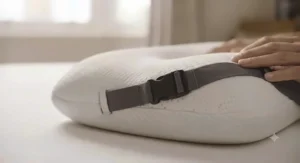
This is a genuinely common point of confusion, since a standard bed pillow tucked between the knees can, in a basic sense, achieve something similar to a dedicated orthopaedic sleep aid. The honest analysis is that the difference lies in consistency and precision rather than a completely different mechanism: orthopaedic sleep aids are specifically contoured and often density-tested to hold a particular shape and firmness night after night, while a general pillow flattens unevenly and needs constant readjustment to maintain the same supportive position.
| Factor | Orthopaedic Sleep Aid | Ordinary Pillow |
|---|---|---|
| Shape retention | Holds contour consistently | Flattens and shifts over time |
| Positioning precision | Designed for a specific joint or posture | General-purpose, imprecise |
| Best For | Confirmed sciatica, bursitis or chronic hip pain | Occasional, mild discomfort |
| Typical cost | Higher upfront investment | Lower, using pillows already owned |
The honest verdict here is that ordinary pillows are a genuinely reasonable starting point for mild, occasional hip discomfort, and there’s no need to buy a specialist product before confirming a knee pillow approach actually helps you. However, for people managing a diagnosed condition like sciatica or bursitis, the more precise, durable shape of a dedicated orthopaedic sleep aid — such as the Putnams Knee Pillow or Coop Home Goods Adjustable Body Pillow featured in this guide — tends to deliver more consistent relief over the course of a full night, precisely because it doesn’t require constant manual readjustment to keep working.
Common Mistakes When Buying a Pillow for Hip Pain
The most common mistake is buying based purely on star rating without checking whether the pillow’s shape actually matches your sleep position — a knee pillow designed for side sleepers offers little benefit to someone who mostly sleeps on their back. A close second is underestimating the importance of a securing strap or a genuinely stable shape for anyone who moves around a lot during the night, since a pillow that constantly needs repositioning by hand defeats much of its purpose. Buying the cheapest available option without checking foam density is another frequent misstep — very low-density fill flattens within weeks under nightly pressure, meaning the ongoing cost of repeated cheap replacements can exceed the price of one durable option. Ignoring firmness relative to body weight causes real disappointment too, since a pillow that feels supportive for a lighter person may compress completely and offer minimal support for a heavier individual. Finally, expecting a pillow alone to resolve a diagnosed medical condition is a mistake worth flagging honestly: a pillow supports better sleep positioning, but it isn’t a substitute for appropriate medical assessment when pain is severe, worsening, or accompanied by numbness, weakness, or other concerning symptoms.
What to Expect: Real-World Comfort and Adjustment Period
Specs and marketing claims rarely translate directly into exactly how a pillow feels on the first night, so it’s worth setting realistic expectations before buying. Most memory foam knee pillows need a short adjustment period — typically a handful of nights — for the foam to soften slightly and for you to find the correct positioning that actually reduces pressure rather than simply adding bulk between your legs. What the spec sheet won’t tell you, but reviewers across nearly every brand in this guide note consistently, is that correct positioning matters more than the specific product: a premium pillow placed too low near the ankles does far less than a budget pillow correctly wedged snugly between the knees. Relief is also rarely instant in the way painkillers might be — most people report a gradual reduction in morning stiffness and overnight waking over one to two weeks of consistent use, rather than an immediate transformation on night one. It’s worth noting, too, that sleep and pain genuinely interact in both directions: poor sleep can heighten pain sensitivity, while unresolved pain disrupts sleep quality, which is part of why a consistent, comfortable sleep position is worth the initial adjustment effort rather than abandoning a new pillow after a single disappointing night.
Long-Term Value & Care
A dedicated orthopaedic pillow is a bigger upfront outlay than simply repositioning a spare bed pillow, so it’s worth thinking about total value over time rather than sticker price alone. Higher-density options like the Putnams Knee Pillow and Restorology Extra Large Wedge Pillow, priced toward the middle of this guide’s range, tend to hold their shape for considerably longer under nightly compression than budget fibre-fill alternatives, which can mean fewer replacement purchases over a two-to-three-year period even with a higher initial cost. Machine-washable covers, featured on most products in this guide, keep ongoing maintenance simple, though the foam inserts themselves generally should never go through a washing machine directly — spot cleaning or airing the foam core is the safer approach for most products. Cost-per-use genuinely favours regular, nightly users over occasional ones, since a pillow used consistently every night amortises its price far more effectively than one that sits unused after the first uncomfortable week. Watching for early signs of flattening — a pillow that no longer springs back to shape within a few seconds of removing pressure — is a useful cue that replacement is approaching, rather than waiting until the support has clearly failed and pain symptoms have already started creeping back.
Safety and When to See a Doctor
While a well-chosen pillow can meaningfully ease positional hip pain, it’s important to be realistic about what it can and can’t do. Persistent hip pain that doesn’t improve with consistent self-care, including proper pillow positioning, rest and appropriate over-the-counter pain relief, is a reasonable prompt to see a GP rather than continuing to self-manage indefinitely. According to Arthritis UK’s guidance on bursitis, signs such as a high temperature, or feeling hot, cold or shivery alongside joint pain, can indicate infection and warrant more urgent medical attention rather than home treatment alone. Similarly, sciatica accompanied by numbness around the genitals or difficulty controlling the bladder or bowel is a rare but serious warning sign requiring emergency care, distinct from the more common, self-limiting nerve irritation a knee pillow is designed to ease. None of the products in this guide are medical devices, and none should be relied upon as a substitute for professional diagnosis if pain is severe, sudden, or accompanied by other concerning symptoms — they’re a genuinely useful, low-risk first step for positional discomfort, but not a treatment for underlying joint or nerve conditions that need clinical assessment.
Frequently Asked Questions
❓ Does a knee pillow actually help hip pain?
❓ Should I sleep on my painful hip or the other side?
❓ How long does it take for a hip pain pillow to work?
❓ Can a pillow help with sciatica specifically?
❓ What's the difference between a knee pillow and a body pillow for hip pain?
Conclusion
A pillow for hip pain sleeping is a genuinely useful, low-risk tool for easing the positional discomfort that keeps so many people tossing and turning, whether that discomfort stems from sciatica, hip bursitis, or simply the natural strain of side sleeping without support. Across the seven options in this guide, the right choice comes down to matching the pillow’s shape and firmness to where your pain sits and how you actually move through the night, rather than defaulting to whichever product has the flashiest marketing. The Everlasting Comfort Memory Foam Knee Pillow remains a strong, well-evidenced pick for sciatica-related discomfort, while the Groove Knee Pillow and Putnams Knee Pillow suit hip bursitis and long-term durability respectively. Buyers wanting broader, full-body support shouldn’t overlook the Coop Home Goods Adjustable Body Pillow or the versatile Restorology Extra Large Wedge Pillow, and the budget-conscious Contour Legacy and DMI options prove effective hip support doesn’t have to come with a premium price tag. Whichever you choose, give it a fair adjustment period, position it correctly and consistently, and treat it as one genuinely helpful part of managing hip pain — not a substitute for medical advice if symptoms persist or worsen.
✨ Don’t Miss These Exclusive Deals!
🔍 Take the first step toward pain-free nights with the orthopaedic sleep aids featured in this guide. Click through on any highlighted pick to check current pricing and availability before bedtime tonight!
Recommended for You
- Pillow to Put Between Knees: 7 Best Picks for 2026 UK
- J-Shaped Pillow for Pregnancy: 7 Genuinely Comfy Picks 2026
- Wedge Pillow for Sleep Apnoea: 7 Best Picks for 2026 UK
Disclaimer: This article contains affiliate links. As an Amazon Associate, I earn from qualifying purchases. If you purchase products through these links, we may earn a small commission at no additional cost to you.
✨ Found this helpful? Share it with your friends! 💬🤗
