
In This Article
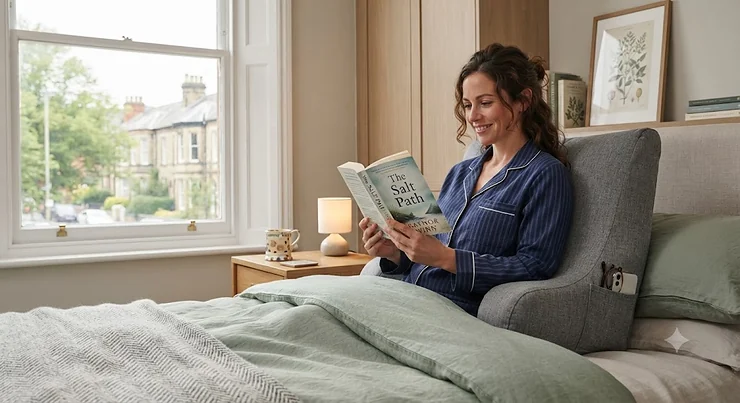
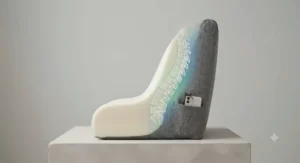
Here’s a confession most of us won’t say out loud: the moment we get truly comfortable with a book, our spine quietly files a complaint. You prop yourself against the headboard, stack two flat pillows behind your shoulders, and twenty minutes later you’re leaning sideways like a collapsing Jenga tower, one hand pressed into your lower back. A reading pillow for back pain exists to solve exactly that problem — it’s a structured, often arm-equipped cushion designed to hold your spine in a supported, semi-upright position so the weight of your torso doesn’t collapse onto your lumbar discs while you read, work, or recover in bed.
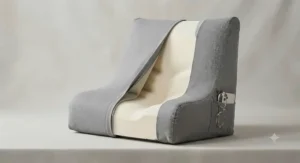
That one paragraph, incidentally, answers the question search engines love: what is a reading pillow for back pain? It’s a backrest-style cushion, usually filled with foam or shredded memory foam, shaped to fill the gap between your spine and whatever you’re leaning against — headboard, sofa arm, car seat — so your back stays in something closer to its natural curve instead of collapsing into a slouch.
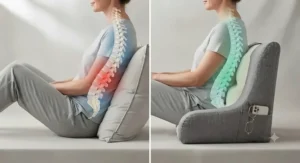
This matters more than it sounds. According to NHS guidance on seating and back pain, poor posture while sitting can aggravate back and neck pain, and because our bodies adapt quickly, slouched habits can start to feel completely normal even as they quietly wind up the tension in our lower back. A good reading pillow won’t fix a herniated disc, but it removes one very avoidable source of daily strain — the thirty minutes of unsupported slouching that so many of us do every single night before lights out.
Below, we’ve researched seven genuinely available reading pillows for back pain, from budget faux-fur cuddle cushions to British-made orthopaedic backrests, and broken down exactly what the specs mean for your spine, your wallet, and your Sunday-morning coffee-in-bed routine.
Quick Comparison Table
| Product | Best For | Foam Type | Price Range |
|---|---|---|---|
| Nestl Reading Pillow | All-round armrest reading pillow for adults | Shredded memory foam | £45-£65 |
| ComfortSpa Reading Pillow | Adjustable firmness / GERD elevation | Shredded foam | £40-£60 |
| OHS Back Support Cushion | Budget cosy pick | Polyester fibre fill | Under £30 |
| Putnams Memory Foam Back Support | Physiotherapist-recommended orthopaedic support | Solid memory foam | £35-£55 |
| CnA Stores Orthopaedic V-Pillow | Post-surgery / rigid orthopaedic support | High-density foam | £20-£35 |
| Sasttie Reading Pillow | Allergy-conscious, OEKO-TEX certified | Down-alternative fill | £35-£50 |
| ENITYA 22″ XL Back Pillow | Tall or larger-framed readers | High density foam | £45-£60 |
Looking across the table, price doesn’t track neatly with support quality here — the budget-tier CnA Stores Orthopaedic V-Pillow actually punches above its weight for rigid lumbar support, while the mid-priced OHS Back Support Cushion trades firmness for cosiness. If your priority is genuine orthopaedic backing rather than lounge comfort, skip straight to the Putnams Memory Foam Back Support and the CnA Stores pillow further down.
💬 Just one click — help others make better buying decisions too!😊
Top 7 Reading Pillows for Back Pain: Expert Analysis
1. Nestl Reading Pillow — best armrest reading pillow for adults
The Nestl Reading Pillow is the one you’ll see recommended most often, and there’s a reason for that: it’s built around genuinely usable armrests rather than decorative wings. The shredded memory foam fill isn’t a single solid block — it’s loose clusters you can physically redistribute through a zip access panel, so the pillow can be firmer under your lower back and softer under your shoulder blades if that’s what your spine actually needs. That’s a meaningfully different approach from a fixed-foam backrest, which gives you one firmness whether you like it or not.
Specs-wise, it’s rated for adult and teen frames, includes a removable machine-washable cover, and ships vacuum-compressed — expect it to take a day or two to fully loft after unboxing. Based on the spec comparison with rivals in this list, the adjustable fill is what earns it the “best all-rounder” tag: buyers with asymmetric pain (worse on one side, common with sciatica) can shift foam volume to compensate, which fixed-foam pillows simply can’t offer.
Reviewers consistently note that the arms genuinely take weight off tired shoulders during long reading or laptop sessions, though a recurring theme in aggregated feedback is that the foam needs periodic “fluffing” to stop it compacting flat in the seat area after a few months of nightly use.
Pros:
- ✅ Adjustable shredded foam fill for personalised firmness
- ✅ Genuinely supportive armrests for laptop or tablet use
- ✅ Machine-washable removable cover
Cons:
- ❌ Foam compacts over time and needs occasional fluffing
- ❌ Takes 24-48 hours to fully expand after delivery
Sitting in the mid-£40s to mid-£60s range depending on colour and size, the Nestl Reading Pillow represents solid value for anyone who reads or works from bed several nights a week — it’s not the cheapest option here, but it’s the most adaptable.

2. ComfortSpa Reading Pillow — best for adjustable firmness and elevation
Where the Nestl Reading Pillow lets you shift foam around internally, the ComfortSpa Reading Pillow goes a step further with bottom zippers that let you physically add or remove foam volume to change the overall firmness and height of the backrest. That’s a genuinely practical feature if you’re recovering from surgery or dealing with acid reflux, since a taller, firmer incline changes how your torso is elevated — this is one of the few reading pillows in this list explicitly marketed for that dual use.
The arms extend a generous 12 inches, which on paper means broader shoulder and neck coverage than most competitors offer, translating in practice to less “arm hanging off the edge” fatigue during longer sessions. Aggregated customer sentiment is largely positive on the customisability, though several reviewers mention that the shredded foam has a noticeable off-gassing smell for the first few days — not unusual for compressed foam products, but worth airing out before first use.
Who should care: side-sleepers-turned-readers who find generic backrests either too soft or too flat, and anyone using the pillow for post-op elevation rather than pure reading comfort.
Pros:
- ✅ Zippered access to add or remove foam for custom firmness
- ✅ Extra-long 12-inch arms for shoulder support
- ✅ Doubles as an elevation wedge for reflux relief
Cons:
- ❌ Noticeable foam odour on first unboxing
- ❌ Bulkier footprint than slimmer competitors
Priced in the £40-£60 range, the ComfortSpa Reading Pillow earns its keep specifically because of that adjustability — you’re effectively buying two firmness levels for the price of one.
3. OHS Back Support Cushion — best budget cosy pick
If your priority leans more towards “cocoon me in something soft” than “give me rigid orthopaedic structure,” the OHS Back Support Cushion is the honest budget choice here. It uses a faux fur or fleece exterior over a polyester fibre fill rather than memory foam, which on paper means less structured support but noticeably more immediate plush comfort — this is a cushion built for cosiness first, spinal correction second.
What most buyers overlook about fibre-filled backrests like this one is that they compress faster under sustained weight than foam alternatives, so the support you feel on day one will soften measurably within a few months of regular use. That’s a fair trade-off at this price point, though it does mean this isn’t the pillow to reach for if you’re managing an active back injury.
Reviewers consistently praise the cosy feel and describe it as a strong gifting option, with the aggregated sentiment skewing towards comfort and appearance rather than therapeutic support — a distinction worth being honest about before you buy.
Pros:
- ✅ Genuinely plush, cosy feel straight out of the box
- ✅ Lightweight and easy to reposition around the house
- ✅ Comes in on-trend colourways and textures
Cons:
- ❌ Fibre fill compresses faster than memory foam
- ❌ Less structured lumbar support than orthopaedic options
At under £30 in most colourways, the OHS Back Support Cushion is best treated as a comfort cushion with light back support, not a clinical-grade backrest — set expectations accordingly and it delivers real value.
4. Putnams Memory Foam Back Support — physiotherapist-recommended design
This is the pillow in our line-up that most directly earns the “physiotherapist-recommended” tag, and it’s worth explaining why rather than just asserting it. Putnams is a long-standing British back-care specialist, manufacturing pressure relief products for over three decades that are used and recommended within the medical profession, with cushions designed to support conditions including herniated discs, muscle strains, pinched nerves and spinal stenosis.
Unlike the shredded-foam reading pillows above, the Putnams Memory Foam Back Support uses solid moulded memory foam rather than loose fill, which in practice means a firmer, more clinically predictable shape that doesn’t flatten unevenly the way shredded foam can. It’s designed to sit over the back of a chair and be adjusted up or down until maximum support is felt in the lumbar region, with a counterbalance design that holds it in place without constant readjustment. Based on that design brief, this product suits desk-and-bed dual use better than most: strap it to a headboard-adjacent chair for reading, then move it to your office chair the next morning.
The honest caveat: it’s a lumbar support cushion first and a reading backrest second, so it lacks the built-in arms some readers specifically want — pair it with a firm pillow stack if arm support is a dealbreaker.
Pros:
- ✅ British-made with a genuine medical-sector reputation
- ✅ Firm, consistent moulded memory foam that won’t flatten unevenly
- ✅ Adjustable strap system works on chairs, beds and car seats
Cons:
- ❌ No built-in armrests for shoulder support
- ❌ Firmer feel may suit some backs better than others
Typically priced in the £35-£55 range, the Putnams Memory Foam Back Support is the pick for readers who want orthopaedic credibility over lounge-cushion softness.
5. CnA Stores Orthopaedic V-Shaped Pillow — best rigid orthopaedic support
The CnA Stores Orthopaedic V-Shaped Pillow takes a genuinely different shape to everything else on this list — instead of a squared backrest with arms, it’s a wide V that cradles the head, neck and upper back simultaneously. That geometry matters: a V-shape spreads your weight across a broader surface area than a rectangular cushion, which on paper reduces pressure concentration at any single point along the spine, a detail that matters if you’re propping yourself up for extended periods during recovery from illness or surgery.
The high-density foam fill holds its shape far better than the fibre-filled budget options above, and because there’s no complex arm structure to maintain, there’s simply less that can go wrong or wear out over time. Aggregated review sentiment frequently references its use as a “nursing pillow” or post-operative support — genuinely versatile beyond pure reading duty.
Who it’s for: anyone prioritising rigid, no-nonsense orthopaedic support over plush comfort, particularly people managing an existing back or neck condition rather than casual evening readers.
Pros:
- ✅ Broad V-shape distributes weight across neck, back and shoulders
- ✅ High-density foam resists flattening long-term
- ✅ Genuinely multi-purpose (reading, nursing, recovery)
Cons:
- ❌ No dedicated armrests
- ❌ Less “cosy” aesthetic than fabric-forward options
At £20-£35, the CnA Stores Orthopaedic V-Shaped Pillow is arguably the best value-for-support ratio in this entire list.

6. Sasttie Reading Pillow — best for allergy-conscious buyers
For buyers managing allergies or sensory sensitivities alongside back pain, the Sasttie Reading Pillow is worth a specific look. It’s an OEKO-TEX certified backrest support cushion filled with adjustable down-alternative fill, sized around 18 inches for sitting up in bed, on the couch, or on the floor. The OEKO-TEX certification means the fabric and fill have been independently tested against a long list of regulated and unregulated substances that can be harmful to human health — a genuinely useful data point if you’re sensitive to synthetic fillings or off-gassing.
Down-alternative fill behaves differently to shredded memory foam: it’s softer and more forgiving initially, but on paper offers less structured lumbar correction than a foam core. Based on that trade-off, this is the pillow for readers whose back pain is mild-to-moderate and who prioritise breathability and hypoallergenic materials over maximum spinal rigidity.
Reviewers commonly describe it as cosy and quick to loft, with the recurring caveat that it’s softer than expected for buyers coming from a firm-foam background — worth knowing before you order if firmness is your main criterion.
Pros:
- ✅ OEKO-TEX certified, hypoallergenic-friendly materials
- ✅ Soft, breathable down-alternative fill
- ✅ Lofts quickly after unpacking compared with dense foam
Cons:
- ❌ Less structured support than memory foam options
- ❌ May feel too soft for firm-support preferences
Priced around £35-£50, the Sasttie Reading Pillow is a smart pick specifically for allergy-aware households rather than those chasing maximum orthopaedic firmness.
7. ENITYA 22″ XL Back Pillow — best for taller or larger-framed readers
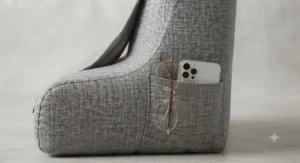
Standard reading pillows top out around 18-19 inches, which is where the ENITYA 22″ XL Back Pillow earns its spot: the extra height and width genuinely matter if you’re over roughly 5’9″ or simply have broader shoulders, since a too-small backrest forces exactly the kind of side-leaning slouch this whole product category exists to prevent. Big pockets built into the arm structure add practical storage for a phone, glasses or remote, which sounds minor but does reduce the twisting-and-reaching that can aggravate a sore lower back.
The high-density foam core holds its shape under sustained weight better than lower-density fibre fill, and the armrests are proportionally sized to match the larger frame rather than simply stretched wider — a detail that matters because undersized arms on an oversized backrest is a common design failure in this category. Based on the spec sheet, this is genuinely one of the largest reading pillows currently available through UK retailers.
Aggregated reviews consistently flag the generous size as the standout feature, with a recurring complaint that its larger footprint makes it awkward to store or transport between rooms compared with more compact alternatives.
Pros:
- ✅ Genuinely oversized for taller or broader-framed users
- ✅ High-density foam maintains shape under sustained weight
- ✅ Large armrest pockets for phone, glasses or remote
Cons:
- ❌ Bulky and harder to store or move between rooms
- ❌ Overkill for average-height or petite users
Expect to pay in the £45-£60 range, and note that the ENITYA 22″ XL Back Pillow is genuinely a “measure your space first” purchase given its size.
Practical Usage Guide: Setting Up Your Reading Pillow for Real Back Support
Buying the right pillow is only half the job — how you set it up determines whether it actually helps your back or just becomes an expensive lounging prop. Start by placing the pillow flush against a solid, flat surface (headboard, wall, or sofa arm) rather than propping it against soft stacked pillows behind it, since a soft backing lets the whole structure sink and lose its angle over an evening. Sit right back into the seat of the pillow rather than perched forward on the edge — perching is the single most common mistake, and it puts your lumbar spine exactly where the pillow was designed to prevent it from being.
In the first 30 days, expect shredded-foam models to need a genuine “settling in” period: give the pillow a firm shake and reshape session every few days to stop the fill migrating to the edges and leaving a hollow in the centre. If you’re using a firmness-adjustable model like the ComfortSpa Reading Pillow, resist the urge to max out the foam immediately — add small amounts and test over a few nights, since more foam isn’t automatically more supportive if it pushes your spine out of alignment.
Maintenance-wise, wash the removable cover monthly if you’re using the pillow nightly, and rotate the pillow’s orientation occasionally so wear doesn’t concentrate in one seating zone. A quick weekly fluff — lifting and reshaping the fill by hand — will noticeably extend the working life of any shredded-foam design, including the Nestl Reading Pillow and Sasttie Reading Pillow covered above.
Real-World Scenarios: Who Actually Needs an Orthopaedic Reading Pillow
Picture three very different readers. First, there’s the university student in a shared house, reading and revising in bed most nights because the desk chair is uncomfortable and the room is small — for them, a budget, easy-to-move option like the OHS Back Support Cushion or the CnA Stores Orthopaedic V-Shaped Pillow makes more sense than a premium orthopaedic model, since portability and low cost matter more than clinical-grade firmness at this life stage.
Second, consider someone in their fifties managing recurring lower back stiffness who reads every evening as part of an established wind-down routine. Here, structured, consistent support matters far more than budget — the Putnams Memory Foam Back Support, with its moulded foam and medical-sector pedigree, or the adjustable-firmness Nestl Reading Pillow, are the more sensible investments, since the goal is genuinely reducing strain rather than simply adding cushioning.
Third, picture someone recovering from minor back surgery or a flare-up, propped up in bed for extended stretches during the day rather than just before sleep. For this scenario, elevation and rigid support outrank cosiness entirely — the ComfortSpa Reading Pillow, with its adjustable-height foam and reflux-friendly elevation, or the broad-support CnA Stores V-pillow, are the more appropriate choices than anything fibre-filled or fashion-forward.
Problem → Solution: Common Reading Pillow Complaints, Solved
Problem: The pillow flattens within a few weeks. This is almost always a fibre-fill issue rather than a foam-density issue — budget cushions like a basic polyester-filled backrest compress under repeated weight far faster than memory foam. Solution: fluff the fill weekly, or step up to a high-density foam model like the ENITYA 22″ XL Back Pillow or CnA Stores Orthopaedic V-Shaped Pillow if flattening is a recurring frustration.
Problem: My lower back still aches even with the pillow. This usually means the pillow’s angle is too reclined or too upright for your specific pain pattern. Solution: experiment with tucking a smaller rolled towel behind the small of your back inside the pillow’s seat area — a trick genuinely recommended in NHS posture guidance — before assuming the pillow itself is at fault.
Problem: The arms dig into my shoulders during long sessions. This is common with narrower, budget-tier armrests. Solution: choose a model with proportionally generous arms relative to your frame, such as the ComfortSpa Reading Pillow‘s 12-inch extensions, or the oversized ENITYA 22″ XL Back Pillow if you’re broader-shouldered.
Problem: The pillow smells strongly when it first arrives. This is standard off-gassing from compressed foam and fabric treatments, not a defect. Solution: unbox and air the pillow in a ventilated room for 24-48 hours before first use, as several manufacturers including ComfortSpa Reading Pillow explicitly recommend.
Problem: I can’t tell if I need “soft” or “firm.” Solution: if your pain is more about general discomfort and fatigue, softer fill like the Sasttie Reading Pillow is fine; if you’re managing a diagnosed spinal condition, prioritise firm, structured foam like the Putnams Memory Foam Back Support.
How to Choose a Reading Pillow for Back Pain
- Start with your pain pattern, not the pillow’s marketing. General fatigue responds well to softer fill; diagnosed conditions like disc issues respond better to firm, structured foam.
- Measure your frame honestly. Taller or broader readers consistently report better results with oversized models like the ENITYA 22″ XL Back Pillow rather than standard 18-inch designs.
- Decide whether you need armrests at all. If you mainly use the pillow for reading with hands free, dedicated armrests matter less than they do for laptop or tablet use in bed.
- Check the fill type against your maintenance tolerance. Shredded foam needs regular fluffing; solid moulded foam like the Putnams Memory Foam Back Support needs almost none.
- Factor in multi-use potential. If you’ll also use it for TV, gaming, or recovery elevation, prioritise adjustability, like the zippered firmness control on the ComfortSpa Reading Pillow.
- Look for genuine certifications, not just marketing claims. OEKO-TEX (as on the Sasttie Reading Pillow) or an established medical-sector reputation (as with Putnams) are meaningfully different from unverified “orthopaedic” labelling.
- Set a realistic budget band and stick to price ranges, not headline discounts. Reading pillow prices fluctuate constantly, so compare on specification, not on whatever number happens to be showing today.
Common Mistakes When Buying a Reading Pillow
The single biggest mistake is buying on colour and fabric alone, without checking fill type — a gorgeous faux-fur cushion like the OHS Back Support Cushion is a wonderful cosy addition to a bed, but it isn’t a substitute for structured orthopaedic support if you’re managing a genuine back condition. A close second is ignoring size relative to your own frame; a standard 18-inch backrest genuinely will not support a 6’2″ reader the way a 22-inch model like the ENITYA XL Back Pillow will.
Another recurring pitfall is assuming “memory foam” always means the same thing. Shredded memory foam (as in the Nestl Reading Pillow) and solid moulded memory foam (as in the Putnams Memory Foam Back Support) behave very differently under sustained weight, and buyers who don’t understand that distinction are often disappointed when a shredded-fill pillow doesn’t feel as rigid as they expected.
Finally, plenty of buyers skip reading aggregated review sentiment around durability, focusing purely on day-one comfort. A pillow that feels incredible fresh out of the box but flattens within eight weeks isn’t genuinely solving your back pain problem — it’s postponing it.
Reading Pillow vs Traditional Pillow Stack: Which Actually Helps Your Back?
The instinctive, free alternative to a dedicated reading pillow is simply stacking two or three regular bed pillows behind you. It’s tempting because you already own them — but the comparison below shows why that approach usually falls short for genuine back support.
| Factor | Dedicated Reading Pillow | Stacked Bed Pillows |
|---|---|---|
| Structural consistency | Holds shape through the session | Shifts and flattens within minutes |
| Armrest support | Built-in on most models | None |
| Lumbar contouring | Purpose-shaped | Generic, no contouring |
| Best For | Nightly readers, recovery use | Occasional, short sessions only |
The core issue with stacked pillows is structural: good sitting posture depends on keeping the natural curves of the spine supported, and clinical posture guidance from NHS musculoskeletal services points to using a proper lumbar roll or support rather than loose, shifting cushioning to achieve that. A dedicated reading pillow is essentially a purpose-built version of that lumbar support, engineered to hold its shape rather than compress unevenly the way three stacked pillows inevitably will after ten minutes of shifting around. If you only read occasionally, stacked pillows are a fine free option — but for nightly use, the structural consistency of something like the Putnams Memory Foam Back Support or Nestl Reading Pillow is doing genuinely different work.
✨ Ready to Stop Wrestling With a Pillow Avalanche?
🔍 Take your bedtime reading set-up to the next level with the picks compared above. Click through to check current pricing and availability, and give your back the structured support it’s been missing every single night.
What to Expect: Real-World Performance
Specs on a page don’t tell you what forty minutes of actual reading feels like, so here’s the practical translation. A high-density foam model like the CnA Stores Orthopaedic V-Shaped Pillow will feel notably firmer against your back for the first few nights than a fibre-filled option — that’s not a flaw, it’s the trade-off for support that doesn’t collapse over time. Expect roughly a week of “getting used to it” if you’re switching from soft stacked pillows to a firm orthopaedic design.
Armrest-equipped models genuinely change how long you can comfortably hold a book or tablet — reviewers across multiple products in this list consistently note reduced shoulder fatigue during extended sessions once the arms are properly broken in. On the flip side, expect shredded-foam pillows like the Nestl Reading Pillow to require that periodic reshaping mentioned earlier; without it, a shallow dip forms exactly where your lower back sits, which gradually undermines the very support you bought the pillow for.
Reading Pillows for Different Audiences: Adults, Seniors and Recovery Users
For general adult use, an armrest reading pillow for adults with adjustable fill — the Nestl Reading Pillow being the clearest example here — covers the widest range of body types and use cases, from casual weekend reading to nightly laptop work in bed. For older adults managing chronic stiffness or arthritis, prioritise ease of getting in and out of the seated position; a firmer, more structured design like the Putnams Memory Foam Back Support tends to hold its shape better through repeated sitting and rising than softer fibre-filled alternatives.
For anyone recovering from surgery, illness, or a back flare-up, elevation and rigidity outrank everything else — the adjustable-height ComfortSpa Reading Pillow or the broad-support CnA Stores Orthopaedic V-Shaped Pillow are better suited to extended daytime propping-up than cosier, softer designs. Larger-framed adults, meanwhile, should default to oversized options like the ENITYA 22″ XL Back Pillow rather than assuming a standard size will simply “do.”
Long-Term Cost & Maintenance
A reading pillow isn’t a one-off purchase you forget about — durability genuinely affects the cost-per-use maths. A £25 fibre-filled cushion that needs replacing after eight months works out more expensive over two years than a £55 high-density foam model that’s still holding its shape at the eighteen-month mark. Based on the fill-type comparison earlier in this article, solid moulded foam (as in the Putnams Memory Foam Back Support) and high-density foam (as in the CnA Stores and ENITYA pillows) consistently outlast shredded or fibre fill in terms of shape retention.
Ongoing maintenance costs are minimal either way — a machine-washable cover, available on most models here including the Nestl Reading Pillow and Sasttie Reading Pillow, keeps ongoing costs to essentially nothing beyond the odd wash cycle. The genuine long-term value calculation, then, isn’t about sticker price at all; it’s about how many years of actual nightly use you’re likely to get before the support noticeably degrades.
Memory Foam Density Explained: What Actually Matters
“Memory foam” gets used as a catch-all marketing term, but density is the number that actually predicts how a pillow will perform under your back over time. Higher-density foam — generally used in the CnA Stores Orthopaedic V-Shaped Pillow and ENITYA 22″ XL Back Pillow — resists compression better, holds its shape through months of nightly weight, and tends to feel firmer underneath you. Lower-density or shredded foam clusters, as in the Nestl Reading Pillow, feel plusher initially and offer that adjustable, redistributable quality, but will compact and need reshaping sooner than a solid high-density core.
What most buyers overlook is that neither approach is objectively “better” — it’s a genuine trade-off between adjustability and longevity. If you have a specific, diagnosed pain pattern that needs consistent, unchanging support, higher-density solid foam is the safer bet. If your back pain is more general fatigue-related and you value being able to reshape the pillow to your mood or position, shredded lower-density foam is a perfectly reasonable choice — just budget for periodic fluffing to keep it performing.
Safety, Certification and Physiotherapist-Recommended Design
Not every product labelled “orthopaedic” has earned that word. Genuine physiotherapist-recommended design, in the way the Putnams Memory Foam Back Support can credibly claim it, typically comes from a manufacturer with a demonstrable medical-sector track record rather than a marketing team choosing a persuasive adjective, built on decades of specialist UK back-care manufacturing.
Beyond brand credibility, look for independent material certifications — OEKO-TEX, as carried by the Sasttie Reading Pillow, confirms the fabric and fill have been tested against a substantial list of regulated and unregulated substances that could pose a health risk, which matters if you or a family member has sensitive skin or allergies. It’s also worth applying the same seating principles at your desk, not just in bed — the HSE’s official seating advice leaflet is a genuinely useful free resource for setting up any supportive seated position correctly. No single pillow, however well-certified, replaces movement, breaks, and general spinal awareness through the day. If pain persists or worsens despite a supportive reading pillow, that’s a cue to speak with a GP or physiotherapist rather than simply buying a firmer cushion.
Frequently Asked Questions
❓ Does a reading pillow actually help with back pain?
❓ What is the best reading pillow for lower back pain?
❓ How firm should a reading pillow be for back support?
❓ How long do memory foam reading pillows last?
❓ Can I use a reading pillow instead of stacked bed pillows?
Conclusion
A good reading pillow for back pain won’t replace a physiotherapist or fix a diagnosed spinal condition, but it does solve a genuinely common, entirely avoidable problem: the nightly slouch that turns a relaxing chapter into a sore lower back by morning. Across the seven products covered here, the right choice really does come down to your specific pain pattern and habits — the adjustable Nestl Reading Pillow for all-round adult use, the firm, medically-credentialed Putnams Memory Foam Back Support for genuine orthopaedic backing, or the oversized ENITYA 22″ XL Back Pillow if standard sizing has never quite worked for your frame.
What all seven share is a simple design principle: fill the gap between your spine and whatever you’re leaning against, so your back does less work and your book gets more of your attention. Whichever you choose, give it the first week to settle, fluff it regularly if it’s shredded foam, and pay attention to whether your own back actually feels better — that’s the only review that really counts.
✨ Found the right pillow for your reading nights?
🔍Check current pricing on your favourite pick above before you turn in tonight.
Recommended for You
- Large Reading Pillow With Arms: 7 Best UK Picks for 2026
- Best Reading Pillow 2026: 7 Genuinely Comfy UK Picks
- Backrest Pillow For Bed: 7 Top UK Picks You’ll Actually Use (2026)
Disclaimer: This article contains affiliate links. As an Amazon Associate, I earn from qualifying purchases. If you purchase products through these links, we may earn a small commission at no additional cost to you.
✨ Found this helpful? Share it with your friends! 💬🤗
