

In This Article
Have you ever woken up with a stiff neck, thinking your pillow was meant to support you, not sabotage your morning? If you’re a stomach sleeper or someone who finds traditional pillows uncomfortably high, you’re not alone. An ultra thin pillow might be exactly what your spine has been crying out for whilst you’ve been blissfully unaware during your slumber.

Traditional pillows can force stomach sleepers into awkward neck positions, creating strain that manifests as morning headaches, shoulder tension, and that general “did I sleep or wrestle a bear?” feeling. According to NHS guidance on sleep posture, maintaining a neutral spine alignment is essential for musculoskeletal health. For stomach sleepers specifically, this means using a minimal height pillow that doesn’t tilt your neck at an unnatural angle.
The ultra thin pillow market has exploded across the UK in recent years, with options ranging from budget-friendly £13 models to premium £45+ designs featuring advanced cooling technologies and orthopaedic-grade memory foam. Whether you’re dealing with chronic neck pain, trying to improve your sleep posture, or simply prefer a flatter sleeping surface, this comprehensive guide will help you navigate the increasingly crowded marketplace to find your perfect match.
Quick Comparison Table
| Pillow Model | Height | Material | Price (£) | Best For | Rating |
|---|---|---|---|---|---|
| Iwacool Ultra Thin | 2.25″ (5.7cm) | Gel Memory Foam | £24-£30 | Stomach/Back | 4.4/5 |
| BLISSBURY 2.6″ | 2.6″ (6.6cm) | Memory Foam | £28-£35 | Stomach/Belly | 4.5/5 |
| AOTOZE Thin | 2.4″ (6cm) | Gel Memory Foam | £22-£28 | All Positions | 4.3/5 |
| MINUPWELL 2.5″ | 2.5″ (6.4cm) | 7D Fibre | £13-£18 | Budget Option | 4.2/5 |
| DLIGHT BD 2.7″ | 2.7″ (6.9cm) | Memory Foam | £26-£32 | Back/Stomach | 4.3/5 |
| SUQ I OME Latex | 2.2-2.7″ | Natural Latex | £35-£45 | Eco-Conscious | 4.4/5 |
| NOFFA 6cm | 2.4″ (6cm) | Memory Foam | £18-£24 | Multi-Sleepers | 4.2/5 |
💬 Just one click – help others make better buying decisions too!😊
✨ Don’t Miss These Exclusive Deals!
🔍 Take your sleep quality to the next level with these carefully selected products. Click on any highlighted item to check current pricing and availability on Amazon.co.uk. These pillows will help you achieve proper spinal alignment and wake up pain-free!
Top 7 Ultra Thin Pillows: Expert Analysis
1. Iwacool Ultra Thin Cooling Memory Foam Pillow
At just 2.25 inches (5.7cm) in height, the Iwacool Ultra Thin stands as one of the thinnest memory foam options on Amazon.co.uk. This pillow features gel-infused memory foam with built-in ventilation holes designed to regulate temperature throughout the night. The dual-sided cover offers ice silk fabric on one side and soft rayon derived from bamboo on the other, giving you cooling options for hot summer nights or cosy warmth during colder months.
Key Specifications:
- Height: 2.25″ (5.7cm)
- Material: CertiPUR-US certified gel memory foam
- Cover: Removable, machine-washable bamboo blend
Price Range: £24-£30
UK customers particularly appreciate this pillow’s medium-firm support that doesn’t sacrifice comfort. Many stomach sleepers report significantly reduced neck strain and improved breathing during sleep. The cooling gel technology genuinely delivers on its promise, with reviewers noting they no longer wake up overheated.
✅ Pros:
- Exceptionally thin profile perfect for stomach sleepers
- Dual-sided cover for temperature preference
- Excellent cooling properties
❌ Cons:
- May feel too firm initially (requires break-in period)
- Not ideal for side sleepers who need more loft

2. BLISSBURY Stomach Sleeping Pillow (2.6″)
Australian-designed but widely available in the UK, the BLISSBURY pillow at 2.6 inches offers a brilliant compromise between ultra-thin and supportive. Crafted with premium 50D memory foam, this pillow specifically targets stomach and back sleepers who struggle with traditional pillow heights. The gel-infused foam includes strategically placed ventilation holes to prevent heat build-up.
Key Specifications:
- Height: 2.6″ (6.6cm)
- Material: 50D memory foam with gel infusion
- Certifications: CertiPUR-US foam, OEKO-TEX pillowcase
Price Range: £28-£35
British buyers rave about the luxurious double-weave pillowcase that wicks moisture effectively. One London-based reviewer mentioned transitioning from chronic morning headaches to pain-free mornings within just three days. The pillow comes with a carry bag, making it brilliant for travellers who refuse to compromise on sleep quality in hotels.
✅ Pros:
- Premium 50D memory foam offers superior durability
- Includes travel carry bag
- Excellent moisture-wicking properties
❌ Cons:
- Higher price point than competitors
- Pillowcase colour options limited
3. AOTOZE Thin Pillow for Adults
The AOTOZE brings exceptional value at 2.4 inches (6cm), certified by both OEKO-TEX and CertiPUR-US for safety and quality. This pillow is 30% thinner than standard UK pillows, making it ideal for those who’ve struggled to find genuinely flat options. The gel-infused memory foam core maintains shape whilst providing gentle contouring support.
Key Specifications:
- Dimensions: 60 x 40 x 6cm
- Material: Gel-infused memory foam
- Double certification: OEKO-TEX & CertiPUR-US
Price Range: £22-£28
Customer feedback from across the UK highlights the pillow’s versatility – it works brilliantly for stomach sleepers but also accommodates back sleepers and even petite side sleepers. The pillowcase is notably soft, though some users mention the core feels slightly firmer than expected, which actually provides better support for spinal alignment.
✅ Pros:
- Double safety certification
- Suitable for multiple sleeping positions
- Excellent value for money
❌ Cons:
- Pillow core cannot be washed (cover only)
- Initial firmness may surprise some users
4. MINUPWELL Ultra Flat 7D Fibre Pillow
If you’re after a budget-friendly option without sacrificing quality, the MINUPWELL delivers admirably at 2.5 inches. Unlike memory foam competitors, this pillow uses 7D high-support fibre filling (750g of premium down-alternative material) encased in 100% cotton fabric. The baffle box construction ensures even distribution, preventing the annoying clumping that plagues cheaper fibre pillows.
Key Specifications:
- Height: 2.5″ (6.4cm)
- Filling: 750g of 7D fibre (60% 3D, 40% 7D)
- Cover: 100% cotton fabric
Price Range: £13-£18
This pillow represents outstanding value for UK shoppers on a budget. The natural cotton cover provides excellent temperature regulation without fancy gel technology, and the entire pillow is machine washable – a massive advantage over memory foam alternatives. Edinburgh-based reviewers particularly appreciate how the pillow maintains its loft after washing, unlike cheaper alternatives that flatten permanently.
✅ Pros:
- Exceptional price point (under £20)
- Fully machine washable
- Natural cotton fabric for breathability
❌ Cons:
- Less durable than memory foam options
- May require refluffing after extended use
5. DLIGHT BD Ultra Slim 2.7″ Memory Foam
At 2.7 inches, the DLIGHT BD sits at the upper range of ultra-thin territory whilst still providing substantial support. This pillow features gel-infused memory foam designed specifically for stomach and back sleepers who need spine alignment without excessive height. The bamboo-polyester blend cover offers softness and breathability, regulated by the material’s natural moisture-wicking properties.
Key Specifications:
- Height: 2.7-2.9″ (6.9-7.4cm)
- Material: CertiPUR-US gel memory foam
- Cover: Bamboo-polyester blend, removable
Price Range: £26-£32
UK customers report this pillow works brilliantly for couples where one partner prefers ultra-thin and the other needs slightly more support. The gel infusion genuinely keeps the pillow cool throughout the night. A Manchester reviewer mentioned her chronic shoulder pain disappeared within a fortnight of switching to this pillow, crediting the perfect balance between softness and support.
✅ Pros:
- Ideal middle-ground height (not too extreme)
- Excellent for couples with different preferences
- Superior pressure relief
❌ Cons:
- Slightly taller than true ultra-thin enthusiasts prefer
- Cover colour shows marks more easily

6. SUQ I OME Slim Sleeper Natural Latex
For eco-conscious UK sleepers, the SUQ I OME latex option offers a refreshing alternative to memory foam. Available in multiple heights (1.9″ to 2.7″), this pillow uses natural latex foam that provides responsive support whilst remaining naturally hypoallergenic and antimicrobial. The ventilated design ensures excellent airflow, and latex’s inherent properties mean it won’t retain heat like some memory foams.
Key Specifications:
- Height options: 1.9″, 2.2″, 2.4″, 2.7″
- Material: Natural latex foam, ventilated
- Eco-friendly and sustainably sourced
Price Range: £35-£45
British buyers appreciate the environmental credentials and the fact that latex offers superior durability compared to synthetic foams. The pillow provides bouncy, responsive support rather than the slow-sink feeling of memory foam. Brighton-based customers particularly favour this for its antimicrobial properties in the humid coastal climate. The higher price reflects quality materials and ethical sourcing.
✅ Pros:
- Eco-friendly natural latex
- Multiple height options available
- Naturally antimicrobial and hypoallergenic
❌ Cons:
- Premium pricing
- Different feel than memory foam (not everyone’s preference)
7. NOFFA 6cm Slim Memory Foam
Rounding out our list, the NOFFA at 2.4 inches (6cm) offers reliable performance at a mid-range price point. This pillow features standard memory foam with a washable cover, designed for versatility across sleeping positions. Whilst it doesn’t boast gel infusion or fancy cooling technology, it delivers solid spinal support and reasonable temperature regulation.
Key Specifications:
- Height: 2.4″ (6cm)
- Material: Memory foam, medium-firm density
- Cover: Removable, machine-washable
Price Range: £18-£24
UK reviewers praise this pillow’s reliability and straightforward design. It’s particularly popular with stomach sleepers transitioning from traditional pillows, as the 6cm height provides reassuring support whilst still being considerably thinner than standard options. Glasgow customers mention it works brilliantly for children and teenagers who need proper support without adult-height pillows.
✅ Pros:
- Great for pillow transition
- Suitable for children and adults
- No-nonsense reliable design
❌ Cons:
- Lacks advanced cooling features
- Less distinctive than premium competitors
What Is an Ultra Thin Pillow?
An ultra thin pillow is a sleeping support specifically designed to maintain minimal height—typically between 2 to 3 inches (5 to 7.5cm)—providing just enough cushioning to support the head and neck without creating excessive elevation. These pillows represent a fundamental shift from the traditional puffy pillows that have dominated UK bedrooms for decades.
The concept centres on spinal alignment. When you sleep on your stomach, a thick pillow forces your neck into an unnatural upward angle, compressing vertebrae and straining muscles. According to Sussex Community NHS Foundation Trust guidance, maintaining a neutral head position is crucial, and stomach sleepers benefit most from minimal pillow height or even sleeping without a pillow entirely. An ultra thin pillow offers a middle ground—gentle support without harmful elevation.
Modern ultra thin pillows utilise advanced materials like gel-infused memory foam, natural latex, or high-support synthetic fibres. Unlike simply using a deflated old pillow, purpose-designed thin pillows provide strategic support where needed whilst maintaining their low profile. The best options incorporate cooling technologies, washable covers, and ergonomic designs that prevent the pillow from bunching or losing shape during sleep.
These pillows aren’t exclusively for stomach sleepers, though. Back sleepers who find traditional pillows tilt their chin towards their chest often discover ultra thin options maintain better cervical alignment. Some petite side sleepers also prefer thinner pillows, particularly when paired with a softer mattress that allows natural shoulder sink.

How Ultra Thin Pillows Support Stomach Sleepers
Stomach sleeping remains controversial amongst sleep experts, with many physiotherapists advising against it due to potential neck strain. However, for the estimated 7-16% of UK adults who naturally gravitate towards this position, the solution isn’t necessarily changing sleep habits—it’s optimising support.
The Biomechanics of Stomach Sleeping
When lying face-down, your spine naturally curves into extension (backbend). Adding a thick pillow compounds this by forcing your neck into rotation and extension simultaneously—imagine turning your head sharply to one side whilst looking upward. This position compresses facet joints, stretches ligaments, and forces muscles to work throughout the night.
An ultra thin pillow minimises this strain by keeping your head closer to mattress level. Your cervical spine maintains a more neutral position, reducing muscle tension and joint compression. As noted by Bupa’s physiotherapy guidance, whilst side-lying is generally optimal for spinal health, stomach sleepers can improve their posture significantly by choosing appropriate pillow height and potentially placing a small pillow under their pelvis.
Material Considerations for Stomach Sleepers
Memory Foam: Gel-infused memory foam provides gentle contouring whilst maintaining low height. It adapts to pressure without collapsing entirely, offering consistent support throughout the night.
Natural Latex: Provides responsive, bouncy support with excellent breathability. Latex doesn’t trap heat like traditional memory foam and offers natural antimicrobial properties.
Fibre Fill: Budget-friendly options using 7D synthetic fibres offer adequate support with the advantage of being fully machine washable. They require more frequent replacement than foam alternatives.
Down/Feather: Traditional down pillows in extra-thin profiles offer luxurious softness but require regular fluffing and may trigger allergies. They’re less common in the ultra-thin category due to difficulty maintaining consistent low height.
Benefits vs Traditional Pillows Comparison
| Aspect | Ultra Thin Pillow | Traditional Pillow |
|---|---|---|
| Height | 2-3″ (5-7.5cm) | 4-6″ (10-15cm) |
| Stomach Sleeping | Maintains neutral spine | Forces neck extension |
| Neck Strain | Significantly reduced | Higher risk |
| Breathing | Improved airway alignment | Potential restriction |
| Temperature | Often includes cooling tech | Variable |
| Versatility | Limited to specific sleepers | Works for multiple positions |
| Price Range (UK) | £13-£45 | £8-£60+ |
| Lifespan | 2-4 years (foam) | 1-3 years (varies) |
Choosing the Right Ultra Thin Pillow: 7 Essential Factors
1. Determine Your Exact Sleeping Position
Whilst stomach sleeping is the primary use case, consider your complete sleep behaviour. Do you start on your stomach but roll to your back? Do you occasionally side-sleep? Pure stomach sleepers can opt for the thinnest options (2-2.5 inches), whilst multi-position sleepers benefit from the 2.5-3 inch range.
2. Assess Your Current Mattress Firmness
Your mattress dramatically influences pillow choice. A firm mattress provides less body sink, requiring a slightly thicker pillow to fill the gap between your head and mattress surface. Soft mattresses allow more shoulder sink for stomach sleepers, meaning you can use an even thinner pillow without your face pressing directly into the mattress.
3. Consider Your Body Frame
Larger individuals with broader shoulders may need marginally thicker pillows even as stomach sleepers. Petite sleepers often find 2-2.25 inch options perfect. The goal is maintaining a straight line from your head through your spine—neither tilting up nor down.
4. Evaluate Material Preferences
Memory Foam suits those who want contouring support and don’t mind a slower response. Look for gel-infused varieties if you sleep hot.
Latex appeals to eco-conscious buyers seeking responsive, bouncy support with natural cooling properties.
Fibre works for budget shoppers and those who prioritise easy washing over long-term durability.
5. Budget Realistically
Ultra thin pillows in the UK range from £13 to £45+. Budget options (£13-£20) typically use synthetic fibres or basic memory foam. Mid-range (£20-£30) offers gel-infused memory foam with better covers. Premium (£30-£45+) features natural latex, advanced cooling, or superior construction.
6. Check Washing Requirements
Memory foam cores cannot be washed—only their removable covers. Fibre pillows can be machine washed entirely. Consider how important easy maintenance is for your lifestyle. If you have allergies or pets, fully washable options provide peace of mind.
7. Verify UK Delivery and Returns
Ensure your chosen pillow ships from UK stock (not China with 3-week delivery) and offers reasonable return policies. Most reputable sellers provide 30-day trials, acknowledging that pillow comfort is highly personal.
💡 Ready to Transform Your Sleep?
These expert-selected ultra thin pillows are available now on Amazon.co.uk with fast UK delivery. Click any highlighted product name to check today’s prices, read verified customer reviews, and take advantage of current offers. Your neck will thank you!
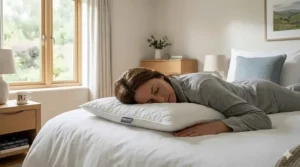
The Science Behind Sleep Posture and Pillow Height
Research into sleep ergonomics has evolved significantly over recent decades, with particular focus on how pillow height affects spinal health. The cervical spine (neck region) contains seven vertebrae designed to maintain a gentle forward curve. During sleep, pillows should preserve this natural curvature rather than force the neck into extreme positions.
Studies published in the Journal of Chiropractic Medicine demonstrate that improper pillow height correlates with increased neck pain, morning headaches, and reduced sleep quality. For stomach sleepers specifically, excessive pillow height creates a cascade of biomechanical issues: cervical hyperextension, muscle imbalance, and potential nerve compression.
UK physiotherapy guidance emphasises individual variation in optimal pillow height. Factors including shoulder width, neck length, mattress firmness, and personal comfort all influence the ideal specification. This explains why “one-size-fits-all” approaches to pillow selection often fail—what works brilliantly for one person may exacerbate problems for another with different anatomical characteristics.
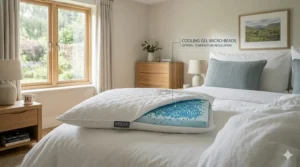
Temperature regulation also plays a crucial role in sleep quality. The brain naturally cools during sleep as part of circadian rhythm regulation. Pillows that trap heat can interfere with this process, leading to fragmented sleep and morning grogginess. Gel-infused memory foams and natural latex both offer superior heat dissipation compared to traditional pillow materials, making them particularly valuable for UK sleepers during warmer months.
Common Mistakes When Choosing Ultra Thin Pillows
Assuming All “Thin” Pillows Are Equal
Not all thin pillows are created with stomach sleepers in mind. Some marketed as “thin” still measure 3-4 inches, which defeats the purpose for genuine stomach sleepers. Always verify exact height in centimetres or inches rather than relying on vague marketing terms.
Ignoring Break-In Periods
Memory foam pillows often feel firmer initially, softening gradually over 7-14 days as the foam responds to body heat and pressure. Many sleepers abandon excellent pillows prematurely, before the material has properly broken in. Give new pillows at least two weeks before final judgement.
Overlooking Cover Quality
The pillowcase you sleep on matters enormously. Cheap, synthetic covers can trap heat and feel clammy. Look for bamboo-derived fabrics, cotton blends, or moisture-wicking materials. Removable, washable covers are essential for hygiene and longevity.
Expecting Instant Pain Relief
If you’ve spent years sleeping on improper pillow heights, your muscles and joints have adapted to that position. Switching to correct support may initially feel unusual as your body readjusts. Some temporary discomfort during the first week is normal—persistent pain suggests the pillow isn’t right for you.
Neglecting Mattress Compatibility
Your pillow works in tandem with your mattress. A saggy, unsupportive mattress will undermine even the best pillow. If your mattress is over 8 years old or shows visible sagging, consider whether it needs replacement alongside your new pillow.
Price Range & Value Analysis Table
| Price Bracket | What to Expect | Best For | Example Models |
|---|---|---|---|
| £13-£20 | Basic materials, fibre fill, standard covers, adequate support | Budget-conscious, trying thin pillows first time | MINUPWELL, budget NOFFA |
| £20-£30 | Gel memory foam, better covers, cooling features, good durability | Most stomach sleepers, value seekers | Iwacool, AOTOZE, NOFFA |
| £30-£40 | Premium foam, advanced cooling, travel bags, superior construction | Quality-focused, frequent users | BLISSBURY, DLIGHT BD |
| £40-£50+ | Natural latex, eco-materials, multiple options, longest lifespan | Eco-conscious, luxury seekers, allergy sufferers | SUQ I OME, premium latex options |
Caring for Your Ultra Thin Pillow
Memory Foam Pillows
Do:
- Remove and wash covers monthly in cool water
- Air out the pillow weekly by standing it in a well-ventilated area
- Use pillow protectors beneath pillowcases for extra protection
- Spot clean foam with damp cloth if necessary
Don’t:
- Wash the memory foam core (it will disintegrate)
- Expose to direct sunlight for extended periods (degrades foam)
- Use harsh chemicals or bleach
- Wring or twist the pillow
Latex Pillows
Do:
- Wash covers monthly in warm water
- Vacuum the latex surface gently to remove dust
- Allow occasional airing in shade
- Use mild, eco-friendly detergents
Don’t:
- Expose to prolonged direct sunlight (latex degrades in UV)
- Use hot water on covers
- Fold or compress for long storage periods
Fibre Fill Pillows
Do:
- Machine wash entire pillow monthly (30°C)
- Tumble dry on low heat with tennis balls to restore fluffiness
- Replace every 1-2 years
- Fluff daily to maintain shape
Don’t:
- Use fabric softener (reduces loft)
- Wash on hot cycles
- Wring out excess water (roll in towels instead)
Health Conditions and Ultra Thin Pillows
Chronic Neck Pain
Stomach sleepers with existing neck pain often see dramatic improvement with proper pillow height. The reduction in cervical strain allows inflamed muscles and joints to recover. Pair your ultra thin pillow with gentle neck stretches and proper daytime posture for best results.
Sleep Apnoea and Snoring
Whilst not a cure, proper pillow height can improve airway alignment, potentially reducing snoring episodes. Some sleep apnoea sufferers find breathing easier with minimal neck extension. However, always consult your GP for serious sleep-breathing issues rather than relying solely on pillow changes.
Migraines and Headaches
Morning headaches often stem from neck muscle tension during sleep. By reducing strain, ultra thin pillows may decrease headache frequency. Track your headaches in a sleep diary to identify correlations with your new pillow.
Shoulder and Upper Back Pain
When stomach sleeping, arms often end up in awkward positions to accommodate thick pillows. A thinner pillow allows more natural arm placement, reducing shoulder compression and upper back tension.
Sustainability and Environmental Considerations
The pillow industry’s environmental impact deserves consideration, particularly for eco-conscious UK consumers. Traditional pillows often contain synthetic materials derived from petroleum, whilst manufacturing processes can involve significant water and energy consumption.
Natural Latex: Sourced from rubber trees, natural latex is renewable and biodegradable. Look for certifications like Eco-Institut or OEKO-TEX to ensure sustainable harvesting and processing.
Organic Cotton Covers: Conventional cotton production uses intensive pesticides and water. Organic cotton alternatives reduce environmental harm whilst offering similar comfort and breathability.
CertiPUR-US Foam: This certification ensures memory foam meets standards for low VOC emissions and doesn’t contain harmful chemicals like formaldehyde, mercury, or lead. Whilst not purely environmental, it represents better manufacturing practices.
Bamboo Fabrics: Often marketed as eco-friendly, bamboo viscose production can be chemically intensive. Look for OEKO-TEX certification to ensure responsible processing. True bamboo linen (less common) offers better environmental credentials.
Longevity: The greenest pillow is one that lasts longer. Investing in durable memory foam or latex pillows reduces replacement frequency compared to cheap fibre options requiring annual replacement.
Frequently Asked Questions
❓ What thickness pillow is best for stomach sleepers in the UK?
❓ Can ultra thin pillows help reduce neck pain for UK sleepers?
❓ How long do ultra thin memory foam pillows last in the UK climate?
❓ Are ultra thin pillows suitable for children and teenagers?
❓ What's the difference between ultra thin and low profile pillows available in UK shops?
Conclusion: Choosing Your Perfect Ultra Thin Pillow
Finding the right ultra thin pillow can genuinely transform your sleep quality, particularly if you’ve spent years battling morning neck pain and stiffness as a stomach sleeper. The seven options reviewed here represent the best currently available on Amazon.co.uk, spanning budget-friendly fibre fills to premium natural latex.
For most UK stomach sleepers, the Iwacool Ultra Thin at 2.25 inches offers outstanding value, combining genuine ultra-low height with effective cooling technology. Budget-conscious shoppers will appreciate the MINUPWELL 7D Fibre, whilst those seeking premium eco-friendly options should explore the SUQ I OME Latex range.
Remember that pillow comfort is highly individual. What feels perfect for one person may be uncomfortable for another with different body proportions or sleep preferences. Take advantage of Amazon’s return policies to trial options, giving each pillow at least two weeks for break-in before making final decisions.
Pair your new ultra thin pillow with good sleep hygiene—consistent bedtimes, cool bedroom temperatures around 16-18°C, and proper mattress support. Consider placing a small pillow under your pelvis when stomach sleeping, as recommended by NHS physiotherapy guidance, to further reduce back strain.
Your investment in proper sleep support pays dividends far beyond the initial purchase cost. Better sleep enhances cognitive function, mood regulation, immune response, and overall quality of life. For £13 to £45, an ultra thin pillow could be your most impactful health purchase this year.
Recommended for You
- 7 Best Soft Pillow for Stomach Sleepers UK 2026
- 7 Best Low Profile Pillows UK 2026: Transform Your Sleep
- 7 Best Thin Pillow for Stomach Sleepers UK 2026
Disclaimer: This article contains affiliate links. If you purchase products through these links, we may earn a small commission at no additional cost to you. Prices shown are approximate and may vary.
✨ Found this helpful? Share it with your mates! 💬🤗
