
In This Article
If you’re waking up with that familiar ache running down your lower back or hip, you’re not imagining things. Side sleeping—favoured by roughly 60% of British adults according to sleep experts—puts your spine through a rather testing night shift. Your top leg pulls downward, your pelvis rotates, and your lumbar spine twists into positions that would make any physiotherapist wince.
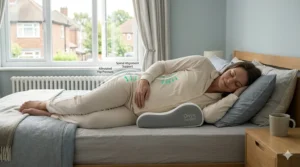
The solution isn’t abandoning your preferred sleep position. It’s understanding that a back support pillow side sleeper setup requires more than just your standard head pillow. Between-the-knees support, lumbar cushioning, and proper hip stacking all play crucial roles in maintaining that neutral spine alignment sleep experts keep banging on about. What most UK buyers overlook is that the damp British climate affects pillow materials differently than drier regions—memory foam can retain moisture, covers need frequent washing, and cheaper polyester fills go flat faster in our temperate conditions.
I’ve analysed dozens of products available on Amazon.co.uk, consulted NHS sleep guidance, and examined real customer feedback from British users dealing with our specific sleeping environment. This guide cuts through the marketing waffle to identify which back support pillows actually deliver on their promises for UK side sleepers—and which ones you should avoid despite their glossy product photos.
Quick Comparison Table: Top Back Support Pillows for Side Sleepers
| Product | Type | Price Range | Best For | Key Feature |
|---|---|---|---|---|
| ComfiLife Orthopedic Knee Pillow | Between-knees | £20-£30 | Hip alignment | Ergonomic contour design |
| Everlasting Comfort Memory Foam | Between-legs | £25-£35 | All-night stability | Removable strap system |
| Aeyla Adjustable Body Pillow | Full-body | £60-£80 | Customisable support | Adjustable fill levels |
| ComfiLife Lumbar Support Pillow | Lower back | £25-£35 | Back sleepers transitioning | Waist support wedge |
| Sleep Yoga Side Sleeper Pillow | Multi-position | £30-£45 | Versatile use | Down-alternative fill |
| MedCline Therapeutic Body Pillow | Premium full-body | £120-£155 | Pregnancy/medical needs | Shredded memory foam |
| Budget V-Shaped Support Pillow | Multi-use | £12-£20 | Entry-level testing | Basic orthopaedic support |
From this comparison, the ComfiLife Orthopedic Knee Pillow and Everlasting Comfort models represent the sweet spot for most UK side sleepers—they’re affordable enough not to feel like a gamble, compact enough for British bedroom storage, and engineered specifically for the between-knees gap that causes most spinal misalignment. The premium MedCline option justifies its higher price if you’re pregnant or recovering from back surgery, whilst budget V-shaped pillows serve as useful testing ground before committing to specialist products.
💬 Just one click — help others make better buying decisions too! 😊
Top 7 Back Support Pillows for Side Sleepers: Expert Analysis
1. ComfiLife Orthopedic Knee Pillow
This contoured memory foam pillow slots between your knees and holds its shape through the night—which matters more than you’d think when you’re unconsciously shifting positions during REM cycles. The 9.8 x 7.9 x 6.3-inch dimensions provide adequate thickness for most body frames without creating that “sleeping with a breeze block” sensation cheaper alternatives deliver.
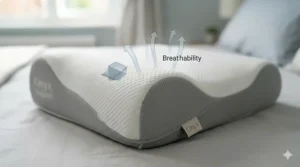
What sets the ComfiLife apart for UK users is the breathable zippered cover. British bedrooms rarely reach the sweltering temperatures that prompt Americans to invest in cooling gel technology, but our damp climate means pillows need proper airflow to avoid that clammy feeling by 3am. The high-density memory foam maintains support better than budget polyester fills, which compress flat after about three months of nightly use—rather important when you’re spending £20-£30.
UK buyers should note this pillow works best for those between 60-90kg. Lighter sleepers may find it too firm initially, whilst heavier individuals might compress it beyond its optimal support range. The foam is temperature-sensitive, so it’ll feel firmer on chilly January mornings and softer during summer—room temperature is ideal for consistent performance.
Pros:
- Ergonomic contour keeps knees separated throughout sleep cycles
- Memory foam retains shape better than polyester alternatives
- Machine-washable cover handles frequent laundering (necessary in humid UK climate)
Cons:
- Initial “new foam” smell lingers for 3-4 days (normal off-gassing)
- May feel too firm for lighter-weight sleepers under 55kg
Price: Around £20-£30 on Amazon.co.uk | Value Verdict: Solid mid-range choice that outlasts budget options by months
2. Everlasting Comfort Memory Foam Knee Pillow
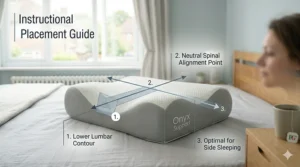
The dual concave design here is cleverly engineered—it cradles both your lower and upper legs, which prevents the pillow from sliding out of position when you inevitably roll over at 2am. Most knee pillows are contoured for just one leg, which works fine if you’re unconscious and motionless (you’re not), but the Everlasting Comfort model’s shape means it stays put through realistic sleep movement.
The removable elastic strap is either brilliant or pointless depending on your sleeping style. If you’re a restless sleeper who cycles through positions, the strap keeps the pillow attached to your leg—genuinely useful for pregnant women or those recovering from hip surgery. If you primarily stay on one side all night, the strap just adds laundry complexity. It’s also worth noting the strap can leave slight compression marks on your thigh if fastened too tightly, though this fades within minutes of waking.
For UK buyers, this pillow ships from Amazon UK warehouses with Prime eligibility, meaning next-day delivery rather than the two-week wait some imported products require. The cover uses a bamboo-derived viscose blend that wicks moisture better than pure cotton—rather handy given our tendency to wake up in puddles during humid August nights.
Pros:
- Dual concave design provides more stability than single-contour alternatives
- Elastic strap option for restless sleepers or medical recovery
- Bamboo-blend cover manages moisture better in British climate
Cons:
- Strap can feel constrictive if over-tightened during night
- Slightly bulkier than streamlined alternatives (storage consideration for compact British bedrooms)
Price: Around £25-£35 on Amazon.co.uk | Value Verdict: Worth the extra fiver over budget options if you move frequently during sleep
3. Aeyla Adjustable Body Pillow
This straight-profile body pillow earned its reputation by solving the problem cheaper alternatives ignore: one firmness level doesn’t suit everyone. The Aeyla arrives over-filled with adjustable bamboo-shredded memory foam, and you literally unzip it and remove handfuls of fill until it matches your preferred support level. Brilliant for couples sharing a bed who need different firmness preferences.
The bamboo cover isn’t just eco-marketing waffle—it genuinely regulates temperature better than synthetic materials. British bedrooms rarely need active cooling technology, but the breathability prevents that sweaty-pillow situation you get with cheap polyester covers. The cover withstands repeated washing at 40°C without shrinking, which you’ll appreciate after the third time your partner’s cup of tea ends up on your pillow.
At 150cm length, this pillow provides full-body support from head to ankles, though realistically you’ll use it mainly for hip-to-knee alignment. UK buyers should measure their bed before ordering—it takes up considerable space on a standard UK double (135cm wide), making it better suited for king-size beds (150cm+) or single users who don’t share their sleeping space.
Pros:
- Adjustable fill lets you customise firmness to your exact preference
- Bamboo cover manages moisture and temperature better than synthetics
- 100-night trial period (return for full refund if unsuitable)
Cons:
- £60-£80 price point makes it pricier than between-knees alternatives
- Takes up significant bed space (not ideal for UK double beds shared with partner)
Price: Around £60-£80 on Amazon.co.uk | Value Verdict: Premium investment that adapts as your needs change over time
4. ComfiLife Lumbar Support Pillow for Sleeping
This wedge-shaped pillow targets a different problem point—the gap between your waist and mattress when lying on your side. At 2.5 inches thick, it’s a low-profile support cushion rather than a towering wedge pillow, which means it doesn’t force your spine into unnatural positions. The 27.5-inch length provides support across your entire lower back region, not just a localised pressure point.
What most UK buyers misunderstand about this pillow is its intended use case. It’s designed for mild lower back discomfort during sleep, not for seated lumbar support or acid reflux elevation. If you’re experiencing sharp sciatic pain or herniated disc symptoms, this gentle cushioning won’t provide medical-grade correction—see your GP and ask for NHS physiotherapy referral instead.
The medium-soft memory foam makes this pillow particularly suited for lighter-framed side sleepers who need gentle support rather than firm correction. Heavier individuals or those with significant lumbar lordosis may find it too soft to prevent their lower back from sinking into softer mattresses. It works best paired with medium-firm to firm mattresses that provide adequate baseline support.
Pros:
- Low-profile design doesn’t create excessive elevation (avoids awkward spine angles)
- 27.5-inch length supports full lower back region
- Medium-soft foam comfortable for lighter sleepers
Cons:
- Not firm enough for heavier individuals (90kg+)
- Limited corrective capability for serious back conditions
- Only effective with medium-firm or firmer mattresses
Price: Around £25-£35 on Amazon.co.uk | Value Verdict: Useful supplementary support for mild discomfort, not a standalone solution for chronic pain
5. Sleep Yoga Side Sleeper Pillow
Designed by a chiropractor specifically for side sleepers, this pillow takes a different approach with down-alternative fill rather than memory foam. The 26-inch length provides support for both knees and ankles simultaneously, which prevents your legs from making contact through the night—genuinely helpful if you’re prone to restless legs or nocturnal circulation issues.
The soft, cushiony feel differs markedly from firm memory foam alternatives. Some UK users prefer this plusher sensation, finding memory foam too rigid and “orthopaedic” feeling. Others report the down-alternative fill compresses more over time compared to high-density foam, requiring daily fluffing to maintain optimal support. It’s rather like the difference between a traditional feather pillow and a memory foam neck support—neither is objectively better, they suit different preferences.
The cotton-blend cover breathes well and withstands machine washing without shrinking or pilling. The pillow arrives vacuum-packed and needs 24-48 hours to fully expand to its intended dimensions—don’t judge its effectiveness immediately after unboxing. UK customers should note the pillow performs best at room temperature around 18-20°C; it feels softer in warm bedrooms and firmer in cold rooms.
Pros:
- Chiropractor-designed angles optimised for side sleeping posture
- Softer, more plush feel than rigid memory foam alternatives
- 26-inch length supports both knees and ankles simultaneously
Cons:
- Down-alternative fill requires more frequent fluffing than memory foam
- May compress faster than high-density foam options
- Needs 24-48 hours to fully expand after vacuum-packed delivery
Price: Around £30-£45 on Amazon.co.uk | Value Verdict: Good choice if you prefer softer support over firm memory foam
6. MedCline Therapeutic Body Pillow
At £120-£155, this pillow sits firmly in the premium category—and it’s engineered to justify that price for specific use cases. The shredded memory foam fill is adjustable (you can remove foam to customise thickness), whilst the patented inner curvature prevents that digging-into-your-neck sensation some contoured pillows create. UK buyers should note this is left-side sleeping specific by design, which aligns with NHS recommendations for pregnant women to sleep on their left side for improved circulation to the baby.
What you’re paying for here is medical-grade support rather than general comfort improvement. The MedCline pillow helps maintain side-sleeping position throughout the night—crucial for conditions like acid reflux, sleep apnoea, or post-surgical recovery where sleeping position directly affects health outcomes. If you’re simply looking to reduce mild hip discomfort, the £100+ price premium over standard knee pillows doesn’t deliver proportional value.
The pillow comes with a plush washable case installed and CertiPUR-US® certified foam (made without phthalates or harmful chemicals). Two size options accommodate different body frames. UK delivery typically takes 3-5 working days via Amazon.co.uk, with full returns accepted within the standard 30-day window if unsuitable.
Pros:
- Medical-grade design for pregnancy, acid reflux, or recovery needs
- Adjustable shredded foam customises to your body shape
- Patented curvature design prevents neck pressure
- CertiPUR-US® certification ensures chemical-free materials
Cons:
- £120-£155 price point is substantial investment
- Specifically designed for left-side sleeping (less versatile)
- Size takes up considerable bed space
Price: Around £120-£155 on Amazon.co.uk | Value Verdict: Justified investment for medical needs or pregnancy; overpriced for general comfort improvement
7. Budget V-Shaped Orthopaedic Support Pillow
Available from multiple UK brands (CHILIMILII, ELOVELA, SYSN) at £12-£20, these V-shaped pillows offer entry-level orthopaedic support without the financial commitment of premium alternatives. The triangle design props you up for reading in bed, supports your back whilst sitting, or wedges between your knees for side sleeping—versatile but not optimised for any single purpose.
The hollow fibre filling provides soft cushioning but compresses noticeably faster than memory foam alternatives. Expect these budget pillows to lose about 20-30% of their height within three months of nightly use. For testing whether knee-pillow sleeping suits you before investing in premium products, they serve that purpose adequately. For long-term nightly use, you’ll likely need to replace them every 6-9 months.
Most UK brands include a free pillowcase (usually polycotton blend) that’s machine washable. The pillows themselves can handle gentle washing but may lose some loft permanently after laundering. Storage is straightforward—they fold or compress easily, which matters in compact British bedrooms where wardrobe space comes at premium.
Pros:
- £12-£20 price point makes trying orthopaedic support low-risk
- Multi-functional design (reading, sitting, sleeping)
- Compact storage when not in use
Cons:
- Hollow fibre fill compresses faster than memory foam
- Not ergonomically optimised for side sleeping specifically
- Needs replacement every 6-9 months with nightly use
Price: Around £12-£20 on Amazon.co.uk | Value Verdict: Sensible starting point to test knee-pillow sleeping before investing in premium products
Understanding Side Sleeping Mechanics: Why Your Back Hurts by Morning
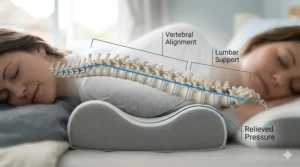
Side sleeping maintains lateral spinal alignment and reduces pressure on the lumbar discs when done correctly, but that “when done correctly” qualifier is where most people stumble. According to research on sleeping positions, when you lie on your side without proper support, your top leg naturally falls forward, pulling your pelvis into rotation. This twists your lumbar spine out of neutral alignment, creating torsional stress on the facet joints and intervertebral discs.
The biomechanics are straightforward: placing a pillow between your knees can reduce spine pressure by nearly half because it prevents your upper leg from pulling your pelvis forward. Your hips stay level with your shoulders, maintaining the spine’s natural curves rather than forcing it into twisted positions that strain ligaments and compress nerves.
British mattresses tend toward firmer support than American alternatives, which actually works in side sleepers’ favour for spinal alignment. However, firmer mattresses create larger gaps between your waist and the sleeping surface—that’s where lumbar support pillows earn their keep. As highlighted in BBC Science Focus guidance on pillow selection, memory foam pillows or those with contouring features can be beneficial for maintaining proper alignment, particularly when you’re dealing with the temperature fluctuations of British bedrooms where foam responds differently at 14°C versus 22°C.
The critical measurement is the gap between your waist and mattress when lying on your side. Measure this distance (have someone help), then select a pillow thickness that fills that gap without pushing your spine into lateral flexion. For most adults, this ranges between 5-10cm depending on shoulder width and hip circumference. Broader-shouldered individuals need thicker support; narrower frames need less.
Case Study: Three UK Side Sleepers, Three Different Solutions
Profile 1: Sarah, 34, Manchester—Office Worker with Lower Back Pain
Working from a dining table-turned-desk during lockdown left Sarah with chronic lower back discomfort that worsened overnight. At 68kg with a medium build, she initially tried a budget £15 V-shaped pillow between her knees but found it too soft to prevent her top leg from pulling forward. Switching to the ComfiLife Orthopedic Knee Pillow provided firmer support that maintained hip alignment throughout the night. After three weeks, her morning stiffness reduced noticeably. She pairs it with a medium-firm mattress and has learned to position the pillow before falling asleep rather than trying to insert it whilst half-conscious at 2am.
Profile 2: James, 52, Edinburgh—Post-Surgical Recovery
Following lumbar discectomy surgery, James needed medical-grade support to maintain side-sleeping position during recovery. His physiotherapist recommended left-side sleeping to reduce pressure on the surgical site. The MedCline Therapeutic Body Pillow provided the necessary support structure, though the £140 investment felt steep initially. The adjustable foam let him modify support levels as his mobility improved over 12 weeks of recovery. He continues using it six months post-surgery, finding it prevents him from inadvertently rolling onto his back during sleep.
Profile 3: Priya, 28, London—Pregnant, Second Trimester
At 24 weeks pregnant, Priya’s growing bump made side sleeping increasingly uncomfortable. The Aeyla Adjustable Body Pillow provided full-body support that adapted as her pregnancy progressed—she removed fill incrementally as her bump expanded, preventing the pillow from forcing her into awkward positions. The bamboo cover handled frequent washing (pregnancy night sweats are real), and the pillow continues serving post-pregnancy as general comfort support. Living in a London flat with limited storage, she appreciates that the pillow folds compactly when not in use.
How to Choose Your Back Support Pillow: UK-Specific Buying Guide
1. Measure Your Body Gap First
Lie on your side on your mattress and have someone measure the distance from your waist to the mattress surface. This determines your required lumbar support thickness. For between-knees pillows, measure the gap between your knees when lying in your natural sleeping position—this varies from 8-15cm depending on hip width.
2. Consider Your Weight and Build
Heavier individuals or those with broader shoulders often need firmer, higher-loft pillows to keep the spine aligned, whilst lighter or more petite people benefit from softer, lower-loft options. UK product descriptions rarely specify weight recommendations clearly—assume medium-density memory foam works for 60-85kg, whilst lighter sleepers should seek “medium-soft” or “plush” options.
3. Factor in British Climate Realities
Memory foam retains moisture in humid conditions. If your bedroom lacks adequate ventilation or you live in particularly damp regions (looking at you, Scottish Highlands), prioritise pillows with breathable covers (bamboo-derived viscose, cotton blends) over synthetic materials. Cheaper polyester covers trap moisture and develop that musty smell after a few weeks.
4. Match to Your Mattress Firmness
Firm mattresses create larger waist gaps requiring thicker lumbar support. Soft mattresses already provide some lateral give, so excessively thick pillows can over-correct and push your spine into opposite misalignment. Medium-firm mattresses (the most common in UK bedrooms) pair best with 5-8cm thick lumbar pillows or standard-density knee pillows.
5. Assess Your Storage Reality
British bedrooms are notoriously compact compared to North American equivalents. Full-body pillows measuring 140-150cm take up considerable space. If you’re working with a UK double bed (135cm wide) shared with a partner, between-knees pillows (20-30cm) are more realistic than body-length alternatives that colonise half the mattress.
6. Verify UK Plug Compatibility
For heated lumbar pillows or electric massage versions, confirm 230V UK compatibility and Type G plug fittings. Some imported products ship with US voltage specifications (110V) requiring adapters that add bulk and create safety concerns. Stick with products sold directly through Amazon.co.uk’s UK warehouse for proper electrical standards.
7. Check Amazon.co.uk Prime Eligibility
Products fulfilled by Amazon UK typically arrive next-day with Prime membership, whilst third-party sellers may require 7-14 days shipping from overseas. For products you’ll use immediately (pregnancy support, post-surgical recovery), Prime eligibility justifies selecting slightly pricier options over cheaper imports with lengthy delivery windows.
Common Mistakes When Buying Back Support Pillows in the UK
Mistake #1: Ignoring UKCA Marking Requirements
Post-Brexit, products sold in England, Scotland, and Wales require UKCA (UK Conformity Assessed) marking demonstrating safety compliance. Northern Ireland follows different rules under the Protocol. Whilst most memory foam pillows aren’t technically covered under UKCA for materials safety, checking for OEKO-TEX® Standard 100 certification ensures the foam and fabrics meet chemical safety standards. Cheaper imports occasionally skip these certifications entirely.
Mistake #2: Buying Excessively Thick Lumbar Support
More thickness doesn’t equal better support. Overlift your waist with a 10cm wedge when you only need 6cm, and you’ll create opposite-direction spinal misalignment. Your spine should remain horizontally straight when viewed from behind—neither sagging downward nor arching upward.
Mistake #3: Choosing Knee Pillows Too Soft or Too Firm
Memory foam firmness varies by density (measured in kg/m³, though manufacturers rarely disclose this). High-density foam (80+ kg/m³) feels very firm and maintains shape longer but may feel uncomfortable initially. Low-density foam (under 50 kg/m³) compresses quickly and loses effectiveness within months. Medium-density (50-80 kg/m³) provides the best compromise for most UK users.
Mistake #4: Expecting Instant Pain Relief
Your body needs 7-14 days to adapt to new sleeping support. Initial discomfort is normal as your muscles adjust to proper alignment after years of sleeping in twisted positions. Research from the National Spine Health Foundation confirms that maintaining proper spinal alignment during sleep is essential for reducing back pain, but adaptation takes time. If pain persists or worsens after two weeks, the pillow thickness or firmness is likely wrong for your build—not that orthopaedic pillows “don’t work.”
Mistake #5: Neglecting Pillow Maintenance
British humidity means pillow covers need washing every 2-3 weeks, not monthly. Memory foam itself shouldn’t be machine washed (it disintegrates), but most quality pillows use removable, washable covers specifically for this reason. Unzip, launder at 40°C, air dry fully before reinstalling. Foam exposed to moisture develops mould in UK climate.
Integrating Back Support Pillows into Your Sleep Routine
Week 1-2: Adjustment Period
Position your knee or lumbar pillow before getting into bed, not after you’re already lying down. Your body needs to learn the new alignment pattern. Expect some initial awkwardness—your muscles have developed habits around your old sleeping position. Mild soreness is normal; sharp pain indicates incorrect pillow thickness or placement.
Week 3-4: Habit Formation
By week three, your body should automatically seek the pillow during sleep. If you wake to find it on the floor, you’re likely positioning it incorrectly. Knee pillows should sit between your thighs just above the knees, not at ankle level. Lumbar pillows should contact your waist, not your upper back or hips.
Month 2+: Long-Term Use
Quality memory foam maintains support for 12-18 months with nightly use before requiring replacement. Budget alternatives need replacing every 6-9 months. Signs your pillow has lost effectiveness: visible indentation remaining after use, failure to return to original shape within 30 seconds, or returning morning stiffness despite continued use.
British Winter Considerations
Memory foam stiffens in cold temperatures. If your bedroom drops below 16°C during winter (standard in many British homes with heating timers), allow your pillow 10-15 minutes to warm to body temperature after getting into bed. Some users briefly place their pillow under the duvet whilst showering to pre-warm it.
Back Support Pillow vs Traditional Body Pillow: Which Do You Actually Need?
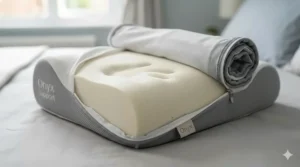
Traditional body pillows are essentially elongated head pillows—they provide cuddle comfort and general support but lack ergonomic contouring for spinal alignment. Back support pillows use contoured shapes and firmer materials specifically engineered to maintain neutral spine positioning.
Choose Traditional Body Pillow If:
- You primarily want comfort and psychological security (pregnancy cuddle factor)
- You frequently change sleeping positions throughout the night
- You’re testing whether pillow-based support suits you before investing in specialist products
- Budget under £25 and you need something immediately
Choose Back Support Pillow If:
- You wake with specific hip, lower back, or sciatic pain
- You’ve had physiotherapy recommendations for sleeping support
- You’re recovering from back or hip surgery
- You’re pregnant and need medically recommended left-side sleeping support
- Budget allows £25-£60 investment in purpose-built solution
For many UK side sleepers, the answer is “both”—a contoured knee pillow for spinal alignment paired with a traditional body pillow for comfort and warmth. This combination costs £35-£50 total and provides comprehensive support without taking up the entire bed.
Long-Term Cost Analysis: Budget vs Premium Options
Budget Option (£12-£20):
- Initial cost: £15
- Replacement frequency: Every 6 months
- 5-year cost: £150 (10 replacements)
- Additional laundry wear from cover washing
Mid-Range Option (£25-£35):
- Initial cost: £30
- Replacement frequency: Every 15-18 months
- 5-year cost: £90-£120 (3-4 replacements)
- Better durability reduces waste
Premium Option (£60-£155):
- Initial cost: £80-£140
- Replacement frequency: Every 24-36 months
- 5-year cost: £120-£210 (2-3 replacements)
- Adjustable features extend usability as needs change
The mid-range £25-£35 category offers the best value for most UK side sleepers—you’re not gambling on cheap materials that fail quickly, but you’re not overpaying for medical-grade features you might not need. Premium options justify themselves primarily for pregnancy, medical recovery, or if you’re particularly fussy about sleep quality and willing to invest accordingly.
Factor in the hidden costs of poor sleep: GP appointments for chronic back pain (NHS is free but time-consuming), over-the-counter pain medication (£8-£12 monthly), reduced work productivity from exhaustion. A £30 pillow that genuinely improves sleep pays for itself within months through avoided healthcare costs and improved daily functioning.
FAQ: Back Support Pillows for Side Sleepers
❓ Are memory foam knee pillows better than polyester-filled alternatives for UK side sleepers?
❓ How thick should a knee pillow be for proper spine alignment?
❓ Can I use a back support pillow if I switch between side and back sleeping during the night?
❓ Do back support pillows help with sciatic nerve pain specifically?
❓ Are pregnancy body pillows worth the investment for non-pregnant side sleepers in the UK?
Conclusion: Finding Your Sleep Solution
The best back support pillow side sleeper setup depends on your specific pain points, body measurements, and British bedroom realities. If you’re experiencing hip discomfort and want to test knee-pillow sleeping without major financial commitment, start with a mid-range contoured option around £25-£30. The ComfiLife Orthopedic Knee Pillow or Everlasting Comfort models provide proper ergonomic support without the premium price tags.
For comprehensive full-body support or pregnancy needs, invest in the Aeyla Adjustable Body Pillow (around £70)—the customisable fill adapts as your requirements change, and the 100-night trial period removes financial risk. If you’re recovering from surgery or managing chronic conditions, the MedCline Therapeutic Body Pillow justifies its £120-£155 cost through medical-grade engineering and durability.
What matters most is matching pillow thickness to your body measurements and mattress firmness, not chasing the most expensive option. Measure that waist-to-mattress gap, consider your weight and build, and select accordingly. Give your body the full two-week adjustment period before deciding whether the pillow works—proper spinal alignment takes time to feel comfortable after years of sleeping in twisted positions.
Your spine doesn’t care about marketing claims or Amazon reviews. It cares about neutral alignment and pressure distribution. Get those two factors right, and you’ll notice the difference within a fortnight.
Recommended for You
- Best Pillow for Spinal Alignment Sleeping UK 2026
- Best Orthopaedic Pillow Back Pain: 7 UK Expert Picks 2026
- 7 Best Lumbar Pillows UK 2026: Expert-Tested for Back Pain Relief
Disclaimer: This article contains affiliate links. As an Amazon Associate, I earn from qualifying purchases. If you purchase products through these links, we may earn a small commission at no additional cost to you.
✨ Found this helpful? Share it with your mates! 💬🤗
