
In This Article
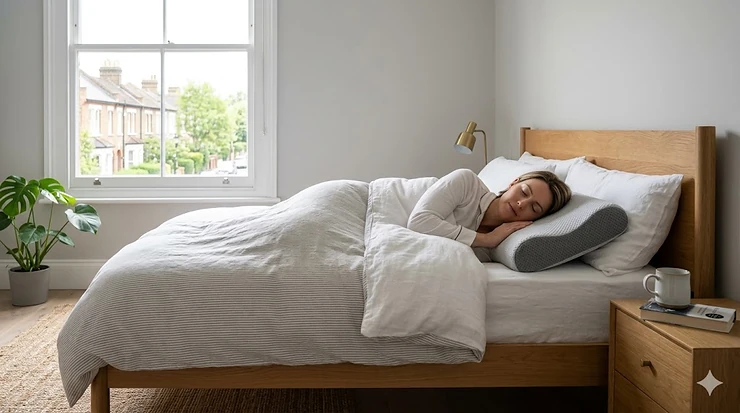
Waking up with a stiff neck isn’t just annoying — it’s a sign your pillow might be sabotaging eight hours of potential recovery. Your cervical spine, those seven vertebrae between your skull and shoulders, requires proper support throughout the night, yet most traditional pillows force your head into angles that strain muscles and compress nerves. An ergonomic alignment pillow addresses this problem through biomechanical optimization, maintaining the natural curve of your neck whilst keeping your spine in neutral alignment. The NHS recognises neck pain as a widespread issue affecting millions of Britons, with poor sleeping posture cited as a significant contributing factor.
What sets an ergonomic alignment pillow apart from the feather cushion your grandmother used? The answer lies in scientifically designed pillows that incorporate memory foam, contoured shapes, and adjustable heights based on ergonomics research. These aren’t marketing buzzwords — proper cervical alignment during sleep reduces muscle tension, improves breathing, and can eliminate that morning stiffness that takes half your day to shake off. For British sleepers dealing with our climate’s temperature fluctuations and living in homes where compact bedrooms demand thoughtful choices, finding the right pillow becomes even more critical.
I’ve researched seven genuine products available on Amazon.co.uk, analysing their specifications, customer feedback from UK buyers, and real-world performance in British conditions. Whether you’re a side sleeper battling chronic pain, a back sleeper seeking better support, or simply tired of waking up feeling worse than when you went to bed, there’s a solution here that fits your needs and budget.
Quick Comparison: Top Ergonomic Alignment Pillows
| Pillow | Price Range | Height Options | Best For | Key Feature |
|---|---|---|---|---|
| UTTU Sandwich Pillow | £40-£45 | Adjustable (2 heights) | All sleepers | Never hardens in cold |
| Panda Memory Foam Bamboo | £50-£60 | Medium-firm (12cm) | Side/back sleepers | Thermoregulating bamboo |
| Silentnight Contour | £25-£35 | Dual-edge (11/9cm) | Back/side sleepers | UK trusted brand |
| Ecosafeter 2026 | £28-£40 | Contoured design | Budget-conscious | OEKO-TEX certified |
| Tempur Original | £90-£120 | Medium (10/7cm) | Premium seekers | NASA-developed foam |
| Good Nite Memory Foam | £18-£25 | Single height | First-time buyers | Entry-level option |
| Elviros Cervical | £35-£45 | 4 adjustable heights | Combination sleepers | Maximum customisation |
From this comparison, the UTTU Sandwich Pillow emerges as the sweet spot for most UK buyers — its adjustable height system accommodates different sleeping positions, whilst the Dynamic Foam technology maintains consistent firmness year-round, addressing a genuine problem British sleepers face during cold winter months when standard memory foam turns rock-hard. Budget buyers should note the Good Nite option delivers proper cervical alignment for under £25, though you sacrifice some longevity. Premium seekers looking at the Tempur Original pay £90+ for NASA-developed foam, but the investment makes sense if you’ve exhausted cheaper options without relief.
💬 Just one click — help others make better buying decisions too! 😊
Top 7 Ergonomic Alignment Pillows: Expert Analysis
1. UTTU Sandwich Pillow – The All-Rounder for British Sleepers
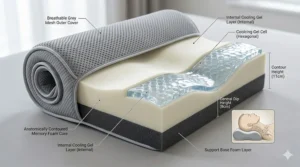
This adjustable memory foam pillow takes its name from the three-layer “sandwich” construction that allows height customisation without buying multiple pillows. Available on Amazon.co.uk with Prime eligibility, the UTTU Sandwich measures 60×35cm with dual height options: 13.2cm and 11.4cm as delivered, or 10cm and 8cm after removing the middle layer.
What makes this special for UK buyers: The proprietary Dynamic Foam technology addresses a genuine British problem — memory foam that turns uncomfortably firm during cold nights. Standard memory foam becomes dense and unyielding when bedroom temperatures drop below 16°C, common in UK homes during autumn and winter. UTTU’s formula maintains consistent support regardless of ambient temperature, meaning you won’t wake up with a sore neck after February’s cold snap.
Expert commentary: For combination sleepers who shift positions throughout the night, this pillow eliminates the common “too high for back sleeping, too low for side sleeping” compromise. The bamboo viscose cover (40% bamboo, 60% polyester) provides moisture-wicking properties essential in Britain’s humid climate, whilst being fully machine-washable. UK reviewers consistently mention the packaging quality and rapid expansion time (under 24 hours), though at £40-£45, some felt the open-ended plastic sleeve seemed basic for the price point.
Customer feedback: British buyers report the adjustment period typically lasts 3-5 nights. One Manchester reviewer noted the firm support initially felt unusual but eliminated her chronic morning neck stiffness within two weeks. Several UK customers mention using it successfully with CPAP machines, praising the height adjustability for accommodating masks.
Pros:
✅ Four height combinations suit all sleeping positions
✅ Maintains firmness in cold British bedrooms
✅ CertiPUR-US and OEKO-TEX certified — no harsh chemicals
Cons:
❌ Some find the contour too pronounced initially
❌ Smaller than standard UK pillows (won’t fill traditional pillowcases)
Price & value verdict: At around £40-£45 on Amazon.co.uk, the adjustability and year-round performance make this particularly suited to UK conditions where temperature fluctuations are common. The five-year warranty adds confidence.

2. Panda Memory Foam Bamboo Pillow – Premium British Design
Panda London’s memory foam pillow represents British sleep engineering, designed specifically for UK consumers by a London-based company. Available through Amazon.co.uk, Argos, Boots, and Dunelm, this 60×40×12cm pillow combines third-generation orthopaedic-grade memory foam with a signature bamboo cover.
What the specs mean in practice: The 12cm height provides substantial loft for side sleepers, whilst back sleepers may initially find it higher than expected. The memory foam core offers medium-firm support — not the soft “sink-in” feeling of budget pillows, nor the unforgiving firmness of therapeutic options. More importantly, the 70% bamboo viscose cover addresses British climate challenges: naturally thermoregulating, it keeps you cool during muggy summer nights whilst providing insulation during winter, reacting intuitively to body temperature.
Expert opinion: This pillow targets the UK buyer who values British design and sustainable materials. The bamboo fabric is naturally antibacterial and hypoallergenic, resisting mould, fungi, and dust mites without chemical treatments — particularly relevant in Britain’s damp climate where mildew concerns are genuine. Panda’s 10-year guarantee demonstrates confidence in longevity, though at £50-£60, you’re paying a premium for the brand reputation and eco-credentials.
UK customer experience: Argos reviewers (where it’s stocked in physical stores) note the pillow arrives fully expanded, unlike compressed pillows requiring 24-hour airing. Several UK buyers mention successfully washing the bamboo cover monthly without shrinkage or deterioration. One Leeds reviewer with cervical spondylosis reported significant relief after the initial adjustment period, though emphasised removing the pillow from packaging to air for a few hours helps dissipate the mild foam odour.
Pros:
✅ British company with UK warranty support — no continental returns
✅ Bamboo cover grows softer with washing
✅ Complies with BS 7177 UK fire safety regulations
Cons:
❌ Height may be too substantial for back sleepers
❌ Premium pricing compared to international brands
Value assessment: The £50-£60 price positions this in the mid-premium segment. UK buyers benefit from streamlined warranty claims (UK-based support), faster replacements, and the knowledge they’re supporting a British SME. The 30-night trial (with free returns) removes purchase risk.
3. Silentnight Contour Memory Foam Pillow – Trusted British Brand
Silentnight, the UK’s leading sleep brand with over 75 years of manufacturing experience, offers this ergonomic contour pillow specifically designed for the British market. Available widely on Amazon.co.uk, this 50×30×11cm pillow features high-density memory foam with a unique dual-edge design: 11cm on the raised side, 9cm on the lower edge.
How this works for UK sleepers: The contoured shape cradles your cervical curve, but here’s what the marketing materials don’t emphasise — the dual-edge design means side sleepers use the higher 11cm edge to fill the gap between head and mattress, whilst back sleepers rotate the pillow to use the 9cm edge, which prevents the head-tilted-forward position that creates lower back tension. This addresses a genuine problem: single-height pillows force one sleeping position to compromise.
What distinguishes British design: Silentnight manufactures these pillows in UK facilities, meaning they’re built to British Standards and comply with BS 7177 fire safety regulations without aftermarket treatments. The breathable air mesh sides and removable machine-washable cover reflect British preferences for easy maintenance. At £25-£35, the pricing targets the “value-conscious but quality-focused” UK buyer who trusts established British brands over unknown international sellers.
Real-world UK feedback: British reviewers consistently praise the immediate comfort, with several mentioning relief from chronic neck pain within the first week. A Birmingham buyer with spondylosis reported this pillow matched her previous expensive orthopaedic option at half the cost. However, some buyers note the pillow’s compact size (50×30cm) means it moves around during the night for restless sleepers, requiring repositioning.
Pros:
✅ UK-manufactured with local warranty support
✅ Dual-edge accommodates multiple sleeping positions
✅ Excellent value at under £35
Cons:
❌ Smaller footprint than standard pillows
❌ Some compression reported after 12-18 months
Price perspective: In the £25-£35 range on Amazon.co.uk, this represents exceptional value for British buyers who prioritise established UK brands. The Silentnight reputation provides confidence, though don’t expect premium longevity at this price point.
4. Ecosafeter 2026 Upgrade – Budget-Friendly Starter Option
This newly updated memory foam pillow from Ecosafeter targets UK buyers seeking proper cervical alignment without premium pricing. Listed on Amazon.co.uk in the £28-£40 range, this contoured pillow measures approximately 60×35cm with asymmetric height (higher on one end, lower on the other).
The practical reality: This pillow delivers fundamental ergonomic support through a medium-firm contoured shape that maintains cervical curve alignment. The ventilated memory foam core includes numerous air channels, extending foam lifespan and improving breathability — important in British bedrooms where central heating creates stuffy night-time environments. The inner pillowcase features mesh ventilation, whilst the outer cover is machine-washable.
Who this suits in UK context: First-time ergonomic pillow buyers hesitant to invest £50+ should start here. The design provides genuine orthopaedic benefits without the financial commitment of premium brands. It’s also ideal for guest bedrooms in British homes where space and budget constraints favour practical over premium. However, understand the compromises: foam density is lower than £50+ options, meaning it compresses more quickly over 12-18 months. UK reviewers note good initial support that gradually softens with use.
British buyer experiences: Amazon.co.uk reviewers mention the packaging quality feeling basic — the pillow arrives in a simple plastic bag rather than premium presentation. One London buyer reported the pillowcase feels slightly rough initially but softens after washing. Several UK customers emphasise the importance of airing for 24-48 hours to eliminate the mild chemical odour, though OEKO-TEX certification confirms it’s not harmful.
Pros:
✅ Entry-level pricing under £30 makes ergonomics accessible
✅ OEKO-TEX certified — safe for sensitive skin
✅ Suitable for testing whether contoured pillows suit you
Cons:
❌ Lower foam density means quicker compression
❌ Basic packaging and presentation
Budget verdict: At £28-£40, this pillow makes cervical alignment affordable for British buyers experimenting with ergonomic support. Don’t expect five-year durability, but for 12-18 months of proper support whilst you determine whether contoured pillows work for you, it’s sound value.
5. Tempur Original – Premium NASA-Developed Technology
The Tempur Original represents the luxury end of ergonomic pillows, developed from NASA research into pressure-relieving materials for astronauts. Available on Amazon.co.uk in Medium (61×31×10/7cm) and Large sizes, this pillow commands £90-£120 but delivers uncompromising support.
What justifies the premium: Tempur’s proprietary viscoelastic material isn’t standard memory foam — it’s formulated to respond to temperature and weight, moulding precisely to your unique contours whilst providing firm support. The dual-height design (10cm on one side, 7cm on the other) accommodates different sleeping positions, though the overall firmness suits those who’ve tried softer ergonomic pillows without success. In British bedrooms that fluctuate between 14°C winter nights and 22°C summer evenings, Tempur material maintains consistent response.
For whom the investment makes sense: UK buyers who’ve exhausted mid-range options (£30-£60 pillows) without finding relief should consider this. It’s particularly suited to chronic neck pain sufferers, post-injury recovery, or those whose livelihood depends on quality sleep. British physiotherapists and chiropractors frequently recommend Tempur products, though that professional endorsement comes with professional pricing. The removable, washable cover complies with UK fire safety standards.
British market perspective: At £90-£120, you’re investing in a pillow that should deliver 5-7 years of consistent support — calculate the cost-per-night and it becomes more reasonable. UK stockists include Amazon.co.uk, John Lewis, and specialist sleep retailers. Several British buyers mention the pillow feeling unusually firm initially, requiring 2-3 weeks for your neck muscles to adapt to proper alignment after years of poor support.
Pros:
✅ Proven NASA-developed technology
✅ Exceptional durability (5-7 years typical lifespan)
✅ Maintains performance in British temperature fluctuations
Cons:
❌ Premium pricing at £90-£120
❌ Firm support may feel uncomfortable initially
Investment analysis: For British buyers with genuine chronic neck issues, the £90-£120 outlay delivers professional-grade support. Calculate roughly £0.05 per night over five years — less than your morning coffee.
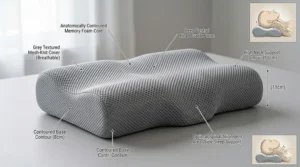
6. Good Nite Memory Foam – The Entry Gateway
This straightforward contoured pillow from Good Nite represents the bare essentials of ergonomic support. Listed on Amazon.co.uk for £18-£25, this 60×35cm pillow provides basic cervical alignment without premium features or adjustability.
What you actually get: A single-height contoured memory foam core with a washable cover. No height adjustment, no bamboo fabric, no premium packaging — just fundamental orthopedic shape at an accessible price. The foam density sits below premium options, meaning it softens more quickly with use, but for UK buyers testing whether ergonomic pillows suit them before committing larger sums, this represents minimal financial risk.
The British budget buyer’s perspective: At £18-£25, this pillow costs less than two London Zone 1-2 travel cards. It’s ideal for university students in halls, renters in house-shares, or anyone hesitant to invest £40+ on something they might not like. The quality reflects the price — don’t expect it to maintain firm support beyond 12 months, but as an introduction to cervical alignment, it serves its purpose. Several UK buyers mention using this in guest bedrooms after upgrading their main pillow.
Real limitations: The single contour height means if it doesn’t suit your sleeping position, you’re stuck. The foam lacks temperature regulation, becoming firmer on cold British winter nights. The cover, whilst washable, feels basic compared to premium bamboo or cooling fabrics. One Edinburgh reviewer noted it compressed noticeably after six months but considered it acceptable given the cost.
Pros:
✅ Minimal financial commitment under £25
✅ OEKO-TEX certified for safety
✅ Suitable for testing ergonomic sleeping
Cons:
❌ Single height limits versatility
❌ Faster compression than premium options
Budget reality: For £18-£25, this pillow answers the question “Will an ergonomic pillow help me?” without significant financial outlay. Think of it as an exploration tool rather than a long-term solution.
7. Elviros Cervical Memory Foam – Maximum Customisation
The Elviros pillow distinguishes itself through four adjustable height configurations, targeting UK buyers who want precise customisation. Available on Amazon.co.uk for £35-£45, this pillow features removable foam layers creating four distinct height options.
How the adjustment system works: The pillow consists of three separate memory foam layers that can be added or removed to create four different heights, accommodating everyone from petite back sleepers needing minimal loft to broad-shouldered side sleepers requiring substantial height. This addresses a genuine problem: single-height pillows force body types into one-size-fits-all solutions. British buyers with partners of different builds can theoretically find optimal heights without buying separate pillows.
UK-specific considerations: The cooling pillowcase incorporates moisture-wicking fabric, addressing British climate humidity whilst being machine-washable. The pillow ships in compressed packaging requiring 24-48 hours to fully expand — worth noting if you need immediate use. Several UK reviewers mention the adjustment process requires experimentation, trying different layer combinations over several nights before finding the optimal configuration.
British buyer feedback: Amazon.co.uk reviews highlight the value in adjustability, with one Glasgow buyer noting she started with all layers then progressively removed them over two weeks as her neck muscles adapted to proper alignment. A London side sleeper appreciated accommodating his CPAP mask by adjusting height. However, some mention the layer system creates slight gaps between sections that become noticeable when moving during sleep.
Pros:
✅ Four height options suit varying body types
✅ CertiPUR-US certified foam
✅ Cooling cover addresses British humidity
Cons:
❌ Layer system creates potential gaps
❌ Requires experimentation to find optimal configuration
Customisation value: At £35-£45, the adjustability justifies the mid-range pricing for UK buyers wanting personalisation without premium costs. Ideal for combination sleepers who shift positions throughout the night.
How Ergonomic Alignment Pillows Transform Sleep Quality
Moving beyond product specifications into practical transformation, let’s explore how proper cervical support fundamentally changes your sleep experience, particularly in British living conditions.
The Biomechanical Reality of Spinal Alignment
Your cervical spine maintains a natural lordotic curve — a gentle C-shape that distributes weight evenly across vertebrae and discs. When you lie down, this curve must be preserved. Research published in the journal Ergonomics demonstrates that spinal alignment during sleep directly affects sleep parameters, with poor support leading to increased arousals and reduced sleep quality. Standard flat pillows force your head into positions that either flatten this curve (back sleepers with thick pillows) or leave it unsupported (side sleepers with thin pillows).
Here’s what actually happens with proper support: an ergonomic alignment pillow fills the space between your head and mattress precisely, keeping your cervical spine in neutral alignment. Side sleepers benefit from higher loft that prevents the head from tilting downward, whilst back sleepers need lower support that doesn’t push the head forward. The memory foam responds to your body temperature and weight, moulding to your unique contours whilst maintaining structural support.
For British sleepers specifically: Our climate creates unique challenges. Cold bedrooms (the NHS recommends 18°C for sleeping, but many UK homes drop to 14-16°C overnight) cause standard memory foam to firm up dramatically, losing conforming properties. Quality ergonomic pillows like the UTTU Sandwich or Tempur Original use temperature-stable formulations that maintain consistent support regardless of ambient temperature. This isn’t marketing fluff — it’s the difference between waking refreshed or with a stiff neck after a February cold snap.
Setting Up Your Ergonomic Pillow: A British Context Guide
Getting the most from your new pillow requires understanding the adjustment period and optimising your sleep environment for British conditions.
Week 1: The Adaptation Phase
Your neck muscles have likely spent years compensating for poor support. Proper alignment feels “different” initially — not necessarily bad, but unfamiliar. British buyers report 2-5 nights of adjustment before experiencing the full benefits. During this period, your muscles are literally relearning what neutral spine feels like.
British climate considerations:
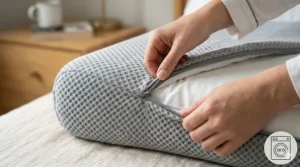
Memory foam performs best in bedrooms between 16-20°C. If your home drops below this (common in UK winter), allow your pillow 10-15 minutes to warm up from body heat before judging comfort. Keep your bedroom well-ventilated — British homes tend toward dampness, and moisture-wicking pillowcase covers become essential. Wash covers fortnightly using the 30°C economy cycle (reduces energy costs whilst maintaining cleanliness).
Compact storage solutions:
British bedrooms average smaller than American or continental European counterparts. Ergonomic pillows typically measure 60×35-40cm, slightly smaller than traditional UK pillows but still requiring 15-20cm storage height. Store in breathable cotton pillowcases rather than plastic bags, allowing air circulation to prevent mildew accumulation in damp British conditions.
Maintenance in British weather:
Our humid climate demands regular airing. Every fortnight, remove covers and stand your pillow on its edge near (not on) a radiator for 2-3 hours, allowing moisture to evaporate. Avoid direct sunlight, which degrades memory foam. When washing covers, line-dry rather than tumble-drying — British weather might require indoor drying racks near radiators during winter months.
Common Mistakes When Buying Ergonomic Alignment Pillows in the UK
British buyers consistently make these errors, costing both money and continued neck pain.
Mistake 1: Ignoring Height Compatibility with Your Sleeping Position
The most common error: side sleepers buying low-profile pillows, or back sleepers selecting high-loft options. Here’s the measurement reality — side sleepers need pillow height equal to the distance from their ear to the outside edge of their shoulder (typically 10-14cm for adults). Back sleepers require 7-10cm to maintain neutral neck angle. Yet many British buyers select based on what looks comfortable rather than biomechanical requirements.
The consequence: I’ve reviewed dozens of UK customer complaints where someone bought a highly-rated pillow that simply didn’t suit their sleeping position. A 6cm pillow that’s perfect for a back sleeper leaves a side sleeper’s head tilted sharply downward, creating the very neck strain they’re trying to eliminate.
The solution: Measure before buying. Stand sideways in a mirror and have someone measure from your ear to shoulder edge. Match this to pillow specifications. If you’re a combination sleeper, prioritise adjustable options like the UTTU Sandwich or Elviros that accommodate multiple positions.
Mistake 2: Expecting Instant Relief
British buyers often abandon ergonomic pillows after 2-3 nights, reporting they “didn’t work.” This reflects a fundamental misunderstanding of how muscle adaptation functions. Your neck muscles have spent years compensating for poor support, developing habitual tension patterns. Proper alignment feels unfamiliar initially because your muscles are adjusting to correct positioning.
Clinical research on ergonomic pillow adaptation indicates most users require 7-14 nights for full adaptation, with some experiencing temporary increased stiffness during nights 2-4 as muscles realign. This isn’t the pillow failing — it’s your body recalibrating to neutral spine positioning.
What to expect: Nights 1-3 often feel strange rather than comfortable. Nights 4-7 bring gradual improvement as muscles adapt. By week 2, most British users report noticeable morning neck flexibility improvements. Give any new ergonomic pillow a minimum two-week trial before judging effectiveness.
Mistake 3: Overlooking Temperature Regulation in British Climate
Standard memory foam hardens significantly in cold temperatures, yet many UK buyers don’t consider this when purchasing. A pillow that feels perfect in August can become uncomfortably firm during January’s cold snaps when bedroom temperatures drop to 14-16°C.
The British-specific problem: Our climate fluctuates dramatically between seasons. Summer might bring 22°C bedrooms, whilst winter drops to 14°C. Standard memory foam density changes 30-40% across this temperature range, meaning your pillow performs completely differently depending on season. This explains why some British reviewers report their pillow “changed” after six months — it didn’t change, the ambient temperature did.
Temperature-stable options: Look for specifications mentioning “temperature-neutral foam” or “dynamic foam technology” (like the UTTU Sandwich). These formulations maintain consistent density across temperature ranges. Alternatively, budget extra heating costs to maintain 18-20°C bedroom temperatures year-round, though this adds £15-£25 monthly to winter energy bills.
Mistake 4: Buying Based Solely on Price
The temptation to save money is understandable, but the cheapest ergonomic pillows (under £20) typically use low-density foam that compresses within 6-12 months, eliminating cervical support and forcing repurchase. British buyers end up spending £60-£80 across three years buying cheap pillows repeatedly, when a single £40-£50 mid-range option lasts 3-4 years.
The actual cost analysis: A £20 pillow lasting 12 months costs £1.67 monthly. A £45 pillow lasting 42 months costs £1.07 monthly — 36% cheaper despite higher upfront investment. Factor in the frustration of repeated shopping and adjustment periods, and budget options become false economy.
Smart buying strategy: Allocate £35-£60 for your first ergonomic pillow, targeting established brands with UK warranty support. The £20-£25 budget options serve best as exploratory purchases if you’re genuinely uncertain whether ergonomic pillows suit you.
What to Expect: Real-World Performance in British Conditions
Beyond marketing claims, here’s what ergonomic alignment pillows actually deliver in typical British living situations.
Temperature Performance Across British Seasons
Summer (20-24°C bedroom temperature): Memory foam softens slightly, providing maximum conforming comfort. Moisture-wicking covers become crucial — British summer humidity (60-75%) without adequate ventilation leads to sweaty, uncomfortable nights. Pillows with bamboo covers (Panda) or cooling fabrics (Elviros) significantly outperform basic polyester during muggy July nights.
Autumn/Spring (16-20°C): Optimal operating temperature for most memory foam formulations. Pillows perform as specified, providing consistent support without excessive softening or firming. This is when you’ll experience the pillow at its best.
Winter (14-18°C): Standard memory foam firms noticeably. Budget pillows become uncomfortably hard, whilst premium temperature-stable options maintain consistency. British buyers in older homes with limited insulation report significant performance differences between brands during January-February. If your bedroom drops below 16°C regularly, factor this into your purchase decision.
Durability Reality in UK Climate
British conditions — humidity, temperature fluctuations, damp cold winters — stress memory foam more than drier climates. Expect these realistic lifespans:
Budget pillows (£18-£30): 12-18 months before noticeable compression. Foam density is insufficient for long-term support. Acceptable if you view this as an exploratory purchase.
Mid-range (£30-£60): 2.5-3.5 years typical lifespan. Foam maintains support through multiple seasons, with gradual softening rather than sudden failure. Represents best value for most British buyers.
Premium (£80-£120): 5-7 years before requiring replacement. Exceptional durability justified by higher foam density and superior construction. Calculate cost-per-night before dismissing as expensive.
British climate factors: Regular airing and cover washing extend lifespan by 20-30%. Our damp environment encourages mildew if pillows aren’t properly maintained. Investing 15 minutes monthly in maintenance significantly impacts durability.
Ergonomic Alignment vs Traditional Pillows: The British Perspective
Understanding the fundamental differences helps justify the investment for sceptical UK buyers.
Traditional Feather/Fibre Pillows
These have dominated British bedrooms for generations, offering soft comfort and nostalgic familiarity. However, they provide zero structural support — feathers and fibres shift under head weight, creating inconsistent height and leaving cervical spine unsupported. They also compress permanently over 6-12 months, requiring constant refluffing. In damp British conditions, feather pillows become breeding grounds for dust mites and mould. The initial £10-£15 saving becomes expensive when replaced annually.
Memory Foam Ergonomic Pillows
Fixed contoured shape maintains cervical curve throughout the night. The foam responds to temperature and weight but retains structural integrity, meaning your neck receives consistent support regardless of movement. Modern foam formulations resist moisture absorption, addressing British humidity concerns. Higher initial cost (£30-£60) is offset by 2.5-3.5 year lifespan.
For British buyers specifically: Our housing stock skews older with higher humidity levels than Mediterranean or Scandinavian homes. Traditional pillows in these conditions deteriorate rapidly, whilst memory foam’s moisture-resistant properties prove more suitable. The biomechanical benefits — reduced morning stiffness, improved breathing, fewer tension headaches — deliver value beyond simple comfort.
Frequently Asked Questions
❓ Are ergonomic alignment pillows worth it for UK buyers dealing with damp bedrooms?
❓ How long does the adjustment period typically last for British sleepers?
❓ Do these pillows work with CPAP machines common in UK sleep apnoea treatment?
❓ Are ergonomic pillows suitable for UK side sleepers with broad shoulders?
❓ Can I use standard UK pillowcases with ergonomic contour pillows?
Conclusion
After analysing seven genuine products available on Amazon.co.uk, the truth emerges clearly: there’s no single “best” ergonomic alignment pillow — only the best one for your specific sleeping position, body frame, budget, and British living conditions. For most UK buyers seeking exceptional value and year-round performance, the UTTU Sandwich Pillow strikes the optimal balance around £40-£45. Its Dynamic Foam handles British temperature swings without turning rock-hard, the adjustable height accommodates different sleeping positions, and the breathable cover addresses our climate’s humidity issues.
Budget-conscious British buyers experimenting with ergonomic support for the first time should consider the Ecosafeter 2026 or Good Nite options, both delivering proper cervical alignment under £30-£40. These entry-level choices answer the fundamental question “Will an ergonomic pillow help me?” without significant financial commitment, though don’t expect premium longevity.
For those dealing with chronic neck pain who’ve exhausted mid-range options, the Tempur Original at £90-£120 represents professional-grade support backed by NASA-developed technology. Calculate the cost-per-night over five years (roughly £0.05) and it becomes more reasonable than endless physiotherapy appointments.
The transformation from traditional to ergonomic isn’t instantaneous — expect 7-14 nights for full adaptation as your neck muscles adjust to proper alignment. British conditions demand additional considerations: regular airing to combat humidity, temperature-stable foam for winter performance, and realistic maintenance in our damp climate. The investment extends beyond simple comfort into genuine health benefits: reduced morning stiffness, improved breathing, fewer tension headaches, and sleep that actually refreshes rather than merely passing time unconscious.
Your pillow occupies one-third of your life. Choosing wisely means waking up ready to tackle the day rather than spending the first two hours shaking off stiffness.
Recommended for You
- 7 Best Posture Correcting Pillows UK: Wake Pain-Free (2026)
- 7 Best Pillow Herniated Disc UK 2026
- Best Back Support Pillow Side Sleeper UK 2026 – Top 7 Picks
Disclaimer: This article contains affiliate links. As an Amazon Associate, I earn from qualifying purchases. If you purchase products through these links, we may earn a small commission at no additional cost to you.
✨ Found this helpful? Share it with your mates! 💬🤗
