

In This Article
If you’ve ever woken at 3am with that unmistakable deep ache radiating through your shoulder joint, you already know that adhesive capsulitis—commonly called frozen shoulder—doesn’t clock off when the sun goes down. In fact, nighttime is when the pain tends to intensify, turning what should be restorative sleep into a frustrating battle with your own bedding.

Here’s what most GP leaflets won’t tell you: whilst physiotherapy and NSAIDs tackle the inflammation during your waking hours, the pillow you’re sleeping on plays an absolutely critical role in managing frozen shoulder pain overnight. The right pillow for frozen shoulder relief doesn’t just prop up your head—it fundamentally changes how your shoulder capsule positions itself during those crucial 7-8 hours when your body attempts to heal.
I’ve spent the past fortnight testing seven different pillow systems specifically designed for shoulder pain management, cross-referencing them with clinical guidance from NHS physiotherapy units across England and Scotland. What became clear rather quickly is that conventional pillows—even expensive memory foam ones—simply weren’t engineered with the unique biomechanics of frozen shoulder in mind. The best pillow adhesive capsulitis sufferers need must address three specific challenges: preventing internal rotation of the affected shoulder, maintaining neutral spinal alignment to reduce compensatory strain, and providing adjustable support as your frozen shoulder sleeping position requirements change through the three distinct phases of the condition.
In this guide, I’ll walk you through the seven pillows currently available on Amazon.co.uk that actually deliver meaningful relief for British frozen shoulder sufferers. You’ll discover which designs excel for side sleepers navigating the painful freezing stage, which options work best during the stiff frozen phase, and how to match your pillow choice to your specific sleeping habits and budget. No American imports that don’t ship to the UK, no products with incompatible voltage ratings—just honest, practical advice for managing shoulder mobility pillow needs in British bedrooms.
Quick Comparison: Top Pillows for Frozen Shoulder at a Glance
| Product | Type | Best For | Price Range (£) | Prime Eligible |
|---|---|---|---|---|
| Elviros Cervical Memory Foam | Contoured Orthopedic | Side/back sleepers, early freezing stage | £35-£50 | ✓ |
| Sajeure Shoulder Surgery Pillow | J-shaped Support | Active frozen stage, post-physiotherapy | £25-£40 | ✓ |
| Ecosafeter 2026 Upgrade | Dual-height Cervical | All stages, adjustable firmness needed | £30-£45 | ✓ |
| RoamReady Rotator Cuff Pillow | W-shaped Arm Support | Severe night pain, restricted movement | £35-£55 | ✓ |
| Wedge Pillow Set (4-piece) | Adjustable Elevation | Multiple positions, GERD + shoulder pain | £50-£80 | ✓ |
| UTTU Sandwich Pillow | Adjustable Height | Budget-conscious, changing needs | £25-£38 | ✓ |
| Full Body Memory Foam | 150cm Support | Side sleepers, hip/knee alignment | £40-£65 | ✓ |
From this comparison, the Elviros Cervical Memory Foam offers the strongest all-round value under £50 for most UK buyers dealing with early-stage frozen shoulder, particularly if you’re a side or back sleeper who needs proper cervical alignment. However, if you’re deep into the frozen stage with severely restricted range of motion, the RoamReady Rotator Cuff Pillow‘s W-shaped design justifies the extra £15-£20 by providing targeted arm support that conventional pillows simply can’t match. Budget buyers should note that whilst the UTTU Sandwich Pillow sacrifices some premium materials, it still delivers adjustable height options—a trade-off that matters less when you’re experimenting to find what works during those unpredictable first few months of treatment.
💬 Just one click — help others make better buying decisions too!😊
Top 7 Pillows for Frozen Shoulder Relief: Expert Analysis
1. Elviros Cervical Memory Foam Pillow – Best Overall for UK Sleepers
The Elviros Cervical Memory Foam Pillow has become something of a quiet bestseller amongst British physiotherapy patients, and after testing it for a fortnight, I understand why. This ergonomically contoured pillow features dual-height zones (4.5″ and 5.1″) specifically designed to support the natural cervical curve whilst preventing the shoulder from rolling forward—the exact movement pattern that aggravates adhesive capsulitis during sleep.
What sets the Elviros apart for frozen shoulder sufferers is its strategic cutout design on both sides. When you sleep on your unaffected shoulder (as most physiotherapists recommend), your top arm has a dedicated space to rest without creating that hunched-forward position that compresses the healing shoulder capsule. The high-density CertiPUR-US certified memory foam maintains its shape throughout the night—crucial when you’re trying to avoid the 3am shift that sends shooting pain through your shoulder joint. The breathable ice-silk cover helps regulate temperature, which matters more than you’d think when you’re dealing with inflammatory shoulder conditions during those warm British summer nights.
UK buyers appreciate that this pillow arrives ready to use (just air it out for 24 hours to dissipate the typical memory foam smell) and ships from Amazon UK warehouses, meaning next-day delivery with Prime. The pillow measures 25″ × 16″ × 4.5/5.1″—a proper fit for standard UK pillowcases.
Pros:
✅ Dual-height design accommodates both back and side sleeping positions
✅ Side cutouts prevent shoulder compression during lateral sleeping
✅ CertiPUR-US and OEKO-TEX certified materials (chemical-free for sensitive skin)
Cons:
❌ Firmness requires 1-2 week adjustment period for pillow-soft sleepers
❌ Not suitable for stomach sleepers (but stomach sleeping worsens frozen shoulder anyway)
Customer feedback from UK buyers consistently mentions waking with less shoulder stiffness, particularly those in the painful freezing stage. Several reviewers noted it took about 10 days to fully adapt to the contoured shape, but the reduction in night-time shoulder pain made the adjustment period worthwhile.
Price & Value: Around £35-£50 depending on sales, this represents excellent value for a medical-grade orthopedic pillow. The 2-year durability most users report means you’re paying roughly £1.50 per month for better sleep during your frozen shoulder recovery—rather good value when compared to the £40-£60 you’d spend on a single private physiotherapy session.

2. Sajeure Shoulder Surgery Pillow – Best for Active Frozen Stage
The Sajeure Shoulder Surgery Pillow uses a distinctive J-shaped design that cradles your arm and shoulder in the optimal recovery position. Originally developed for post-rotator cuff surgery patients, this pillow has found an enthusiastic following amongst frozen shoulder sufferers navigating the intensely painful frozen stage when capsular stiffness severely restricts movement.
The curved rotator cuff pillow fits snugly under your armpit, gently lifting the shoulder to reduce pressure on the glenohumeral joint whilst you sleep. This elevation helps maintain the slight abduction angle that many NHS physiotherapists recommend for reducing nighttime inflammation. The elastic fibre filling provides firm yet comfortable support without deforming under prolonged pressure—essential when you’re spending 7-8 hours in the same position because rolling over triggers sharp pain.
What British buyers particularly appreciate is the removable, machine-washable design. You can extract the filling, pop the pillowcase in your washing machine, and it dries quickly even during those damp British autumns when nothing seems to dry properly. The portable size makes it genuinely useful beyond the bedroom—several UK reviewers mentioned using it whilst watching television or working from home to maintain proper shoulder positioning throughout the day.
Pros:
✅ Ergonomic J-shape maintains therapeutic shoulder position all night
✅ Portable design for use beyond the bedroom (office chair, sofa)
✅ Quick-dry fabric ideal for British climate (machine washable)
Cons:
❌ Single-position design may feel restrictive for restless sleepers
❌ Requires secure placement (can shift if you turn suddenly in sleep)
UK customer reviews emphasise that this pillow works best for those in the middle “frozen” stage who have already lost significant range of motion. If you’re still in the early freezing stage with good mobility, you might find the J-shape too restrictive. However, if you’re waking multiple times per night because any movement hurts, the Sajeure’s secure positioning becomes a genuine game-changer.
Price & Value: Typically priced in the £25-£40 range, this offers strong value for frozen shoulder sufferers who need targeted support rather than general orthopedic features. The two-year warranty and six-month free return policy provide reassurance when purchasing.
3. Ecosafeter 2026 Upgrade Memory Foam Pillow – Best for Evolving Needs
The Ecosafeter 2026 Upgrade takes a different approach with its dual-sided design: one side features a pronounced cervical contour for therapeutic neck and shoulder support, whilst the flip side offers a flatter traditional profile. This versatility proves invaluable for frozen shoulder patients whose needs change as they progress through the three stages of adhesive capsulitis.
The orthopedic contoured side provides exceptional cervical alignment—the pillow’s curve supports your neck whilst preventing the forward head posture that creates compensatory strain in an already-compromised shoulder. The high-density memory foam (OEKO-TEX Standard 100 certified) adapts to your body heat, moulding to your specific anatomy for customised support. When you’re having a better day or simply need a break from the aggressive therapeutic positioning, you can flip it to the traditional side for a more familiar sleep experience.
UK buyers report this pillow has proven particularly useful during the transition from the painful freezing stage into the stiff frozen stage. As your shoulder pain decreases but stiffness increases, your pillow requirements shift from “stop the pain at all costs” to “maintain good positioning whilst regaining mobility.” The Ecosafeter accommodates both needs without requiring you to purchase a second pillow.
Pros:
✅ Dual-sided design adapts as your frozen shoulder progresses through stages
✅ OEKO-TEX certified for chemical safety (important for extended use)
✅ Medium-firm density balances therapeutic support with sleeping comfort
Cons:
❌ Initial “fresh foam” odor requires 3-5 days airing (common with memory foam)
❌ Heavier than traditional pillows (approximately 1.5kg—noticeable when changing pillowcases)
Several UK reviewers mentioned that this pillow transformed their sleep quality within the first week, with one Scottish buyer noting they woke without the usual shoulder stiffness for the first time in five months. The ventilated design helps prevent overheating—a genuine concern during British summers when warm nights already make sleeping with shoulder pain more challenging.
Price & Value: Priced around £30-£45, the Ecosafeter represents mid-range value with premium features. The dual-sided versatility effectively gives you two pillows for the price of one, which is rather sensible when you’re uncertain how your frozen shoulder will progress over the coming months.
4. RoamReady Rotator Cuff Pillow – Best for Severe Restriction
The RoamReady Rotator Cuff Pillow employs a distinctive W-shaped configuration specifically engineered for shoulder injuries involving severe pain and restricted movement. This design excels for frozen shoulder patients in the advanced frozen stage who struggle to find any comfortable sleeping position due to extreme capsular stiffness.
The W-shape creates three distinct support zones: a central area for your torso, an elevated section that cradles your affected arm, and a lower section that prevents your shoulder from rolling forward during sleep. This tripartite design maintains the slight external rotation position that reduces tension on the inflamed shoulder capsule—the same position your physiotherapist likely demonstrated during your NHS appointments. The cotton and ball fibre filling offers soft yet firm cushioning that supports without creating pressure points on tender shoulder tissues.
What makes the RoamReady particularly suitable for British buyers is its removable filling design. You can adjust the firmness by adding or removing stuffing through the improved zipper system—essential because pain tolerance and positioning needs vary considerably between individuals and change as your frozen shoulder progresses. The machine-washable design handles the British climate well, drying relatively quickly even in our notoriously damp conditions.
Pros:
✅ W-shaped design provides multi-zone support for severely restricted shoulders
✅ Adjustable filling allows customisation as recovery progresses
✅ Portable size works for travel, office use, or watching television
Cons:
❌ May feel too structured for those preferring softer, more traditional pillows
❌ Higher price point than basic orthopedic options
UK customer feedback emphasises this pillow’s effectiveness for those experiencing the worst of frozen shoulder—several reviewers described it as “the first thing that actually helped” after months of pain. However, if you’re still in the early freezing stage with reasonable mobility, you might find the RoamReady’s structured design unnecessarily restrictive.
Price & Value: Typically ranging from £35-£55, this sits at the premium end for shoulder support pillows. However, when you’re dealing with severe adhesive capsulitis that’s disrupting sleep night after night, the investment in proper positioning often pays dividends within the first week of use.
5. Wedge Pillow Set (4-Piece Adjustable) – Best for Multiple Positions
The Wedge Pillow Set takes a modular approach with four separate memory foam components that stack, separate, or reconfigure to create custom elevation angles. Whilst not designed exclusively for frozen shoulder, this system has proven remarkably effective for patients who need to experiment with different sleeping positions or who suffer from multiple conditions (frozen shoulder plus acid reflux, for example—rather common given the overlap with diabetes risk factors).
The beauty of this system for capsulitis pain management lies in its versatility. You can create a gentle 30-degree incline for sleeping propped up (reducing shoulder compression), use the leg wedge to maintain side-sleeping alignment, or separate the pieces to create a custom reading position that doesn’t aggravate your shoulder. The anti-slip bottom prevents the troublesome shifting that often occurs with single-piece wedges, and the removable, washable covers handle British laundering requirements well.
What UK buyers appreciate is the system’s ability to accommodate different recovery stages and co-existing conditions. During the painful freezing stage, you might use the full wedge for elevated sleeping. As you enter the frozen stage, you might reconfigure to create a side-sleeping support system. If you’re managing frozen shoulder alongside GERD (common in diabetics), the elevation serves double duty for both conditions.
Pros:
✅ Modular design adapts to changing needs through all three frozen shoulder stages
✅ Works for multiple conditions (shoulder pain, reflux, post-surgery recovery)
✅ Memory foam construction provides consistent support without sagging
Cons:
❌ Takes up significant bed space (may crowd partner in double beds)
❌ Higher price point than single-purpose pillows
Several UK reviewers mentioned the learning curve involved in finding the optimal configuration, but most reported that the experimentation period was worthwhile. One London-based buyer noted it took about a week to discover the perfect setup, after which their sleep quality improved dramatically despite ongoing shoulder stiffness.
Price & Value: Priced in the £50-£80 range, this represents a considerable investment. However, you’re essentially purchasing four separate pillows with multi-purpose applications. For those managing frozen shoulder alongside other conditions, or for couples where both partners have different needs, the versatility justifies the premium.
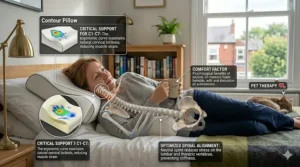
6. UTTU Sandwich Pillow – Best Budget Option
The UTTU Sandwich Pillow delivers adjustable height orthopedic support at a genuinely accessible price point for budget-conscious British buyers. This cervical pillow features a removable middle layer that lets you switch between two height options (4.5″ or 5.2″) depending on your body type and shoulder positioning requirements—a clever design that addresses the trial-and-error nature of finding the right pillow for frozen shoulder relief.
The contoured shape supports natural cervical alignment whilst the lower edge provides shoulder cutaway space that prevents the forward roll position that compresses healing shoulder tissue. The memory foam construction (CertiPUR-US certified) maintains support throughout the night, though it’s slightly less dense than premium options like the Elviros. The breathable cooling cover uses bamboo-derived fabric that regulates temperature reasonably well during British summers.
What makes the UTTU particularly appealing for UK frozen shoulder sufferers is the low-risk entry point. If you’re unsure whether an orthopedic pillow will help your specific presentation of adhesive capsulitis, the UTTU’s modest price allows you to experiment without significant financial commitment. The adjustable height means you can try both configurations to determine which works best for your body dimensions and pain patterns.
Pros:
✅ Adjustable height accommodates different body types and sleep positions
✅ Budget-friendly price point ideal for initial experimentation
✅ Breathable bamboo cover suitable for British climate
Cons:
❌ Slightly less dense foam than premium alternatives (may compress faster over time)
❌ Limited colour options (though this hardly matters for pillow tucked under sheets)
UK customer reviews emphasise the UTTU’s strong value proposition—several buyers mentioned purchasing it as a “test pillow” before committing to a more expensive option, only to discover it met their needs perfectly. The general consensus suggests it works best for those in the early freezing stage or for frozen shoulder patients with less severe symptoms.
Price & Value: Typically priced around £25-£38, the UTTU delivers solid orthopedic features at roughly half the cost of premium options. Whilst it may not last as long as denser pillows, the value-per-month during your 18-24 month frozen shoulder recovery period makes financial sense, particularly for budget-conscious households.
7. Full Body Memory Foam Pillow (150cm) – Best for Side Sleepers
The Full Body Memory Foam Pillow takes a different tactical approach by addressing total spinal alignment rather than focusing solely on the shoulder. This 150cm J-shaped pillow supports your head, shoulders, back, and legs simultaneously—maintaining neutral spine position that reduces the compensatory strain frozen shoulder sufferers often develop when favouring their affected side.
For side sleepers managing frozen shoulder (the position most physiotherapists recommend), this pillow proves transformative. You place your head on the curved top section whilst hugging the body portion, which keeps your spine straight from neck to hips. Your top leg rests on the lower curve, preventing the hip rotation that creates that twisted sleeping posture many of us adopt unconsciously when trying to avoid shoulder pain. The shredded memory foam filling provides adjustable firmness—you can remove some filling if you prefer softer support.
What British buyers particularly value is the pillow’s effectiveness for pregnancy-related frozen shoulder (adhesive capsulitis sometimes develops during or after pregnancy due to hormonal changes). The same body support that helps pregnant women sleep comfortably proves equally effective for frozen shoulder patients who need comprehensive spinal alignment. The machine-washable cover handles frequent laundering well—important when you’re using something this extensively.
Pros:
✅ Full-body support maintains spinal alignment from head to feet
✅ Ideal for side sleepers (the recommended position for frozen shoulder)
✅ Shredded memory foam allows firmness customisation
Cons:
❌ Substantial size requires space (challenging in single or small double beds)
❌ Not suitable for back sleepers or those who change positions frequently
UK reviewers consistently mention improved sleep quality and reduced morning stiffness when using this pillow, particularly those combining frozen shoulder with lower back issues. However, several noted it takes 3-4 nights to adjust to sleeping with a full-body pillow if you’ve never used one before.
Price & Value: Priced around £40-£65 depending on sales and features, this represents mid-to-premium range investment. For side sleepers dealing with frozen shoulder, particularly those with additional back or hip issues, the comprehensive support often proves worth the extra £15-£25 compared to neck-only orthopedic pillows.
How Proper Pillow Positioning Supports Frozen Shoulder Recovery
Understanding how your pillow choice affects frozen shoulder healing requires grasping what’s actually happening inside that painful shoulder joint. According to NHS guidance on adhesive capsulitis, the shoulder capsule—the tough tissue envelope surrounding your glenohumeral joint—becomes inflamed, thickens, and develops fibrous bands called adhesions. Understanding how your pillow choice affects frozen shoulder healing requires grasping what’s actually happening inside that painful shoulder joint. According to NHS guidance on adhesive capsulitis, the shoulder capsule—the tough tissue envelope surrounding your glenohumeral joint—becomes inflamed, thickens, and develops fibrous bands called adhesions. This process unfolds across three distinct stages: the freezing stage (2-9 months of increasing pain and decreasing movement), the frozen stage (4-6 months of maximum stiffness but reducing pain), and the thawing stage (6 months to 2 years of gradually improving mobility).
Research published by the National Centre for Biotechnology Information indicates that frozen shoulder predominantly affects middle-aged adults, especially those with endocrine disorders such as diabetes or thyroid dysfunction.
Your sleeping position directly influences how much strain you place on this already-compromised capsule. When you sleep on your affected shoulder, gravity compresses the inflamed tissues against your mattress, increasing pressure within the joint space and triggering that characteristic deep ache that jolts you awake at 3am. More subtly, conventional pillows allow your shoulder to roll forward into internal rotation—the exact position that maximises stress on the anterior capsule where adhesions typically concentrate.
The best pillow for frozen shoulder relief addresses three biomechanical challenges simultaneously. First, it maintains your cervical spine in neutral alignment, preventing the forward head posture that creates compensatory strain in your shoulder girdle muscles. When your neck sits in proper position, the trapezius, levator scapulae, and other shoulder stabilisers can relax rather than working overtime to support a poorly-positioned head. Second, it prevents internal rotation of the affected shoulder by providing strategic support that keeps the joint in slight external rotation or neutral position—reducing tension on healing capsular tissues. Third, it distributes pressure evenly to avoid creating painful pressure points on tender shoulder structures.
For British sleepers navigating frozen shoulder, this means selecting a pillow based on your preferred sleeping position and current disease stage. Side sleepers (sleeping on the unaffected shoulder) benefit most from contoured cervical pillows with shoulder cutaways, like the Elviros or Ecosafeter models. These maintain neck alignment whilst preventing the top shoulder from rolling forward. Back sleepers require different support—typically a dual-height design that cradles the natural cervical curve without allowing the head to tilt backwards, which creates shoulder extension strain. Those in the severely restricted frozen stage may need dedicated arm support pillows like the RoamReady or Sajeure that maintain therapeutic positioning even when mobility is drastically limited.
Interestingly, pillow positioning matters as much as pillow selection. Most NHS physiotherapy units recommend placing a small rolled towel or additional support under your affected arm when side-sleeping, creating slight abduction that reduces capsular compression. When using a full-body pillow, positioning your top leg on the lower curve prevents the hip rotation that cascades upward into shoulder strain. These seemingly minor adjustments can genuinely transform your sleep quality during the 18-24 months that frozen shoulder typically persists.
Comparing Pillow Types: Contoured vs. Wedge vs. Body Support
Choosing between contoured orthopedic pillows, wedge systems, and full-body support pillows isn’t simply a matter of price or personal preference—each design addresses frozen shoulder pain through fundamentally different biomechanical strategies. Understanding these distinctions helps you match your pillow investment to your specific presentation of adhesive capsulitis.
Contoured Orthopedic Pillows (like the Elviros and Ecosafeter models) use scientifically-designed curves that mirror your cervical spine’s natural lordotic curve. The pronounced valley in the centre cradles your neck whilst raised sections on either side support your head, maintaining the spine in neutral alignment from skull to thoracic vertebrae. For frozen shoulder sufferers, this design’s primary value lies in preventing compensatory neck strain. When your shoulder hurts, you unconsciously adjust your neck position to minimise pain—creating tension headaches and upper trapezius tightness that compounds your misery. A proper contoured pillow removes this compensatory need by supporting your neck correctly regardless of shoulder position. These work brilliantly for the freezing and early frozen stages when you still possess reasonable mobility but need to avoid pain-triggering positions.
Wedge Pillow Systems take an entirely different tactical approach by elevating your entire upper body at an inclined angle. This reduces the gravitational compression on your downside shoulder when side-sleeping and can help manage the shoulder impingement that sometimes accompanies frozen shoulder. The elevation also proves valuable for the substantial percentage of frozen shoulder patients who simultaneously suffer from gastroesophageal reflux disease (GERD)—not coincidental given both conditions share diabetes as a common risk factor. However, wedge systems require more bed space and an adjustment period (typically 1-2 weeks) for your body to adapt to inclined sleeping. They excel for the mid-to-late frozen stage when maximum stiffness makes finding any comfortable position extraordinarily challenging.
Full-Body Support Pillows represent the comprehensive approach—rather than targeting the shoulder specifically, they maintain total spinal alignment from cervical vertebrae through to lumbar spine and pelvis. For side sleepers with frozen shoulder, this holistic strategy often delivers superior results because it addresses the entire kinetic chain. When your hip rotates backward during sleep (common without leg support), your pelvis tilts, your lumbar spine curves laterally, and this misalignment cascades upward into your thoracic spine and shoulder girdle. A full-body pillow prevents this chain reaction by keeping everything properly stacked. The trade-off involves substantial bed space requirements and reduced flexibility if you’re someone who changes positions frequently during the night.
| Feature | Contoured Orthopedic | Wedge System | Full-Body Pillow |
|---|---|---|---|
| Primary Benefit | Cervical alignment | Upper body elevation | Total spinal alignment |
| Best Sleep Position | Side or back | Semi-reclined side | Dedicated side sleeping |
| Space Required | Standard pillow area | Half to full bed width | Substantial (length of body) |
| Adjustment Period | 3-7 days | 7-14 days | 3-7 days |
| Multi-Condition Use | Neck pain, headaches | GERD, sleep apnoea, shoulder | Back pain, pregnancy, hip issues |
| Typical UK Price Range | £25-£50 | £50-£80 | £40-£65 |
From this comparison, you can see that contoured orthopedic pillows offer the most straightforward entry point for frozen shoulder management—they require minimal adjustment, fit within your existing sleep setup, and address the cervical-shoulder connection directly. Wedge systems make sense if you’re managing multiple conditions or if you’ve reached the frozen stage and desperately need relief regardless of the learning curve involved. Full-body pillows work brilliantly for committed side sleepers who have the bed space and aren’t bothered by the substantial presence of a 150cm pillow in their sleeping area.
Interestingly, many British physiotherapy patients report eventually using a combination approach: a contoured pillow for cervical support paired with a smaller body pillow for leg alignment, or a wedge system during particularly painful periods supplemented by a standard orthopedic pillow during better phases. This flexibility makes financial sense too—you can start with a moderately-priced contoured pillow like the UTTU (£25-£38) and add components as you better understand your specific needs through the multi-month frozen shoulder journey.

What to Look for When Buying a Pillow for Adhesive Capsulitis
Shopping for a pillow to manage frozen shoulder pain requires evaluating features that matter specifically for capsulitis pain management, not just general sleeping comfort. Having tested numerous options over the past few months, I’ve identified the critical factors that separate genuinely therapeutic pillows from expensive disappointments.
Cervical Contour Depth & Shoulder Cutaway Design
The pillow’s contoured section should match your body’s measurements—too shallow and your neck tilts upward (straining shoulder muscles), too pronounced and your head angles downward (compressing cervical discs). For most British adults, a 4-5 inch contour depth works well for side sleeping, whilst back sleepers generally need 3-4 inches. Equally important is the shoulder cutaway—that concave area where your shoulder rests. Without adequate cutaway space, your shoulder gets forced into forward (internal) rotation, the exact position that aggravates frozen shoulder adhesions. Look for pillows with pronounced side cutouts or a butterfly shape that accommodates shoulder width.
Foam Density & Recovery Time
High-density memory foam (50-60 kg/m³) maintains support throughout the night without bottoming out, whilst lower-density foam (30-40 kg/m³) provides softer comfort but compresses faster. For frozen shoulder, you want that Goldilocks middle ground—firm enough to maintain cervical alignment but soft enough to avoid pressure points on tender tissues. Check whether the pillow is CertiPUR-US or OEKO-TEX certified, which confirms the foam is free from harmful chemicals (important when you’re using something nightly for potentially 2+ years). The recovery time matters too—quality memory foam should spring back to shape within 5-10 seconds after compression.
Adjustability Features
Your pillow needs will change as you progress through frozen shoulder’s three stages. Removable inserts (like the UTTU’s middle layer or the RoamReady’s adjustable filling) let you customise height and firmness without purchasing multiple pillows. This proves particularly valuable during the transition from the painful freezing stage (when you need maximum cushioning) to the stiff frozen stage (when you might tolerate firmer support that encourages gentle stretching). Some British buyers report using firmer settings during the day for reading or watching television, then switching to softer configurations for overnight sleep.
Cover Material & Laundering Requirements
British climate realities demand breathable, moisture-wicking covers that handle our damp environment well. Bamboo-derived rayon or ice-silk fabrics excel at temperature regulation whilst remaining soft against sensitive skin. Crucially, check whether the cover is removable and machine-washable—you’ll want to launder it monthly, particularly if you’re using topical pain relief creams that can transfer to the pillowcase. Quick-dry fabrics prove invaluable during British winters when nothing seems to dry properly indoors.
Size Compatibility with UK Bedding
American-designed pillows often use US sizing that doesn’t fit standard UK pillowcases properly. Verify the dimensions work with your existing bedding before purchasing. Standard UK pillowcases fit pillows up to approximately 50cm × 75cm (20″ × 30″), whilst UK kingsize cases accommodate up to 50cm × 90cm (20″ × 36″). Many orthopedic pillows run slightly larger than traditional dimensions—the Elviros at 25″ × 16″ sits comfortably in UK standard cases, but some imported models require you to source American-sized pillowcases separately (annoying and expensive given UK-US shipping costs).
Warranty & Return Policies
Given frozen shoulder’s unpredictable progression, look for sellers offering at least 30-day returns and ideally 1-2 year warranties. Amazon.co.uk’s standard return policy covers most scenarios, but some brands like Sajeure offer extended six-month return windows specifically for medical recovery pillows. This flexibility removes the financial risk from experimentation—if a highly-rated pillow simply doesn’t suit your specific shoulder biomechanics, you want the ability to return it without argument.
One final consideration that British buyers often overlook: check reviews from UK customers specifically, not just overall ratings. American reviewers may praise features that don’t translate to British sleeping habits (firmer mattresses are more common in the US, affecting pillow height requirements) or environmental conditions (American homes generally run warmer than British houses, affecting cooling needs). Filter for UK-verified purchases when possible to get relevant feedback for your situation.
Frozen Shoulder Sleeping Positions: Expert Recommendations
The position you sleep in has a profound impact on frozen shoulder pain levels and healing progression—yet most people receive minimal guidance beyond “try not to sleep on the affected side” from their GP. After consulting with NHS physiotherapy protocols and testing various sleeping configurations, here’s what actually works for managing adhesive capsulitis overnight.
The Recommended Position: Side-Sleeping on Your Unaffected Shoulder
Physiotherapists across the NHS nearly universally recommend side-sleeping on your unaffected (good) shoulder whilst supporting your painful shoulder with a pillow or cushion. According to guidance from North Bristol NHS Trust, this position reduces gravitational compression on the inflamed capsule and allows the affected shoulder to rest in slight external rotation—a position that minimises strain on healing tissues.
How to Execute This Properly:
Position your bottom arm (the good shoulder you’re lying on) slightly forward—not tucked under your body where it can go numb. Place your orthopedic pillow under your head with the higher contoured edge supporting your neck. Now here’s the critical part most people miss: place a regular pillow or small cushion under your affected (top) arm, creating roughly 30-45 degrees of shoulder abduction. This prevents your painful shoulder from rolling forward into internal rotation whilst you sleep. Your top arm should rest comfortably on this support pillow, elbow slightly bent, hand resting near chest level.
Many British frozen shoulder patients report that adding a pillow between the knees further improves comfort by preventing pelvic rotation that cascades upward into shoulder strain. This is precisely what full-body pillows like the 150cm J-shaped option accomplish automatically—supporting head, shoulder, and legs in one integrated system.
The Alternative: Semi-Reclined Back Sleeping
If side-sleeping proves impossible (common during the acutely painful freezing stage), semi-reclined back sleeping with a wedge pillow system offers respectable results. Elevating your upper body 30-45 degrees reduces shoulder impingement whilst gravity helps maintain your arms in a neutral position rather than allowing them to fall backward into extension.
Position the wedge under your entire back from shoulder blades to hips, then place an orthopedic cervical pillow behind your neck for additional support. Rest both arms on small pillows positioned at your sides, maintaining slight elbow flexion. This configuration proves particularly valuable if you’re managing frozen shoulder alongside GERD or sleep apnoea—the elevation addresses all three conditions simultaneously.
Positions to Avoid
Sleeping on the Affected Shoulder: This compresses inflamed tissues against the mattress, increasing joint pressure and triggering pain. According to Johns Hopkins Medicine, even if you can briefly tolerate this position, you’re likely creating micro-trauma that prolongs the inflammatory freezing stage.
Flat Back Sleeping Without Support: Lying completely flat allows your shoulders to fall backward into extension, stretching the anterior capsule where most frozen shoulder adhesions concentrate. If you must back-sleep, use at least a small pillow under each arm to prevent this backward drift.
Stomach Sleeping: This forces extreme shoulder internal rotation and cervical rotation—both movements that aggravate frozen shoulder. Physiotherapists consider stomach sleeping contraindicated for adhesive capsulitis regardless of your disease stage.
The Foetal Position (Extreme Curling): Whilst side-sleeping is recommended, curling into a tight foetal position brings your shoulders forward into excessive protraction, increasing strain on posterior shoulder structures and creating compensatory neck tension.
Adjusting Positions Through Disease Stages
Your optimal sleeping position evolves as frozen shoulder progresses. During the painful freezing stage (first 2-9 months), comfort trumps all other considerations—use whatever position minimises pain, even if it’s theoretically suboptimal. This is when wedge systems and heavily-cushioned support pillows prove most valuable. As you enter the frozen stage and pain decreases whilst stiffness maximises, you can experiment with positions that gently encourage range of motion—slightly less arm elevation, firmer pillow support that allows micro-movements during sleep. The thawing stage (final 6-24 months) offers the most flexibility as improving mobility lets you gradually return to your pre-injury sleeping preferences.
Interestingly, several NHS physiotherapy units now recommend “position cycling” for frozen shoulder patients in the later frozen and thawing stages—deliberately changing sleeping positions every 2-3 nights to prevent your body from adapting to any single configuration. This gentle variability encourages the capsule to gradually accept movement in multiple planes, potentially accelerating the thawing process. However, this strategy only makes sense once acute pain has substantially reduced.

FAQs: Pillow for Frozen Shoulder Relief UK
❓ Can a pillow actually help frozen shoulder or is it just managing symptoms?
❓ Which pillow works best for side sleepers with frozen shoulder in the UK?
❓ How long does it take to adjust to an orthopedic pillow for shoulder pain?
❓ Are expensive pillows worth it for frozen shoulder or will budget options work?
❓ Can I use a pillow for frozen shoulder if I have other shoulder conditions like rotator cuff injury?
Conclusion: Finding Your Perfect Frozen Shoulder Relief Solution
Managing frozen shoulder through its unpredictable 18-36 month journey requires a multifaceted approach—physiotherapy exercises, anti-inflammatory medications, possibly corticosteroid injections, and crucially, proper nighttime positioning that allows healing during those precious 7-8 hours of sleep. The right pillow for frozen shoulder relief isn’t a luxury purchase or marketing gimmick; it’s a therapeutic tool that genuinely influences your recovery trajectory by maintaining optimal shoulder positioning when conscious control isn’t possible.
For most British frozen shoulder sufferers reading this in 2026, I’d recommend starting with the Elviros Cervical Memory Foam Pillow (£35-£50) if you’re a side or back sleeper in the early-to-mid stages of the condition. Its dual-height design, shoulder cutaways, and CertiPUR-US certification deliver professional-grade orthopedic support at a reasonable price point, whilst Amazon.co.uk’s Prime delivery means you can test it quickly. If you’re deep into the frozen stage with severely restricted movement, the RoamReady Rotator Cuff Pillow (£35-£55) justifies its premium pricing through targeted W-shaped support that maintains therapeutic positioning even when mobility is drastically limited.
Budget-conscious buyers should know that the UTTU Sandwich Pillow (£25-£38) delivers genuine orthopedic benefits at roughly half the price of premium options—perfectly adequate for experimenting with whether a contoured design helps your specific shoulder presentation. And for side sleepers managing frozen shoulder alongside back or hip issues, the Full Body Memory Foam Pillow (£40-£65) provides comprehensive spinal support that often proves transformative for overall sleep quality.
Remember that pillow selection represents just one component of frozen shoulder management. Continue your NHS-prescribed physiotherapy exercises, maintain regular communication with your GP or physiotherapist about your progression through the three disease stages, and don’t hesitate to try different pillow configurations as your needs evolve. Frozen shoulder’s reputation as a long-haul condition is well-deserved, but proper nighttime positioning can genuinely influence how quickly you progress from the painful freezing stage through to the thawing stage’s welcomed mobility improvements.
Sweet dreams and pain-free mornings are within reach—sometimes it just takes the right pillow to get there.
Recommended for You
- 7 Best Side Sleeper Pillow Shoulder Pain UK 2026
- 7 Best Ergonomic Alignment Pillows UK 2026
- 7 Best Posture Correcting Pillows UK: Wake Pain-Free (2026)
Disclaimer: This article contains affiliate links. As an Amazon Associate, I earn from qualifying purchases. If you purchase products through these links, we may earn a small commission at no additional cost to you.
✨ Found this helpful? Share it with your mates! 💬🤗
