

In This Article
There’s a very particular kind of 3am despair that comes from flipping your pillow over for the fourth time, hunting for a cool patch that’s already gone warm again. If that sounds familiar, you’re not imagining it — a 2026 sleep survey found well over a third of Brits regularly wake up too hot, and standard polyester and feather pillows are often the quiet culprit, trapping heat against your head and neck all night long.
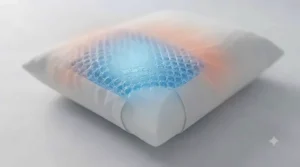
The best cooling gel pillow won’t turn your bedroom into a walk-in fridge, but it should genuinely change how your head and neck feel through the small hours. That said, “cooling” has become one of the most stretched words in the pillow aisle. Some products use a pressure-activated gel pad that feels icy for the first few minutes and then behaves like any other pillow. Others use genuine phase-change material, the same category of technology developed for spacesuit thermal regulation, which keeps working all night rather than just at first contact. A few simply rely on a breathable knitted cover and call it “cooling” because it doesn’t trap heat quite as badly as a duvet-stuffed alternative.
This guide compares seven real, currently available pillows — from budget gel pads through to genuine PCM-infused memory foam — and explains honestly which cooling method each one actually uses, what the aggregated reviews say, and who each pillow genuinely suits. No invented ratings, no manufactured quotes — just a proper look at what’s on the market and what the technology inside each one can and can’t do.
Quick Comparison Table
| Pillow | Cooling Method | Firmness | Best For |
|---|---|---|---|
| Simba Hybrid Pillow | Stratos cool-touch fabric + graphite | Adjustable | Astronaut-tech cool-to-touch feel |
| Emma Comfort Cooling Pillow | Genuine Outlast PCM cover | Soft, adjustable | True phase-change cooling |
| REM-Fit 500 Cool Gel Pillow | Gel-infused memory foam + wicking cover | Medium-firm | All-night contouring support |
| Panda Hybrid Bamboo Pillow | Charcoal-infused foam + airflow pods | Medium-firm | Allergy-prone hot sleepers |
| BedStory Gel Memory Foam Pillow | Gel-infused shredded foam | Medium-firm | Budget contouring support |
| Silentnight Cool Touch Pillow | Pressure-activated gel pad | Medium | Instant-chill budget pick |
| Slumberdown Cool Memory Foam Pillow | CoolMAX knitted cover | Medium | UK-made budget staple |
Looking at the table, there’s a genuine technology split worth understanding before you buy. Only the Emma Comfort Cooling Pillow uses true phase-change material throughout its cover — everything else here relies on gel infusion, graphite conduction, charcoal, or a breathable knit, which are all legitimate cooling approaches but work differently and, in most cases, less consistently through a full eight-hour night.
💬 Just one click — help others make better buying decisions too!😊
Top 7 Best Cooling Gel Pillows: Expert Analysis
1. Simba Hybrid Pillow — best astronaut-inspired cool-touch technology
Simba’s flagship pillow leans on Stratos cool-touch technology, a fabric treatment the brand says was inspired by materials used to keep astronauts comfortable in space. Independent lab testing commissioned by Simba found the treated fabric measured up to 3°C cooler to the touch than an untreated equivalent, with the effect refreshed by movement rather than fading permanently.
Underneath that cover sits a genuinely clever construction: a knitted inner shell filled with hundreds of small viscoelastic memory foam Nanocubes, which you can add or remove to adjust height and firmness. On paper, that airy Nanocube structure matters as much for cooling as the fabric treatment itself — loose foam pieces allow far more airflow through the pillow than a single solid block of memory foam ever could, which is a genuinely different mechanism to the gel-infused pillows further down this list.
Reviewers consistently highlight the adjustability as the standout feature, with several describing it as the first pillow that’s actually solved both their neck support and overheating complaints at once. A recurring criticism is that the initial “cool to touch” sensation is most noticeable in the first few minutes of contact and, like most cool-touch fabrics, becomes less pronounced once the fabric has been warmed by sustained contact.
Pros:
- ✅ Genuinely adjustable height and firmness via Nanocubes
- ✅ Independently tested cool-touch fabric performance
- ✅ Machine washable cover and Renew pads
Cons:
- ❌ Cool-touch sensation fades with sustained contact
- ❌ Among the pricier options in this comparison
The Simba Hybrid Pillow typically sits in the £80-£110 range, positioning it as a premium pick for buyers who want adjustability alongside the cooling technology.

2. Emma Comfort Cooling Pillow — best genuine phase-change cooling pillow
If you specifically want a phase change cooling pillow rather than a pillow that merely feels cool at first touch, this is the one on this list that actually delivers it. The Emma Comfort Cooling Pillow’s cover incorporates Outlast, a genuine phase-change material originally developed through NASA-funded research to manage astronaut suit temperature, which absorbs, stores and releases heat as your body temperature fluctuates through the night rather than simply feeling cold on contact.
That distinction matters more than marketing copy usually admits. A cool-touch fabric treatment cools your skin the moment you touch it and then equalises with your body heat within minutes. Genuine PCM keeps buffering temperature swings for hours, because the material physically changes state — moving between solid and liquid at a specific temperature threshold — to absorb excess warmth before releasing it back out once your skin cools again. Independent tests referenced by the brand report meaningfully less overnight sweating on Outlast-treated bedding compared with standard fabric.
Reviewers, including UK tech and lifestyle outlets, praise the adjustable microfibre layers and the immediate cool sensation, though a fair few note the pillow runs softer than a memory foam alternative, which suits back and stomach sleepers better than side sleepers needing firmer neck support.
Pros:
- ✅ Genuine phase-change (PCM) technology, not just cool-touch fabric
- ✅ Adjustable height via removable microfibre layers
- ✅ 30-night trial and 2-year guarantee from Emma
Cons:
- ❌ Softer feel unsuited to side sleepers wanting firm support
- ❌ PCM effectiveness depends on maintaining skin contact with the cover
Expect to pay around £45-£65 for the Emma Comfort Cooling Pillow, making genuine PCM technology considerably more accessible than premium mattress-brand alternatives.
3. REM-Fit 500 Cool Gel Pillow — best all-night contouring support
The REM-Fit 500 Cool Gel Pillow takes a different route entirely: rather than a cooling cover, the cooling comes from gel powder blended directly into the viscoelastic memory foam core, with an additional gel pad positioned specifically under the head. The brand’s Re-Ax moisture-wicking cover works alongside that gel infusion to pull sweat away from the skin rather than letting it sit against the fabric.
What most buyers overlook about gel-infused foam is that it works through thermal mass rather than active regulation — the gel simply takes longer to heat up than plain memory foam, delaying (rather than preventing) that familiar warm, sunken feeling later in the night. Based on the spec comparison, that makes it a genuinely strong contouring pillow for side and back sleepers who overheat gradually rather than immediately, though it won’t outperform genuine PCM technology on a properly hot night.
The pillow won a Good Housekeeping award for memory foam pillows in 2026, and aggregated reviews consistently praise the spinal support alongside the cooling claim, with several reviewers specifically noting they stopped needing to flip the pillow overnight. It’s worth flagging that REM-Fit sells primarily direct through its own UK site, so availability through other retailers can vary.
Pros:
- ✅ Award-winning spinal support for side and back sleepers
- ✅ Gel pad concentrated under the head for direct contact cooling
- ✅ 100-night trial and 5-year guarantee
Cons:
- ❌ Primarily sold direct rather than through wide retail availability
- ❌ Firmer than the Emma and Simba picks, which won’t suit every sleeper
The REM-Fit 500 Cool Gel Pillow generally retails around £70-£99, though it’s frequently discounted, so it’s worth checking current pricing before buying.
4. Panda Hybrid Bamboo Pillow — best for allergy-prone hot sleepers
Panda’s approach folds cooling into a broader hypoallergenic package: CharcoCell memory foam infused with bamboo and activated charcoal, paired with what the brand calls Active O2 Micro-pods — small perforations engineered through the foam to improve airflow. The charcoal infusion does double duty here, dissipating body heat while also absorbing moisture and odour, a combination that’s genuinely useful for anyone who overheats and sweats simultaneously rather than just one or the other.
The BambooCloud outer cover adds a third layer to the cooling approach, being naturally breathable and moisture-wicking in its own right, on top of whatever the foam core is doing. On paper this means the cooling effect here is more diffuse and gradual than the concentrated gel pad approach used by REM-Fit or BedStory — less about a dramatic cold sensation and more about steadily preventing heat build-up across a full night.
Reviewers consistently praise the pillow’s cooling performance even during genuine heatwave testing, alongside its hypoallergenic credentials for dust mite and allergen sensitivity. The most frequent complaint is firmness — several buyers describe it as noticeably firmer than expected for a foam pillow, while an equally vocal group say the medium-firm feel is exactly right, suggesting this comes down to personal preference more than a genuine product flaw.
Pros:
- ✅ Bamboo and charcoal infusion tackles heat and odour together
- ✅ OEKO-TEX certified and compliant with UK fire safety standard BS 7177
- ✅ Naturally hypoallergenic bamboo cover
Cons:
- ❌ Firmness runs harder than some buyers expect
- ❌ Inner pillow is wipe-clean only, not machine washable
The Panda Hybrid Bamboo Pillow sits in the £45-£65 range, putting it firmly in the mid-market alongside REM-Fit but with a stronger allergy-focused angle.
5. BedStory Gel Memory Foam Pillow — best budget contouring support
For buyers who want the contouring feel of gel-infused memory foam without paying mattress-brand prices, the BedStory Gel Memory Foam Pillow is a sensible entry point. It uses a shredded gel-infused foam fill on one side for warmer months and a copper-infused layer on the reverse, designed for the pillow to be flipped seasonally rather than replaced.
Here’s what to weigh before buying: shredded foam fill, while more adjustable than a solid block, tends to compress and shift more over time than a single-piece foam core, which is a genuine trade-off for the lower price point. Reviewers reflect this directly — several praise the initial comfort and cooling sensation strongly, while a recurring theme in the review pool describes the pillow as noticeably firm and overstuffed straight out of the packaging, with comfort improving once excess fill is removed.
Both certification marks worth checking are present here: CertiPUR-US for the foam and OEKO-TEX for the fabric, giving some reassurance around chemical safety that budget pillows don’t always carry. For anyone testing whether gel-infused foam suits them before committing to a pricier pillow, this is a low-risk way to find out.
Pros:
- ✅ Dual-sided design for seasonal flipping
- ✅ CertiPUR-US and OEKO-TEX certified
- ✅ Genuinely affordable entry to gel-infused foam
Cons:
- ❌ Shredded fill can feel overstuffed until adjusted
- ❌ Less structured support than single-piece foam alternatives
The BedStory Gel Memory Foam Pillow typically costs around £30-£45, making it one of the most accessible gel-infused options in this comparison.
6. Silentnight Cool Touch Pillow — best instant-chill budget pick
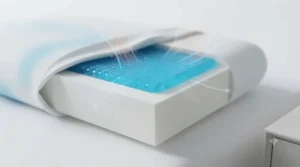
If what you actually want is that dramatic ice-pillow sensation the moment your head lands, the Silentnight Cool Touch Pillow is built specifically for that. A pressure-activated gel pad sits at the core, delivering an immediate cooling hit as soon as weight and body heat make contact — the closest thing on this list to the “ice pillow” experience people are often searching for.
The trade-off is one worth being upfront about: pressure-activated gel cools fastest and most dramatically at first contact, then gradually equalises with your body temperature as the night goes on, unlike genuine PCM which keeps buffering. Silentnight sells a matching Cool Touch pillowcase designed to layer on top of the gel pad, which the brand says extends the cooling effect further by adding a second moisture-wicking layer rather than trapping heat the way an ordinary cotton case can.
As one of the UK’s longest-established bedding brands, Silentnight benefits from a large aggregated review base, and the recurring theme is straightforward: buyers consistently confirm the instant cooling sensation works as described, with the most common criticism being that the effect is noticeably stronger on the first few nights of use than it feels weeks later.
Pros:
- ✅ Genuinely instant, noticeable cooling sensation
- ✅ Gel cover can be transferred onto your existing pillow
- ✅ From one of the UK’s most established bedding brands
Cons:
- ❌ Cooling effect diminishes as the night progresses
- ❌ Less structured support than memory foam alternatives
At around £8-£20 depending on pack size, the Silentnight Cool Touch Pillow is the cheapest genuinely cooling-focused pick in this entire guide.
7. Slumberdown Cool Memory Foam Pillow — best UK-made budget staple
Rounding out the list is a pillow that takes the simplest possible approach to cooling: rather than gel infusion or PCM, it relies on a CoolMAX knitted cover, a genuinely breathable performance fabric more commonly seen in sportswear, wrapped around a standard supportive memory foam core.
What most buyers overlook about cover-only cooling is that it’s honestly the most modest of the seven mechanisms covered here — it won’t actively draw heat away from your head the way gel or PCM does, but a properly breathable knit does measurably reduce the “clammy” trapped-heat feeling that dense, non-breathable covers create. Manufactured in the UK, the pillow carries a 2-year guarantee and is machine washable at 40°C, both genuinely useful for a pillow at this price point.
Reviewers consistently describe it as a reliable, no-frills pillow rather than a dramatic overheating fix, which is an honest reflection of what a breathable-cover-only approach can realistically deliver. For anyone whose overheating is mild rather than severe, or who simply wants a supportive, well-made pillow that won’t make things worse, it’s a genuinely sensible budget choice.
Pros:
- ✅ Breathable CoolMAX knitted cover
- ✅ UK-made with 2-year guarantee
- ✅ Fully machine washable at 40°C
Cons:
- ❌ No active cooling technology beyond the breathable cover
- ❌ Won’t match gel or PCM pillows on severe night sweats
Priced around £10-£18, the Slumberdown Cool Memory Foam Pillow is a solid, low-risk option for mild hot-sleeper complaints rather than genuine night-sweat relief.
Practical Usage Guide: Getting the Most from Your Cooling Pillow
Even the best cooling gel pillow underperforms if it’s used the wrong way. Skip a thick cotton pillowcase if you can — cotton absorbs moisture and traps it against the fabric, which works directly against whatever cooling technology sits underneath. A thin, breathable case, or the manufacturer’s own cooling pillowcase where available, lets the pillow’s technology actually reach your skin.
In the first few weeks, expect a mild “off-gassing” smell from any new memory foam pillow, gel-infused or otherwise — this is normal and typically clears within 24-48 hours in a well-ventilated room, not a fault. Fluff or reshape shredded-fill pillows regularly in the early weeks, since fill naturally settles and redistributing it helps maintain both loft and airflow. For gel pad pillows specifically, avoid folding or compressing the pillow tightly during storage, as this can damage the gel layer over time.
Pair your pillow with genuinely breathable bedding rather than expecting it to compensate for a hot, stuffy room on its own. The gov.uk Beat the Heat guidance recommends closing blinds during the day and ventilating rooms once outdoor air cools in the evening — small habits that make any cooling pillow work considerably harder for you.
Real-World Scenarios: Which Cooling Pillow Suits You
Consider Aisha, a side sleeper who runs hot most nights but doesn’t have a specific medical trigger — just a warm bedroom and a habit of overheating gradually through the night. For her, the REM-Fit 500 Cool Gel Pillow‘s gel-infused core and firm side-sleeper support is a sensible match, since her problem builds slowly rather than hitting immediately.
Then there’s Tom, going through a period of frequent night sweats and wanting the most dramatic, immediate relief he can get without spending a fortune. The Silentnight Cool Touch Pillow‘s pressure-activated gel pad, paired with its matching cooling pillowcase, is built precisely for that instant-hit scenario, even though the effect softens later in the night.
And consider Priya, who’s specifically researching phase change cooling pillow technology because she’s read that PCM performs more consistently than gel through a full night and wants the genuine version rather than a marketing approximation. For her, the Emma Comfort Cooling Pillow‘s Outlast-lined cover is the only pick on this list that actually delivers true phase-change performance rather than a cool-touch fabric treatment.
Problem → Solution: Common Cooling Pillow Complaints (And Fixes)
Problem: The cooling effect disappears after a few weeks. This is usually normal wear on gel pads or cool-touch fabric treatments, not a fault — pairing the pillow with a breathable cover and avoiding a hot, stuffy bedroom extends how noticeable the effect feels night to night.
Problem: The pillow smells strongly when first unboxed. Nearly universal with memory foam, gel-infused or not — leave it in a well-ventilated room for 24-48 hours before first use rather than assuming it’s faulty.
Problem: The pillow feels too firm or too soft after a few nights. Check whether the model has removable layers (Emma and Simba both do) before assuming you’ve bought the wrong pillow entirely — many firmness complaints are solvable without a return.
Problem: Night sweats persist despite a cooling pillow. A pillow alone rarely solves genuine night sweats caused by room temperature, bedding tog rating, or an underlying health factor — the British Red Cross’s advice on keeping cool at night covers wider steps like cooling your feet and adjusting your evening routine that work alongside, not instead of, the right pillow.
Extreme Cooling Pillow: How Far Can “Ice Cold” Really Go?
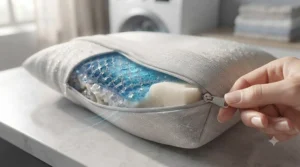
Marketing language around an extreme cooling pillow tends to promise more than physics can deliver over an eight-hour night. No pillow actively refrigerates itself — what varies between products is how much heat they can absorb before reaching thermal equilibrium with your body, and how quickly that happens. A pressure-activated gel pad, like the one in the Silentnight Cool Touch Pillow, delivers the most dramatic initial sensation because gel has high thermal conductivity and pulls heat away fast — but that same property means it equalises with your skin temperature relatively quickly too.
Genuine PCM, as used in the Emma Comfort Cooling Pillow, takes a fundamentally different approach: rather than simply conducting heat away fast, the material changes physical state at a specific temperature, which lets it keep absorbing heat for considerably longer before it “fills up” and needs to release that stored warmth back out. Neither approach is universally “more extreme” — gel wins on first impression, PCM wins on sustained performance, and a genuinely realistic expectation is somewhere between the two, not the near-instant AC-unit sensation some product listings imply.
Ice Pillow vs Gel Pillow: What’s Actually Different
The phrase “ice pillow” gets used loosely enough that it’s worth separating from genuine cooling gel technology. A true ice pillow, in the literal sense, typically refers to a pillow insert or pad designed to be chilled in a fridge or freezer before use, delivering active refrigeration rather than passive heat absorption — none of the seven pillows in this comparison work this way, and it’s worth knowing that distinction before searching specifically for that product type.
What’s sold as an “ice pillow” in mainstream retail is almost always a pressure-activated gel pad, functionally identical to the technology in the Silentnight Cool Touch Pillow, rebranded with more dramatic marketing language. The gel itself isn’t literally cold — it’s simply a material that conducts heat away from your skin faster than foam or fibre filling, creating a genuinely convincing cold sensation without requiring any actual refrigeration. Understanding that distinction helps set realistic expectations: a gel pillow will feel cold to the touch, but it won’t stay icy all night the way a genuinely chilled pack would.
Phase Change Cooling Pillow: PCM Technology Explained
Phase-change material works on a genuinely elegant scientific principle. According to the technical explanation of phase-change material on Wikipedia, these substances absorb and release large amounts of thermal energy specifically as they transition between physical states — commonly solid and liquid — at a defined temperature, allowing them to buffer temperature fluctuations far more effectively than materials that simply conduct heat.
In a pillow context, this means the PCM layer melts almost imperceptibly as it absorbs excess body heat, staying at a near-constant temperature throughout that process rather than steadily warming the way gel or foam does. Once your body temperature drops later in the night, the material re-solidifies and releases that stored heat back out, helping prevent the opposite problem of waking up too cold. Of the seven pillows compared here, only the Emma Comfort Cooling Pillow uses this mechanism throughout its cover — everything else relies on simple heat conduction, which is a real cooling effect but a fundamentally different, generally shorter-lived one.
Gel Infused Memory Foam Benefits (And Its Limits)
Gel infused memory foam benefits go well beyond the cooling headline. Because gel particles are denser than air-filled foam, gel-infused memory foam typically responds slightly faster to pressure changes than standard memory foam, meaning less of that “stuck” feeling some sleepers dislike about traditional viscoelastic foam. It also, genuinely, retains structural support better over time in several of the aggregated reviews checked for this guide, with buyers of the REM-Fit 500 and BedStory Gel Memory Foam Pillow both noting the pillows held their shape well over months of use.
The limits are worth being equally honest about. Gel infusion cools primarily through thermal mass — the gel simply takes longer to heat up than plain foam — which delays overheating rather than preventing it entirely on a genuinely hot night. It also doesn’t match genuine PCM’s ability to keep buffering heat for hours on end. For moderate hot sleepers, that delay is often more than enough to get through the night comfortably; for severe night sweats, it may fall short on its own.
Cooling Pillow for Summer Nights: Seasonal Buying Advice
Buying a cooling pillow for summer nights specifically, rather than as a year-round purchase, changes what’s worth prioritising. If cost matters more than longevity because you’re solving a seasonal problem, the Silentnight Cool Touch Pillow or Slumberdown Cool Memory Foam Pillow deliver a genuine improvement for a fraction of the outlay of the premium picks, and both pack away easily if you switch to a warmer pillow through winter.
If you’d rather buy once and use the same pillow year-round, dual-sided designs like the BedStory Gel Memory Foam Pillow, with its gel side for summer and copper-infused side for winter, or genuinely temperature-adaptive PCM in the Emma Comfort Cooling Pillow, make more sense — PCM in particular works both ways, releasing stored warmth back out on cooler nights rather than only ever cooling.
Long-Term Cost & Maintenance
Cost per use tells a more honest story than the sticker price alone. A £90 Simba Hybrid Pillow used nightly for three years works out to roughly 8p per night, genuinely competitive against replacing a £15 budget pillow every six to eight months as filling compresses and hygiene concerns build up — pillows generally need replacing every 1-2 years regardless of price point, per most bedding manufacturer guidance.
Maintenance varies more than shoppers often expect. Gel pads and PCM covers are typically not machine washable in the way a standard fibre pillow is — only the removable outer cover usually is — so factor in a pillow protector from day one if hygiene between washes matters to you. Foam cores generally can’t be tumble dried, and doing so risks damaging both the foam structure and any gel or PCM treatment embedded in it, so always check the specific care label rather than assuming standard washing rules apply.
Common Mistakes When Buying a Cooling Gel Pillow
The most common mistake is assuming every product with “cooling” in the name uses the same technology — as this guide has hopefully made clear, a pressure-activated gel pad, genuine PCM, and a breathable knitted cover are three meaningfully different mechanisms with different overnight performance. A second frequent error is buying based on firmness description alone without checking whether the pillow has adjustable layers, since “medium” varies considerably between brands.
Buyers also regularly underestimate normal new-foam odour, returning pillows that would have been fine after a day or two of airing. Finally, it’s worth not expecting a pillow alone to fix genuine night sweats or a persistently overheated bedroom — pairing the right pillow with breathable bedding and basic room ventilation makes a measurably bigger difference than the pillow in isolation.
FAQ
❓ Do cooling gel pillows actually work?
❓ How long does the cooling effect in a gel pillow last each night?
❓ Can you machine wash a cooling gel pillow?
❓ What's the difference between a cooling pillow and an ice pillow?
❓ Is phase-change material better than gel for cooling pillows?
Conclusion
If there’s one honest takeaway from comparing these seven pillows, it’s that “cooling” isn’t a single technology — it’s a spectrum. At one end sits the Emma Comfort Cooling Pillow, the only genuine phase change cooling pillow in this lineup, built around real PCM science rather than a cool-touch fabric treatment. At the other sits the budget-friendly Silentnight Cool Touch Pillow and Slumberdown Cool Memory Foam Pillow, both genuinely useful for mild overheating without the premium price tag. In between sit the Simba Hybrid Pillow, REM-Fit 500 Cool Gel Pillow, Panda Hybrid Bamboo Pillow, and BedStory Gel Memory Foam Pillow, each blending gel infusion, graphite, or charcoal technology with genuinely solid all-round support.
None of these is universally “the best” — the right pick depends on how severely you overheat, how firm you like your pillow, and whether you’re solving a seasonal problem or a year-round one. Whichever you choose, check current pricing and stock before buying, since availability and offers shift regularly across retailers.
Recommended for You
- 7 Best Kids Character Pillow Picks for Bedroom Decor (2026)
- Best Pillow for Teenagers 2026: 7 Picks That Actually Help
- Best Junior Pillow 2026: 7 Top Picks & Size Guide for Kids
Disclaimer: This article contains affiliate links. As an Amazon Associate, I earn from qualifying purchases. If you purchase products through these links, we may earn a small commission at no additional cost to you.
✨ Found this helpful? Share it with your friends! 💬🤗
