
In This Article
There’s a particular kind of parenting panic that hits the moment your toddler graduates from the cot: suddenly you’re staring at a wall of pillows online, half of them claiming to be “orthopaedic” and none of them explaining what size you actually need. Finding the best junior pillow shouldn’t require a physiotherapy degree, but the sheer range of sizes, fillings and age claims makes it feel that way. Pillows themselves have existed in some form for millennia — Wikipedia’s overview of pillow history traces the fabric-and-filling design most of us recognise today back to Ancient Greece around 500 BCE — but the specific science of sizing them correctly for a child’s smaller proportions is a much more recent development. This guide cuts through that with real UK sizing data, seven genuine currently available products, and honest guidance on when your child actually needs to move on from their junior pillow altogether.
We’ve pulled together current junior size pillow dimensions, aggregated review sentiment from real UK buyers, and the guidance paediatric sources give on sleep and spinal development, then applied all of it across products spanning budget hypoallergenic options to premium orthopaedic memory foam. Whether you’re outfitting a first toddler bed or hunting for something more supportive for a growing 7-year-old, you’ll find honest, sourced comparisons here rather than a rewritten product listing.
Quick Comparison Table
| Pillow Type | Typical Dimensions | Typical Price Range | Best For |
|---|---|---|---|
| Standard Junior Pillow | 40 x 60cm | £7-£20 | Toddler beds, ages 2-6 |
| Memory Foam Junior Pillow | 38-53 x 38cm | £25-£45 | Growing kids needing consistent support |
| Adjustable Kids Pillow | Variable loft | £30-£50 | Children transitioning through sizes |
| Standard Adult Pillow | 50 x 75cm | £10-£25 | Not recommended before age 8+ |
Looking at the table, the 40 x 60cm junior size dominates the UK market for good reason — it’s small enough to prevent an over-elevated head position while still giving proper support to a growing neck. Memory foam and adjustable options cost noticeably more, but the price difference often buys genuine longevity rather than just marketing gloss, since a well-made junior pillow can realistically see a child through several years rather than needing yearly replacement.
💬 Just one click — help others make better buying decisions too!😊
Top 7 Junior Pillows: Expert Analysis
Rather than reviewing pillows in isolation, we’ve picked seven genuine, currently available products that represent the real choices UK parents face — from budget hypoallergenic staples to premium orthopaedic memory foam — so you can compare like-for-like rather than guessing from marketing copy alone.
1. Panda Kids Memory Foam Bamboo Pillow — best premium orthopaedic option
The Panda Kids Memory Foam Bamboo Pillow measures 53 x 38 x 10cm and is designed specifically for children aged four and above, using third-generation memory foam that’s noticeably firmer and lower-loft than adult equivalents. The bamboo cover is removable via a child-friendly zip and machine washable at 30°C, which matters enormously given how often children’s bedding needs a proper wash.
Based on the spec comparison with standard hollowfibre junior pillows, what genuinely justifies the premium price here is the orthopaedic-grade foam’s consistency — unlike fibre filling, which compresses and bunches over months of use, memory foam holds its contour night after night, which is precisely why it’s recommended for supporting healthy head and neck alignment. Reviewers consistently praise the balance of firmness, with several parents specifically noting it’s “not too soft and not too firm” for children transitioning from toddler pillows. The pillow complies with BS 7177 UK fire safety regulations and carries OEKO-TEX Standard 100 certification.
Pros:
- ✅ Orthopaedic-grade memory foam holds shape far longer than fibre fill
- ✅ Removable, machine-washable bamboo cover
- ✅ 10-year guarantee and 30-night trial
Cons:
- ❌ Considerably pricier than standard hollowfibre junior pillows
- ❌ Not suitable for children under four years old
The Panda Kids Memory Foam Bamboo Pillow typically retails in the £35-£45 range, making it a genuine long-term investment rather than an impulse buy.
2. Coop Home Goods Adjustable Toddler Pillow — best for children with changing support needs
The Coop Home Goods Adjustable Toddler Pillow takes a different approach entirely, using a zippered access panel that lets parents add or remove shredded memory foam fill to customise the loft height as their child grows. This is genuinely useful for the awkward stretch between toddlerhood and the 5-8 age bracket, where a fixed-loft pillow that’s perfect one year can feel wrong the next.
What most buyers overlook about adjustable pillows is that the customisation isn’t just a gimmick — it directly addresses the reality that children’s proportions change faster than most parents replace bedding. The CertiPUR-US and GREENGUARD Gold certifications confirm the foam has been independently tested for harmful emissions, which matters for a product your child’s face rests against for eight-plus hours a night. Aggregated reviewer sentiment describes the washable cover as genuinely convenient, though some parents note the shredded foam can feel slightly lumpy compared with solid memory foam until it settles.
Pros:
- ✅ Adjustable loft grows with your child rather than being replaced
- ✅ CertiPUR-US and GREENGUARD Gold certified foam
- ✅ Washable outer cover
Cons:
- ❌ Shredded foam fill feels less uniform than solid memory foam initially
- ❌ Premium pricing compared with standard junior pillows
Expect to pay around £35-£50 for the Coop Home Goods Adjustable Toddler Pillow, positioning it as a strong pick for parents wanting one pillow to last through multiple growth stages.
3. John Lewis Kids’ Micro-Fresh Anti-Allergy Pillow, Junior — best trusted retailer option
For parents who’d rather buy from a name they already trust, the John Lewis Kids’ Micro-Fresh Anti-Allergy Pillow, Junior delivers the standard 40 x 60cm junior dimensions with Micro-Fresh antibacterial treatment built into the fibre filling, designed to keep the pillow fresher for longer between washes.
Here’s what the spec sheet won’t tell you, but is worth knowing: anti-allergy treatments on children’s bedding matter more than they might seem, since kids spend considerably more total hours in bed relative to their body size than adults, and dust mite exposure during those hours has been linked to allergy sensitisation in early childhood. John Lewis’s own-brand quality control tends to be consistently reliable across its bedding range, and the retailer’s straightforward returns policy gives genuine peace of mind if the size or firmness doesn’t suit your child.
Pros:
- ✅ Micro-Fresh antibacterial treatment reduces odour between washes
- ✅ Standard 40 x 60cm junior sizing fits most toddler bed pillowcases
- ✅ Backed by John Lewis’s straightforward returns policy
Cons:
- ❌ Less firm than memory foam alternatives
- ❌ Fibre filling will need replacing sooner than foam equivalents
The John Lewis Kids’ Micro-Fresh Anti-Allergy Pillow, Junior typically costs £15-£20, sitting comfortably in the mid-range for parents wanting reliable quality without premium pricing.
4. Silentnight Healthy Growth Breathable Pillow — best for active, sweaty sleepers
The Silentnight Healthy Growth Breathable Pillow uses mesh side panels specifically designed to increase airflow through the pillow, which genuinely matters for children who run hot at night or kick off their covers repeatedly. The cotton cover and anti-bacterial fill combine to create what Silentnight positions specifically as support for growing children, rather than a generic toddler pillow.
Based on the spec comparison with sealed-cover alternatives, the mesh side design isn’t just a marketing flourish — increased airflow genuinely reduces the overheating that can disrupt children’s sleep, and disrupted sleep has been linked by researchers to increased onset of musculoskeletal pain in children, making breathability a more meaningful spec than it first appears. Reviewers describe the pillow as comfortable and appropriately supportive for children moving past the toddler stage, with the two-year manufacturer’s guarantee giving reasonable reassurance on durability.
Pros:
- ✅ Mesh side panels improve airflow for hot sleepers
- ✅ Positioned specifically for growing, active children
- ✅ Two-year manufacturer’s guarantee
Cons:
- ❌ Firmness may feel too soft for children wanting more structured support
- ❌ Cotton cover shows wear faster than synthetic alternatives
The Silentnight Healthy Growth Breathable Pillow typically retails around £12-£18, making it a sensible mid-range pick focused on temperature regulation.
5. Silentnight Safe Nights Anti-Allergy Cot Bed Pillow — best budget hypoallergenic option
The Silentnight Safe Nights Anti-Allergy Cot Bed Pillow delivers the standard 40 x 60cm junior dimensions with anti-allergy hollowfibre filling that’s British Allergy Foundation approved, at a price point that makes it easy to buy a spare without a second thought. It’s part of Silentnight’s award-winning Safe Nights collection, suitable from 12 months onward.
What genuinely matters here is that budget doesn’t have to mean compromised safety credentials — this pillow’s anti-allergy treatment doesn’t wash out over time, unlike cheaper unbranded alternatives where hypoallergenic claims sometimes fade after a handful of washes. Reviewer sentiment is genuinely mixed on this exact model, with some describing it as good value that held up well, while others report it going flat or lumpy within weeks; buyers should treat this as a solid budget option rather than a premium substitute, and expect to replace it sooner than a memory foam alternative.
Pros:
- ✅ Anti-allergy treatment doesn’t wash out over repeated cycles
- ✅ British Allergy Foundation approved
- ✅ Genuinely affordable entry point
Cons:
- ❌ Reviewer feedback on longevity is mixed, with some reporting flattening within weeks
- ❌ Less structured support than firmer alternatives
The Silentnight Safe Nights Anti-Allergy Cot Bed Pillow typically costs £8-£14, making it one of the most accessible options on this list.
6. Adam Home Toddlers Cot Bed Pillow — best budget microfibre alternative
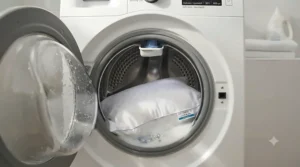
The Adam Home Toddlers Cot Bed Pillow offers a straightforward 40 x 60cm hypoallergenic microfibre pillow aimed squarely at the budget end of the market, without sacrificing the basic anti-allergy and machine-washable credentials parents expect as standard.
The honest analytical take here is that at this price point, the differences between competing budget junior pillows come down to fine margins in fill density and cover fabric feel rather than dramatic quality gaps. What most buyers overlook is that microfibre fill, while less prestigious-sounding than memory foam, is entirely appropriate for younger children in the 2-5 range who don’t yet need the more structured support older children benefit from. It’s a sensible, unremarkable choice that does exactly what a budget junior pillow should.
Pros:
- ✅ Genuinely low price point
- ✅ Hypoallergenic and fully machine washable
- ✅ Standard junior sizing fits widely available pillowcases
Cons:
- ❌ Basic construction compared with branded alternatives
- ❌ Less supportive for older children in the 5-8 range
The Adam Home Toddlers Cot Bed Pillow typically costs £7-£12, making it a genuinely budget-friendly starting point.
7. Silentnight Safe Nights Cot Bed Anti Allergy Pillow 2 Pack — best value multipack
For households with more than one child, or parents who want a spare on hand for the inevitable bedwetting or spillage incident, the Silentnight Safe Nights Cot Bed Anti Allergy Pillow 2 Pack bundles two standard 40 x 60cm anti-allergy pillows together at a meaningfully lower per-unit cost than buying individually.
Here’s what most buyers overlook about multipacks: having a genuine spare on hand means a child’s sleep routine isn’t disrupted by a pillow being mid-wash, which matters more than it sounds for children who rely on consistent bedtime routines to settle. Reviewer sentiment specifically around the pack format is positive, with parents appreciating the practicality of always having a clean, ready pillow available. The trade-off is that, like the single version, this remains a budget hollowfibre option rather than a premium supportive pillow.
Pros:
- ✅ Genuine cost saving over buying two individually
- ✅ Always having a spare avoids sleep routine disruption
- ✅ Same trusted anti-allergy treatment as the single version
Cons:
- ❌ Basic hollowfibre support, not suited to older or heavier children
- ❌ Same longevity concerns as the single Safe Nights pillow
The Silentnight Safe Nights Cot Bed Anti Allergy Pillow 2 Pack typically costs £14-£20 for the pair, representing genuine value for multi-child households.
Practical Usage Guide: Getting Your Child’s Junior Pillow Set Up Right
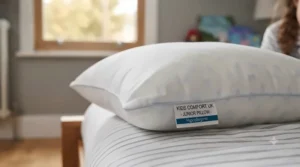
Getting real value from a junior pillow starts with the pillowcase. Always use a genuine junior-sized pillowcase (typically 40 x 60cm) rather than folding down an adult case, since a loose case allows the pillow to bunch and shift during the night, undermining whatever support it’s meant to provide. Wash the pillow itself according to the label roughly every one to two months, more often if your child is prone to night sweats or hasn’t yet grown out of the occasional bedwetting accident, since trapped moisture in fibre filling can encourage dust mites and mould growth.
A common first-month mistake is introducing a pillow that’s genuinely too soft, on the assumption that softer automatically means more comfortable for a small child. In practice, an overly soft pillow allows the head to sink too deeply, which can misalign the neck rather than support it; a pillow that regains its shape within a few seconds of pressing down is a reasonable firmness benchmark. For memory foam pillows specifically, allow 24-48 hours of airing after unboxing before use, since a mild “new foam” scent is normal and typically dissipates in a well-ventilated room.
Real-World Scenario: Which Junior Pillow Suits Your Child
Consider three families. First, parents introducing a pillow for the first time to a child who’s just moved from cot to toddler bed — a straightforward, affordable option like the Adam Home Toddlers Cot Bed Pillow or Silentnight Safe Nights Anti-Allergy Cot Bed Pillow makes sense here, since there’s genuine value in not overspending before confirming the child is even ready for or interested in a pillow.
Second, parents of a 6- or 7-year-old who’s outgrown their original toddler pillow and needs something more substantial — the Panda Kids Memory Foam Bamboo Pillow suits this stage well, since its firmer, more consistent support better matches an older child’s proportions than a soft fibre-filled toddler pillow ever could.
Third, a family with a child who runs hot at night, kicks off bedding, or has mild allergies — the Silentnight Healthy Growth Breathable Pillow with its mesh airflow panels addresses the overheating concern directly, while the Coop Home Goods Adjustable Toddler Pillow offers a genuinely flexible option for households wanting one pillow to adapt as their child’s needs change over several years.
Problem → Solution: Common Junior Pillow Issues Solved
Problem: The pillow keeps sliding out of a loose adult pillowcase. Solution — always buy a genuine 40 x 60cm junior pillowcase rather than improvising with adult bedding, since correctly sized cases hold the pillow securely through a full night of movement.
Problem: A fibre-fill pillow has gone flat and lumpy within a few months. Solution — consider upgrading to a memory foam junior pillow, which holds its shape far longer, or simply accept more frequent replacement as the trade-off for a budget hollowfibre option.
Problem: Your child complains the pillow feels “too hot.” Solution — switch to a breathable, mesh-sided design or a bamboo-covered pillow, both of which are specifically designed to improve airflow and reduce overheating.
Problem: Uncertain whether your child still needs a junior pillow or has outgrown it. Solution — check their proportions against the pillow rather than relying purely on age; if their head and shoulders now comfortably span a standard adult pillow without excessive elevation, it may be time to transition.
Problem: Worried about hidden allergens in cheaper pillows. Solution — look specifically for OEKO-TEX Standard 100 certification or British Allergy Foundation approval, both of which confirm independent testing rather than relying on unverified marketing claims.
What Is a Junior Pillow?
best junior pillow searches typically refer to a smaller, lower-loft pillow specifically sized and firmed for children, distinct from adult pillows in both dimensions and support level. A junior pillow is designed to keep a child’s head, neck and spine in a more neutral position during sleep, since a child’s proportionally larger head and smaller shoulder width mean an adult pillow can force unhelpful neck angles.
Junior Size Pillow Dimensions Explained
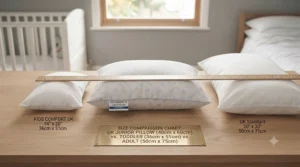
Junior size pillow dimensions in the UK are standardised at 40cm x 60cm, roughly two-thirds the size of a standard adult pillow (50cm x 75cm). This standard junior pillow size cm measurement isn’t arbitrary — it’s proportioned specifically to avoid over-elevating a child’s head while still providing genuine neck support, and it’s the size used consistently across major UK retailers including Silentnight, John Lewis and most Amazon-listed children’s bedding brands. Loft height (thickness) also matters alongside the flat dimensions, with most junior pillows sitting between 5cm and 10cm thick, noticeably lower than the 12-15cm common on adult pillows.
How to Choose the Best Junior Pillow
- Confirm your child is genuinely ready. The Lullaby Trust’s safer sleep guidance is unambiguous that pillows should never be used with babies under 12 months, and most experts recommend waiting until 18-24 months or later once a child has moved into a toddler bed.
- Stick to standard 40 x 60cm junior dimensions. Avoid the temptation to size up early; an adult pillow can strain a young child’s developing neck.
- Check the firmness. Press down on the pillow — if it doesn’t regain its shape quickly, it’s likely too soft and unsuitable for safe use.
- Prioritise machine washability. Children’s bedding needs frequent washing, so confirm the cover (and ideally the fill) can be cleaned easily.
- Look for genuine safety certifications. OEKO-TEX Standard 100, British Allergy Foundation approval and BS 7177 fire safety compliance are all meaningful indicators.
- Match the fill type to your child’s needs. Memory foam suits children needing consistent structured support; breathable fibre suits hot sleepers; hypoallergenic options suit allergy-prone children.
- Reassess as your child grows. A pillow that fits a 3-year-old perfectly may need replacing or upgrading by age 6 or 7.
Choosing a Pillow for 5-8 Year Old Children
A pillow for 5-8 year old children sits in an interesting transitional zone — often too big for a standard toddler pillow, but generally still too young for a full adult pillow. What most buyers overlook is that a standard 40 x 60cm junior pillow remains entirely appropriate for most children through this age range; the dimensions don’t necessarily need to increase, but the firmness and support level often should, which is precisely why several products on this list, including the Panda Kids Memory Foam Bamboo Pillow, are specifically marketed from age four upward.
Based on the spec comparison between toddler-focused and older-child-focused junior pillows, the key difference isn’t usually size but structure — a 5-8 year old benefits from a pillow that holds a consistent shape through an active night’s sleep, rather than one designed primarily around suffocation-risk minimisation for a much younger, less mobile child.
Single Bed Pillow Size Comparison: Junior vs Standard vs King
Understanding single bed pillow size comparison helps clarify exactly where junior pillows sit within the broader UK sizing system, since bed size and pillow size aren’t strictly linked — a single bed can accommodate a junior, standard or even king pillow depending on the sleeper’s age and preference.
| Pillow Size | Dimensions | Typical User | Fits Single Bed? |
|---|---|---|---|
| Junior | 40 x 60cm | Children roughly 1-8 years | Yes, most common junior fit |
| Standard | 50 x 75cm | Most teens and adults | Yes, most common adult fit |
| King/Super King | 50 x 90cm | Adults on wider beds | Yes, but often feels oversized |
| Square | 65 x 65cm | Decorative, not primary sleeping | Rarely used as main pillow |
The table shows that while a single bed can technically host any pillow size, the junior pillow is specifically proportioned for smaller sleepers rather than simply being “whatever fits the bed.” Parents transitioning a child from a junior to a standard pillow should do so based on the child’s actual proportions and readiness rather than automatically upgrading when they move to a bigger bed, since bed size and appropriate pillow size are genuinely separate considerations.
Growing Spine Support: What Parents Should Know
Growing spine support is one of the more overstated claims in children’s pillow marketing, and it’s worth separating genuine evidence from convenient positioning. Children’s spines and necks are still developing throughout early-to-mid childhood, and NHS physiotherapy guidance on growing pains notes that muscles and bones grow at different rates during this period, which can contribute to the common but harmless condition known as growing pains, typically affecting children aged three to twelve. This doesn’t mean a specific “orthopaedic” pillow is medically necessary for every child, but a pillow that’s appropriately sized and firm enough to hold a neutral neck position is a reasonable, low-cost way to avoid unnecessary strain during the many hours children spend asleep.
What’s genuinely supported by research is the broader link between sleep quality and musculoskeletal comfort in children — disrupted or poor-quality sleep has been associated with increased onset of musculoskeletal pain in school-age children, which is a stronger argument for prioritising comfort and appropriate fit over chasing specific “spine support” marketing claims that lack robust paediatric evidence behind them.
Junior Pillow vs Standard Pillow vs Travel Pillow
The junior pillow, standard adult pillow and travel pillow all serve genuinely different purposes despite superficial similarity. A junior pillow’s smaller 40 x 60cm footprint and lower loft are specifically calibrated for a child’s proportions, while a standard 50 x 75cm adult pillow, if used too early, can force a child’s neck into an unnecessarily elevated angle. Travel pillows, meanwhile, are typically similar in size to junior pillows but are designed for occasional portable use rather than nightly support, often using thinner, more compressible fill that isn’t built for years of daily wear.
Parents sometimes reach for a travel pillow as a budget junior pillow substitute, and while this can work in a pinch, it’s not a genuine long-term solution — travel pillow fill is optimised for packability, not sustained nightly support, and tends to flatten considerably faster under regular use than a purpose-built junior pillow.
Long-Term Value & When to Replace a Junior Pillow
A genuine cost analysis for junior pillows needs to look past the purchase price alone. A £10 budget hollowfibre pillow that needs replacing every six to nine months due to flattening works out to a similar or higher annual cost than a £35 memory foam pillow that holds its shape for two to three years. Fibre-filled pillows should generally be replaced once they no longer spring back after being pressed, while memory foam options typically need replacing only when visible wear appears on the cover or the foam develops a permanent indentation.
Beyond wear, children also simply outgrow pillows in terms of appropriate firmness and support level, even if the pillow itself remains in good condition. A pillow that suited a 3-year-old may no longer provide adequate support for the same child at 7, independent of how well it’s held up physically.
Common Mistakes When Buying a Junior Pillow
The most frequent mistake is buying based on age recommendations alone without checking actual firmness and fill type, resulting in a pillow that’s technically “for” the right age bracket but doesn’t suit the individual child’s sleep style. A close second is using an incorrectly sized pillowcase, which undermines even a well-chosen pillow by allowing it to bunch or shift overnight. Parents also commonly overlook safety certifications entirely, buying unbranded budget pillows without OEKO-TEX or British Allergy Foundation credentials purely on price, which removes an important layer of assurance around chemical safety for a product in prolonged contact with a child’s face. Finally, many delay replacing a visibly flattened or lumpy pillow far longer than they would with adult bedding, despite children’s developing necks arguably benefiting more from consistent support.
Safety and Regulations for Children’s Pillows in the UK
UK safety guidance around children’s pillows centres primarily on age-appropriate introduction and product certification. Safer sleep guidance is unambiguous that pillows should never be used with babies under 12 months, since soft bedding significantly increases suffocation and overheating risks in very young infants; this guidance is specifically about babies rather than the 5-8 age range most junior pillows in this guide are aimed at, but it explains why every reputable junior pillow brand clearly states a minimum age on packaging.
Once a child has moved well past infancy, the relevant regulatory framework shifts toward general product and fire safety. All UK pillows sold for domestic use, including children’s pillows, must comply with the Furniture and Furnishings Fire Safety Regulations, which set flammability requirements for filling materials. Look for pillows explicitly stating BS 7177 compliance, as several products on this list do, since this confirms the filling has been independently tested against UK ignition-resistance standards rather than simply assumed safe.
Frequently Asked Questions
❓ What size is a junior pillow in the UK?
❓ At what age should a child stop using a junior pillow?
❓ Is memory foam or fibre filling better for a junior pillow?
❓ Can a junior pillow help with growing pains?
❓ Do junior pillows need special pillowcases?
Conclusion
There’s no single best junior pillow that suits every child, and the honest answer depends heavily on your child’s age, sleep habits and how much you’re willing to spend upfront versus over time. For a first pillow after the cot-to-bed transition, an affordable, certified hypoallergenic option like the Adam Home Toddlers Cot Bed Pillow or Silentnight Safe Nights Anti-Allergy Cot Bed Pillow makes complete sense. For older children in the 5-8 range needing more consistent, structured support, the Panda Kids Memory Foam Bamboo Pillow or the adjustable Coop Home Goods option represent genuinely better long-term value despite the higher initial cost.
What matters most is matching the pillow’s size and firmness to your specific child rather than chasing marketing claims about spine support or growth benefits that aren’t strongly evidenced. Stick to genuine 40 x 60cm junior dimensions, check for real safety certifications, and reassess as your child grows, and you’ll land on a pillow that genuinely earns its place on their bed rather than one that gets kicked to the floor by week two.
✨ Don’t Miss These Exclusive Deals!
🔍 Take your child’s bedtime routine to the next level with these carefully selected junior pillows. Click on any highlighted item to check current pricing and availability on Amazon.co.uk. These picks will help your little one settle into comfortable, supported sleep every night!
Recommended for You
- Best Toddler Pillow 2026: 7 Safe, Comfy Picks Parents Trust
- Best Pillow for Kids 2026: 7 Genuinely Brilliant Picks
- Leg Elevation Pillow Bed Bound: 7 Best Picks for 2026
Disclaimer: This article contains affiliate links. As an Amazon Associate, I earn from qualifying purchases. If you purchase products through these links, we may earn a small commission at no additional cost to you.
✨ Found this helpful? Share it with your friends! 💬🤗
