
In This Article
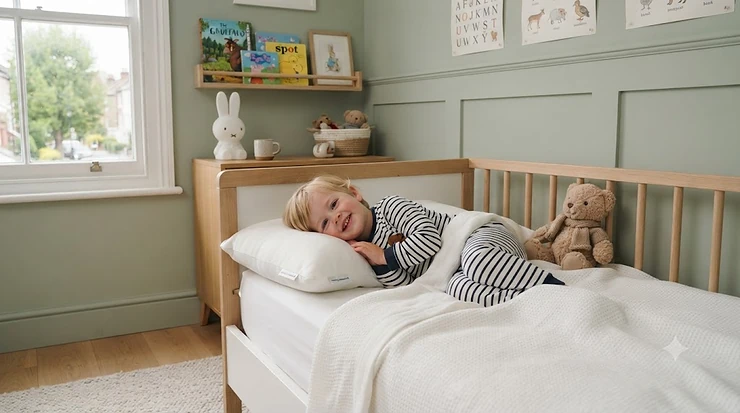
There’s a particular kind of 2am negotiation that happens once your toddler graduates from a cot to a “big bed.” One minute you’re congratulating yourself on a milestone well handled; the next, your child is dragging your bed pillow across the landing because theirs doesn’t exist yet. That’s usually the moment best toddler pillow becomes the most-Googled phrase in your search history.
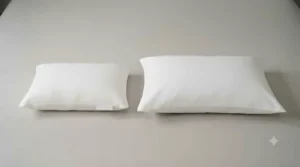
So let’s answer the basics first. A toddler pillow is a small, low-loft pillow — typically around 40 x 60cm, roughly a third the size of an adult one — built specifically to support a young child’s head, neck and still-developing spine once they’ve moved out of a cot and into a toddler bed, usually from around 12 months onwards. It’s flatter, firmer and considerably less puffy than anything you’d sleep on yourself, and that’s by design, not by accident.
This guide digs into seven real, currently-available toddler pillows on amazon.co.uk, spanning budget microfibre options through to premium memory foam and organic wool. We’ve weighed up loft height, firmness, certification, breathability and genuine aggregated review sentiment for each one, rather than just reciting spec sheets. We’ll also cover the practical stuff nobody tells you: how to time the transition from cot to bed, which safety certifications actually matter, and the common buying mistakes that leave parents with an unused pillow gathering dust under the bed frame. Following the UK’s December 2025 product safety alert on ‘Baby Sleep Pillows’, choosing a pillow that’s genuinely designed and certified for toddlers — not babies — matters more than ever. Full details on the safety side are in the dedicated section below, but consider this your fair warning: not every pillow marketed at “little ones” is appropriate for a toddler bed.
Quick Comparison Table
Short on time? Here’s the seven-second version before we get into the detail.
| Pillow | Best For | Material | Loft/Size | Price Range |
|---|---|---|---|---|
| Panda Toddler Memory Foam Bamboo Pillow | Overall pick, 2-4 years | Memory foam, bamboo cover | 58 x 38 x 6cm | £30-£40 range |
| The Little Green Sheep Organic Wool Cot Pillow | Natural materials, small beds | Organic wool, cotton | 40 x 60cm | £25-£35 range |
| Silentnight Safe Nights Anti-Allergy Cot Bed Pillow | Tightest budget | Polyester/microfibre | 40 x 60cm | Under £10 |
| John Lewis Kids Micro Fresh Anti Allergy Pillow | Allergy-conscious families | Micro Fresh-treated fibre | 40 x 60cm | £15-£20 range |
| ClevaMama Junior Pillow | Restless sleepers, 3+ | Reflex support foam, lavender | 40 x 60 x 7cm | £20-£30 range |
| WOOLROOM Deluxe Washable Kids Cot Pillow | British wool, eczema-prone skin | 100% British wool | 40 x 60cm | £30-£45 range |
| KeaBabies Toddler Pillow with Pillowcase | Travel, small toddler beds, includes case | Organic cotton | 33 x 45cm | £15-£25 range |
Looking at the spread here, the real split isn’t cheap versus expensive — it’s foam versus fibre versus wool, and each has a genuinely different feel underneath a toddler’s head. Budget picks like the Silentnight Safe Nights Anti-Allergy Cot Bed Pillow get the fundamentals right without frills, while the Panda Toddler Memory Foam Bamboo Pillow and WOOLROOM Deluxe Washable Kids Cot Pillow justify their higher price with materials that hold their shape and regulate temperature over years, not months. If your toddler is a hot sleeper, weight the wool and bamboo options more heavily; if you’re buying a first pillow to test the waters, the budget end is a sensible place to start.
💬 Just one click — help others make better buying decisions too!😊
Top 7 Toddler Pillows: Expert Analysis
We’ve pulled together seven pillows that genuinely exist on amazon.co.uk right now, covering the full range from £7 basics to premium orthopaedic picks. Each one gets the full breakdown: what it’s made of, who it actually suits, and what real reviewers keep saying about it.
1. Panda Toddler Memory Foam Bamboo Pillow — best orthopaedic support for 2-4 years
The standout here is the contoured memory foam core, which is a genuinely different proposition from the flat fibre-fill pillows further down this list. The Panda Toddler Memory Foam Bamboo Pillow measures 58 x 38 x 6cm, uses a slow-recovery foam designed for the 2-4 age bracket, and is wrapped in a bamboo-viscose cover that’s naturally moisture-wicking. Because memory foam holds its shape rather than compressing flat like polyester fill, it keeps the same loft height night after night — something that matters more than it sounds, since a pillow that flattens unevenly can nudge a toddler’s neck out of alignment as they turn over. It’s OEKO-TEX Standard 100 certified and complies with BS 7177 UK fire safety regulations for children’s bedding, and it comes with a 10-year guarantee, which is unusually long for a product this size. This one’s best suited to parents whose toddler runs warm at night and needs consistent support rather than a squishable pillow they can mould with their hands. Reviewers consistently report that the bamboo cover feels cool to the touch and that the pillow keeps its shape well after repeated washing, though a handful note that memory foam retains a faint “new foam” smell for the first week or so — not unusual for the material, and it fades.
Pros:
- ✅ Holds its shape for years rather than flattening
- ✅ Bamboo cover helps regulate temperature overnight
- ✅ 10-year guarantee is rare at this price point
Cons:
- ❌ Memory foam can’t be machine washed, only the cover
- ❌ Firmer feel may not suit toddlers who prefer a squashier pillow
Sitting in the £30-£40 range, this is a mid-to-premium buy, but the shape-retention and certification make it a reasonable one-and-done purchase rather than something you’ll replace within a year.
2. The Little Green Sheep Organic Wool Cot Pillow for Toddlers — best natural materials pick
What most buyers overlook about wool bedding is that it isn’t just “natural” as a marketing buzzword — it genuinely behaves differently under a sleeping toddler than synthetic fill. The Little Green Sheep Organic Wool Cot Pillow for Toddlers is made from GOTS-certified organic wool, sized at a standard 40 x 60cm, and manufactured in the UK, which shortens the supply chain considerably compared with imported alternatives. Wool naturally wicks moisture away from the skin and self-regulates temperature far more effectively than polyester fill, which tends to trap heat. It’s compliant with BS 4578 (the British Standard specifically covering pillows for children over 12 months) and is explicitly marked as unsuitable for under-ones, which is exactly the kind of clear labelling parents should be looking for post-2025 safety alert. Based on the spec comparison with synthetic options, this pillow suits allergy-conscious families and toddlers prone to night sweats particularly well, since wool is naturally dust-mite resistant. Aggregated customer sentiment for The Little Green Sheep’s cot bedding range consistently highlights the softness of the wool moulding gently around a child’s head without collapsing flat, alongside praise for the brand’s UK manufacturing.
Pros:
- ✅ GOTS-certified organic wool, made in the UK
- ✅ Naturally temperature-regulating and dust-mite resistant
- ✅ Clearly labelled as compliant with BS 4578
Cons:
- ❌ Machine wash cold only, cannot be tumble dried
- ❌ Premium natural materials sit at a higher price point
For parents prioritising sustainability and skin-sensitivity over the lowest possible price, this is one of the stronger options in the £25-£35 range.
3. Silentnight Safe Nights Anti-Allergy Cot Bed Pillow — best budget-friendly pick
Here’s the honest take: you don’t need to spend £40 to get a safe, functional first pillow, and the Silentnight Safe Nights Anti-Allergy Cot Bed Pillow proves it. This is a straightforward polyester-fill pillow at the standard 40 x 60cm cot bed size, finished with an anti-allergy treatment and a soft microfibre cover. The fill is lightweight and flat by design rather than plush, which is precisely the firmness profile paediatric guidance recommends for a toddler’s first pillow. What’s easy to miss with budget pillows like this is that “cheap” doesn’t automatically mean “unsafe” — Silentnight is a long-established UK bedding brand, and this product is specifically labelled and sized for the cot-bed category rather than repurposed adult stock. It’s the pillow we’d point parents towards for a low-stakes first trial: if your toddler rejects it after a fortnight, you haven’t lost much. Reviewers frequently mention that it washes and dries quickly without losing shape, and that it feels appropriately flat and firm rather than the marshmallow-soft feel some competitors go for.
Pros:
- ✅ Genuinely low-risk price point for a first-time trial
- ✅ Appropriately flat, firm profile for toddler use
- ✅ Machine washable and dries quickly
Cons:
- ❌ Polyester fill flattens faster than foam or wool over time
- ❌ Fewer premium features like bamboo or wool covers
At under £10, this is about as accessible as a certified toddler pillow gets, and it’s a sensible starting point if you’re not yet sure your toddler is ready.
4. John Lewis Kids Micro Fresh Anti Allergy Pillow — best allergy-conscious mid-range option
The John Lewis Kids Micro Fresh Anti Allergy Pillow leans on a treatment called Micro Fresh, an anti-bacterial and anti-fungal finish applied to the fabric itself rather than just the fill. In practice, this means the pillow actively resists the growth of bacteria, mould and dust mites within the fibres, rather than simply being hypoallergenic by virtue of synthetic fill. Sized at the standard 40 x 60cm cot bed dimension, it sits comfortably in John Lewis’s own quality-control standards, which tend to be a notch above generic own-brand competitors on stitching and fabric durability. This one is best suited to families dealing with eczema, hay fever or dust-mite sensitivities in the household, where an active anti-microbial treatment offers genuine peace of mind beyond a basic hypoallergenic label. Aggregated reviews on John Lewis’s own product pages and third-party retailers consistently note that the pillow retains a “fresh” feel between washes and that parents of allergy-prone children specifically sought it out on recommendation from health visitors or paediatric allergists.
Pros:
- ✅ Micro Fresh treatment actively resists bacteria and mould
- ✅ John Lewis quality control on stitching and fabric
- ✅ Standard cot bed sizing fits most toddler beds
Cons:
- ❌ Costs more than basic anti-allergy alternatives
- ❌ Micro Fresh treatment effectiveness diminishes slightly with very frequent washing
In the £15-£20 bracket, it strikes a sensible middle ground between the Silentnight budget pick and the premium natural-material options above it.
5. ClevaMama Junior Pillow — best for restless sleepers, ages 3 plus
What the spec sheet won’t tell you outright is that the ClevaMama Junior Pillow is built around reflex support foam — a slightly different material to standard memory foam, engineered to respond faster to movement, which matters for toddlers who toss and turn rather than staying in one position all night. At 40 x 60 x 7cm, it’s a touch taller than some competitors, aimed at the 3-plus bracket rather than younger toddlers still adjusting to any pillow at all. The breathable design incorporates a lavender essence woven into the fill, marketed as an aid to a more settled bedtime routine, though we’d frame that as a gentle bonus rather than a guaranteed sleep hack — no pillow replaces a consistent bedtime routine. ClevaMama, an Irish brand with a strong reputation in UK nursery retail, positions this specifically for children who’ve outgrown their very first flat pillow and need slightly more structured support. Reviewers commonly report that the reflex foam responds well to a toddler changing sleep position multiple times a night, springing back into shape rather than staying compressed.
Pros:
- ✅ Reflex foam responds quickly to a restless sleeper
- ✅ Slightly taller loft suits the 3-plus age bracket
- ✅ Breathable design aids airflow through the night
Cons:
- ❌ Taller loft may be too much for children under 3
- ❌ Lavender scent won’t suit every household or child
Priced in the £20-£30 range, it’s a solid step-up pillow for toddlers who’ve already mastered sleeping with something under their head.

6. WOOLROOM Deluxe Washable Kids Cot Pillow — best British wool, handcrafted option
The WOOLROOM Deluxe Washable Kids Cot Pillow is handcrafted from 100% British wool, which places it firmly in the premium natural-fibre camp alongside The Little Green Sheep, but with a distinctly different provenance story: WOOLROOM sources exclusively from British sheep farms, appealing to parents who care specifically about domestic, traceable wool production. The washable design addresses one of the traditional criticisms of wool bedding — that it’s fussy to clean — by using a construction that tolerates gentle machine washing without the wool clumping or losing its loft. Based on the spec comparison with synthetic fill, wool’s natural crimp structure means it springs back into shape after compression far more reliably than polyester, which matters for a pillow that’s getting compressed nightly by a toddler’s head. This suits families specifically seeking British-made provenance and those managing eczema or sensitive skin, since wool’s natural lanolin content has mild antimicrobial properties. Aggregated reviewer sentiment for WOOLROOM’s children’s range highlights the pillow’s ability to stay fresh-smelling between washes and praises the brand’s transparency about sourcing, though the higher price point comes up repeatedly as a consideration for larger families needing multiple pillows.
Pros:
- ✅ 100% traceable British wool, handcrafted
- ✅ Naturally springs back into shape after use
- ✅ Machine washable despite being a wool product
Cons:
- ❌ Among the pricier options on this list
- ❌ Wool won’t suit households with a wool allergy or sensitivity
At £30-£45, this is squarely a premium buy, best justified if wool’s temperature-regulating properties are a genuine priority rather than a nice-to-have.
7. KeaBabies Toddler Pillow with Pillowcase — best toddler pillow with case included
Rounding out the list is the KeaBabies Toddler Pillow with Pillowcase, part of their “My Little Dreamy” range, and the most compact option here at 33 x 45cm — genuinely small enough to disappear into a nursery bag for daycare naps or travel. The organic cotton shell and matching pillowcase are included in the price, which sounds minor but actually solves a genuine annoyance: standard adult pillowcases simply don’t fit toddler-sized pillows properly, and hunting down a separate case afterwards is a common source of buyer frustration. Aimed at the 2-5 age range, it’s aimed squarely at families wanting a single machine-washable, grab-and-go solution rather than a heavier orthopaedic pillow for permanent bedroom use. What most buyers overlook when comparing pillow-with-case bundles is that the case quality varies wildly between brands; KeaBabies’ organic cotton case is breathable and holds up to repeated washing without the seams fraying, which is a common failure point on cheaper bundled pillowcases. Reviewers consistently mention how easily it fits into a changing bag or suitcase, and several specifically bought it for nursery or grandparents’ houses as a second pillow rather than a primary one.
Pros:
- ✅ Comes complete with a properly fitting pillowcase
- ✅ Compact size ideal for travel, daycare or a spare bed
- ✅ Organic cotton shell is soft against sensitive skin
Cons:
- ❌ Smaller size may feel underwhelming as a sole bedroom pillow
- ❌ Less structured support than foam-based alternatives
Sitting in the £15-£25 range depending on the design chosen, it’s a genuinely practical pick if you want the case sorted from day one rather than an afterthought purchase.
How to Choose the Best Toddler Pillow
If you only remember one thing from this guide, make it this: a toddler pillow should be flat, firm and small — the opposite of what you’d want for yourself. Beyond that, here’s the expert-reasoned checklist we’d actually use.
- Check the age labelling first. Anything not explicitly marked for over-12-months use should be treated with suspicion, and NHS safe sleep advice for babies is unambiguous that pillows aren’t appropriate before the age of one.
- Prioritise firmness over softness. A pillow that regains its shape quickly when pressed is safer and more supportive than one that sinks under a light push.
- Match the size to the bed, not the child’s age alone. A 40 x 60cm cot bed pillow suits most standard toddler beds; smaller travel pillows like the KeaBabies Toddler Pillow with Pillowcase suit compact or portable beds.
- Consider the fill material for your child’s specific needs. Memory foam like the Panda Toddler Memory Foam Bamboo Pillow holds shape longest; wool options like The Little Green Sheep Organic Wool Cot Pillow and the WOOLROOM Deluxe Washable Kids Cot Pillow regulate temperature best for hot sleepers.
- Look for a removable, washable cover. Toddlers are messy sleepers — night-time drinks, dribble and the occasional accident are simply part of the deal.
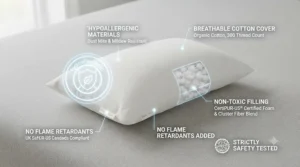
- Verify the certification, not just the marketing copy. OEKO-TEX Standard 100, GOTS, and compliance with BS 4578 or BS 7177 are the labels that actually mean something (more on this below).
- Don’t buy before your toddler shows readiness signs. Bunching a blanket or cuddly toy under their head at night is a much better buying signal than a birthday on the calendar.
✨ Don’t Miss These Exclusive Deals!
🔍 Take toddler bedtime to the next level with these carefully selected pillows. Click on any highlighted pick to check current pricing and availability, and give your little one the comfortable, well-supported sleep they deserve!
Toddler Pillow Sizes: Finding the Right Small Pillow for a Toddler Bed
Toddler beds are not scaled-down adult beds — most are built around a shortened, narrower mattress, and a full-size adult pillow simply overwhelms the available space. The standard small pillow for a toddler bed measures around 40 x 60cm in the UK, roughly the dimensions of an aeroplane pillow, which is exactly the comparison most parenting forums reach for because it’s instantly familiar. That’s the sizing you’ll find on the majority of this list, including The Little Green Sheep Organic Wool Cot Pillow, the Silentnight Safe Nights Anti-Allergy Cot Bed Pillow, the John Lewis Kids Micro Fresh Anti Allergy Pillow, the ClevaMama Junior Pillow and the WOOLROOM Deluxe Washable Kids Cot Pillow.
There’s a smaller sub-category too, sitting closer to 33 x 45cm, exemplified here by the KeaBabies Toddler Pillow with Pillowcase. These compact pillows suit younger toddlers just starting out, travel cots, or households where the toddler bed itself is on the smaller end. Here’s what most buying guides skip: a pillow that’s too large for the bed doesn’t just look oversized, it can bunch up against the guard rail or headboard, creating exactly the kind of loose bedding hazard that safe-sleep guidance warns against. Measure the usable headspace on your toddler’s actual mattress before assuming the standard 40 x 60cm size will fit comfortably, particularly on box-style or novelty-shaped toddler beds where the sleeping area is narrower than it looks.
Best Toddler Pillow for 2-4 Years: What Changes at Each Age
A toddler pillow bought at 15 months and one bought at 3.5 years shouldn’t necessarily be the same product, even though both sit under the broad “toddler pillow” umbrella. In the earlier part of that window, roughly 12 to 24 months, the priority is minimal loft and maximum firmness — a barely-there pillow that gets a child used to the sensation without meaningfully elevating their head. The Silentnight Safe Nights Anti-Allergy Cot Bed Pillow and KeaBabies Toddler Pillow with Pillowcase both sit comfortably in this bracket thanks to their low, soft-but-supportive profile.
By the time a child reaches 2-4 years — the age range specifically targeted by the Panda Toddler Memory Foam Bamboo Pillow — neck and shoulder proportions have changed enough that a slightly more structured pillow makes sense, one that maintains consistent support through a full night of rolling and repositioning. Reviewers and paediatric sleep guidance both point to this stage as when contoured or memory foam designs start to add genuine value over flat fibre-fill, simply because older toddlers move more during sleep and benefit from a pillow that recovers its shape quickly. Past the age of 3, options like the ClevaMama Junior Pillow, built with a slightly taller 7cm loft, become appropriate as a “next step” pillow rather than a starting point. The takeaway: don’t assume one pillow needs to last from cot-exit to school age. Many families buy a flatter starter pillow first, then upgrade once their toddler is a confident, established side or back sleeper.
Flat and Firm: Why Loft and Firmness Matter for Toddler Pillows
It’s tempting to assume “firmer” simply means “less comfortable,” but for toddlers the logic runs the opposite way. A flat, firm pillow keeps a child’s head, neck and spine in neutral alignment, rather than letting the head sink and tilt the neck at an angle it isn’t ready to hold for eight hours. Here’s a simple test worth doing before you buy, or once you own one: press down firmly on the centre of the pillow. If it regains its shape within a second or two, it’s appropriately firm. If it stays compressed, it’s too soft for safe, supportive toddler use — and it’s worth noting this is one of the exact concerns behind the OPSS alert on baby-marketed sleep cushions.
Firmness also interacts directly with loft height. A pillow with too much loft — anything noticeably taller than 5-7cm for a toddler — props the head up at an angle that can strain the neck over a full night’s sleep, in much the same way an overly thick adult pillow leaves you waking up with a stiff neck. Among this list, the Silentnight Safe Nights Anti-Allergy Cot Bed Pillow, The Little Green Sheep Organic Wool Cot Pillow and John Lewis Kids Micro Fresh Anti Allergy Pillow all sit at the lower, flatter end appropriate for younger toddlers, while the ClevaMama Junior Pillow‘s taller 7cm loft is specifically pitched at the older end of the toddler bracket, once a child’s proportions can comfortably accommodate the extra height.
Toddler Pillow vs Adult Pillow: What’s Actually Different
It’s a fair question from any parent standing in the bedding aisle: why not just buy a small adult pillow and call it done? The honest answer is that the differences run deeper than size.
| Feature | Toddler Pillow | Adult Pillow |
|---|---|---|
| Typical size | 40 x 60cm (or smaller) | 50 x 75cm |
| Loft height | 3-7cm, flat and firm | 10-15cm, softer |
| Fill firmness | Firm, quick-recovery | Often softer, slower recovery |
| Certification | BS 4578, OEKO-TEX common | Not toddler-specific |
| Best for | Ages 12 months+ | Adults and older children |
The size difference isn’t just aesthetic — an adult pillow’s extra loft height pushes a toddler’s neck out of the neutral alignment their developing spine needs, and the softer fill common in adult pillows offers far less consistent support through a night of tossing and turning. Certification is the other major gap: adult pillows aren’t tested against child-specific standards like BS 4578, so even a “soft and gentle” adult pillow hasn’t necessarily been assessed for the same firmness and flammability criteria as something explicitly sold as toddler bedding. If cost is the only thing pushing you towards an adult pillow, the budget-friendly Silentnight Safe Nights Anti-Allergy Cot Bed Pillow closes that price gap almost entirely while still meeting toddler-specific standards.
Safety Certifications for Toddler Bedding Explained
This is the section worth reading properly, not skimming. Safety certification for toddler bedding has moved from a nice-to-have to a genuine buying priority, and it’s a topic several independent parenting review panels have covered in detail when testing which cot bed pillows actually hold up to scrutiny.
Three labels are worth actively looking for. OEKO-TEX Standard 100 tests every component of a textile — thread, buttons, trims included — against more than 1,000 regulated and unregulated chemicals that could be harmful to human health, with independent testing renewed annually; you’ll find it on the Panda Toddler Memory Foam Bamboo Pillow and several others on this list. GOTS (Global Organic Textile Standard) applies specifically to organic-fibre products, requiring a minimum of 70% organic fibres alongside strict restrictions on GMOs and hazardous chemicals — relevant to The Little Green Sheep Organic Wool Cot Pillow. And BS 4578, the British Standard specifically covering pillows intended for children over 12 months, is explicitly exempted from the OPSS alert precisely because it represents the compliance bar toddler pillows are expected to clear.
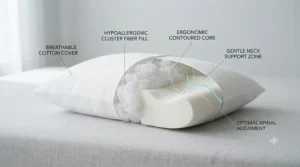
Crucially, the alert draws a hard line at 12 months: products marketed for babies to sleep on unsupervised, including in a cot or crib, carry serious suffocation and overheating risks and should never be used regardless of how they’re marketed. If a pillow’s packaging or listing doesn’t clearly state a minimum age or reference a recognised standard, treat that absence as a red flag rather than an oversight.
Making the Transition From Cot to Bed
The transition from cot to bed rarely happens on a tidy schedule, and pillow readiness is one of the clearest signals worth watching for.
The restless sleeper. If your toddler is around 20 months, still in a cot, but you’ve noticed them shuffling towards the top of the mattress or bunching a comfort blanket under their cheek most nights, that’s a stronger signal than age alone. A flat, low-loft option like the Silentnight Safe Nights Anti-Allergy Cot Bed Pillow is a sensible, low-cost way to test whether a pillow actually improves their settling.
The established side-sleeper. For a 2.5-3 year old who’s confidently rolling onto their side and staying there most of the night, a slightly more structured pillow earns its keep. The Panda Toddler Memory Foam Bamboo Pillow‘s consistent, shape-holding support suits this stage well, since side sleeping puts more sustained pressure on one section of the pillow than back sleeping does.
The allergy-prone toddler moving into their own room. If the cot-to-bed move coincides with a change of bedroom, dust exposure often increases. The John Lewis Kids Micro Fresh Anti Allergy Pillow or The Little Green Sheep Organic Wool Cot Pillow both address that specific pain point through active anti-microbial treatment or wool’s natural dust-mite resistance.
Whichever category fits, keep the wider sleep environment as close to the pre-transition routine as possible for the first fortnight — same room temperature, same lighting, same bedtime sequence — and introduce the pillow as one small change rather than bundling it with several disruptions at once. For broader guidance on keeping a toddler’s sleep space safe through this stage, NHS advice on baby and toddler safety is a useful reference point beyond pillows alone.
Practical Usage Guide: The First 30 Nights With a New Pillow
Getting a toddler pillow right isn’t just about the purchase — the first month of use matters just as much.
Setup: Wash any included pillowcase before first use, even if it looks clean out of the packet, since manufacturing residue can occasionally irritate sensitive skin. Fit the case snugly; a loose pillowcase can bunch up overnight and become its own minor hazard.
First-use tips: Introduce the pillow during daytime naps first if possible, rather than diving straight into overnight use. A toddler who’s had a chance to get used to the sensation of a slightly raised head during a supervised nap adjusts far more smoothly at bedtime.
Maintenance schedule: Wash covers weekly, or more often if your toddler is a drooler (most are). Fibre-fill pillows like the Silentnight Safe Nights Anti-Allergy Cot Bed Pillow typically tolerate full machine washing; foam cores like the Panda Toddler Memory Foam Bamboo Pillow should only have the cover washed, with the foam itself spot-cleaned or wiped down.
Common mistakes in the first month: Panicking and swapping pillows after just a few rejected nights is the biggest one — most toddlers need one to two weeks to genuinely adjust to any new sleep surface. Overcompensating by buying an oversized “just in case” pillow is another; bigger doesn’t equal better here, and a too-large pillow undermines the exact flat, firm profile that makes toddler pillows safe in the first place.
Common Mistakes When Buying a Toddler Pillow
Even well-intentioned parents fall into a handful of predictable traps.
Buying based on cute designs rather than certification. A pillow covered in dinosaurs is not automatically a safe pillow; check the age labelling and certification before the print pattern.
Assuming “hypoallergenic” and “safe for babies” mean the same thing. They don’t. Hypoallergenic refers to allergen resistance, not age-appropriateness or firmness, and plenty of soft, plush “hypoallergenic” cushions are entirely unsuitable for unsupervised toddler sleep.
Choosing based on adult preferences. Parents who love an ultra-soft pillow themselves sometimes unconsciously buy the plushest option on the shelf for their toddler too — but as covered above, firm and flat is the safer, more supportive standard for a young child’s spine.
Ignoring the washing instructions before buying. Wool options like the WOOLROOM Deluxe Washable Kids Cot Pillow need cooler washes and no tumble drying; if that doesn’t suit your laundry routine, a fully machine-washable fibre pillow will serve you better long term.
Overlooking the pillowcase question entirely. Standard adult pillowcases genuinely don’t fit toddler-sized pillows well, leaving fabric bunched at one end. Bundles like the KeaBabies Toddler Pillow with Pillowcase sidestep this from day one.
Long-Term Value: Cost, Durability and Replacement
Thinking about a toddler pillow purely on upfront price misses half the picture, because materials age at very different rates.
| Pillow | Typical Lifespan | Replace When |
|---|---|---|
| Panda Toddler Memory Foam Bamboo Pillow | 3-4+ years | Foam loses recovery/springback |
| The Little Green Sheep Organic Wool Cot Pillow | 3-5 years | Wool clumps despite washing |
| Silentnight Safe Nights Anti-Allergy Cot Bed Pillow | 12-18 months | Visibly flattened or lumpy |
| John Lewis Kids Micro Fresh Anti Allergy Pillow | 18-24 months | Anti-microbial freshness fades |
| ClevaMama Junior Pillow | 2-3 years | Reflex foam feels permanently compressed |
| WOOLROOM Deluxe Washable Kids Cot Pillow | 3-5 years | Wool loses loft after washing |
| KeaBabies Toddler Pillow with Pillowcase | 12-18 months | Cotton fill thins with heavy use |
Cost-per-use tells a slightly different story than the sticker price alone. A £35 memory foam pillow that lasts four years works out cheaper per month of use than replacing a £7 polyester pillow every 12-18 months, though the budget option still wins if your toddler is between beds, sizes or preferences and you don’t want to commit yet. As a rough rule, foam and wool pillows earn their higher upfront cost through genuine longevity, while budget fibre-fill options make more sense as a low-commitment first purchase or a spare for grandparents’ houses and daycare.

FAQ
❓ What size pillow does a toddler need?
❓ At what age can a toddler start using a pillow?
❓ Is memory foam safe for a toddler pillow?
❓ How often should a toddler pillow be replaced?
❓ Do toddler pillows need a special pillowcase?
Conclusion
Choosing the best toddler pillow really comes down to three checks: is it certified for over-12-month use, is it genuinely flat and firm rather than plush, and does it fit the actual dimensions of your toddler’s bed. Beyond that, the “best” pick depends entirely on your household’s priorities — the Panda Toddler Memory Foam Bamboo Pillow for consistent orthopaedic support, The Little Green Sheep Organic Wool Cot Pillow or WOOLROOM Deluxe Washable Kids Cot Pillow for natural, temperature-regulating materials, the Silentnight Safe Nights Anti-Allergy Cot Bed Pillow for a low-risk first trial, the John Lewis Kids Micro Fresh Anti Allergy Pillow for households managing allergies, the ClevaMama Junior Pillow for older, more established toddler sleepers, and the KeaBabies Toddler Pillow with Pillowcase for a compact, travel-ready option that solves the pillowcase problem from day one.
None of these are the “wrong” choice on their own merits — the mistake worth avoiding is buying based on age alone, print pattern, or price without checking certification and firmness first. Given how much this small piece of bedding influences a toddler’s sleep quality (and, by extension, yours), it’s worth the extra five minutes of comparison before you check out.
Recommended for You
- Best Pillow for Kids 2026: 7 Genuinely Brilliant Picks
- Leg Elevation Pillow Bed Bound: 7 Best Picks for 2026
- Pressure Sore Prevention Pillow: 7 Genuine Picks for 2026
Disclaimer: This article contains affiliate links. As an Amazon Associate, I earn from qualifying purchases. If you purchase products through these links, we may earn a small commission at no additional cost to you.
✨ Found this helpful? Share it with your friends! 💬🤗
