

In This Article
If you’re reading this at 2am with a laptop balanced on your knees while someone you love sleeps down the hall, you already know more about pressure sores than most GPs did a decade ago. You’ve probably already heard the terms heel offloading, Waterlow score, and category two ulcer thrown around by a district nurse who was moving too fast to explain them properly. So let’s slow down. A pressure sore prevention pillow, in the broadest sense used across this market, covers any cushion, protector, or offloading device, foam, air-filled, or powered, designed to redistribute body weight away from bony areas like the heels, hips, and tailbone for someone who can’t reposition themselves easily.

Here’s the honest bit up front, because this matters more than usual: nothing in this guide replaces a proper pressure ulcer risk assessment from a qualified nurse, and none of these products are a substitute for regular repositioning. What they are is genuine, clinically-referenced equipment that supports the plan your care team has already put in place, or that you’re building at home while you wait for one. The NHS explains that pressure ulcers usually form on bony parts of the body such as the heels, elbows, hips and tailbone, and that people with limited mobility are at meaningfully higher risk.
This guide covers seven real products worth knowing about in 2026, from budget foam cushions through to the specialist heel protectors the NHS has trusted for a quarter of a century, with honest analysis of who each one actually suits. No invented reviews, no exact prices (they shift constantly), and no pretending a cushion can do a nurse’s job. Just real spec comparison so you can make a genuinely informed choice, whether you’re a family carer at 2am or a care home ordering in bulk.
Quick Comparison Table
Here’s the market at a glance before we go deeper. Pressure relief equipment splits broadly into static foam, static air-cell, powered alternating, and specialist heel-offloading devices, each suited to a different level of risk.
| Product | Type | Risk Level Suited | Best For |
|---|---|---|---|
| Repose Pressure Relieving Foot Protector | Air-cell heel offload | High risk | Heel pressure relief pillow NHS-style care |
| Repose Pressure Relieving Foot Protector Plus | Air-cell heel offload with strap | High risk | Restless sleepers, high mobility risk |
| NRS Healthcare Castellated Foam Cushion | Static foam | Low-medium risk | Budget entry point |
| NRS Healthcare Standard Sero Pressure Cushion | Static ridged foam | Low-medium risk | Everyday seating, breathability |
| Harvest Healthcare Modular Foam Pressure Care Cushion | Modular static foam | Medium risk | Home and community care |
| NRS Healthcare Repose Air Filled Pressure Care Cushion | Static air-cell | High risk | Longer sitting periods |
| NRS Healthcare Standard Alternating Cushion | Powered alternating pressure | High-very high risk | Continuous unattended pressure redistribution |
Reading down that table, the honest pattern is this: static foam is the accessible starting point, air-cell technology steps things up for genuinely high-risk skin, and powered alternating systems are the heaviest-duty option for people who can’t be repositioned as often as their risk level demands. Anti pressure ulcer pillow choices genuinely should be matched to a documented risk level rather than picked on price alone, so if you don’t already have a Waterlow score or equivalent assessment on file, that’s genuinely worth arranging before you buy anything on this list.
💬 Just one click — help others make better buying decisions too!😊
Top 7 Pressure Sore Prevention Pillows and Cushions: Expert Analysis
Seven genuine products currently available in the UK, spanning budget foam through to the specialist heel protector the NHS has relied on for over two decades.
1. Repose Pressure Relieving Foot Protector — best heel pressure relief pillow NHS-style pick
Heels are brutal territory for pressure damage: thin skin, almost no cushioning fat, and the full weight of the leg resting on a tiny bony point whenever someone lies flat. The Repose Pressure Relieving Foot Protector tackles this with a reactive single-cell air design that fully offloads the heel rather than merely cushioning it, which matters because partial cushioning still leaves pressure concentrated exactly where damage starts. Manufactured in the UK, Repose products have been used within NHS care for over 25 years, and the manual pump with smart valve technology means you inflate it until you hear a click rather than guessing at the right firmness. Based on the spec comparison, this genuinely different approach, full suspension rather than gradual compression, is what clinical literature on heel offloading points toward as more effective than a standard pillow tucked under the calf. Aggregated clinical and product literature consistently describes it as suitable for very high-risk users, including those with existing pressure damage, though supervision is advised where skin damage is already severe.
Pros:
- ✅ Genuine full heel offloading rather than partial cushioning
- ✅ UK-manufactured with 25+ years of NHS use
- ✅ Smart valve pump takes the guesswork out of inflation
Cons:
- ❌ Requires a caregiver to inflate correctly for full benefit
- ❌ Sold as a pair, so no single-unit budget option
Typically priced around £45-£65 for a pair, the Repose Pressure Relieving Foot Protector is the product tissue viability nurses reach for first when heels are genuinely at risk.

2. Repose Pressure Relieving Foot Protector Plus — best for restless sleepers and mobility risk
Here’s what most buyers overlook about the standard foot protector: a restless sleeper can shift a foot right out of position overnight, undoing hours of careful offloading. The Repose Pressure Relieving Foot Protector Plus solves this with Magnaffix technology, a multi-adjustable strap fastened with a magnetic fixing system, plus a built-in air cell pocket barrier that keeps the fixation magnets away from direct skin contact. On paper this means the same reactive single-cell offloading as the standard model, but with genuinely better retention through a night of movement, which matters enormously for anyone who tosses, turns, or has involuntary movements. Reviewers and clinical literature consistently note this as the sensible upgrade for anyone whose standard foot protector kept slipping off, rather than a different technology altogether.
Pros:
- ✅ Magnaffix strap keeps the device in place overnight
- ✅ Air cell pocket barrier protects skin from the magnetic fixing
- ✅ Same clinically-proven offloading core as the standard version
Cons:
- ❌ Costs more than the standard Foot Protector for the same core technology
- ❌ Still needs correct pump inflation to work as intended
Usually found around £55-£75 for a pair, the Repose Pressure Relieving Foot Protector Plus is worth the extra outlay specifically for anyone whose feet won’t stay still.
3. NRS Healthcare Castellated Foam Cushion — best budget entry point
Sometimes the honest answer is that someone needs something today, at a price that doesn’t require a funding conversation first. The NRS Healthcare Castellated Foam Cushion uses an egg-crate style modular surface, the peaks and troughs you’ll recognise from hospital mattress toppers, designed to reduce shear and friction by letting the surface move slightly with the user during transfers or shuffling. In practical terms, that modular movement also allows for genuine ventilation, which matters over long sitting periods since trapped heat and moisture are their own risk factor for skin breakdown. Based on the spec comparison, this is positioned for lower to medium risk use rather than high-risk skin, and reviewer feedback consistently notes it’s a genuine improvement over sitting on an ordinary sofa cushion, though a small number of long-term users report the foam eventually starting to feel firmer underneath after months of daily use.
Pros:
- ✅ Genuinely affordable entry point into pressure care
- ✅ Castellated surface allows movement and ventilation
- ✅ Wipeable, VAT-relief-eligible cover for UK buyers
Cons:
- ❌ Not intended for high or very high-risk skin
- ❌ Foam can firm up with months of continuous daily use
At around £25-£40, the NRS Healthcare Castellated Foam Cushion is a sensible starting point for lower-risk users who need genuine support without a premium price tag.
4. NRS Healthcare Standard Sero Pressure Cushion — best breathable ridged design for everyday seating
The NRS Healthcare Standard Sero Pressure Cushion takes a slightly different foam approach, a ridged surface rather than a castellated one, designed specifically to let air flow underneath rather than trapping heat against skin through a long day of sitting. What reviewers consistently note, sometimes from family carers describing an elderly relative’s experience directly, is the difference this airflow makes to comfort and to reducing the sweating that can itself contribute to skin breakdown. Based on the spec comparison, the ridges are soft enough to sit on comfortably while still providing the structural support needed to redistribute weight away from the tailbone and hips, a genuinely sensible middle ground between a flat cushion that does nothing and a rigid one that’s uncomfortable for daily use. It’s a strong pick for someone spending long hours in a chair or wheelchair rather than someone at the most severe end of risk.
Pros:
- ✅ Ridged design promotes genuine airflow underneath
- ✅ Removable, washable cover for practical daily care
- ✅ Comfortable enough for genuinely long sitting periods
Cons:
- ❌ Softer support than dedicated high-risk air-cell options
- ❌ Cover material can feel warm without an additional cotton case
Priced around £30-£45, the NRS Healthcare Standard Sero Pressure Cushion suits anyone whose main daily risk comes from long periods sitting rather than acute, severe skin vulnerability.
5. Harvest Healthcare Modular Foam Pressure Care Cushion — best modular support for medium-risk home care
Positioned explicitly for medium-risk pressure ulcer prevention, the Harvest Healthcare Modular Foam Pressure Care Cushion offers a genuinely sensible middle step between basic foam and premium air-cell technology. Its modular foam construction reduces shear and friction during transfers in much the same way as castellated designs, while offering a bit more structural stability underneath for users who need consistent support rather than maximum movement. Aggregated review sentiment consistently praises this cushion for controlling existing pressure sores as well as preventing new ones, with genuine feedback from carers managing wheelchair users describing even, comfortable support across the pelvis. Here’s what to weigh before buying: this model is explicitly medium-risk rated, so anyone whose care team has documented a high or very high Waterlow score should look toward air-cell or alternating options instead.
Pros:
- ✅ Clearly rated for medium-risk pressure ulcer prevention
- ✅ Good stability and support during transfers
- ✅ VAT-relief eligible for UK buyers with a qualifying condition
Cons:
- ❌ Not rated for high or very high-risk skin
- ❌ Bulkier than slimmer foam alternatives
At roughly £35-£50, the Harvest Healthcare Modular Foam Pressure Care Cushion is a solid, honestly-rated choice for medium-risk home and community care.

6. NRS Healthcare Repose Air Filled Pressure Care Cushion — best air-cell upgrade for longer sitting
Stepping up from foam into genuine air-cell technology, the NRS Healthcare Repose Air Filled Pressure Care Cushion uses the same Repose reactive air-cell principle found in the brand’s heel protectors, applied instead to a seat cushion for high-risk users. Based on the spec comparison, air-cell technology redistributes weight dynamically as the user shifts, rather than compressing under a fixed load the way static foam does, which on paper means genuinely more consistent pressure relief for someone spending extended periods in a wheelchair or chair. It packs down inside its own manual pump for portability, useful for anyone moving between a bed, a chair, and perhaps a car seat through the day, and reviewers consistently describe the inflation process as fast and reliable once you’ve done it a couple of times. What most buyers overlook is that, like the foot protectors, this is rated appropriate even for users with existing pressure-related tissue damage, though clinical supervision is genuinely advised in more severe cases.
Pros:
- ✅ Genuine air-cell technology rated for high-risk users
- ✅ Portable, packs into its own pump for transport
- ✅ Suitable even alongside existing tissue damage, with supervision
Cons:
- ❌ Costs meaningfully more than static foam options
- ❌ Needs correct inflation to deliver full benefit
Generally priced around £45-£65, the NRS Healthcare Repose Air Filled Pressure Care Cushion is the sensible step up for anyone whose risk level has genuinely moved beyond what foam can manage.
7. NRS Healthcare Standard Alternating Cushion — best powered option for continuous unattended redistribution
For the highest-risk users, particularly those who can’t be repositioned as frequently as their risk level demands, the NRS Healthcare Standard Alternating Cushion brings powered, motorised alternation into the mix, cycling pressure between different cells automatically rather than relying on the user shifting their own weight. In practical terms, this means genuine pressure redistribution continuing even through long unattended periods, overnight, or when a carer simply can’t reposition someone every couple of hours. This is squarely an alternating pressure pillow in the fullest sense, using a small electric pump to continuously cycle air between cells rather than the passive redistribution of static foam or air designs. Here’s what to weigh before buying: powered systems add genuine ongoing value through electricity use and occasional pump maintenance, and the audible cycling motor, while generally quiet, is worth being aware of for light sleepers in the same room.
Pros:
- ✅ Continuous automated pressure redistribution, even unattended
- ✅ Suited to the highest documented risk levels
- ✅ Genuinely reduces reliance on frequent manual repositioning
Cons:
- ❌ Highest price point of any option on this list
- ❌ Requires mains power and occasional pump upkeep
At around £70-£100, the NRS Healthcare Standard Alternating Cushion is the heavyweight choice for genuinely high-risk, hard-to-reposition situations.
✨ Don’t Miss These Exclusive Deals!
🔍 Whichever risk level you’re managing, getting the right pressure relief equipment in place is one decision that genuinely protects comfort and skin health. Click through to check current prices and availability before the next long stretch in bed or in a chair.
How to Use a Pressure Relief Pillow Properly: Practical Usage Guide
Getting a pressure relief pillow bed bound situation right isn’t just about buying the product, it’s about using it correctly from day one. Start with inflation, where relevant: air-cell products like the Repose Pressure Relieving Foot Protector rely on the pump’s smart valve to reach the correct firmness, and under-inflating defeats the offloading effect just as surely as skipping the device altogether. Follow the manufacturer’s click-to-stop guidance rather than guessing by feel.
Next, positioning matters as much as the product itself. A heel protector genuinely suspending the heel in mid-air does nothing if the leg has rolled sideways and the ankle is now bearing weight instead. Checking position every time someone is repositioned, not just when the device is first fitted, keeps the offloading effect working as intended throughout the day.
Finally, don’t treat any of this equipment as a substitute for movement. Even the powered NRS Healthcare Standard Alternating Cushion works best alongside a documented repositioning schedule rather than instead of one; pressure-relieving equipment reduces risk between repositions, it doesn’t remove the underlying need for them. Regular skin checks, ideally at every position change, remain the single most reliable way to catch early skin changes before they progress.
Real-World Scenarios: Who Actually Needs a Pressure Sore Prevention Pillow
Scenario one — a family member newly discharged home after a hip fracture, largely chair-bound during recovery. Medium risk, manageable with foam. The Harvest Healthcare Modular Foam Pressure Care Cushion or the NRS Healthcare Standard Sero Pressure Cushion genuinely suit this recovery window without over-specifying equipment they may not need long-term.
Scenario two — an elderly relative who is largely bed-bound, with a documented high Waterlow score and early heel redness already noted by the district nurse. This is precisely the pressure relief pillow bed bound situation the Repose Pressure Relieving Foot Protector was designed for, ideally alongside a proper repositioning schedule agreed with the care team.
Scenario three — a care home resident at very high risk who can only be repositioned every few hours due to staffing realities overnight. The NRS Healthcare Standard Alternating Cushion, continuing to redistribute pressure automatically through the night, genuinely earns its higher price in this specific, harder-to-manage situation.

Common Problems With Pressure Relief Pillows (and How to Fix Them)
Problem: the cushion feels flat or ineffective after a few weeks. For air-cell products like the NRS Healthcare Repose Air Filled Pressure Care Cushion, this usually means the seal needs re-checking or the unit needs re-inflating to the correct level rather than being faulty outright.
Problem: a heel protector keeps slipping out of position. This is exactly the problem the Repose Pressure Relieving Foot Protector Plus and its Magnaffix strap were built to solve, so upgrading from the standard model is often the simplest fix.
Problem: the cushion feels too hot or causes sweating. Ridged or castellated foam designs like the NRS Healthcare Standard Sero Pressure Cushion promote more airflow than a flat cushion, but adding a breathable cotton cover underneath the supplied one can help further if sweating remains an issue.
Problem: skin redness persists despite using the cushion. This is genuinely a signal to involve the care team rather than swap products independently, since persistent redness after removing pressure for 30 minutes is one of the recognised early indicators of pressure damage that needs proper clinical assessment.
Problem: unsure whether foam is enough or a powered system is needed. This decision should follow a documented risk assessment rather than guesswork, and a district nurse or tissue viability team can advise on whether your current Waterlow score or equivalent justifies stepping up.
How to Choose the Best Pillow to Prevent Bedsores
Picking the right product genuinely comes down to matching equipment to documented risk rather than price or appearance:
- Has a formal risk assessment been done? A Waterlow score or equivalent tool gives you a genuine starting point rather than a guess.
- Which body area is most at risk? Heels need dedicated offloading devices like the Repose range; seating pressure needs a cushion designed for that purpose.
- How long is the person in one position? Longer unbroken periods favour air-cell or powered alternating options over static foam.
- Is existing skin damage present? Products explicitly rated for use alongside tissue damage, with supervision, differ from those intended purely for prevention.
- Can repositioning happen frequently enough? If not, a powered alternating system like the NRS Healthcare Standard Alternating Cushion genuinely earns its cost.
- Is portability a factor? Air-cell cushions that pack down, like the NRS Healthcare Repose Air Filled Pressure Care Cushion, suit anyone moving between settings through the day.
- Is VAT relief eligibility relevant? Many products on this list, including the NRS Healthcare Castellated Foam Cushion, qualify for UK VAT relief for eligible buyers.
Understanding Pressure Ulcer Staging (NHS Grading Explained)
Pressure ulcer staging NHS terminology runs from grade one through to grade four, and understanding it helps make sense of why some products are rated for prevention only while others are described as suitable alongside existing damage. NHS inform’s guide to pressure ulcer grading describes grade one as discoloured skin that doesn’t change colour when pressed, appearing red on lighter skin or purple or blue on darker skin, without any break in the skin itself. Grade two involves some loss of the outer or deeper skin layer, looking like an open or burst blister. Grade three involves skin loss through the full thickness of the skin with damage to the tissue underneath, though bone, muscle, and tendon remain unaffected, while grade four is the most severe, with tissue necrosis and potential damage to bone, muscle, or tendon beneath.
This staging matters directly for equipment choice: static foam cushions like the NRS Healthcare Castellated Foam Cushion are generally positioned for prevention in lower-risk skin, while air-cell products from the Repose range are explicitly described as suitable even where pressure-related tissue damage has already begun, with clinical supervision advised where that damage is severe. If you’re ever uncertain which grade you’re looking at, that’s precisely the moment to involve the nursing team rather than guess from a product description.
Understanding Your Waterlow Score and Pressure Sore Risk
Waterlow score pressure sore risk assessment is the tool most UK nursing teams reach for first, developed by Judy Waterlow in 1985 and still in widespread use across NHS trusts today. It weighs factors including build and weight for height, skin type, age and sex, continence, mobility, nutritional status, and specific special risk factors like neurological impairment, adding them into a single overall score. Generally, a score of 10 or above indicates at-risk status, 15 or above indicates high risk, and 20 or above indicates very high risk, though local trust protocols can vary slightly in exactly how they apply these thresholds. NHS Lothian’s Waterlow Pressure Area Risk Assessment Chart sets out the full scoring process used in clinical practice, including guidance on repeating the assessment regularly rather than treating it as a one-off exercise.
Knowing your own or your relative’s Waterlow score, or asking for one to be carried out if it hasn’t been already, genuinely changes which products in this guide make sense. A score in the at-risk range points toward foam options like the NRS Healthcare Standard Sero Pressure Cushion, while a high or very high score points more firmly toward air-cell or powered alternating equipment.
Static Foam vs Alternating Pressure: Which Pillow Type Do You Need?
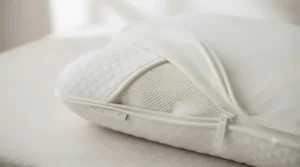
Static foam and static air-cell products rely on the material itself redistributing weight passively, which works well provided the person is repositioned regularly by a carer or is able to shift their own weight periodically. An alternating pressure pillow or cushion, by contrast, uses a small pump to actively cycle pressure between different cells on a timed basis, continuing to redistribute weight even when nobody’s in the room to help.
| Factor | Static Foam/Air | Alternating Pressure |
|---|---|---|
| Power required | None | Mains electricity |
| Works unattended | Only between manual repositions | Continuously, automatically |
| Best For | NRS Healthcare, Harvest Healthcare static ranges | NRS Healthcare Standard Alternating Cushion overnight or high-risk use |
Looking at that comparison, the honest answer for most low to medium-risk situations is static foam, simply because it’s simpler, cheaper, and needs no power source. The moment repositioning genuinely can’t happen often enough, whether due to staffing, mobility, or overnight gaps, a powered alternating system stops being a luxury and starts being the more clinically appropriate choice.
Heel Pressure Relief: Why the Heels Need Special Attention
Heels deserve their own section because they behave nothing like the seat or hips when it comes to pressure damage. The skin covering the heel is thin, there’s minimal cushioning fat underneath, and virtually the entire weight of the leg funnels down onto that single bony point whenever someone lies flat on their back. This is why an ordinary pillow tucked under the calf, while better than nothing, often falls short of what dedicated heel offloading devices achieve: genuine suspension of the heel in mid-air, with zero surface contact at the point of highest risk. The Repose Pressure Relieving Foot Protector and its Magnaffix-equipped sibling were specifically engineered around this principle, and it’s precisely why clinical guidance consistently references dedicated heel devices rather than general-purpose cushions when heel risk has already been flagged. If heel redness has already been noted by a nurse, this is one area where the right dedicated product genuinely outperforms improvised alternatives.
Features That Actually Matter (And Those That Don’t)
Some specifications carry real clinical weight, others are closer to marketing polish. Genuine risk-level rating matters enormously: products honestly describing themselves as suited to medium versus high versus very high risk, as the Harvest Healthcare Modular Foam Pressure Care Cushion and the Repose range both do, give you something concrete to match against an actual Waterlow score. Reactive, weight-redistributing design also matters, whether that’s castellated foam moving with a user’s shifts or air-cell technology responding dynamically, since a completely rigid, unyielding surface concentrates rather than spreads pressure.
What matters less than it might appear: cushion thickness alone, without reference to the technology underneath. A thick cushion using basic flat foam can still perform worse than a slimmer, properly engineered castellated or air-cell design. Colour and cosmetic cover styling, occasionally mentioned in product listings, genuinely make no difference to pressure redistribution and matter purely for personal preference.
When to Involve a Tissue Viability Nurse
A tissue viability pillow decision, meaning any equipment choice tied to an existing or emerging pressure ulcer, is genuinely a moment to loop in specialist nursing input rather than rely on product descriptions alone. Tissue viability nurses assess wounds, advise on equipment appropriate to a specific risk level and body area, and can arrange NHS-funded pressure-relieving equipment in many cases where clinical need is established, rather than everything needing to be bought privately. NICE’s guideline on pressure ulcers, prevention and management sets out that adults assessed as being at high risk of developing a pressure ulcer should be offered a proper skin assessment by a trained healthcare professional, which is exactly the referral pathway worth asking about if one hasn’t happened yet.
If you’re managing pressure risk at home without an existing care team involved, a GP or community nursing service can typically arrange a risk assessment, and it’s a genuinely reasonable thing to ask for directly rather than waiting to be offered. Equipment from this guide can bridge a gap while that assessment is arranged, but it shouldn’t replace the referral itself.
Long-Term Cost and Care of Pressure Relief Cushions
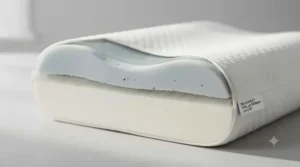
Cost across the lifetime of the product matters as much as the purchase price, particularly for equipment used daily over months or years. Static foam products like the NRS Healthcare Castellated Foam Cushion are the cheapest upfront and need essentially no maintenance beyond wiping the cover, but foam can compress and lose effectiveness over extended heavy use, eventually needing replacement. Air-cell products like the Repose range need occasional attention to inflation levels but otherwise hold their performance well over time, while powered alternating systems carry a genuinely higher upfront cost plus modest ongoing electricity use and occasional pump servicing.
| Product Type | Typical Price Range | Maintenance Pattern |
|---|---|---|
| NRS Healthcare Castellated Foam Cushion (static foam) | £25-£40 | Wipe clean; foam degrades gradually with heavy use |
| NRS Healthcare Repose Air Filled Pressure Care Cushion (air-cell) | £45-£65 | Periodic re-inflation check |
| NRS Healthcare Standard Alternating Cushion (powered) | £70-£100 | Mains power plus occasional pump maintenance |
The pattern here is straightforward: for shorter recovery periods, foam’s low upfront cost makes sense, while for long-term, high-risk situations, the higher initial outlay of air-cell or powered alternating equipment tends to pay off through more consistent, reliable pressure redistribution over months of daily use.
FAQ
❓ What is a pressure sore prevention pillow used for?
❓ How do I know what risk level I need equipment for?
❓ Can a heel pillow really prevent pressure sores on its own?
❓ What's the difference between static and alternating pressure cushions?
❓ When should I involve a tissue viability nurse?
Conclusion
Choosing the right pressure sore prevention pillow really comes down to matching genuine risk level to genuine product technology, not picking whatever looks most reassuring on a shelf. Lower to medium-risk situations are well served by static foam options like the NRS Healthcare Castellated Foam Cushion, the NRS Healthcare Standard Sero Pressure Cushion, or the Harvest Healthcare Modular Foam Pressure Care Cushion, while genuinely high-risk skin, particularly at the heels, calls for the specialist offloading design of the Repose Pressure Relieving Foot Protector or its strap-equipped sibling. For seating over longer periods, the NRS Healthcare Repose Air Filled Pressure Care Cushion steps things up with air-cell technology, and for the highest-risk, hardest-to-reposition situations, the NRS Healthcare Standard Alternating Cushion brings genuine powered redistribution into play. Whichever you choose, remember this equipment supports a proper care plan, it doesn’t replace one, so keep repositioning, keep checking skin, and keep the nursing team involved whenever something changes.
Recommended for You
- Firm Pillow for Elderly: 7 Best Orthopaedic Picks 2026
- Lightweight Pillow for Elderly 2026: 7 Easy-Lift Picks
- 7 Best Positioning Pillow for Elderly Care in 2026
Disclaimer: This article contains affiliate links. As an Amazon Associate, I earn from qualifying purchases. If you purchase products through these links, we may earn a small commission at no additional cost to you. This article is for general information only and is not a substitute for professional clinical advice, diagnosis, or a formal pressure ulcer risk assessment from a qualified healthcare professional.
✨ Found this helpful? Share it with your friends! 💬🤗
