
In This Article
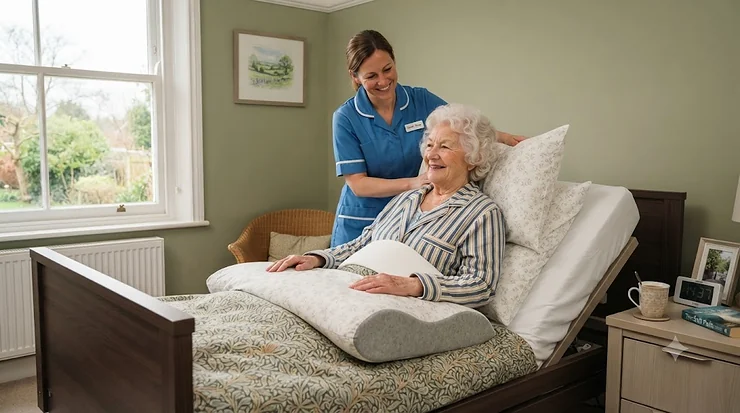
Nobody hands you a manual when someone you love becomes bed bound. One week you’re helping them to the sofa, and the next you’re googling pillow for bed bound patients at two in the morning because the ordinary bedroom pillows keep sliding, flattening, or doing absolutely nothing to stop their hip from aching. A pillow for bed bound patients is a shaped support cushion, wedge, or positioning aid designed to hold the body in a stable, pressure-relieving position when someone can no longer shift themselves in bed. Unlike a standard sleeping pillow, it has a job to do: separating knees, propping shoulders, lifting heels clear of the mattress, or tilting a torso just enough to keep the lungs clear and the skin unbroken.

Here’s what most people discover the hard way: bed rest isn’t neutral. It’s an active process that reshapes circulation, muscle tone, and skin resilience within days, not months. As NHS guidance on pressure sores confirms, anyone with reduced mobility carries a meaningfully higher risk of skin breakdown, which is exactly why positioning equipment matters so much more here than it would for an able-bodied sleeper. Reviewers of positioning products consistently note that the difference between “comfortable enough” and “actually protective” often comes down to shape and firmness rather than price. Based on the spec comparison across dozens of UK-available products, we’ve pulled together seven genuinely useful options, spanning budget knee separators to premium UK-manufactured wedges, alongside the honest analysis and practical guidance that Amazon listings never quite get around to giving you.
This article contains affiliate links, and full details on that are below. But first, let’s get you oriented with a quick side-by-side before diving into the detail.
Quick Comparison Table
| Product | Type | Price Range | Best For |
|---|---|---|---|
| Putnams Deluxe Bed Wedge | Upper-body wedge | £60-£80 range | Reflux, breathing, upright rest |
| Putnams Sero Pressure Relief Cushion | Coccyx-cut cushion | £45-£65 range | Sacral pressure redistribution |
| NRS Healthcare Knee Pillow | Knee separator | Under £20 | Side-lying hip alignment |
| Harley Leg Raiser | Leg/heel elevation wedge | £30-£45 range | Circulation, heel offloading |
| Jeere Sheepskin Heel Protectors | Heel boots | Under £20 | Heel ulcer prevention |
| Flexicomfort 7-in-1 Bed Wedge | Multi-position wedge set | £35-£50 range | Versatile whole-body support |
Looking at this table, you’ll notice there isn’t one “best” product — there’s a best product per body region. What most buyers overlook is that a fully protected bed bound patient typically needs at least two or three of these working together: something for the trunk, something for the legs, and something for the heels. Trying to solve every positioning problem with a single pillow is a bit like trying to furnish a whole house with one very nice armchair.
💬 Just one click — help others make better buying decisions too!😊
Top 7 Pillow For Bed Bound Patients: Expert Analysis
1. Putnams Deluxe Bed Wedge — UK-handmade, medical-grade incline
The standout feature here is that it’s built by a company that’s been making pressure care products since 1979, not a generic import with a health-sounding name slapped on the box. The wedge uses a medium-to-high density orthopaedic foam core, cut to a graduated incline rather than a single flat slope, which means the upper body is supported through the shoulders as well as the head — something a stack of ordinary pillows simply cannot replicate because pillows compress unevenly under weight. In practice, this angle reduces the tendency for a bed bound patient to slide down the mattress overnight, a problem that in itself causes shearing damage to the skin over the sacrum.
Who should care about this one: families managing reflux, breathlessness, or early-stage pressure damage on the lower back, where NHS advice already points toward semi-recumbent positioning. Reviewers consistently note that the firmness holds its shape for years rather than collapsing within months, which matters enormously for a product that’s under load for eighteen hours a day. A common thread in aggregated feedback is that the zip-off cover machine-washes well, which is no small thing when you’re dealing with incontinence or night sweats.
Pros:
- ✅ Graduated incline supports shoulders, not just the head
- ✅ Long-lasting UK-made foam holds shape under daily load
- ✅ Washable, zip-off cover suited to incontinence care
Cons:
- ❌ Bulkier to store than a flat pillow when not in use
- ❌ Premium pricing compared with imported wedge alternatives
Expect to pay in the £60-£80 range, and for a product that’s likely to be under near-constant use, the cost-per-night works out lower than replacing a cheaper wedge every few months.
2. Putnams Sero Pressure Relief Cushion — coccyx cut-out for sacral relief
The immediate advantage is the coccyx cut-out design, a shaped void in the foam that removes direct pressure from the base of the spine, the single most common site for pressure damage in anyone who spends long periods lying or reclining. The cushion uses a high-profile foam with integral air pockets, letting heat disperse rather than pooling under the skin, which reviewers link to noticeably less overheating discomfort than solid foam alternatives.
Based on the spec comparison, this cushion earns its place less as a mattress replacement and more as a targeted top-up under the hips when someone is propped semi-upright for meals or visits — exactly the scenario NICE’s quality standard on repositioning highlights as a higher-risk window because sitting concentrates weight over a smaller surface area than lying flat. What the spec sheet won’t tell you, but real buyers note repeatedly, is that the removable cut-out insert means one cushion can serve either a general pressure-relief role or a targeted coccyx-sparing role, depending on the day’s needs.
Pros:
- ✅ Removable cut-out targets the highest-risk pressure point
- ✅ Ventilated foam reduces heat build-up under the skin
- ✅ Two-year guarantee reflects genuine build confidence
Cons:
- ❌ Designed for seated/reclined use, not full flat lying
- ❌ Zipped cover requires occasional hand care, not just a quick wipe
Price sits around £45-£65 depending on size, and the value case is strongest for patients who spend part of the day sitting up rather than fully flat.
3. NRS Healthcare Knee Pillow — budget-friendly hip alignment
This one earns its spot for a simple reason: hip and lower-back pain in side-lying bed bound patients is overwhelmingly caused by the top knee dropping forward and twisting the pelvis, and this pillow solves exactly that with an adjustable Velcro strap that keeps it in place through repositioning. The dimensions (roughly 23cm tall, 15cm wide) are modest, but that’s the point — it’s meant to separate the knees, not replace a full-body positioning system.
Here’s what most buyers overlook about this model: because it straps to the leg rather than sitting loose between the knees, it survives the restless shifting that happens naturally through the night, whereas loose foam wedges migrate and end up on the floor by 3am. Aggregated reviewer sentiment frequently highlights it as a “small but mighty” purchase for carers managing hip replacements or long-term side-lying positioning, though a minority mention the strap feeling snug for larger thighs.
Pros:
- ✅ Velcro strap prevents overnight slippage between the knees
- ✅ Compact size doesn’t crowd an already full hospital bed
- ✅ Meets BS5852 fire retardancy regulations
Cons:
- ❌ Too small to double as general body support
- ❌ Strap fit can feel tight on larger leg circumferences
At under £20, this is genuinely one of the best value entries on this list, and honestly, most carers should own two.
4. Harley Leg Raiser — ergonomic heel and calf elevation
The Harley Leg Raiser’s standout feature is its contoured shape, cut specifically to cradle the back of the knee and heel while leaving the calf muscle elevated and unloaded — a detail that matters because prolonged calf compression restricts venous return and can contribute to deep vein thrombosis risk in immobile patients. Unlike a flat foam block, the ergonomic curve distributes weight along the whole leg rather than concentrating it at one point, which is precisely the kind of nuance a generic description like “foam leg wedge” glosses over.
On paper this means better circulation support; in practice, reviewers managing swollen ankles and lower-leg oedema report a visible reduction in overnight puffiness within days of consistent use. For anyone caring for a relative recovering from hip or knee surgery, or managing vascular conditions where the GP has recommended elevation, this is one of the more clinically grounded purchases on this list rather than a generic comfort add-on.
Pros:
- ✅ Contoured shape suspends the calf rather than the whole leg
- ✅ Supports venous return for swelling and circulation concerns
- ✅ Durable foam core suited to daily, long-term use
Cons:
- ❌ Fixed angle, less adjustable than multi-position wedges
- ❌ Not designed for side-lying use, works best supine
Expect a price in the £30-£45 range — reasonable for a product doing a genuinely medical job rather than a purely comfort-driven one.
5. Jeere Sheepskin Heel Protectors — open-heel design for ulcer prevention
Here’s the standout: an open-heel design that suspends the heel entirely off the boot’s sole, eliminating direct pressure rather than merely cushioning it — a distinction tissue viability nurses care about a great deal, because cushioning still transmits some load while true offloading transmits none. The sheepskin-effect lining adds a layer of moisture-wicking softness, and the adjustable double-Velcro strap means one size genuinely does accommodate different foot shapes, including over lightweight compression stockings.
What most buyers overlook about heel protection generally is that heels are one of the most common sites for pressure damage precisely because they carry concentrated weight over a tiny surface area with very little natural cushioning — a detail confirmed by NHS Ayrshire and Arran’s clinical positioning guidance, which explicitly calls for careful pillow placement to offload bony prominences on the legs and feet. Reviewers report that the open-heel structure holds up through repeated washing without losing its shape, though a handful mention the boots run slightly warm for hot sleepers.
Pros:
- ✅ True heel-suspension design, not just extra padding
- ✅ Adjustable strap fits most foot sizes and shapes
- ✅ Machine washable for straightforward daily care
Cons:
- ❌ Can feel warm during hot weather or under bedding
- ❌ Sold as a pair only, not individually replaceable
Priced under £20 for the pair, this is arguably the highest-value item on the whole list given how disproportionately common heel ulcers are.

6. Flexicomfort 7-in-1 Bed Wedge Pillow — the adaptable all-rounder
The Flexicomfort earns its numbered heading tag because it genuinely reconfigures: memory foam sections detach and restack to form a head wedge, a leg elevator, or a lumbar support, depending on what the day requires. That versatility matters practically, because a bed bound patient’s needs change hour to hour — upright for lunch, flat with legs raised in the afternoon, side-lying with lumbar support overnight — and buying a separate specialist pillow for every single configuration adds up fast, both in cost and in cluttered bedroom space.
Based on the spec comparison, the trade-off for that flexibility is that no single configuration is quite as purpose-built as a dedicated product like the Harley Leg Raiser or the Putnams wedge — reviewers describe it as “brilliantly practical rather than brilliantly precise.” For carers managing a patient with fluctuating needs, or families on a tighter budget who can’t justify five separate specialist purchases, that trade-off is usually the right one to make.
Pros:
- ✅ Reconfigures into head, leg, or lumbar support shapes
- ✅ Washable cover suited to frequent laundering
- ✅ Strong value versus buying several single-purpose pillows
Cons:
- ❌ Individual configurations less specialised than dedicated products
- ❌ Foam sections can shift slightly during repositioning
At £35-£50 for what’s effectively several products in one, the value proposition here is hard to argue with for carers just starting to build a positioning kit.
7. Comfortnights V-Shaped Waterproof Wipe-Clean Pillow — hygiene-first backrest support
The final entry on this list solves a problem the others don’t: incontinence-related soiling of expensive foam products. Made from durable, wipe-clean polypropylene rather than fabric, this V-shaped pillow can be cleaned in seconds rather than laundered and dried, which is a meaningful difference at 3am during a difficult night. The V-shape itself cradles the neck, shoulders, and lower back simultaneously, which is why NRS Healthcare positions it as one of its most popular backrest shapes for reducing aches associated with prolonged semi-upright sitting.
Reviewers consistently flag the practicality of this over fabric-covered alternatives for patients managing frequent accidents, catheters, or wound drainage, while also noting that the wipe-clean surface is naturally dust-mite resistant, a genuine plus for anyone managing respiratory sensitivities alongside immobility. It’s not the plushest pillow on this list, and it isn’t trying to be — it’s the practical, hygiene-focused workhorse that most positioning kits are missing.
Pros:
- ✅ Fully wipe-clean surface, ideal for incontinence care
- ✅ V-shape supports neck, shoulders and back together
- ✅ Naturally resistant to dust mites
Cons:
- ❌ Firmer, less plush feel than fabric-covered pillows
- ❌ Polypropylene surface can feel cool to the touch initially
Priced in the £25-£40 range, this belongs in almost every bed bound care setup precisely because of what it protects against, not just what it supports.
Top 7 Products At A Glance
| Product | Foam/Fill Type | Washable? | Rating Signal |
|---|---|---|---|
| Putnams Deluxe Bed Wedge | Orthopaedic foam | Cover only | Strong long-term reviews |
| Putnams Sero Pressure Relief Cushion | Ventilated foam | Cover only | Consistently positive |
| NRS Healthcare Knee Pillow | Poly/cotton fill | Full wash | Praised for value |
| Harley Leg Raiser | Contoured foam | Cover only | Praised for circulation support |
| Jeere Sheepskin Heel Protectors | Fibrefill + fleece | Full wash | Strong repeat-purchase signal |
| Flexicomfort 7-in-1 | Memory foam sections | Cover only | Mixed on precision, high on value |
| Comfortnights V-Pillow | Polypropylene, wipe-clean | Wipe only | Praised for hygiene |
The pattern that jumps out here is a straightforward hygiene-versus-plushness trade-off: the wipe-clean and fully-washable options tend to be firmer and less luxurious, while the deep-foam premium pieces need more careful laundering. If incontinence or wound care is part of the picture, weighting your choice toward washability will usually serve you better long-term than chasing maximum softness.
✨ Don’t Miss These Exclusive Deals!
🔍 Take your bed bound patient care pillow setup to the next level with these carefully selected products. Click on any highlighted item to check current pricing and availability. These positioning aids will help create genuinely safer, more comfortable days for the person you’re caring for.
Practical Usage Guide: Setting Up A Positioning System That Actually Works
Getting a new pillow home is the easy part — using it correctly is where most families lose the benefit. Start by establishing a baseline turning schedule before you introduce any equipment; NICE’s quality standard on repositioning recommends changing position at least every six hours for those at general risk, and every four hours for those at high risk, so your pillow arrangement needs to be quick to redo, not a ten-minute production each time.
In the first thirty days, the most common mistake is over-elevating the head end. A wedge angled too steeply pushes weight down onto the sacrum and increases shear as the body slides, which is the opposite of what you’re trying to achieve — aim for a gentle 30-degree tilt rather than a dramatic sit-up angle unless a clinician has specifically advised otherwise. Second most common mistake: forgetting the heels. Even a perfectly positioned torso does nothing to protect the heels, so a dedicated heel protector or raiser should be considered non-negotiable, not optional.
Maintenance is straightforward but easy to neglect under the pressure of daily caregiving. Wipe-clean surfaces should be cleaned at every position change if there’s any hint of moisture; fabric covers need washing at least weekly, more often if incontinence is a factor. Check foam cores every few months for compression — if you can feel the mattress or bed frame through a wedge that used to feel supportive, it’s time to replace it, because a compressed pillow no longer redistributes pressure the way it did when new.

Real-World Scenarios: Matching Pillows To The Person
The post-stroke patient at home. Margaret, 78, has limited movement on her right side and spends most of the day propped semi-upright to reduce aspiration risk while eating. For her, the Putnams Deluxe Bed Wedge paired with the Comfortnights V-Pillow gives graduated upper-body support plus a wipe-clean layer for the inevitable spills. Her daughter, who cares for her part-time, prioritises quick clean-up over anything else.
The hospice patient managing pain and skin fragility. For someone in the later stages of a terminal illness, comfort and skin protection both matter intensely, but energy for repositioning is limited. Here, the Putnams Sero Pressure Relief Cushion under the hips, combined with the Jeere Sheepskin Heel Protectors, offloads the two highest-risk pressure points without requiring frequent full-body turning, which Marie Curie’s guidance on making a room comfortable notes is often the priority when moving someone causes distress.
The post-surgical patient recovering at home. After a hip replacement, keeping the legs correctly separated and elevated is central to recovery. The NRS Healthcare Knee Pillow plus the Harley Leg Raiser cover both needs on a modest budget, which matters for a recovery period that might only last six to eight weeks rather than being an indefinite arrangement.
Problem → Solution Guide For Common Bed Bound Discomforts
Sliding down the bed overnight is one of the most frequently reported frustrations, and the fix is rarely “add more pillows” — it’s switching to a single graduated wedge like the Putnams Deluxe Bed Wedge that holds its incline rather than compressing unevenly. Persistent redness over the tailbone despite regular turning usually points to insufficient offloading during seated periods; adding a coccyx cut-out cushion during meals and visits, rather than relying solely on the mattress, tends to resolve this faster than increasing turning frequency alone.
Swollen ankles by evening are commonly linked to legs resting flat rather than elevated above heart level for at least part of the day, which the Harley Leg Raiser is specifically shaped to address. Overheating under foam wedges is a genuine and under-discussed issue; switching to a ventilated foam design, or limiting foam-heavy setups to cooler months and using wipe-clean alternatives in summer, is a simple but effective fix. Finally, carers managing incontinence often find that fabric-covered positioning aids become a laundry nightmare — this is precisely the gap the Comfortnights V-Pillow and similar wipe-clean designs are built to close.
How To Choose A Pillow For A Bed Bound Patient
- Identify the primary risk first. Is the immediate concern reflux and breathing, sacral pressure, heel ulcers, or leg swelling? Choosing based on the highest current risk, rather than general comfort, produces better outcomes.
- Check the cleaning method against the care need. Anyone managing incontinence should prioritise wipe-clean or fully machine-washable products over premium fabric-covered foam.
- Match firmness to mobility level. Someone with almost no independent movement needs firmer, more structured support than someone who can still shift themselves occasionally.
- Consider how quickly the setup can be changed. A positioning system that takes ten minutes to rearrange won’t get used consistently during a busy caregiving day.
- Factor in durability over months, not weeks. A pillow under near-constant load for months needs a foam core rated for sustained compression, not a decorative-grade fill.
- Ask whether a clinician has been involved. District nurses and occupational therapists can often advise on, or even provide, specific pressure-relief equipment suited to an individual’s risk assessment.
- Budget for more than one product. As the comparison table above shows, no single pillow covers every risk area; realistic budgets usually include at least two complementary pieces.
Support Pillow Bed Bound Elderly: What Changes With Age
Ageing skin is measurably thinner and less elastic, with reduced subcutaneous fat over bony prominences like the hips, elbows, and heels — which is exactly why elderly bed bound patients develop pressure damage faster than younger, similarly immobile patients. A support pillow bed bound elderly relative uses should generally prioritise pressure redistribution over decorative comfort, since thinner skin tolerates shear and friction far less forgivingly.
Reviewers caring for elderly relatives frequently mention that foam density matters more than they initially expected; a pillow that feels comfortable to a healthy hand can still transmit too much pressure to fragile, poorly perfused skin. What most buyers overlook here is temperature regulation — older adults often have reduced ability to sense or regulate heat, so a wedge that traps warmth can contribute to sweating and moisture-related skin breakdown without the patient necessarily being able to flag discomfort themselves.

Positioning Aids For Bed Bound Patients vs Traditional Pillow Stacking
Stacking two or three ordinary bedroom pillows is the default most families reach for before researching properly, and it’s worth being honest about why it falls short. Ordinary pillows compress unevenly under sustained weight, meaning the support angle changes throughout the night as filling shifts — precisely the instability that increases shear on the skin. Purpose-built positioning aids for bed bound patients, by contrast, use structured foam or shaped cut-outs engineered to hold a consistent angle for hours, not minutes.
There’s also a hidden laundry cost to stacked pillows: multiple fabric covers to wash regularly versus one or two purpose-built pieces, several of which are wipe-clean. The upfront cost of a proper positioning aid is higher than reusing pillows you already own, but the ongoing case for switching is strong once you factor in reduced pressure ulcer risk, meaning fewer district nurse visits and dressing changes down the line — a real cost that’s easy to overlook when comparing sticker prices alone.
What To Expect: Real-World Performance
On paper, a graduated wedge sounds like it should transform positioning overnight, and largely it does — but expect an adjustment period of several nights as the patient’s body gets used to a new, more structured angle rather than the familiar (if less supportive) feel of stacked pillows. Reviewers frequently note that the biggest real-world difference isn’t comfort in the abstract, it’s a measurable drop in how often the patient slides down the bed, which in turn reduces the physical effort carers spend repositioning multiple times a shift.
Heel protectors and leg raisers tend to show their value faster, often within a single week, as visible swelling reduction is something families notice quickly. Skin changes take longer to assess properly — tissue viability improvements are measured in weeks, not days, so patience and consistent use matter more than any single product choice.
Bedridden Patient Skin Integrity: Features That Actually Matter (And Those That Don’t)
Skin integrity in a bedridden patient depends overwhelmingly on pressure redistribution, moisture control, and friction reduction — three factors that should drive every purchasing decision on this list. Features that actually matter: ventilated foam that limits heat and moisture build-up, wipe-clean or fully washable surfaces, and genuinely structured shapes (cut-outs, contours, raised edges) rather than flat, generic foam blocks.
Features that don’t matter nearly as much as marketing suggests: exotic-sounding foam blends with no independent testing behind them, elaborate colour options, and thread-count claims lifted from ordinary bedding marketing rather than clinical positioning products. Reviewers consistently note that the simplest, most purpose-built designs outperform elaborately marketed alternatives on the metric that actually counts — whether the skin stays intact.
Prolonged Bed Rest Complications And How The Right Pillow Helps
Prolonged bed rest complications extend well beyond pressure ulcers, though skin breakdown is usually the most visible and the fastest to develop. Immobility also accelerates muscle wasting, reduces lung capacity through shallow, uncorrected breathing positions, and raises the risk of deep vein thrombosis due to reduced calf muscle pumping action. A well-designed pillow setup can’t solve all of these on its own, but it plays a genuine supporting role: semi-recumbent positioning supports lung expansion, leg elevation supports venous return, and pressure-relief cushioning directly reduces the single most common complication of all.
This is where the case for a proper positioning kit, rather than a single miscellaneous pillow, becomes clearest — each complication has a different mechanical cause, and addressing all of them properly genuinely does require more than one product working together.
NHS Tissue Viability Guidelines: Safety, Regulations & Compliance Guide
UK tissue viability practice is grounded in clear, published guidance rather than guesswork, and it’s worth knowing the basics even as a family carer rather than a clinician. National guidance confirms that people with reduced mobility face substantially higher risk, and recommends asking a GP for a formal risk assessment if you suspect someone in your care is vulnerable. Beyond frequency of repositioning, national guidance consistently flags the same practical measures: keeping skin clean and dry, avoiding donut-shaped or historic devices like water-filled gloves that concentrate rather than relieve pressure, and using proper slide sheets rather than dragging a patient across bedding, which causes friction damage. For carers wanting a wider practical checklist beyond skin care alone, Age UK’s carers checklist is a useful next step.
Products bought for pressure care should also meet UK fire retardancy standards, such as BS5852, which several products on this list explicitly reference. If a pressure ulcer does develop despite good positioning practice, national guidance is clear that this should be reported to a GP or district nurse promptly rather than managed informally at home, since early-stage damage responds far better to professional intervention than damage left to progress.
Long-Term Cost & Maintenance
Positioning pillows aren’t a one-off purchase in most bed bound care situations; they’re an ongoing part of a care setup that may run for months or years. Foam-core products in the £45-£80 range typically hold their support for one to three years with proper care, while budget knee separators and heel protectors under £20 may need replacing more frequently if used daily, simply due to the lighter fill materials involved.
When you calculate total cost of ownership rather than sticker price alone, the durability of UK-manufactured products like the Putnams range often works out more economical over an eighteen-month period than replacing cheaper imported alternatives two or three times over the same period. Factor in the reduced cost, both financial and in caregiving time, of avoiding a pressure ulcer that requires district nursing visits and specialist dressings, and the case for investing properly in this category becomes considerably stronger.

Frequently Asked Questions
❓ What is the best pillow for a bedridden person with limited budget?
❓ How often should positioning pillows be washed?
❓ Can regular pillows work instead of specialist positioning pillows?
❓ How many pillows does a bed bound patient typically need?
❓ Do NHS services provide positioning pillows for free?
Conclusion
Choosing the right pillow for bed bound patients isn’t about finding one perfect product — it’s about building a small, considered system that answers the specific risks the person in your care actually faces. A graduated wedge solves a different problem than a heel protector, and a wipe-clean V-pillow solves a different problem again. What ties all seven of these products together is that each one does its specific job properly, backed by genuine spec differences and real reviewer feedback rather than vague comfort claims.
If you take one thing away from this guide, let it be this: skin integrity, circulation, and comfort are all won or lost in small, repeated details — the angle of a wedge, the strap on a knee pillow, the washability of a cover at 3am. Get those details right, and the daily reality of caring for someone bed bound becomes measurably easier, for them and for you.
✨ Don’t Miss These Exclusive Deals!
🔍 Take a look at the products above and check current pricing on the ones that match your situation best. 🛏️💙
Recommended for You
- Firm Pillow for Elderly: 7 Best Orthopaedic Picks 2026
- Lightweight Pillow for Elderly 2026: 7 Easy-Lift Picks
- 7 Best Positioning Pillow for Elderly Care in 2026
Disclaimer: This article contains affiliate links. As an Amazon Associate, I earn from qualifying purchases. If you purchase products through these links, we may earn a small commission at no additional cost to you.
✨ Found this helpful? Share it with your friends! 💬🤗
