
In This Article
You wake up at 3 a.m., nose running, eyes itching, throat doing that thing. You’ve blamed the cat, the pollen, even your neighbour’s garden bonfire. But the real culprit? It’s been lying directly beneath your face every single night. If you’ve never seriously considered an anti allergy treated pillow, this is the moment to start.
The UK has a genuine dust mite problem. According to Allergy UK, house dust mite allergy is one of the most prevalent allergic conditions in the country, closely linked to asthma, eczema, and perennial rhinitis. Each mite produces around 20 allergen-laced droppings per day — and they thrive in exactly the sort of warm, humid microclimate that a British bedroom provides. Our mild, damp climate, combined with centrally heated homes and double-glazed windows that trap moisture, creates something close to a five-star resort for the humble Dermatophagoides pteronyssinus. Lucky them.
Here’s where an anti allergy treated pillow earns its keep. Unlike a standard hypoallergenic pillow (which simply uses materials less likely to provoke a reaction), a treated pillow has been actively infused with antimicrobial or allergen-neutralising compounds — think Sanitized® technology, Aegis/LUROL AM-7 fibres, or next-generation probiotic treatments — that fight allergens at source. The difference is meaningful, especially if you’re managing asthma or eczema. We’ve done the research so you don’t have to spend another groggy morning wondering why.
Quick Comparison: Top Anti Allergy Treated Pillows at a Glance
| Product | Treatment Type | Allergy Approval | Washable | Price Range | Best For |
|---|---|---|---|---|---|
| Silentnight Anti Allergy Pillow 2 Pack | Aegis/LUROL AM-7 | Allergy UK ✅ | 40°C | Under £20 | Budget buyers |
| Slumberdown Anti Allergy 2 Pack | Anti-bacterial fill | Allergy UK ✅ | 40°C | Under £20 | Back sleepers |
| Panda Hybrid Bamboo Pillow | Natural bamboo fibre | Hypoallergenic | 30°C | £40–£70 range | Premium comfort seekers |
| Linens Limited Anti Allergy Hollowfibre | Treated hollowfibre | Allergy Fresh | 60°C | Under £25 | Hot washers |
| Silentnight Anti Allergy 4 Pack | Aegis-treated fibre | Allergy UK ✅ | 40°C | £20–£35 range | Multi-bed households |
| Slumberdown Firm Anti Allergy | Anti-bacterial fill | Allergy UK ✅ | 40°C | Around £20 | Firm support / side sleepers |
| Adam Home Quilted Cover Pillow 2 Pack | Hollowfibre dust mite resistant | Hypoallergenic | 40°C | Under £25 | Hotel-feel on a budget |
The table above tells an interesting story. Allergy UK-approved products cluster firmly in the budget-to-mid range, which is rather good news — you needn’t spend a fortune to sleep well. The Panda Bamboo is the outlier: premium pricing justified by premium natural materials. What’s worth noting is that price correlates less with allergen effectiveness here than it does in most product categories; a £15 treated pillow with genuine Aegis-treatment certification can outperform a £50 pillow that merely claims to be hypoallergenic without any third-party backing.
💬 Just one click — help others make better buying decisions too! 😊
✨ Don’t Miss These Exclusive Deals!
🔍 Take your allergy management to the next level with these carefully selected products. Click on any highlighted item to check current pricing and availability on Amazon.co.uk. These picks will help you finally get the restorative sleep you deserve!
Top 7 Anti Allergy Treated Pillows: Expert Analysis
1. Silentnight Anti Allergy Pillow Pack of 2
Silentnight is practically the patron saint of British bedrooms, and this two-pack is their bread-and-butter offering for allergy sufferers — and genuinely one of the most popular anti allergy treated pillow options on Amazon.co.uk.
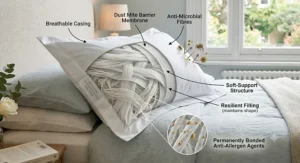
The filling uses Aegis-treated (LUROL AM-7) hollowfibre, a technology that bonds antimicrobial agents permanently to fibre surfaces, preventing dust mite colonisation and bacterial growth. What that means in real life: the treatment doesn’t wash out after a few cycles, which is exactly what you need when you’re running these through the machine every fortnight as NHS guidance recommends. The medium-support fill is versatile enough for back and stomach sleepers; side sleepers with broad shoulders might want the firmer variant.
Critically, this pillow carries Allergy UK approval — the recognised UK charity standard that confirms the product has been scientifically tested for allergen reduction. That’s not marketing fluff; it’s a third-party certification that matters.
UK buyers love the sheer no-fuss value here. Machine washable at 40°C, standard size (48 × 74 cm), and available Prime-eligible for next-day delivery. The rating across 12,000+ UK reviews speaks for itself.
✅ Allergy UK approved and genuinely tested
✅ Permanent Aegis antimicrobial treatment
✅ Excellent value for multi-room households
❌ Medium support may flatten sooner than firmer alternatives
❌ Side sleepers may find it lacking height
Price range: Under £20 for a pair. For the money, it’s hard to argue with.
2. Slumberdown Anti Allergy Pillows 2 Pack
Slumberdown have quietly built a reputation for honest, unpretentious bedding that actually works — no gimmicks, no overwrought claims. This Allergy UK-approved pair is a particular favourite for back sleepers who want medium support with a dedicated anti-bacterial fill.
Made in the UK (which matters for build-quality consistency and shorter supply chains), these pillows use a specially formulated anti-allergy filling that works by creating an inhospitable environment for dust mites rather than simply diluting their presence. The anti-bacterial outer cover adds another layer of protection — useful for anyone managing eczema, where skin-contact bacteria can be as problematic as the mites themselves.
At 48 × 74 cm with a breathable outer cover, these suit the classic British standard pillowcase. Washing at 40°C is recommended; the filling maintains its loft well after multiple washes, which is the critical test most budget pillows quietly fail.
UK reviewers consistently praise the washability — “still in decent shape after four months of fortnightly washing” summarises the general consensus. One caveat worth noting: they run slightly flatter than some competitors, so firmer-preference sleepers should consider Slumberdown’s Firm Anti Allergy variant instead.
✅ Genuine Made in UK credentials
✅ Allergy UK approved
✅ Anti-bacterial cover adds secondary protection
❌ Medium support may not satisfy firm-preference sleepers
❌ Loft is modest compared to premium alternatives
Price range: Under £20 for a pair — solidly competitive.
3. Panda Hybrid Bamboo Pillow
This is the premium pick, and it earns that position not through marketing hyperbole but through material science. The Panda Hybrid combines a memory foam core with a bamboo-derived rayon outer cover — and bamboo’s naturally antimicrobial properties mean allergen resistance is baked into the material itself, rather than applied as a surface treatment.
The practical implication is significant. Where treated-fibre pillows rely on chemical compounds that can diminish marginally over time (even if manufacturers claim permanence), bamboo fibre maintains its inherent anti-mould, anti-bacteria, and dust-mite-resistant properties through its natural cellular structure. For someone with severe dust mite sensitivity, that passive, chemistry-free protection is genuinely reassuring.
The memory foam core moulds to your head and neck alignment and returns to shape — important for allergy sufferers who already deal with disrupted sleep and don’t need added neck pain. The bamboo cover is also exceptionally breathable, which helps regulate the moisture levels that dust mites depend on. In a typical British bedroom (warm, often humid), that moisture management makes a meaningful difference.
It’s hand-washable rather than machine-washable, which is a minor inconvenience worth acknowledging. And the price reflects its premium positioning.
✅ Naturally antimicrobial bamboo cover — no chemical treatment needed
✅ Memory foam for superior neck and head support
✅ Outstanding breathability reduces bedroom humidity levels
❌ Hand-wash only — less convenient for weekly allergy-protocol washing
❌ Premium pricing will give budget shoppers pause
Price range: £40–£70 range. Worth it for chronic allergy sufferers who want a long-term solution.
4. Linens Limited Anti Allergy Hollowfibre Pillows (2 Pack)
Here’s one that often flies under the radar, which is a shame. Linens Limited’s offering is made in the UK, uses anti allergy hollowfibre filling, and — crucially — is washable at 60°C. That last point is more important than it sounds.
The NHS advises washing bedding at 60°C or above to actually kill dust mites, not merely wash allergens away temporarily. Most anti allergy pillows on the market recommend 40°C, which cleans the allergen but leaves living mites to repopulate within days. A 60°C-safe pillow lets you go scorched-earth on the colony — considerably more satisfying, and clinically more effective.
The filling uses what the brand describes as “allergy fresh” treated hollowfibre — a term that encompasses the same category of antimicrobial fibre treatment as Aegis, applied to a soft-feel fill. The soft-to-medium support suits stomach and front sleepers particularly well.
These won’t win a design award, and the packaging is functional rather than aspirational. But if what you need is a washable, treated, genuinely effective anti allergy treated pillow at a sensible price, this does the job quietly and reliably.
✅ 60°C wash-safe — kills mites outright, not just allergens
✅ Made in the UK
✅ Good value for a hot-wash-protocol household
❌ Brand less widely known; fewer UK reviews to draw on
❌ Soft support only — not for firm-preference sleepers
Price range: Under £25 for a pair.
5. Silentnight Anti-Allergy Pillows 4 Pack
The same trusted Aegis-treated technology as Silentnight’s pair, scaled up to four. This is the obvious buy for anyone furnishing multiple bedrooms — a semi-detached with two kids and an allergy-prone partner suddenly becomes rather more economical.
The value-per-pillow calculation works out handsomely in the 4-pack’s favour. All four carry Allergy UK approval, all use the same LUROL AM-7 antibacterial fibre treatment, and all wash at 40°C. Silentnight describe the support as soft-to-medium, making these well-suited to back and stomach sleepers — or children’s bedrooms, where softer support is generally preferable.
One practical point worth raising for UK family households: dust mite allergy in children is extremely common, and the bedroom exposure route is the dominant one. Allergy UK’s guidance specifically prioritises pillow and mattress protection as first-line interventions. Kitting out the whole house in one go with this 4-pack is genuinely sensible allergy management, not just convenience shopping.
Prime-eligible, fast delivery, easy returns. Sensible all round.
✅ Exceptional value for multi-bedroom households
✅ All four Allergy UK approved
✅ Consistent, trusted Aegis fibre treatment throughout
❌ Soft support means they may not suit firmer-preference adults
❌ Same limitations as the 2-pack on loft for broad-shouldered side sleepers
Price range: £20–£35 range for four — the maths make it a no-brainer.
6. Slumberdown Firm Anti Allergy Pillow (2 Pack)
A frequently overlooked variant in the Slumberdown range. The standard Slumberdown Anti Allergy is excellent for back sleepers, but this Firm version serves the side-sleeping majority considerably better. Side sleepers need height and resistance to keep the cervical spine neutral — a soft or medium pillow just collapses under the pressure of shoulder width, leaving you with neck pain on top of your allergy symptoms. That is not a good combination.
The Firm Anti Allergy uses the same anti-bacterial fill technology and carries Allergy UK approval, maintaining the credentials of its softer sibling while delivering the structural support that side sleepers actually need. The anti-bacterial cover is breathable and maintains structural integrity through repeated washing.
For context: Which? notes that Silentnight and Slumberdown are among the most consistently recommended UK brands for anti-allergy treated pillows — so choosing between them is largely a question of support preference rather than allergen effectiveness.
Dimensions are standard UK size at 48 × 74 cm, washable at 40°C, and available Prime-eligible.
✅ Firm support specifically designed for side sleepers
✅ Allergy UK approved
✅ Breathable anti-bacterial cover
❌ Firmer fill may not suit back or stomach sleepers
❌ Same 40°C wash limitation (not kill-temperature)
Price range: Around £20 for a pair.
7. Adam Home Quilted Cover Pillows 2 Pack
If you’ve stayed in a decent hotel and thought “why don’t my pillows feel like this,” the answer is usually a quilted cover and a well-structured hollowfibre fill — which is exactly what Adam Home delivers here. This is not specifically a Sanitized anti allergy pillow in the technical sense, but it uses dust-mite-resistant hollowfibre filling and a hypoallergenic construction that makes it a strong practical choice for allergy sufferers who prioritise comfort alongside protection.
The quilted outer cover gives the pillow a premium feel that belies the price point considerably. The filling is generously weighted — these don’t flatten into a depressing pancake by morning, which is a common complaint among cheaper anti allergy options. Dust mite resistance is built into the fill’s tight fibre structure, which physically limits mite penetration rather than relying solely on chemical treatment.
With over 30,000 UK reviews on Amazon.co.uk, this is one of the most-reviewed pillows on the platform, and the consensus is clear: superb hotel-quality comfort at an accessible price. For someone who wants allergy-conscious bedding without sacrificing the luxury feel, this is the smart middle ground.
✅ Hotel-quality quilted cover at an accessible price
✅ Dense hollowfibre fill resists dust mite penetration structurally
✅ One of the most reviewed UK pillows — extensive customer feedback
❌ No formal Allergy UK certification — relies on structural rather than chemical protection
❌ Less targeted allergen treatment than Aegis or Sanitized options
Price range: Under £25 for a pair.
How Sanitized® and Allergen Barrier Technology Actually Works
Here’s something most product listings gloss over entirely: the difference between how various anti allergy treatments function — and why it matters for long-term effectiveness.
The Chemistry Behind the Claim
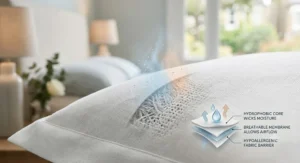
The most widely used technology in UK market anti allergy treated pillows is the Aegis Microbe Shield (marketed as LUROL AM-7 in some formulations). This works by bonding a quaternary ammonium compound to individual fibres, creating a surface that is mechanically and chemically hostile to bacteria and dust mites. Crucially, the bond is meant to be permanent — the treatment doesn’t simply sit on the surface waiting to be washed off.
Sanitized® technology, endorsed specifically by Allergy UK, operates on a similar principle but encompasses a broader range of formulations (including Sanitized® T 99-19 and TH 22-27) designed for mattresses, bedding, and upholstery. Sanitized® protects against house dust mite, bacterial growth, mould, mildew, and odour — making it one of the more comprehensive treatment systems available. When you see Sanitized-treated bedding, you’re looking at a Swiss-developed precision chemistry that has been independently verified for efficacy. That’s meaningfully different from a marketing claim on a box.
The Allergy Butterfly Logo — What It Means
The Allergy UK Seal of Approval — recognisable by the butterfly logo — is arguably the most important certification for UK buyers. It indicates that a product has been reviewed and assessed by Allergy UK, the country’s leading allergy charity, and found to be suitable for people with allergic conditions. It’s not a rubber stamp; products must provide independent testing results demonstrating performance against specific allergen triggers.
When a pillow carries the Allergy UK butterfly, you can reasonably trust that it will do what it says. Without it, you’re relying on manufacturer claims alone — which, in a category prone to vague marketing language, is worth approaching with healthy scepticism.
Allergen Encasement Technology
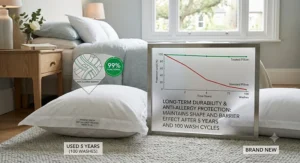
Separate from treatment is encasement — a tightly woven physical barrier that prevents allergens from passing through the fabric. Allergen encasement technology is particularly effective when used in pillow protectors placed over your existing pillow, creating a two-layer defence. The weave is typically below 6 microns, too small for mite faeces to penetrate. Used in combination with a treated pillow, this is the gold-standard approach recommended by Allergy UK for highly sensitive individuals.
Real-World Usage Guide: Getting the Most from Your Anti Allergy Treated Pillow
Buying the right pillow is step one. Using it correctly is step two — and it’s where many well-intentioned allergy sufferers quietly undo their own good work.
Washing: The Most Important Variable
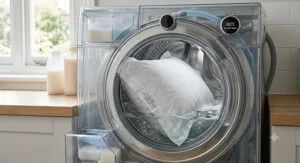
The single most effective thing you can do is wash your pillows regularly. The NHS recommends washing bedding weekly at 60°C where possible; for 40°C-rated anti allergy treated pillows, washing every one to two weeks is the minimum. A hot tumble-dry after washing (on low heat if the label permits) adds extra assurance, as heat also disrupts mite populations.
Avoid the temptation to skip washing because “it’s treated.” The treatment reduces mite colonisation — it doesn’t eliminate the need for hygiene.
Drying and Storage
Britain’s damp climate is your enemy here. Pillows that aren’t dried fully before use become incubators rather than barriers. If you’re in a flat or terraced house without outdoor drying space (most of Britain, essentially), run the tumble dryer for a full cycle even after line drying. A slightly warm, still-slightly-damp pillow is more hospitable to mites than a sun-baked one.
Layering Your Defence
Pair your anti allergy treated pillow with a good allergen-barrier pillow protector (the Silentnight Anti Allergy Pillow Protector 2-Pack is a solid and affordable companion purchase). The protector adds the encasement layer; your treated pillow handles the active antimicrobial work. Together, they’re substantially more effective than either alone.
Replacement Schedule
Even the best treated pillow doesn’t last forever. Most manufacturers recommend replacing pillows every one to two years — sooner if you’re a severe allergy sufferer. A simple fold-test works well: fold the pillow in half and release it. If it doesn’t spring back to shape promptly, the filling has broken down and it’s time to replace.
UK Allergy Sufferers: Matching Pillow to Profile
The London Commuter in a Studio Flat
Compact living, limited ventilation, windows often closed for noise reduction — this is about the worst possible environment for dust mite management. Recommendation: Silentnight Anti Allergy Pillow Pack of 2 for the Allergy UK certification and Aegis treatment, paired with the Silentnight Pillow Protector. Budget around £30-35 total. Wash every week without exception. A small dehumidifier in the bedroom would be a worthwhile investment alongside the bedding.
The Family Household in the Midlands
Three bedrooms, two kids with eczema, budget-conscious parents. The Silentnight Anti-Allergy Pillows 4 Pack is the obvious answer — four Allergy UK-approved pillows for a single mid-range purchase. Add treated protectors for each bed, run them through the wash fortnightly, and you’ve materially reduced the allergen load across the household.
The Allergy-Sensitive Professional Who Wants Comfort Too
If you’re not on a strict budget and want both genuine anti-allergy performance and premium sleep feel, the Panda Hybrid Bamboo Pillow is the answer. The natural bamboo antimicrobial properties are passive and chemistry-free, the memory foam support is genuinely excellent, and the breathability helps manage bedroom humidity — the root environmental cause of the problem. It’s a long-term investment in better sleep.
Common Mistakes When Buying an Anti Allergy Treated Pillow in the UK
Confusing “hypoallergenic” with “anti allergy treated.” These are not the same thing. A hypoallergenic pillow is made from materials less likely to provoke a reaction; a treated pillow has active agents targeting allergens. If you have a genuine dust mite allergy, the treated option is significantly more effective.
Ignoring wash temperature. Buying a treated pillow and washing it at 30°C to “be gentle” is a waste. At 30°C, you clean the surface; you don’t kill anything. Follow the care label — and if you want maximum efficacy, choose a pillow rated for 60°C washing.
Skipping third-party certification. Plenty of pillows claim allergen protection without any independent verification. The Allergy UK butterfly logo and Sanitized® endorsement are the UK standards to look for. The Which? guide to anti-allergy pillows is also a useful starting point for sceptics.
Buying US-spec products. This matters less for pillows than for electronics, but some US-market bedding products carry certifications (like OEKO-TEX or CertiPUR-US) that don’t translate to UK/European standards. For allergy approval specifically, Allergy UK certification is the relevant benchmark.
Neglecting the protector layer. Even the best anti allergy treated pillow benefits substantially from an allergen encasement protector on top. It’s the difference between one barrier and two — and two wins every time.
Long-Term Cost and Value: Are Treated Pillows Worth the Premium?
Let’s work through this practically. A standard untreated pillow might cost £5–8. An Allergy UK-approved treated pair sits in the £15–20 range. The premium is, say, £10–12 over the pair.
If you’re managing a dust mite allergy, the alternative costs look rather different: antihistamines (£3–8/month over-the-counter), GP appointments for recurring rhinitis or asthma flare-ups, potentially prescription nasal sprays. Allergy UK estimates that bedroom allergen exposure is one of the primary drivers of perennial allergic symptoms — reducing it is both cheaper and more effective than medicating around it.
The treated pillow, replaced annually at under £20 a pair, costs roughly £1.60 per month. That’s a fairly compelling calculation.
For the premium end: a Panda Bamboo Pillow in the £40–£70 range, lasting two to three years, works out to £1.50–2.50 per month with better support and better sleep quality as part of the deal. Again, the maths are kinder than they look at the checkout.
The one genuine caveat: no pillow — however well treated — will resolve a severe allergy on its own. It’s one component of a broader bedroom hygiene programme that includes regular vacuuming (with a HEPA-filter hoover), hard-surface flooring in bedrooms where possible, and humidity management. Used within that framework, a quality anti allergy treated pillow punches well above its weight.
✨ Don’t Miss These Exclusive Deals!
🔍 Upgrade your bedroom allergen management right now. Click on any highlighted product to check current pricing and availability on Amazon.co.uk — Prime members get free next-day delivery!
FAQ: Anti Allergy Treated Pillows in the UK
❓ What is an anti allergy treated pillow?
❓ Are anti allergy treated pillows safe for children?
❓ How often should I wash an anti allergy treated pillow?
❓ Does the anti-allergy treatment wash out over time?
❓ Can I get anti allergy treated pillows on Amazon.co.uk with fast delivery?
Conclusion: Sleep Should Be a Refuge, Not a Trigger
Here’s the honest truth about anti allergy treated pillows: they are one of the highest-return, lowest-effort interventions available to anyone managing dust mite allergy in the UK. You don’t need to renovate your bedroom, buy an air purifier the size of a filing cabinet, or change your entire lifestyle. You need to put your head on something that’s actively working against the allergens — not passively tolerating them.
The Silentnight Anti Allergy Pillow Pack of 2 remains the gold-standard budget recommendation: trusted, Allergy UK certified, and backed by thousands of genuine UK reviews. For households needing to kit out multiple bedrooms at once, the 4-pack offers excellent value. Side sleepers with chronic symptoms should look hard at the Slumberdown Firm Anti Allergy or the Panda Hybrid Bamboo Pillow for premium comfort. And anyone serious about a comprehensive allergen barrier should pair their treated pillow with a dedicated encasement protector.
The British climate isn’t going to stop being damp. Your bedroom isn’t going to spontaneously become inhospitable to dust mites. But you can close the loop on the specific exposure that happens every night, for eight hours, directly beneath your face. That’s worth doing.
✨ Don’t Miss These Exclusive Deals!
🔍 Ready to upgrade your sleep? Click any highlighted product to view current pricing and availability on Amazon.co.uk. Your nose will thank you.
Recommended for You
- 7 Best Dust Mite Proof Pillows UK 2026 — Sleep Without Sneezing
- Best CPAP Pillow for Side Sleepers UK 2026: Top 7 Picks
- Best CPAP Pillow UK 2026: 7 Top Picks for Deep, Mask-Friendly Sleep
Disclaimer: This article contains affiliate links. As an Amazon Associate, I earn from qualifying purchases. If you purchase products through these links, we may earn a small commission at no additional cost to you.
✨ Found this helpful? Share it with your mates! 💬🤗
