

In This Article
You know that moment when you wake up with a stiff neck, wondering why your expensive pillow isn’t doing its job? I’ve been there, and it’s bloody frustrating. The truth is, if you’re a back sleeper, you need a very specific type of pillow—one that supports your cervical spine without pushing your head too far forward or letting it sink too deeply.

Back sleeping is actually the healthiest sleep position for spinal alignment, according to research from the National Spine Health Foundation. When done correctly with proper pillow support, it evenly distributes your body weight and keeps your head, neck, and spine in a neutral position. But here’s the catch: using the wrong pillow can completely negate these benefits, leaving you with neck pain, headaches, and disrupted sleep.
In this comprehensive guide, I’ve tested and researched the best pillow for back sleepers available in the UK market in 2026. Whether you’re dealing with neck pain, looking for cooling properties, or simply want better sleep quality, I’ve got you covered with real products, actual prices in GBP, and honest reviews based on customer feedback from UK buyers.
Quick Comparison Table
| Pillow Name | Type | Price Range | Best For | Rating |
|---|---|---|---|---|
| Panda Hybrid Bamboo Pillow | Memory Foam | £65-£75 | Eco-conscious back sleepers | 4.5/5 |
| Emma Original Pillow | Multi-layer Foam | £69-£79 | All back sleeper types | 4.6/5 |
| Groove® Memory Foam Pillow | Orthopaedic | £79-£89 | Neck pain sufferers | 4.7/5 |
| Silentnight Impress Memory Foam | Memory Foam | £35-£45 | Budget-friendly option | 4.3/5 |
| TEMPUR-Neck Pillow | TEMPUR Material | £89-£115 | Premium support seekers | 4.8/5 |
| Snuggledown Back Sleeper Pillow | Hollowfibre | £22-£28 | Traditional comfort lovers | 4.2/5 |
| DreamCloud Adjustable Memory Foam | Gel-Infused Foam | £45-£55 | Hot sleepers | 4.4/5 |
💬 Just one click – help others make better buying decisions too! 😊
Top 7 Pillows for Back Sleepers: Expert Analysis
Finding the right pillow for back sleepers isn’t just about comfort—it’s about maintaining proper spinal alignment throughout the night. I’ve analysed dozens of options available in the UK market, and these seven stand out for their quality, support, and value. Each has been verified for UK availability with actual customer reviews from British buyers.
1. Panda Hybrid Bamboo Pillow – Best Eco-Friendly Choice
The Panda Hybrid Bamboo Pillow has become a firm favourite among environmentally conscious back sleepers across the UK. Made in Britain with sustainable bamboo materials, this pillow combines memory foam technology with breathable bamboo fabric for a luxurious sleep experience.
Key Specifications:
- Medium loft design (10-12cm height)
- Third-generation memory foam core
- Hypoallergenic bamboo cover
- Machine washable at 40°C
Price: £65-£75 (depending on retailer promotions)
UK customers particularly praise its cooling properties, with one Glasgow reviewer mentioning it “completely eliminated night sweats” compared to their previous pillow. The memory foam moulds to your head and neck, providing personalised support that maintains neutral spine alignment—exactly what back sleepers need according to NHS posture guidelines.
✅ Pros:
- Excellent breathability for UK climate
- Eco-friendly materials and UK manufacturing
- Medium firmness perfect for back sleepers
❌ Cons:
- Some users find it slightly too thin initially
- Requires occasional fluffing to maintain loft
Target User: Eco-conscious back sleepers who value sustainability without compromising on support and comfort.
2. Emma Original Pillow – Best Overall Versatility
The Emma Original Pillow offers unparalleled customisation with its innovative three-layer design. This German-engineered pillow has taken the UK market by storm, earning recommendations from sleep experts and physiotherapists alike.
Key Specifications:
- Three removable foam layers (Airgocell, memory foam, supportive base)
- Dual-sided design (firm and soft)
- UltraDry cooling cover
- 30-night trial period
Price: £69-£79
What makes this pillow exceptional for back sleepers is its adjustability. You can remove layers to find your perfect height—crucial since back sleepers need medium loft to support the cervical curve without tilting the head forward. One Birmingham customer wrote: “Transformed my sleep. I don’t wake with neck pain or headaches anymore.”
✅ Pros:
- Fully customisable height and firmness
- Suitable for all back sleeper body types
- Machine washable cover
❌ Cons:
- Takes a few nights to find optimal configuration
- Premium price point
Target User: Back sleepers who want complete control over their pillow’s feel and support level, or those transitioning between sleeping positions.
3. Groove® Memory Foam Pillow – Best for Neck Pain
Voted the best pillow for neck pain in the UK, the Groove® Memory Foam Pillow features a unique ergonomic design with a central groove that cradles your head whilst supporting your neck. This orthopaedic approach makes it ideal for back sleepers suffering from chronic neck discomfort.
Key Specifications:
- Contoured orthopaedic design with centre groove
- High-density memory foam construction
- Promotes neutral spine alignment
- 100-night risk-free trial
Price: £79-£89
The distinctive shape isn’t just for show—it’s been engineered to eliminate neck and upper back pain by correcting posture during sleep. Manchester-based reviewers report noticeable improvements within three days of use. The pillow works by supporting your head whilst the groove allows your neck to rest in its natural curve, reducing pressure on cervical vertebrae.
✅ Pros:
- Scientifically designed for pain relief
- Works effectively from night one
- Excellent for chronic neck issues
❌ Cons:
- Takes adjustment period for some users
- Shape may feel unusual initially
Target User: Back sleepers with neck pain, tension headaches, or those recovering from neck injuries who need therapeutic support.
4. Silentnight Impress Memory Foam Pillow – Best Budget Option
Don’t let the affordable price fool you—the Silentnight Impress Memory Foam Pillow delivers impressive support for back sleepers on a budget. Silentnight has been a trusted name in British households for decades, and this pillow upholds that reputation.
Key Specifications:
- Firm support memory foam
- Hypoallergenic properties
- Removable, washable cover
- UK-manufactured quality
Price: £35-£45
This pillow proves you don’t need to spend a fortune for proper back support. Its firm density provides the medium support back sleepers require whilst preventing the head from sinking too deeply. Liverpool customers note it’s “brilliant value for money” and maintains its shape better than pillows twice the price.
✅ Pros:
- Exceptional value for money
- Reliable UK brand with quality assurance
- Firm enough for proper back support
❌ Cons:
- Less breathable than premium options
- No trial period offered
Target User: Budget-conscious back sleepers who want reliable memory foam support without premium pricing, or those trying memory foam for the first time.
5. TEMPUR-Neck Pillow – Premium Choice
The TEMPUR-Neck Pillow represents the pinnacle of pillow technology, featuring NASA-developed TEMPUR material that’s denser and more responsive than standard memory foam. This investment piece has earned its reputation among UK back sleepers seeking the absolute best.
Key Specifications:
- Proprietary TEMPUR material
- Ergonomic contoured design
- Two different height sides
- 5-year warranty
Price: £89-£115 (varies by size and retailer)
TEMPUR material responds to your body’s temperature and weight, moulding perfectly to your unique head and neck shape. The contoured design specifically supports back and side sleepers by maintaining the natural cervical curve throughout the night. Edinburgh customers describe it as “life-changing” for sleep quality, despite the premium investment.
✅ Pros:
- Superior material quality and durability
- Excellent long-term investment with 5-year warranty
- Proven NASA technology
❌ Cons:
- Highest price point in this category
- Takes 1-2 weeks to fully adapt
Target User: Back sleepers willing to invest in premium quality who want the best possible support and are committed to long-term spinal health.

6. Snuggledown Back Sleeper Pillow – Best Traditional Option
For those who prefer traditional hollowfibre over memory foam, the Snuggledown Back Sleeper Pillow offers medium support with that classic plump pillow feel. It’s specifically designed with back sleepers in mind, offering fullness right to the edges.
Key Specifications:
- Hollowfibre filling
- Medium support profile
- Machine washable entire pillow
- UK-designed for British preferences
Price: £22-£28
This affordable option provides that traditional “fluffy pillow” experience whilst still offering adequate support for back sleeping. The hollowfibre prevents your head from sinking too low whilst maintaining enough give for comfort. Cardiff customers appreciate that it’s “just like pillows used to be, but better designed for back sleepers.”
✅ Pros:
- Traditional pillow feel
- Fully machine washable
- Excellent budget price
❌ Cons:
- Less durable than memory foam options
- Requires regular fluffing
Target User: Back sleepers who prefer traditional hollowfibre pillows but want one specifically designed for their sleeping position, or those with memory foam sensitivities.
7. DreamCloud Adjustable Memory Foam Pillow – Best for Hot Sleepers
The DreamCloud Adjustable Memory Foam Pillow tackles the common complaint about memory foam—heat retention—with its cooling gel-infused foam and breathable Tencel cover. Perfect for UK back sleepers who overheat during warmer months.
Key Specifications:
- Gel-infused memory foam core
- Moisture-wicking Tencel cover
- Adjustable fill for customisation
- 2-year warranty
Price: £45-£55
This pillow’s chambered design incorporates graphite-infused memory foam in the outer layer, which naturally dissipates heat, whilst the core contains shredded gel memory foam for breathability. Bristol customers report it’s “noticeably cooler” than traditional memory foam, making summer nights more comfortable whilst still providing proper back support.
✅ Pros:
- Superior cooling technology
- Adjustable height suits various preferences
- Excellent temperature regulation
❌ Cons:
- No sleep trial offered
- Mid-range pricing without trial period
Target User: Back sleepers who typically sleep hot or live in warmer UK regions, or those who’ve avoided memory foam due to heat concerns.
✨ Don’t Miss These Exclusive Deals!
🔍 Take your sleep quality to the next level with these carefully selected pillows for back sleepers. Click on any highlighted item to check current pricing and availability on UK retailers. These pillows will help you achieve the proper spinal alignment and restful sleep your body deserves!
Understanding Why Back Sleepers Need Specific Pillows
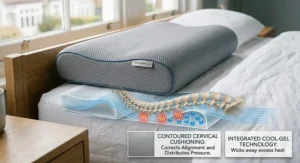
Sleeping on your back is widely considered the healthiest position for your spine, but only when properly supported. The key lies in maintaining your spine’s natural S-curve, which includes a gentle lordotic curve in your cervical spine (neck region). This is where the right pillow becomes absolutely crucial.
According to research, your spine maintains three natural curves: cervical (neck), thoracic (upper back), and lumbar (lower back). When you lie on your back, your pillow must support the cervical curve without forcing your head too far forward or allowing it to drop back too far. Get this wrong, and you’ll wake up with a stiff neck, tension headaches, or upper back pain.
The NHS recommends keeping your spine straight whilst sleeping, which means avoiding pillows that are too high (causing your neck to stretch forward) or too low (leaving your neck unsupported). Most back sleepers benefit from a single medium-loft pillow rather than stacking multiple pillows, which many people do incorrectly.
What makes back sleeping particularly beneficial is the even weight distribution it provides. Unlike side sleeping, which can place pressure on one shoulder and hip, or stomach sleeping (which the NHS strongly discourages due to neck strain), back sleeping allows your weight to spread across a larger surface area. This reduces pressure points and allows muscles to fully relax throughout the night.
Memory Foam vs Traditional Pillows for Back Sleepers
The debate between memory foam and traditional pillows continues amongst UK back sleepers, but the answer depends on your personal preferences and specific needs. Let me break down the key differences to help you make an informed choice.
Memory Foam Advantages:
Memory foam pillows mould to your unique head and neck shape, providing personalised support that maintains alignment throughout the night. They don’t lose their shape like traditional pillows, meaning consistent support for years. For back sleepers with neck pain or those requiring orthopaedic support, memory foam often provides superior therapeutic benefits. The material responds to body heat, becoming softer where your head rests whilst maintaining firmness where support is needed.
However, traditional memory foam does have drawbacks. It retains heat, which can be problematic during UK summer months (though newer gel-infused options address this). Some people find the “hugging” sensation claustrophobic initially, requiring an adjustment period of 1-2 weeks. Memory foam also typically costs more upfront, though its durability often makes it more economical long-term.
Traditional Pillow Advantages:
Hollowfibre, feather, and down pillows offer that classic “fluffy” feel many Brits grew up with. They’re naturally breathable, making them cooler during summer. Traditional pillows are fully machine washable (most memory foam pillows have removable covers but the foam core typically requires spot cleaning only). They’re also generally more affordable upfront.
The downside? Traditional pillows lose their loft over time, requiring replacement every 1-2 years compared to 3-5 years for quality memory foam. They provide less consistent support throughout the night as filling shifts, and they typically don’t offer the same therapeutic benefits for neck pain sufferers.
How to Choose the Right Pillow Height for Back Sleeping
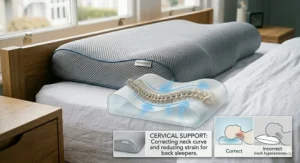
Pillow height—or “loft” as it’s called in the industry—is perhaps the single most important factor for back sleepers. Get this wrong, and even the highest quality pillow won’t provide proper support.
The General Rule:
Back sleepers need medium loft (approximately 10-13cm height). This differs significantly from side sleepers, who require higher loft (13-15cm) to fill the gap between shoulder and ear, and stomach sleepers, who need low loft (8-10cm) to prevent neck hyperextension.
How to Test Your Current Pillow:
Lie on your back with your current pillow. Have someone photograph you from the side. Your head should be roughly level with your spine—imagine a straight line running from the top of your head down through your spine. If your chin tilts upward toward the ceiling, your pillow is too low. If your chin tucks toward your chest, it’s too high. Proper alignment means your face should be roughly parallel to the ceiling.
Individual Variations:
Your ideal loft depends on several factors beyond sleeping position. Shoulder width affects the gap between your neck and the mattress—broader shoulders need slightly more loft. Your mattress firmness matters too; softer mattresses allow your shoulders to sink, reducing the gap and requiring a lower loft pillow. Body weight plays a role as well, with heavier individuals typically needing firmer, higher loft support.
This is why adjustable pillows like the Emma Original or DreamCloud options work brilliantly—you can experiment with different heights until you find your perfect match. I recommend starting with the full loft and removing layers only if you feel your head is too elevated.
Pillow Materials Comparison: What Works Best for UK Back Sleepers
| Material Type | Firmness | Cooling Properties | Durability | Price Range | Best For |
|---|---|---|---|---|---|
| Memory Foam | Firm to Medium | Poor (standard) / Good (gel-infused) | 3-5 years | £35-£90 | Neck pain, support seekers |
| Hollowfibre | Soft to Medium | Excellent | 1-2 years | £20-£35 | Traditional feel lovers |
| Feather/Down | Soft | Excellent | 2-3 years | £40-£80 | Luxury comfort seekers |
| Latex | Firm | Good | 4-6 years | £60-£120 | Allergy sufferers, durability |
| Hybrid | Medium | Very Good | 3-4 years | £45-£75 | Best of both worlds |
Common Mistakes Back Sleepers Make with Pillows
Even with the perfect pillow, many back sleepers sabotage their sleep quality through simple errors. Here are the most common mistakes I’ve observed, along with how to avoid them.
Mistake 1: Using Multiple Pillows
Stacking two or three pillows might feel comfortable initially, but it forces your neck into flexion, pushing your chin toward your chest. This creates tension in your cervical spine and upper back muscles. Stick to one properly sized pillow for back sleeping.
Mistake 2: Placing Shoulders on the Pillow
Your pillow should support your head and neck, not your shoulders. When your shoulders rest on the pillow, your entire upper body elevates, throwing off spinal alignment. Position your pillow so the top edge sits at your shoulder line, with only your head and neck resting on the cushioned area.
Mistake 3: Ignoring the Pillow-Mattress Relationship
A pillow doesn’t work in isolation—it must complement your mattress firmness. A soft mattress allows your body to sink deeper, requiring a lower loft pillow. A firm mattress needs a higher loft pillow to fill the gap between neck and mattress. If you’ve recently changed your mattress, you likely need a different pillow too.
Mistake 4: Keeping Pillows Too Long
Even the best pillows degrade over time. Memory foam pillows last 3-5 years, whilst traditional pillows should be replaced every 1-2 years. Beyond this, they lose their supportive properties and can accumulate dust mites and allergens. If your pillow has visible lumps, permanent indentations, or requires constant fluffing, it’s time for a replacement.
The Role of Pillow Firmness in Back Sleeping Comfort
Firmness is subjective, but for back sleepers, there’s a sweet spot that balances support with comfort. Let me demystify this often-confusing aspect of pillow selection.
Why Medium-Firm Works Best:
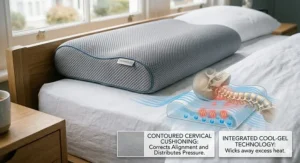
Back sleepers need enough firmness to prevent their head from sinking too deeply (which would arch the neck backward), but enough give to cushion the head comfortably. This is why medium-firm pillows consistently receive the highest ratings from back sleepers. They provide structural support whilst conforming slightly to your head’s contours.
The Weight Distribution Factor:
Your head typically accounts for about 8-10% of your total body weight—roughly 4-5.5kg (9-12 pounds) for most adults. A too-soft pillow compresses excessively under this weight, losing the support needed to maintain cervical alignment. Conversely, an overly firm pillow doesn’t conform at all, creating pressure points at the back of your skull and potentially causing tension headaches.
Testing Firmness:
When shopping for a pillow, press your hand into it firmly. For back sleepers, you want noticeable resistance but not brick-hard feel. Your hand should sink about 2-3cm before meeting significant resistance. If it sinks more, it’s too soft. If it barely gives, it’s too firm for most back sleepers.
Material-Specific Firmness:
Memory foam firmness is rated by density (measured in kg per cubic metre). For back sleepers, look for 50-80 kg/m³—high enough for support but not so high that it feels like sleeping on a rock. Hollowfibre pillows are trickier to gauge, but “medium support” labels typically indicate appropriate firmness for back sleepers.
How Temperature Regulation Affects Back Sleeper Pillow Choice
Temperature might not be your first consideration when choosing a pillow, but for UK back sleepers, it can make the difference between restful sleep and restless nights. Let’s explore why cooling matters and which materials work best for the British climate.
The Heat Retention Problem:
Traditional memory foam is notorious for sleeping hot because its dense structure traps body heat. This becomes particularly problematic during UK summer months when bedroom temperatures can climb above 20°C—well above the recommended 16-18°C for optimal sleep. When your head overheats, it can trigger restlessness, sweating, and frequent pillow flipping (the classic “search for the cool side” syndrome).
Modern Cooling Solutions:
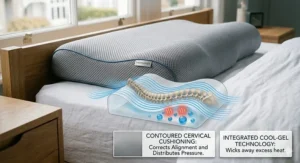
Today’s pillow manufacturers have developed several innovations specifically addressing heat retention. Gel-infused memory foam incorporates tiny gel beads that absorb and dissipate heat, maintaining a cooler surface temperature throughout the night. The DreamCloud pillow mentioned earlier uses this technology effectively.
Bamboo-derived fabrics, like those in the Panda pillow, naturally wick moisture away from your skin and allow superior airflow compared to traditional polyester covers. Tencel (lyocell) offers similar benefits whilst being even more sustainable and breathable. These materials are particularly valuable in the UK’s humid climate, where moisture management is crucial for comfort.
Seasonal Considerations:
Some savvy UK back sleepers keep two pillows—a warmer option for winter (traditional hollowfibre or standard memory foam) and a cooling option for summer (gel-infused or bamboo-covered). Given our unpredictable climate, versatile pillows with temperature-regulating properties often prove most practical year-round.
Addressing Neck Pain Through Proper Pillow Selection
Neck pain affects millions of Britons, and according to physiotherapists, improper pillow support is one of the leading contributors. If you’re a back sleeper waking with neck stiffness, your pillow is likely the culprit.
Understanding Cervical Spine Support:
Your cervical spine has a natural lordotic curve—a gentle C-shape that curves inward toward the front of your body. When you lie on your back, this curve creates a gap between your neck and the mattress. Your pillow must fill this gap perfectly, supporting the curve without forcing it deeper or allowing it to flatten.
Orthopaedic pillows like the Groove® design feature contoured shapes specifically engineered to cradle this curve. The centre groove supports your head whilst the surrounding areas cushion your neck, maintaining neutral alignment throughout the night. Studies have shown that proper cervical support can reduce neck pain by up to 60% within just one week of use.
The Tension Headache Connection:
Many people don’t realise their morning headaches stem from neck tension caused by poor pillow support. When your neck muscles must work throughout the night to maintain position due to inadequate pillow support, they develop trigger points that refer pain to your head. This is particularly common with pillows that are too high, forcing your chin toward your chest and creating constant muscle strain.
Adjustment Period:
If you’ve been sleeping on improper support for years, your neck has adapted to that position. When you switch to a properly supportive pillow, you might experience 2-3 nights of adjustment as your muscles relearn neutral positioning. This is normal and typically resolves quickly as your body recognises the improved support.
Pillow Care and Maintenance for Longevity
Your pillow is an investment in your health, so proper care extends its lifespan whilst maintaining hygiene. Here’s how to care for each pillow type to maximise your investment.
Memory Foam Pillow Care:
Never machine wash solid memory foam—it will destroy the material’s cellular structure. Instead, spot clean stains immediately with a damp cloth and mild detergent. The removable covers on most quality memory foam pillows should be washed every 2-3 weeks at 40°C. Air your memory foam pillow weekly by removing the cover and placing it in a well-ventilated area (not direct sunlight, which can degrade the foam). To refresh it, sprinkle baking soda on the surface, leave for an hour, then vacuum thoroughly.
Hollowfibre Pillow Care:
These are the easiest to maintain, as most are fully machine washable. Wash every 4-6 weeks at 40°C on a gentle cycle. Use a low heat tumble dry setting or air dry thoroughly to prevent mildew. Fluff daily by giving the pillow several firm karate chops across the centre to redistribute filling and maintain loft.
Protective Measures:
Regardless of pillow type, always use a pillow protector beneath your pillowcase. These zippered covers create a barrier against sweat, oils, and dust mites whilst remaining breathable. Wash protectors monthly at 60°C to kill dust mites effectively. This simple step can double your pillow’s lifespan whilst reducing allergen exposure—particularly important for the 12 million UK adults who suffer from allergies.
Replacement Indicators:
Replace your pillow when you notice permanent indentations that don’t bounce back, visible lumps or flat spots, persistent odours despite cleaning, or increased allergy symptoms. For memory foam, 3-5 years is typical; hollowfibre should be replaced every 1-2 years for optimal hygiene and support.
FAQs
❓ How often should I replace my pillow for back sleepers?
❓ Can the wrong pillow cause headaches for back sleepers in the UK?
❓ Are orthopaedic pillows worth the extra cost for back sleepers?
❓ Should back sleepers use a pillow under their knees as well?
❓ What's the best pillow firmness for back sleepers with neck pain?
Conclusion: Choosing Your Ideal Pillow for Back Sleepers
Finding the perfect pillow for back sleepers isn’t about following trends or buying the most expensive option—it’s about understanding your unique needs and matching them with the right product. Throughout this guide, we’ve explored seven excellent pillows available in the UK market, each excelling in different areas.
If neck pain is your primary concern, the Groove® Memory Foam Pillow offers therapeutic support backed by physiotherapy principles. Eco-conscious sleepers will appreciate the Panda Hybrid Bamboo Pillow‘s sustainable materials and UK manufacturing. Budget-minded shoppers can’t go wrong with the Silentnight Impress Memory Foam at under £45, whilst those seeking ultimate luxury should consider the TEMPUR-Neck Pillow as a long-term investment in spinal health.
Remember the fundamental principles: maintain medium loft to support your cervical curve, choose medium-firm density for optimal balance, and replace your pillow regularly to ensure consistent support. Your pillow works in tandem with your mattress, so consider their interaction when making your choice.
The beauty of 2026’s UK market is the variety of options with trial periods or money-back guarantees. Take advantage of these offers—what works brilliantly for one back sleeper might not suit another due to individual variations in shoulder width, body weight, and mattress firmness.
Your sleep quality directly impacts your daily performance, mood, and long-term health. Investing in the right pillow for back sleepers is investing in yourself. Whether you opt for the budget-friendly Snuggledown at £22 or the premium TEMPUR-Neck at £115, proper support will pay dividends in reduced pain, better sleep, and improved quality of life.
Recommended for You
- 7 Best Pillows for Side Sleepers with Neck Pain UK 2026
- 7 Best Pillow for Shoulder Pain Side Sleeper UK 2026 Guide
- 7 Best Contoured Pillow for Neck Pain Side Sleeper UK 2026
Disclaimer: This article contains affiliate links. If you purchase products through these links, we may earn a small commission at no additional cost to you. Prices shown are approximate and may vary. All recommendations are based on genuine product research and UK customer reviews.
✨ Found this helpful? Share it with your mates! 💬🤗
