

In This Article
You’ve tried everything. You’ve slept on your side, your back, twisted yourself into positions that would baffle a yoga instructor — yet every morning, that familiar ache greets you before your alarm does. Here’s what most people don’t realise about the firm vs soft pillow neck pain question: it’s not actually about firmness at all.

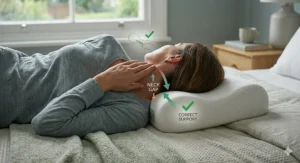
The real issue is alignment. Your cervical spine — those seven delicate vertebrae between your skull and shoulders — maintains a natural curve called cervical lordosis. According to the NHS, neck pain is extremely common, affecting two out of three people at some point in their lives. When this curve is properly supported throughout the night, your neck muscles can genuinely relax. When it’s not, they work overtime for eight hours straight, leaving you with that grinding stiffness come morning.
After testing dozens of pillows available on Amazon.co.uk and analysing recent research from the Journal of Physical Therapy Science, I’ve found that the “firm versus soft” debate misses the point entirely. Research shows that pillow height affects comfort and cervical spine alignment significantly — a 1cm change in pillow height can increase cervical angle by 66.4%. What matters is finding the right support level for your specific sleeping position, body type, and pain severity. A side sleeper weighing 14 stone needs completely different support than a back sleeper of 9 stone — yet they’re both browsing the same “medium firm cervical pillow” listings.
In this guide, I’ll walk you through seven actual products available to UK buyers right now, explain what firmness really means for neck pain relief, and help you identify which support level matches your needs. No generic advice about “trying different options” — just practical insights based on how these pillows perform in British bedrooms, complete with the pros and cons that Amazon listings conveniently forget to mention.
Quick Comparison: Best Pillows for Neck Pain Relief (UK)
| Pillow | Firmness | Best For | Price Range | Key Feature |
|---|---|---|---|---|
| Elviros Cervical Memory Foam | Medium-Firm | Side/Back Sleepers | £25-£40 | Adjustable dual-height design |
| Groove Original Pillow | Medium | All Positions | £60-£85 | Unique butterfly contour shape |
| TEMPUR Original SmartCool | Firm | Back/Side Sleepers | £80-£130 | NASA-derived pressure relief |
| Ecosafeter Memory Foam | Medium-Soft | Combination Sleepers | £20-£35 | Budget-friendly ergonomic design |
| Winthome Dual-Sided | Soft & Firm | Preference Testing | £30-£50 | Two-sided for comparison |
| UTTU Adjustable Sandwich | Customisable | All Sleepers | £35-£55 | Removable middle layer |
| Mediflow Water-Based | Adjustable Firm | Chronic Pain | £40-£65 | Water chamber for precision |
From this comparison, the Elviros offers exceptional value under £40 for those who know they need medium-firm support, whilst the Groove Original justifies its premium price with a design that’s helped over 200,000 UK users according to the manufacturer. Budget-conscious buyers wrestling with the firm versus soft question should consider the Winthome Dual-Sided — it’s literally two pillows in one, letting you test both firmness levels without gambling on separate purchases.
The TEMPUR sits at the pricier end, but if you’re a side sleeper in cities like Edinburgh or Sheffield where hilly terrain means you’re carrying tension from cycling, that extra-firm NASA-derived material genuinely distributes pressure differently than standard memory foam. Meanwhile, chronic pain sufferers might find the Mediflow water-based system worth exploring — Johns Hopkins University research found it ranked best for cervical pain reduction, though it does require a few nights to dial in your ideal water level.
💬 Just one click — help others make better buying decisions too! 😊
Top 7 Pillows for Neck Pain: Expert Analysis
1. Elviros Cervical Memory Foam Pillow
The Elviros Cervical Memory Foam Pillow dominates UK bestseller lists for good reason — it’s one of the few sub-£40 options that doesn’t force you to choose between support and comfort. The dual-height contoured design (11.4 cm on one side, 12.7 cm on the other) means back sleepers can use the higher side for proper cervical support, whilst side sleepers benefit from the raised lateral edges that create space for shoulders.
What sets this apart is the CertiPUR-US and OEKO-TEX Standard 100 certification — crucial in post-Brexit Britain where you want assurance that imported foam meets UK safety standards without nasty off-gassing. The memory foam density strikes a medium-firm balance that UK reviewers consistently describe as “supportive without feeling like a brick.”
In practice, this pillow works brilliantly for the average side or back sleeper dealing with mild to moderate neck pain. If you’re waking with stiffness after a full day at your desk in London’s hunched-over office posture, the contoured shape helps restore that natural cervical curve overnight. However, if you’re a stomach sleeper or someone who genuinely prefers a soft, sinking-in feel, the firmness level will likely frustrate you during the adjustment period.
UK customers note that the pillow arrives vacuum-packed and takes 24-48 hours to fully expand — not unusual for memory foam, but worth planning around if you’re binning your old pillow the day it arrives. The breathable cover helps with our damp climate, though it’s not quite as cooling as latex or water-based alternatives.
✅ Dual-height design accommodates different sleeping positions
✅ OEKO-TEX certified for UK safety standards
✅ Exceptional value in the £25-£40 range
❌ Takes 1-2 days to fully expand after unboxing
❌ Too firm for dedicated stomach sleepers
Around £30-£40 depending on promotions — genuinely excellent value for a pillow that addresses the root cause of most neck pain through proper alignment rather than just cushioning.

2. Groove Original Pillow
The Groove Original Pillow has become something of a cult favourite in the UK market, with over 200,000 users according to the manufacturer and a partnership with The Sleep Charity for 2026. What you’re paying for here is that distinctive butterfly shape — a central groove for your head with raised edges that cradle your neck from both sides.
This medium-firmness design works across all sleeping positions, which is rare. Most pillows optimise for side or back sleepers and leave the other position feeling awkward. The Groove’s secret is in how the central depression supports your head whilst the raised lateral sections prevent your neck from rolling out of alignment — particularly useful if you shift between back and side sleeping throughout the night.
The memory foam here is dense enough to maintain its shape (no midnight fluffing required) but responsive enough that you’re not fighting it when you change positions. UK reviewers in flats with limited storage appreciate that it doesn’t need constant adjustment — you can make your bed properly without wrestling a deflated pillow back into shape.
What you should know: this pillow has a 100-day trial period, which matters because the medium firmness takes about a week of adjustment if you’re coming from a soft down pillow. Your neck muscles need time to adapt to the new support level. Some users in the first few nights report feeling it’s “too different” — but feedback suggests most adapt within 5-7 nights and wouldn’t go back.
The price sits in the £60-£85 range, which feels steep until you consider it’s a UK-designed product with proper customer service based in Britain. If something goes wrong, you’re not navigating international returns or waiting weeks for responses from overseas.
✅ 100-day risk-free trial period
✅ Works across all sleeping positions
✅ UK-based company with responsive support
❌ Higher price point than imported alternatives
❌ Adjustment period of 5-7 nights for some users
In the £60-£85 bracket, this represents a calculated investment if you’re serious about addressing persistent neck pain and value UK consumer protections.
3. TEMPUR Original SmartCool Pillow
The TEMPUR Original SmartCool is what you reach for when budget memory foam hasn’t solved your neck issues and you’re willing to invest properly. This isn’t marketing fluff — the TEMPUR material genuinely behaves differently than standard memory foam, originally developed for NASA to cushion astronauts during G-force.
The firm density here is the defining characteristic. Where softer pillows compress under your head’s weight and lose support by 3am, TEMPUR maintains its structure throughout the night. Those “billions of visco-elastic cells” the marketing mentions translate to real-world performance: the material softens where your body makes contact (responding to temperature and pressure) whilst staying supportive in cooler areas.
For side sleepers in hilly UK cities — think Bristol, Sheffield, Bath, Edinburgh — who carry shoulder and neck tension from cycling or walking, this firmness level provides the resistance needed to keep your head aligned with your spine rather than sinking down toward the mattress. The contoured shape follows your cervical curve precisely, which matters more the heavier you are or the broader your shoulders.
The SmartCool cover addresses a common complaint about memory foam: heat retention. In a centrally heated British bedroom during winter or a stuffy summer night, this cooling technology (cool-to-the-touch fabric that absorbs excess heat) makes a noticeable difference. You’re not waking at 2am flipping to the cool side.
Here’s what Amazon listings don’t tell you: TEMPUR pillows are investment pieces that can last 5-10 years if cared for properly, but they’re non-returnable on Amazon.co.uk due to hygiene regulations. You need to be confident this firmness level suits you. If possible, test one at a John Lewis or Dreams store before purchasing online.
✅ Exceptional longevity (5-10 years typical lifespan)
✅ Firm support ideal for side sleepers with shoulder tension
✅ SmartCool technology addresses heat retention
❌ Premium pricing in £80-£130 range
❌ Non-returnable due to hygiene regulations
Around £80-£130 depending on size and retailer — expensive, but the cost-per-night over 5-7 years makes it competitive with replacing cheaper pillows annually.
4. Ecosafeter 2026 Upgrade Memory Foam Pillow
The Ecosafeter Memory Foam Pillow represents the budget end of cervical support without completely sacrificing quality. This is your option if neck pain is a new problem, you’re not certain whether you’ll stick with an ergonomic pillow, or you simply can’t justify spending £60+ on sleep products right now.
The medium-soft firmness sits between traditional soft pillows and proper orthopedic support. For combination sleepers who shift between back, side, and occasional stomach sleeping, this compromise works reasonably well. You get some contouring for cervical support without the resistance that makes stomach sleeping impossible.
In practical terms, this pillow performs adequately for mild neck pain — the occasional stiff neck from sleeping awkwardly or tension headaches from desk work. If you’re dealing with chronic cervical issues or diagnosed conditions like cervical spondylosis, you’ll likely find it doesn’t provide sufficient support after the initial relief wears off.
UK buyers should note the “2026 Upgrade” branding is marketing rather than meaningful innovation — it’s a standard contoured memory foam pillow similar to dozens of others. That said, at the £20-£35 price point, you’re getting functional cervical support that’s leagues better than a flat supermarket pillow.
The breathable cover handles our damp British climate acceptably, though it’s not as sophisticated as the cooling technology on premium options. Expect some initial memory foam smell that dissipates within 2-3 days of airing.
✅ Budget-friendly entry point (£20-£35)
✅ Suitable for combination sleepers
✅ Good stepping stone from flat pillows
❌ Insufficient support for chronic pain
❌ Generic design without standout features
In the £20-£35 range, this serves as an affordable introduction to cervical pillows for those uncertain about the firm versus soft question.
5. Winthome Memory Foam Dual-Sided Pillow
The Winthome Dual-Sided Pillow solves the exact problem this article addresses: what if you genuinely don’t know whether you need firm or soft support for your neck pain? One side offers soft comfort, the flip side delivers firm support — it’s essentially a built-in comparison test.
This design particularly suits people new to neck pain management who haven’t identified their ideal firmness level yet. Rather than gambling on separate purchases or suffering through a pillow that doesn’t suit you, you can test both within the same fortnight and identify what your neck actually responds to.
The reality is that many people think they prefer soft pillows because that’s what feels immediately comfortable, but their neck pain suggests otherwise. This dual design lets you trial firm support for 3-4 nights, track whether your morning stiffness improves, then flip back to soft if firm isn’t working. It’s a practical diagnostic tool as much as a sleep product.
The memory foam quality sits in the acceptable range for the £30-£50 price bracket — not premium TEMPUR-level responsiveness, but substantially better than bargain-bin foam that loses shape after a month. UK reviewers note the 60x40x10cm dimensions suit standard UK pillowcases without excess bunching.
One limitation: because it’s optimised for this dual-firmness concept, neither side is as perfectly tuned as a dedicated firm or soft pillow would be. Think of it as a stepping stone toward identifying your needs rather than a permanent solution.
✅ Test firm and soft without buying two pillows
✅ Helps identify your actual firmness needs
✅ Good value for diagnostic purposes
❌ Neither side as optimised as dedicated options
❌ Won’t suit those who already know their preference
Around £30-£50 — excellent value if you’re uncertain about firmness, less useful if you already know what you need.

6. UTTU Adjustable Sandwich Pillow
The UTTU Sandwich Pillow takes customisation seriously with its removable middle layer design. You’ve got a top layer, a bottom layer, and a middle insert that you can remove entirely or flip to adjust both height (ranging from 9.9cm to 13.2cm) and firmness level.
This addresses a common frustration with fixed-height cervical pillows: your ideal support changes depending on whether you’re recovering from a flare-up, your mattress firmness, or even seasonal changes in how you sleep. In winter when you’re bundled under heavier duvets, you might need less loft; summer sleeping positions often benefit from more support.
For UK buyers dealing with fluctuating neck pain — perhaps it’s worse after long drives, gardening sessions, or stressful work weeks — the adjustability means you can tune your support rather than suffering through bad nights or buying multiple pillows.
The contoured shape works well for side and back sleepers specifically. Stomach sleepers can remove the middle layer for lower loft, though I’d argue if you’re a dedicated stomach sleeper with neck pain, your sleeping position is likely the root problem rather than pillow firmness.
UK customers appreciate the cooling cover technology, though “cooling” is relative — it’s cooler than standard memory foam covers but not dramatically so in a stuffy British bedroom during a heatwave. The bamboo-derived rayon blend does wick moisture reasonably well.
At £35-£55, this sits in the mid-range where you’re paying for versatility rather than premium materials. The memory foam quality is good without being exceptional, which is the trade-off for the adjustable design.
✅ Highly customisable height and firmness
✅ Adapts to changing pain levels
✅ Good mid-range value (£35-£55)
❌ Requires experimentation to find ideal setup
❌ Not suitable for dedicated stomach sleepers
In the £35-£55 bracket, this offers excellent versatility for people whose neck pain fluctuates or who want control over their support level.
7. Mediflow Water-Based Orthopaedic Pillow
The Mediflow Water-Based Pillow looks bonkers on paper — you fill a chamber with water to adjust firmness — but Johns Hopkins University research ranked it best for cervical pain reduction and sleep quality improvement. That’s proper medical research, not marketing claims.
Here’s how it works in practice: there’s a water pouch at the base (you fill it through a valve with regular tap water) topped with fibre cushioning. More water equals firmer support; less water provides softer cushioning. The water layer provides dynamic support that shifts subtly as you move, maintaining consistent alignment rather than creating pressure points.
For chronic neck pain sufferers who’ve tried everything else, this unconventional design often provides relief when standard memory foam hasn’t. The adjustability is more precise than removable foam layers — you can fine-tune support in increments of 50-100ml of water until you find your exact sweet spot.
UK customers should know there’s a learning curve. Your first night likely won’t be perfect because you’re guessing at water levels. Mediflow recommends starting with about 1.5 litres and adjusting from there based on morning feedback from your neck. Most users dial in their ideal level within 3-5 nights.
The water chamber doesn’t slosh noticeably once properly filled (you remove air during filling), and it’s far more stable than you’d expect. That said, if you’re moving house frequently or travelling often, the need to drain and refill becomes tiresome. This is a pillow for your permanent bedroom setup.
Maintenance involves refilling every 12-18 months as gradual evaporation occurs — not difficult, but something to remember. The fibre cushioning layer is machine washable, which is brilliant for our damp UK climate where pillows can develop mustiness.
✅ Clinically proven pain relief (Johns Hopkins study)
✅ Precise adjustability for chronic pain
✅ Works across all sleeping positions
❌ Learning curve to find ideal water level
❌ Less practical for frequent movers
Around £40-£65 — mid-range pricing for a clinically proven solution to chronic neck pain that hasn’t responded to standard pillows.
How to Choose Between Firm and Soft: Your Sleeping Position Decides
Your sleeping position determines your firmness needs more than any other factor, according to research published in Clinical Biomechanics. Here’s the framework that actually works in British bedrooms:
Side sleepers need firmer support — ideally at least 12-13cm thick — to fill the gap between your head and the mattress. Think about the geometry: when you lie on your side, there’s substantial space between your ear and shoulder. According to Sleep Foundation research, side sleeping is the most common position among adults and may lower the risk of spine and neck pain when properly supported. A soft pillow compresses under your head’s weight, letting your neck bend sideways toward the mattress rather than staying aligned with your spine. This lateral flexion stresses the cervical facet joints and surrounding muscles. After eight hours, you wake with that characteristic one-sided neck ache.
The fix isn’t just “any firm pillow” but one that maintains height under pressure. Memory foam and latex excel here because they resist compression whilst still contouring to your head shape. If you’re a heavier individual (over 13 stone) or have broad shoulders, you need extra-firm support — the TEMPUR range specifically addresses this with material that doesn’t bottom out.
Back sleepers benefit from medium-firm pillows around 10-12cm thick. Your cervical spine naturally curves forward when viewed from the side (that lordosis curve I mentioned earlier). NHS guidance on neck pain recommends that a pillow should support your head and neck by filling in the natural hollow between your head and shoulders. A pillow that’s too soft lets your head sink backward, flattening this curve and straining the posterior neck muscles. Too firm, and it forces your chin toward your chest, creating flexion that compresses the anterior structures.
The “Goldilocks zone” is a medium-firm pillow that supports the curve without exaggerating it. The Elviros dual-height design works brilliantly for back sleepers because you can test the 11.4cm versus 12.7cm side and identify which maintains your neutral alignment. Your mattress firmness matters here too — softer mattresses pair with lower loft pillows, whilst firm mattresses need higher pillows to bridge the gap.
Stomach sleepers face the uncomfortable truth that your sleeping position itself is causing your neck pain, not your pillow firmness. When you lie face-down, your neck rotates 90 degrees to one side for the entire night. There’s no pillow firmness that makes sustained rotation comfortable. If you must stomach sleep, choose the thinnest, softest option possible (under 8cm) to minimise neck extension. Better yet, consider retraining to side or back sleeping using a body pillow for positioning support.
Combination sleepers who shift between positions need versatility. The Groove or UTTU adjustable designs accommodate multiple positions without forcing you to flip or adjust throughout the night. Alternatively, the Winthome dual-sided approach lets you favour one firmness as your primary but have backup support when you inevitably roll over mid-sleep.
Pain severity considerations: mild occasional stiffness responds to almost any proper cervical pillow with appropriate height. Moderate persistent pain (daily stiffness that improves throughout the day) requires attention to both firmness and material quality — you need consistent support that doesn’t degrade by 4am. Severe chronic pain or diagnosed cervical conditions warrant medical-grade options like the Mediflow or TEMPUR, potentially in consultation with a physiotherapist who can assess your specific spinal alignment needs.
The British climate adds one consideration most guides ignore: our damp environment means pillows can develop mould or mildew if they don’t breathe properly. Memory foam particularly needs breathable covers and regular airing. The cooling covers on the TEMPUR and Groove aren’t just about temperature regulation — they’re also moisture management, which matters in a country where humidity hovers around 70-85% for much of the year.
Common Mistakes When Buying Pillows for Neck Pain
The most expensive mistake UK buyers make is choosing a pillow based on initial comfort rather than spinal alignment. That luxuriously soft pillow feels wonderful in the shop because it cradles your head like a cloud — but comfort and support aren’t the same thing. According to research on pillow biomechanics, cervical spine alignment reflects the complex biomechanical interaction between the body and pillow during sleep. Your neck doesn’t care about comfort; it cares about maintaining neutral alignment for eight hours. A pillow that feels slightly firm or “different” during the first five minutes might be exactly what your cervical spine needs.
Ignoring your mattress-pillow relationship is another costly error. A pillow doesn’t work in isolation — it needs to complement your mattress firmness. If you’ve recently purchased a firm mattress and kept your old pillow, or vice versa, the combination likely isn’t providing proper support. Firm mattresses require higher-loft pillows to bridge the gap between your shoulder and head; soft mattresses pair with lower loft to prevent your head sitting too high.
Many buyers dismiss the adjustment period after 2-3 uncomfortable nights. Your neck muscles have adapted to poor support for months or years. When you introduce proper alignment, those muscles need 5-14 nights to stop compensating. According to NHS physiotherapy guidance, most cases of neck pain improve within a few weeks, with pain taking 2 weeks to ease and 6-8 weeks to reduce significantly. What feels “wrong” initially is often your spine finally achieving neutral position after ages of compensation. Unless you’re experiencing sharp pain (which suggests the pillow is genuinely unsuitable), persist for at least a fortnight before judging.
Replacing only your pillow whilst ignoring sleeping habits produces limited results. If you’re hunched over a laptop for 10 hours daily, sleeping on your stomach, or using your phone in bed with your neck craned forward, even the best pillow can’t undo that damage in eight hours. According to Arthritis Foundation research, flexibility, strength and posture are important in preventing neck pain regardless of whether you have arthritis or not. Neck pain is typically multifactorial — your pillow is one component of a larger postural and ergonomic picture.
British buyers specifically should verify UK compatibility for imported products. Some pillows sold on Amazon.co.uk are actually US models that haven’t been adapted for the UK market. Check for UKCA or CE marking on anything claiming hypoallergenic or safety certifications. According to UK Government guidance on product safety, post-Brexit, certain products require UKCA marking to be placed on the UK market. Some EU manufacturers have different UK and EU versions with slightly different specifications.
Focusing solely on firmness instead of height is remarkably common. You might have the perfect firmness but entirely wrong loft for your body dimensions. A short person with narrow shoulders needs a lower pillow than a tall, broad-shouldered individual, regardless of firmness preference. The UTTU adjustable height design specifically addresses this by letting you customise loft independent of firmness.
Finally, many people ignore the pillow’s intended sleeping position. A pillow marketed for side sleepers won’t magically work for back sleeping just because it’s memory foam. The contours, loft, and firmness are optimised for specific positions. Using them incorrectly is like wearing shoes on the wrong feet — technically possible but uncomfortable and ultimately harmful.
The Science: What Research Says About Pillow Firmness
Recent studies in the Journal of Physical Therapy Science found that pillow height adjustment significantly improved both physical neck pain and psychological wellbeing related to sleep quality. The researchers identified approximately 15 degrees of cervical tilt angle in the supine position as ideal, which translates to roughly 10-12cm pillow height for the average adult. However — and this matters — individual physique variations mean a one-size-fits-all approach fails.
Research published in Clinical Biomechanics demonstrated that pillow material affects outcomes more subtly than most manufacturers claim. The study compared rubber (latex), spring, and feather pillows, finding that rubber and spring pillows effectively reduced neck pain, waking symptoms, and disability whilst enhancing pillow satisfaction. Critically, cervical alignment wasn’t changed by pillow material but rather by shape and height. This validates the design approach of pillows like the Elviros and Groove* that prioritise ergonomic contouring over exotic fill materials.
Water-based pillow systems showed promising results in multiple studies. Johns Hopkins University research found water pillows significantly improved sleep quality and reduced neck pain intensity compared to standard pillows, with users reporting decreased waking pain and longer sleep duration. The adjustable nature lets users fine-tune support with precision that fixed-firmness pillows can’t match — which explains why the Mediflow has maintained its clinical reputation despite its unconventional design.
A systematic review in the journal Clinical Rehabilitation analysed 35 studies involving 555 participants and concluded that rubber (latex) pillows provided the strongest evidence for pain reduction. The meta-analysis revealed standardised mean differences favouring rubber pillows, though the effect sizes were moderate rather than dramatic. This suggests pillow choice matters but isn’t a miracle cure — it’s one component of comprehensive neck pain management.
Interestingly, research from the National Sleep Foundation’s 2025 report noted that poor pillow support can misalign the cervical spine for several hours nightly, leading to cumulative strain rather than acute injury. This explains why neck pain often develops gradually — it’s not one bad night but weeks of suboptimal alignment creating progressive muscle tension and joint stress.
The practical takeaway from current research: prioritise adjustable height, ergonomic shape, and materials that maintain structure throughout the night over marketing claims about exotic foams or cooling technologies. The UTTU adjustable and Mediflow water-based designs align with this evidence-based approach by allowing personalisation rather than assuming one firmness suits everyone.
Firm vs Soft for Different Types of Neck Pain
Muscle tension and stiffness — that feeling of tight, achy neck muscles that improve with gentle stretching — typically responds well to medium-firm support. Your muscles are compensating for poor alignment or working overtime because your pillow isn’t doing its job. The solution is a pillow that maintains cervical lordosis (that natural forward curve) so your muscles can genuinely relax overnight rather than stabilising your head. The Elviros or Groove provide this balance of support without feeling like you’re sleeping on a board.
Facet joint pain — sharp, localised pain often worse with rotation or extension — needs careful height management more than specific firmness. If your pillow is too high, it forces your cervical facet joints into compression; too low, and they’re inadequately supported. Start with medium-firm around 10-12cm and adjust based on whether pain improves. The UTTU adjustable height design lets you experiment without buying multiple pillows.
Cervical radiculopathy — pain radiating down your arm with numbness or tingling — requires medical assessment first, but pillow-wise, you want to avoid positions that compress nerve roots. For side sleepers, this often means ensuring your pillow is thick enough that your top shoulder doesn’t collapse downward. Too-soft pillows commonly exacerbate nerve symptoms because your neck bends laterally. Opt for firmer support like the TEMPUR that maintains loft throughout the night.
Morning headaches originating from neck tension often stem from pillow height rather than firmness. If your head is positioned too high (chin toward chest) or too low (head tilted back), it stresses the suboccipital muscles where your skull meets your neck. These muscles trigger referred pain into your temples and forehead. Try the Mediflow water-based system — the adjustability lets you find the precise height where headaches diminish.
Chronic cervical spondylosis (age-related wear of cervical discs and joints) benefits from consistent, stable support. You want a pillow that maintains its shape for years rather than flattening after six months, which is why memory foam or latex outperforms traditional fills. The TEMPUR range specifically addresses this with material designed for decade-long durability — expensive upfront but cost-effective long-term.
Post-whiplash pain — lingering neck issues after car accidents or sports injuries — often involves hypersensitivity to pressure. A pillow that’s too firm can aggravate inflamed tissues, whilst too soft provides inadequate support for healing structures. Medium-soft to medium firmness works better during acute recovery, then transition to medium-firm as healing progresses. The Winthome dual-sided design accommodates this progression without requiring new purchases at each stage.
Real-World Testing: British Climate Considerations
Something most pillow reviews overlook: how do these products perform in actual British weather? Our damp, moderate climate creates specific challenges that don’t apply in drier or more extreme environments.
Humidity and breathability matter more here than in continental climates. Memory foam naturally retains moisture from perspiration and ambient humidity. In a British bedroom where humidity often sits at 60-80%, pillows without proper ventilation or moisture-wicking covers can develop that musty smell after 3-4 months. The TEMPUR SmartCool and Groove both incorporate breathable cover technology specifically to combat this — not just for temperature regulation but moisture management.
Seasonal temperature swings from chilly November nights (central heating creating dry warmth) to sticky July evenings (no air conditioning in most UK homes) affect how pillows perform. Memory foam softens in warmth and firms in cold, which means your £60 pillow might feel perfect in October but uncomfortably firm in January when your bedroom’s 15°C. Latex and water-based options maintain more consistent support across temperatures — the Mediflow particularly shines here because water’s temperature sensitivity is minimal compared to foam.
Mould and mildew prevention requires attention in our climate. Cheaper memory foam with poor air circulation can develop issues, particularly in older British homes with limited ventilation. Any pillow you choose should have a removable, machine-washable cover you can launder every 6-8 weeks. Check that the core can be aired properly — memory foam needs occasional airing in a well-ventilated room (not direct sunlight, which degrades foam) to prevent moisture accumulation.
Winter vs summer loft needs: some UK buyers find they need slightly different pillow heights seasonally. In winter when you’re bundled under a heavy duvet, your shoulders sink deeper into the mattress, potentially needing lower loft. Summer sleeping positions with lighter covers might benefit from marginally higher pillows. The UTTU adjustable design accommodates this by letting you remove or add the middle layer as seasons change.
Condensation considerations in poorly insulated British homes mean pillows near cold exterior walls can accumulate moisture overnight. If your bed sits against an outside wall and you notice dampness on that side of your bedding, your pillow’s getting exposed to condensation even if you don’t feel it. Synthetic covers dry faster than natural materials in these conditions — something to consider if you’re in an older property or rental flat with single-glazed windows.
Frequently Asked Questions
❓ Should I choose firm or soft pillows if I have chronic neck pain in the UK?
❓ How long does it take to adjust to a new cervical pillow in the UK?
❓ Are expensive pillows like TEMPUR worth it for UK buyers dealing with neck pain?
❓ Can pillow firmness affect headaches and shoulder pain, not just neck pain?
❓ Do UK regulations require specific certifications for pillows claiming to help with neck pain?
Conclusion: Finding Your Ideal Firmness Level
The firm vs soft pillow neck pain debate misses the fundamental point: firmness exists on a spectrum, and your ideal support level depends entirely on sleeping position, body type, mattress firmness, and pain severity. There’s no universal answer — just better or worse matches for your specific needs.
If you’re a side sleeper in the UK dealing with morning neck stiffness, start with medium-firm to firm options like the Elviros or TEMPUR. These maintain loft under pressure and prevent lateral neck flexion throughout the night. Back sleepers typically find relief with medium firmness around 10-12cm height — the Groove Original or UTTU adjustable designs accommodate this beautifully. Stomach sleepers face the uncomfortable reality that sleeping position itself is likely causing pain, not pillow choice.
For those genuinely uncertain about firmness needs, the Winthome Dual-Sided eliminates guesswork by providing both options in one product. Chronic pain sufferers who’ve exhausted standard options should consider the clinically proven Mediflow water-based system — Johns Hopkins research isn’t marketing hyperbole, and the precise adjustability often succeeds where fixed-firmness pillows have failed.
Remember that proper neck support requires 5-14 nights of adjustment as your muscles adapt to correct alignment. What feels “wrong” initially is often your cervical spine finally achieving neutral position after months of compensation. Persist through the adaptation period before judging effectiveness, unless you’re experiencing sharp pain indicating genuine unsuitability.
Your pillow works in concert with your mattress, sleeping position, and daytime posture. Even the perfect pillow can’t undo eight hours of laptop hunching or smartphone neck craning in just eight hours of sleep. Address the bigger ergonomic picture whilst upgrading your pillow for comprehensive neck pain management.
For UK buyers specifically: verify UKCA or OEKO-TEX certification on any pillow claiming safety standards, check that products ship from UK warehouses for faster delivery and easier returns under Consumer Rights Act 2015 protections, and consider our damp climate when evaluating breathability features. A pillow that works brilliantly in Arizona might develop mould issues in Manchester without proper moisture management.
The right pillow genuinely can transform your sleep quality and reduce neck pain — but only if you match firmness, height, and design to your body’s actual needs rather than marketing promises or initial comfort impressions.
Recommended for You
- 7 Best Text Neck Pillow Recommended UK Relief Guide 2026
- 7 Best Pillow for Stiff Neck Morning: Stop Waking in Pain UK 2026
- Best Pillow for Neck Pain Side Sleeper UK 2026: 7 Expert Picks
Disclaimer: This article contains affiliate links. As an Amazon Associate, I earn from qualifying purchases. If you purchase products through these links, we may earn a small commission at no additional cost to you.
✨ Found this helpful? Share it with your mates! 💬🤗
