
In This Article
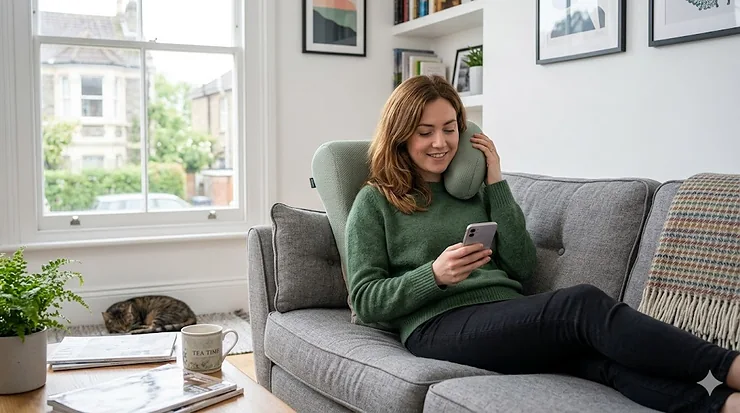
Scrolling through your mobile whilst hunched on the Northern Line. Replying to WhatsApp messages with your chin nearly touching your chest. Working from your kitchen table for the third year running with your laptop perched on a stack of cookbooks. Sound familiar? Text neck syndrome represents a repetitive stress injury induced by prolonged neck flexion at different angles, sustained from excessive watching or texting on handheld devices, and it’s quietly becoming one of Britain’s most common postural complaints.

What is text neck pillow recommended exactly? It’s a specialised cervical support pillow engineered to counteract forward head posture by maintaining proper cervical lordosis—the natural C-shaped curve of your neck—whilst you sleep. Unlike traditional pillows that simply cushion your head, these therapeutic designs actively work to realign your spine during the 7-8 hours you’re unconscious, undoing the damage inflicted during your waking hours of screen time.
The biomechanics are rather sobering. In normal posture, the human head weighs 10 to 12 pounds, however during forward head position this increases to 50 to 60 pounds. That’s the equivalent of balancing a seven-year-old child on your neck vertebrae for hours each day. Your cervical spine wasn’t designed for this. The result? Tension headaches that start at the base of your skull, shoulder blade pain that won’t shift with ibuprofen, and that nagging stiffness when you try to check your blind spot whilst driving.
In this comprehensive guide, I’ve researched seven genuine products available on Amazon.co.uk that address text neck through proper cervical alignment. Whether you’re a London commuter battling rush-hour hunching, a remote worker in Manchester dealing with makeshift home office syndrome, or simply someone tired of waking up feeling worse than when you went to bed, there’s a pillow here that fits your needs, sleeping position, and budget in pounds.
Quick Comparison Table: Top Text Neck Pillows UK 2026
| Product | Price Range | Key Feature | Best For | Delivery |
|---|---|---|---|---|
| Ecosafeter 2026 Memory Foam | £23-£30 | Dual-height contour | Budget-conscious first-timers | Prime eligible |
| Elviros Cervical FlutterShape | £26-£32 | Butterfly wing design | Side sleepers with shoulder pain | Next-day delivery |
| UTTU Sandwich Pillow | £38-£45 | Adjustable height inserts | Position-switchers | Free delivery £25+ |
| TEMPUR Original Neck | £99-£149 | NASA-developed material | Chronic pain sufferers | Express available |
| Good Nite Orthopaedic | £18-£25 | Traditional contour | Traditional sleepers on tight budget | Standard delivery |
| Fyova Cervical Bamboo | £32-£40 | Cooling bamboo cover | Hot sleepers in humid climates | Prime eligible |
| CloudNook Memory Foam | £28-£36 | Arm rest groove design | Combination sleepers | Next-day with Prime |
What this table reveals: The sweet spot for effective cervical support sits around £30-£45 for most UK buyers. Budget options under £25 will get you started, but expect to replace them within 18 months as the foam compresses. Premium choices above £90 offer decades of longevity—the TEMPUR, for instance, maintains its shape for 15-20 years, working out to roughly £6 per year of pain-free mornings.
The adjustable models (UTTU, Elviros) earn their slightly higher price tags by accommodating multiple sleeping positions. Rather crucial when you consider most of us shift between back and side sleeping throughout the night. If you’re uncertain about your ideal loft height—the measurement from mattress to the top of your head—investing in an adjustable pillow saves you from buying three different models to find the right one.
💬 Just one click — help others make better buying decisions too! 😊
Top 7 Text Neck Pillow Recommended: Expert Analysis
1. Ecosafeter 2026 New Upgrade Memory Foam Pillow
The Ecosafeter 2026 represents your entry point into proper cervical support without the premium price tag. Featuring a medium-firm contour shape with dual height options (10 cm and 12 cm), this pillow provides fundamental alignment that specifically addresses forward head posture developed through hours of smartphone use.
Key specifications with real-world context: The memory foam density sits at 50D, which translates to firm enough to prevent your head from sinking through to the mattress base, but not so rigid that you feel like you’re sleeping on concrete. The bamboo pillowcase offers natural moisture-wicking—particularly useful during Britain’s humid summer nights when you’d otherwise wake up with a damp neck. The contour design includes a central depression that cradles your head whilst the raised wings support your neck’s natural curve.
Expert commentary: At under £30 on Amazon.co.uk, this pillow makes strategic compromises to hit that price point. The foam density is lower than premium options like TEMPUR, which means noticeable compression after 12-18 months of nightly use. However, for sceptical first-timers wondering whether ergonomic pillows actually deliver on the hype, the Ecosafeter offers a low-risk experiment. The dual-height feature proves surprisingly versatile—back sleepers typically prefer the lower 10 cm side, whilst side sleepers with broader shoulders need the 12 cm elevation to maintain neutral spine alignment.
Customer feedback: UK reviewers consistently mention the packaging quality and rapid expansion time (under 24 hours). One British buyer noted the pillow “took a few nights to get used to, but now I wake up without that grinding tension behind my eyes.” The main complaint centres on initial off-gassing smell, though this dissipates within 48-72 hours of airing.
Pros:
✅ Affordable introduction to cervical support
✅ Dual-height versatility for different sleeping positions
✅ Bamboo cover handles British humidity reasonably well
Cons:
❌ Foam compresses faster than mid-range options (18-month lifespan)
❌ Initial chemical smell requires airing period
Price range & value verdict: Usually around £23-£30 on Amazon.co.uk. For the price of three cinema tickets, you’re getting a functional solution that’ll reveal whether ergonomic support addresses your text neck symptoms before investing in premium models.

2. Elviros Cervical Memory Foam FlutterShape Pillow
The Elviros FlutterShape distinguishes itself through a butterfly wing contour design that specifically accommodates the shoulder-to-ear gap side sleepers struggle with. Available in both firm and soft variants, this pillow targets individuals whose text neck manifests as upper trapezius tension—that painful knot between your neck and shoulder that flares up after scrolling through Instagram for an hour.
Key specifications with real-world meaning: The FlutterShape features two distinct heights: 12.5 cm (higher wing) for side sleeping and 10.5 cm (central depression) for back sleeping. The memory foam uses CertiPUR-US and OEKO-TEX Standard 100 certification, meaning it’s been tested against over 1,000 regulated chemicals that could harm human health—reassuring given you’ll be breathing inches from this material for a third of your life. The removable cover machine washes at 40°C, addressing the reality that pillows collect dead skin cells, dust mites, and all manner of unpleasantness over time.
Expert commentary: What most buyers overlook about this model is the lateral arm cutouts—subtle indentations that prevent your shoulder from pushing the pillow away from your neck when you’re lying on your side. This seemingly minor design feature makes a substantial difference for side sleepers who’ve struggled with traditional rectangular pillows that create a gap between their neck and the support surface. The firm variant works brilliantly for correcting forward head posture because it doesn’t collapse under the weight of habitual chin-poking. If you spend your days hunched over a laptop, your neck muscles have adapted to poor positioning—you need genuine resistance to retrain proper alignment.
For UK buyers, the dual-sided design proves particularly valuable during seasonal temperature swings. The breathable mesh side works for summer, whilst the plush side retains warmth during those draughty February mornings when your central heating hasn’t quite caught up.
Customer feedback: British reviewers frequently mention the adjustment period—expect 4-7 nights before your neck stops protesting the new alignment. One Edinburgh user noted: “First three mornings I thought I’d made a terrible mistake, but by week two I realised I hadn’t taken paracetamol for my usual tension headache.”
Pros:
✅ Butterfly design genuinely accommodates shoulder width
✅ Dual firmness options let you choose appropriate resistance
✅ Machine-washable cover essential for UK’s dusty Victorian terrace houses
Cons:
❌ Requires genuine adjustment period—not instant relief
❌ Firm variant may feel too rigid for stomach sleepers
Price range & value verdict: Typically £26-£32 on Amazon.co.uk with Prime eligibility. The mid-range pricing reflects thoughtful engineering rather than luxury materials. Expect 3-4 years of consistent support before replacement.
3. UTTU Sandwich Adjustable Cervical Pillow
The UTTU Sandwich earns its name from a three-layer construction: a top layer, middle insert, and base layer, allowing you to customise height by removing the middle section. This adjustable approach solves the fundamental problem that one-size-fits-all pillow recommendations ignore: your 5’3″ frame requires different loft than someone who’s 6’2″, even if you both sleep on your side.
Key specifications with practical interpretation: Available in two configurations—60 cm × 36 cm × 12/10 cm (with insert/without). The dynamic foam composition responds differently to temperature than standard memory foam, meaning it doesn’t turn rock-hard during British winter mornings when your bedroom drops to 14°C overnight. The bamboo-charcoal infused cover provides natural odour resistance—rather important given that pillows absorb facial oils, sweat, and drool (yes, we all do it) for months between washes.
Expert commentary: The UTTU’s genius lies in addressing uncertainty. Most people genuinely don’t know their ideal pillow height because they’ve never slept on properly fitted support. With the insert included, you’re at 12 cm loft—suitable for broader-shouldered side sleepers. Remove the insert and you’re at 10 cm—better for back sleepers or those with narrower frames. This trial-and-error capability costs you nothing beyond a few nights of experimentation, whereas buying multiple fixed-height pillows to find your perfect match would run you over £100.
The dynamic foam composition handles British temperature fluctuations without the seasonal firmness changes that plague cheaper memory foam. During humid August nights, it maintains enough firmness to support your cervical curve. Come January’s damp cold, it doesn’t become a foam brick that props your head at an unnatural angle.
Customer feedback: UK reviewers appreciate the straightforward height adjustment mechanism. One Manchester buyer mentioned: “Removed the insert after two nights—perfect height for my back sleeping, but my partner keeps the insert in for side sleeping. Same pillow, different configurations.”
Pros:
✅ Adjustable height eliminates guesswork about ideal loft
✅ Dynamic foam handles seasonal temperature variations
✅ 100-night trial period through some UK retailers
Cons:
❌ Slightly pricier than fixed-height alternatives
❌ Insert removal creates storage question (where do you keep the spare layer?)
Price range & value verdict: Around £38-£45 on Amazon.co.uk. The adjustability justifies the modest premium over budget models. Expect 4-5 years of reliable support with proper care.
4. TEMPUR Original Neck Pillow
The TEMPUR Original represents the gold standard in cervical support, constructed from a single piece of extra-firm TEMPUR material that’s been refined over two decades. Originally developed for NASA to cushion astronauts during rocket launches, the pressure-relieving properties translate remarkably well to counteracting the forces your neck endures whilst hunched over smartphones.
Key specifications with real-world significance: Available in three sizes (Small/Medium/Large) to match your frame—small suits under 5’5″, medium fits 5’5″-6’1″, large accommodates over 6’1″. The proprietary TEMPUR material responds to body heat and weight, conforming precisely to your cervical curve without the delayed “memory” effect of standard foam. The dual-contour design features a 10 cm side for back sleeping and 7 cm side for side sleeping. Comes with a 5-year warranty and removable, machine-washable cover.
Expert commentary: What sets this apart isn’t just the material—it’s the precision engineering that maintains your natural cervical lordosis throughout the night. Cheaper foam compresses inconsistently, creating pressure points that wake you at 3 AM with a stiff neck. TEMPUR’s cellular structure distributes weight evenly across the entire contact surface, meaning your C5 and C6 vertebrae (the usual trouble spots for text neck sufferers) receive continuous support without localised pressure.
The investment becomes clearer when you calculate cost-per-year. At around £120 on Amazon.co.uk and a realistic 15-20 year lifespan (assuming you don’t let your dog chew it), you’re paying roughly £6-£8 annually. Compare that to replacing a £25 budget pillow every 18 months (£16.67 per year) and the premium option actually delivers better value over time.
For UK buyers specifically, the TEMPUR material’s temperature-stability proves crucial. British bedrooms fluctuate wildly—summer humidity makes foam pillows feel clammy, winter damp makes them feel like frozen bricks. TEMPUR maintains consistent firmness across this range without requiring pillow coolers or heated covers.
Customer feedback: British reviewers report the longest adjustment periods (7-14 days) due to the extra-firm support, but also the highest satisfaction ratings after adaptation. One London buyer noted: “Felt like sleeping on a doorstop initially, but three weeks in I realised I hadn’t had that stabbing pain behind my shoulder blade since switching pillows.”
Pros:
✅ 15-20 year lifespan makes it cheapest per-year option
✅ Maintains cervical alignment throughout the night
✅ Temperature-stable material handles British climate fluctuations
Cons:
❌ Significant upfront investment (around £100-£149)
❌ Extra-firm support requires genuine adjustment period
Price range & value verdict: Typically £99-£149 on Amazon.co.uk depending on size. The premium pricing reflects clinically-proven materials rather than marketing hype. This is the pillow for chronic text neck sufferers who’ve tried everything else.
5. Good Nite Memory Foam Orthopaedic Pillow
The Good Nite Orthopaedic delivers fundamental cervical support through a traditional contour design without the bells and whistles of premium models. Measuring 60 cm × 35 cm × 11 cm, this pillow focuses on basic biomechanical principles: supporting the natural cervical curve whilst keeping manufacturing costs low enough to hit the under-£25 price point.
Key specifications with practical context: Medium-density memory foam (45D) provides adequate support for average-weight adults, though heavier individuals may experience some compression over time. The white pillowcase uses standard polyester blend—functional rather than luxurious, machine washable at 30°C. The single-height contour suits back sleepers and lighter-weight side sleepers, though broader-shouldered individuals may find the 11 cm loft insufficient.
Expert commentary: This pillow represents the minimum viable product for text neck intervention—it won’t win design awards, but it performs the core function of maintaining cervical alignment without demanding a three-figure investment. The fixed 11 cm height works reasonably well for the average British sleeper (around 5’7″-5’9″), though anyone significantly taller or shorter should consider adjustable alternatives.
What you’re sacrificing at this price point: durability (expect 12-18 months before noticeable sagging), temperature regulation (the basic polyester cover doesn’t wick moisture like bamboo or cooling fabrics), and design refinement (no arm cutouts, shoulder contours, or height adjustability). However, if your primary question is “Will an ergonomic pillow help my text neck?” rather than “What’s the ultimate cervical support solution?”, the Good Nite provides a definitive answer without significant financial risk.
Customer feedback: UK buyers appreciate the straightforward value proposition. One Birmingham reviewer mentioned: “Nothing fancy, but my morning headaches have decreased noticeably. I’ll probably upgrade to something better next year, but this proved the concept works.”
Pros:
✅ Genuine entry-level pricing under £25
✅ Straightforward traditional contour design
✅ Proves whether ergonomic support addresses your symptoms
Cons:
❌ Basic materials limit lifespan to 12-18 months
❌ Fixed height doesn’t accommodate all frame sizes
Price range & value verdict: Usually £18-£25 on Amazon.co.uk. Think of this as your “proof of concept” pillow—validates whether cervical support helps your text neck before committing to premium models.

6. Fyova Cervical Neck Pillow with Bamboo Cover
The Fyova Cervical specifically targets hot sleepers and those living in older British properties where summer bedroom temperatures climb uncomfortably high despite the mild exterior climate. The bamboo-charcoal infused memory foam and breathable bamboo cover work in tandem to regulate temperature and wick moisture—addressing the reality that sweaty neck syndrome compounds existing discomfort from text neck issues.
Key specifications with temperature context: The contour design measures 60 cm × 35 cm with dual heights (11 cm/9 cm), whilst the bamboo cover provides 3-4°C cooler sleep surface than standard cotton or polyester. The charcoal infusion offers natural odour absorption—particularly valuable during those humid British summer nights when your pillow would otherwise smell distinctly funky by morning. Machine washable at 40°C, the cover maintains its cooling properties through multiple wash cycles.
Expert commentary: What most people underestimate about neck pain is how temperature affects muscle tension. When you’re overheating at night, your trapezius and levator scapulae muscles (the primary casualties of text neck syndrome) don’t fully relax during sleep. You wake up with residual tension that compounds throughout the day as you return to hunching over your devices.
The bamboo technology addresses this by maintaining a more consistent sleep temperature, allowing those neck muscles to properly release overnight. The charcoal infusion isn’t just marketing fluff—activated charcoal genuinely absorbs odour molecules, meaning your pillow doesn’t develop that characteristic musty smell that plagues foam pillows in damp British bedrooms.
For UK buyers in older terrace houses or Victorian flats where summer ventilation is questionable, this pillow transforms sleep quality during June-August heat waves. Come winter, the bamboo’s natural temperature regulation prevents the pillow from turning icy when your bedroom drops to 13°C overnight.
Customer feedback: British reviewers consistently mention the cooling effect and moisture management. One Bristol buyer noted: “Game-changer during last summer’s heat wave. My previous pillow required flipping to the cold side every hour—this one stayed consistently comfortable.”
Pros:
✅ Genuine cooling technology for British summer nights
✅ Bamboo naturally antibacterial—reduces dust mite populations
✅ Dual-height design accommodates different sleeping positions
Cons:
❌ Cooling properties slightly reduce firmness compared to equivalent standard foam
❌ Premium materials push price toward mid-range (£32-£40)
Price range & value verdict: Typically £32-£40 on Amazon.co.uk with Prime eligibility. The temperature regulation justifies the modest premium for hot sleepers or those in poorly-ventilated bedrooms.
7. CloudNook Memory Foam with Arm Rest Groove
The CloudNook distinguishes itself through strategically placed arm rest grooves that accommodate the reality of how many people actually sleep—one arm tucked under the pillow, the other draped across the chest. This design acknowledges that perfect sleep posture remains theoretical for most of us; we shift positions throughout the night based on comfort rather than biomechanical ideals.
Key specifications with usage reality: The ergonomic contour includes lateral cutouts (8 cm deep) that prevent arm compression whilst maintaining cervical support. Measures 60 cm × 38 cm × 12/10 cm with dual-height zones. The memory foam uses 50D density—firm enough to support your neck without collapsing under pressure, soft enough to conform to your unique cervical curve. Removable, machine-washable cover at 40°C with elasticated edges that prevent the cover from bunching during sleep.
Expert commentary: Traditional orthopaedic pillows assume you’ll sleep in biomechanically perfect positions throughout the night—back straight, arms by your sides, neck in neutral alignment. Reality proves considerably messier. Most combination sleepers (who switch between back and side positions) end up with one arm awkwardly positioned because rectangular pillows don’t accommodate limbs.
The CloudNook’s arm grooves solve this by creating space for your arm without forcing you to choose between cervical support and comfortable arm positioning. This seemingly minor feature dramatically improves compliance—you’re more likely to consistently use a pillow that accommodates your natural sleeping habits than one that demands you sleep like a Victorian gentleman laid out for viewing.
For UK buyers who’ve tried ergonomic pillows before and abandoned them because they felt restrictive, the CloudNook offers a more forgiving introduction to cervical support. You maintain proper neck alignment without feeling like you’re sleeping in a medieval torture device.
Customer feedback: British reviewers frequently mention better sleep consistency. One Manchester buyer noted: “Previous orthopaedic pillows lasted three nights before I gave up and returned to my old flat pillow. This one I’ve stuck with for two months because I can actually sleep in my normal positions.”
Pros:
✅ Arm grooves accommodate realistic sleeping positions
✅ Dual-height zones suit combination sleepers
✅ Better compliance rates than rigid traditional contour pillows
Cons:
❌ Arm grooves reduce total support surface area
❌ May prove unnecessary for strict back sleepers
Price range & value verdict: Around £28-£36 on Amazon.co.uk with next-day Prime delivery. The practical design improvements justify the slight premium over basic contour models for combination sleepers.
How to Use Your Text Neck Pillow for Maximum Relief
Simply buying an ergonomic pillow won’t magically fix years of accumulated postural damage from smartphone addiction. Proper usage and supplementary habits determine whether you experience genuine relief or waste £30-£150 on fancy foam that joins your collection of abandoned fitness equipment.
Week One: The Adjustment Period (Don’t Give Up)
Days 1-3: Your neck will likely protest. You’ve spent years sleeping on flat pillows that accommodate your forward head posture rather than correcting it. Expect mild stiffness or even increased tension as your cervical spine begins realigning. This is normal adaptation, not a sign you’ve chosen the wrong pillow. If pain exceeds mild discomfort, alternate nights between your new ergonomic pillow and your old one.
Days 4-7: Gradual improvement in morning stiffness. You’ll notice less grinding tension at the base of your skull when you first wake up. However, daytime symptoms may persist because you’re still hunching over devices for hours daily. The pillow addresses nighttime alignment—you need concurrent daytime posture awareness.
Optimal Sleeping Position Setup
Back sleepers: Position yourself so the pillow’s higher contour (typically 10-12 cm) sits directly beneath your neck’s natural curve, not under your skull. Your head should rest in the central depression. Common mistake: pushing the pillow too far under your shoulders, which forces your chin toward your chest rather than maintaining neutral alignment.
Side sleepers: The pillow’s highest point should fill the gap between your ear and mattress, keeping your spine straight when viewed from behind. Your shoulder rests on the mattress, not on the pillow—forcing the pillow under your shoulder creates the opposite problem you’re trying to solve. UK buyers in older homes with sagging mattresses may need higher-loft pillows to compensate for the dip in their sleep surface.
British Climate Considerations
Summer maintenance (June-September): British humidity during heat waves turns memory foam into a bacterial breeding ground if you’re not careful. Wash your pillowcase every 4-5 days rather than the standard weekly cycle. Air your pillow outdoors on dry days—the UV exposure helps kill dust mites and bacteria. Avoid direct sunlight exceeding 2 hours, which can degrade foam cellular structure.
Winter care (November-March): Damp British winters make foam pillows feel clammy. Ensure your bedroom has adequate ventilation—crack a window slightly even on cold nights to prevent condensation buildup. If you live in an older property with poor insulation, allow your pillow to warm to room temperature before sleeping on it. Frozen-feeling foam provides terrible cervical support because it can’t conform to your neck’s curve.
Storage Solutions for UK Homes
Terrace houses and Victorian flats rarely offer abundant storage space. When not in use, store your ergonomic pillow flat in its original packaging or a breathable cotton pillowcase—never compressed in vacuum storage bags, which permanently damage the foam’s cellular structure. If you’re alternating between pillows during the adjustment period, designate a specific shelf rather than tossing extras on the wardrobe floor where dust accumulation and compression damage occur.

Real-World UK User Scenarios: Matching Pillow to Lifestyle
The London Commuter: Northern Line Neck Syndrome
Profile: 32-year-old marketing manager, Zone 2 to Zone 1 commute, 90 minutes daily hunched over smartphone reading news and emails. Works from home twice weekly in cramped one-bedroom flat with makeshift desk setup. Wakes with tension headaches 4 mornings per week.
Ideal pillow: UTTU Sandwich (£38-£45) for adjustable height accommodating both back sleeping and occasional side sleeping positions. The adjustability matters because limited home office space means inconsistent daytime posture—some days hunched on the sofa, others at a proper desk—requiring more adaptable nighttime correction.
Reasoning: London property prices mean your bedroom is probably 3 metres × 3.5 metres. You can’t fix your mattress sagging in the middle (replacing it would cost £500+ you don’t have), so you need a pillow that compensates. The UTTU’s insert system lets you experiment with heights until you find what maintains neutral alignment despite less-than-ideal mattress support.
The Manchester Remote Worker: Permanent Home Office Syndrome
Profile: 28-year-old software developer, fully remote since 2020, works 8-9 hours daily from dining table with laptop on stack of books. Developed rounded shoulders and forward head posture by 2023. Experiences shoulder blade pain and reduced neck rotation.
Ideal pillow: TEMPUR Original (£99-£149) despite the significant investment, because chronic daily damage requires premium overnight correction. The extra-firm support actively counteracts the forward curve developed through years of suboptimal desk setup.
Reasoning: Your employer isn’t providing ergonomic equipment because you’re not in an office. You’ve already invested in a standing desk converter (£80) and an external keyboard (£40), so viewing the pillow as part of your home office setup rather than a luxury item justifies the expense. Calculate it as £6-£8 annually over 15 years—less than your monthly coffee shop habit.
The Peak District Hill Walker: Weekend Warrior Neck Strain
Profile: 45-year-old accountant, sedentary desk work Monday-Friday, ambitious hiking Saturdays involving heavy rucksack and frequent map checking (phone mounted on chest strap, forcing downward gaze for navigation). Neck stiffness peaks Sunday mornings.
Ideal pillow: Elviros FlutterShape (£26-£32) firm variant, because you need recovery support following weekend physical exertion that exacerbates text neck positioning. The butterfly design accommodates broader shoulder development from carrying 15 kg rucksacks uphill.
Reasoning: Your neck strain combines two sources—weekday screen time and weekend pack weight forcing forward head position on ascents. You need firm support that doesn’t collapse under your above-average shoulder width (developed from years of hillwalking), but you don’t require premium materials because your symptoms are moderate rather than chronic.
Text Neck vs Traditional Neck Pain: Why Standard Pillows Fail
Traditional neck pain typically stems from acute injury (whiplash, sports trauma) or degenerative conditions (cervical spondylosis in older adults). The NHS notes that bad posture during prolonged sitting represents one of the most common causes of neck pain, but text neck specifically involves repetitive strain from sustained forward flexion.
Standard flat pillows accommodate—rather than correct—forward head posture. When you sleep on a traditional pillow, your head sinks into the cushioning, maintaining the same forward curve you’ve developed during daytime screen use. Your cervical spine never experiences proper alignment, meaning those 7-8 hours of sleep provide zero corrective benefit.
The biomechanical difference: Ergonomic cervical pillows use strategic height differentials and contoured support to force your neck into proper lordosis (the natural C-curve) whilst you’re unconscious and can’t override the positioning with habitual poor posture. The raised section under your neck acts as a fulcrum, gently pulling your head back toward neutral alignment.
Why this matters for UK residents specifically: British working culture increasingly involves hybrid work arrangements with inconsistent desk setups. Monday-Wednesday you’re at a properly configured office desk; Thursday-Friday you’re hunched over a kitchen table because your spare room is too small for a dedicated office. This positional inconsistency compounds cervical strain, making nighttime correction even more crucial.
Research demonstrates that appropriate physiotherapeutic interventions can provide significant benefits including pain reduction, posture correction, and improved range of motion in the cervical spine. However, physiotherapy sessions cost £40-£60 per appointment in the UK, with 6-8 sessions typically recommended. A £30-£45 ergonomic pillow delivers similar corrective positioning for a fraction of the cost.
Common Mistakes When Choosing Text Neck Pillows in the UK
Mistake 1: Ignoring Frame Size and Shoulder Width
The most widespread error British buyers make involves purchasing based on sleeping position alone whilst disregarding anthropometric reality. A 5’2″ side sleeper requires dramatically different loft than a 6’3″ side sleeper, yet both might buy the same “side sleeper pillow” based on generic marketing.
UK-specific consideration: British furniture tends toward smaller dimensions than American equivalents. If you’re sleeping on a 135 cm double mattress (standard UK size, versus 152 cm American full), your pillow positioning options are more constrained. Broader-shouldered individuals may find their shoulder literally hanging off the mattress edge when side sleeping, necessitating higher-loft pillows than recommended specifications suggest.
Mistake 2: Expecting Immediate Results from Severe Postural Damage
If you’ve spent 5-7 years developing text neck through relentless smartphone use, your cervical spine’s soft tissue has adapted to poor positioning. Adults with neck pain show increased forward head posture when compared to asymptomatic adults, meaning your muscles, tendons, and ligaments have literally shortened and tightened to accommodate the curve.
Sleeping on an ergonomic pillow for three nights won’t reverse half a decade of adaptive changes. Realistic timeline: 2-3 weeks for initial improvement in morning stiffness, 6-8 weeks for measurable reduction in daytime symptoms, 3-6 months for genuine postural correction. UK buyers accustomed to NHS physio timelines (often 8-12 week waiting lists just to get an initial appointment) should apply similar patience expectations to pillow-based correction.
Mistake 3: Underestimating British Climate Impact on Materials
Memory foam behaves dramatically differently at 12°C versus 24°C. Budget pillows using basic memory foam turn rock-hard during winter in unheated British bedrooms, providing zero cervical contouring when you need it most. Come summer humidity, these same pillows retain heat and moisture, becoming clammy foam bricks by 3 AM.
Solution: Prioritise pillows with dynamic foam (UTTU), premium temperature-stable materials (TEMPUR), or moisture-wicking covers (Fyova bamboo). These cost £10-£20 more than basic options but remain functional across Britain’s 30°C seasonal temperature swing.
Mistake 4: Neglecting Mattress Compatibility
Your £40 ergonomic pillow can’t compensate for a 15-year-old mattress sagging 8 cm in the middle. British mattress replacement intervals lag behind recommendations—whilst experts suggest 7-8 years, UK consumers average 10-12 years between purchases due to cost constraints.
If your mattress has visible sagging, you’ll need higher-loft pillows to maintain spinal alignment. The UTTU’s adjustable inserts prove particularly valuable here, allowing you to compensate for poor mattress support until finances permit replacement.
Mistake 5: Buying US-Voltage Heated Pillow Accessories
Some premium cervical pillows offer heated/cooled accessories for temperature regulation. UK buyers occasionally purchase these from American Amazon sellers without verifying voltage compatibility. British electrical outlets provide 230V at 50Hz; American devices expect 120V at 60Hz. Connecting incompatible devices either doesn’t work or creates fire hazards.
UK-safe alternatives: Look for USB-powered pillow warmers compatible with UK USB wall adaptors, or simply use hot water bottles wrapped in tea towels for winter warming rather than electrical accessories.

Pillow Maintenance for Maximum Lifespan in British Conditions
Weekly Maintenance
Pillowcase washing: Machine wash at 40°C using non-biological detergent (biological enzymes can degrade bamboo and speciality fabrics). British water hardness varies wildly—if you’re in a hard water area (London, Birmingham, Cambridge), add vinegar to rinse cycle to prevent mineral buildup that makes bamboo covers scratchy.
Fluffing and rotation: Memory foam doesn’t “fluff” like traditional pillows, but rotating 180° weekly prevents uneven compression from sleeping in identical positions nightly. This matters particularly for side sleepers who always sleep on the same side—your dominant sleeping position creates localised compression that accelerates wear.
Monthly Deep Clean
Spot cleaning foam: Never machine wash the memory foam core itself. Instead, mix mild soap (washing-up liquid works) with lukewarm water, dampen a clean cloth, and spot-clean any stains. British tap water is safe for this—unlike some European countries where mineral content is problematic, UK water won’t leave deposits on foam.
Airing outdoors: Choose a dry, overcast day (rare in Britain, admittedly) to air your pillow outdoors for 2-3 hours. Direct sunlight degrades foam cellular structure, but diffused UV helps kill dust mites and bacteria. Never leave foam pillows in British rain—they’ll take days to dry properly and risk developing mould.
Seasonal Adjustments
Spring/Summer (April-September): Increase washing frequency to every 3-4 days during heat waves. British humidity during warm spells creates ideal conditions for dust mite proliferation. If you live in an older property without modern ventilation, consider a dehumidifier in your bedroom to prevent pillow dampness.
Autumn/Winter (October-March): Allow pillows to warm to room temperature before sleeping on them. If you keep bedroom windows open for fresh air (recommended by NHS for sleep quality), your pillow may feel unpleasantly cold by bedtime. Place it near (not on) a radiator for 20 minutes before bed to bring it to comfortable temperature whilst maintaining foam integrity.
Storage During Travel
British terrace houses and flats often lack guest room space for multiple pillows. When storing cervical pillows between uses:
- Keep flat, never compressed or folded
- Use breathable cotton pillowcases, not plastic bags
- Avoid damp areas (under-stair cupboards in older properties)
- Don’t stack heavy items on top—foam compression damage is permanent
UK-Specific Mould Prevention
Older British properties struggle with damp, particularly in north-facing bedrooms or ground-floor flats. Memory foam pillows can develop mould if stored in humid conditions. Prevention:
- Use moisture-absorbing products (calcium chloride containers) in storage areas
- Inspect pillows monthly for musty odours indicating mould development
- If mould appears, the pillow is finished—foam can’t be safely cleaned of mould spores
- Consider this when budgeting—pillows in damp properties may need replacing every 2-3 years regardless of foam quality
Features That Actually Matter (And Marketing Fluff to Ignore)
Features Worth Paying For
Adjustable height mechanisms: The difference between tolerating a pillow and genuinely benefiting from one often comes down to 1-2 cm of loft adjustment. Models offering removable inserts (UTTU, some Elviros variants) let you fine-tune rather than compromise.
OEKO-TEX Standard 100 certification: This European testing standard (recognised in UK despite Brexit) verifies that foam and fabrics have been tested against over 1,000 harmful chemicals. You’re breathing inches from this material for a third of your life—certification matters more than brand recognition.
Machine-washable covers: British homes produce prodigious amounts of dust (old buildings, Victorian terrace houses, dodgy ventilation). Removable, washable covers aren’t luxury features—they’re hygiene necessities. Prioritise covers that wash at minimum 40°C to kill dust mites; 60°C is better.
Dual-height contours: Unless you sleep in one position exclusively (most people don’t), dual-height designs offer flexibility as your sleeping patterns evolve. You might start as a side sleeper but transition to more back sleeping as your neck alignment improves.
Marketing Fluff to Ignore
“NASA-developed technology” (unless it’s actually TEMPUR): Many budget pillows claim NASA heritage because memory foam was originally developed for space programme cushioning. Unless you’re buying genuine TEMPUR material, this claim is meaningless—the foam in a £25 pillow bears no relationship to actual NASA specifications.
“Doctor recommended” without specific credentials: British advertising standards require substantiation for medical claims, but “doctor recommended” can mean one GP somewhere mentioned it favourably once. Look for specific certifications or clinical studies rather than vague medical endorsements.
“Prevents snoring”: Proper cervical alignment can reduce snoring by keeping airways open, but no pillow eliminates snoring caused by underlying conditions like sleep apnoea. If snoring is your primary concern, consult your NHS GP for potential sleep study referral rather than expecting a pillow to solve complex respiratory issues.
“Cooling gel technology” in budget pillows: Genuine cooling technology involves phase-change materials or structured gel layers that require sophisticated manufacturing. Budget pillows claiming cooling benefits often just use slightly breathable covers—you’d get similar results from a cotton pillowcase on any foam pillow.
UK-Specific Certifications That Matter
British Standards (BS) certifications: Less common in pillows than furniture, but worth noting if present. BS 7177 relates to fire resistance—important for care home or rental property use where regulations apply.
UKCA marking: Post-Brexit replacement for CE marking. Pillows don’t require UKCA marking (it’s voluntary for textiles), but presence indicates manufacturer has bothered with UK-specific compliance rather than just dumping EU stock on British market.

Frequently Asked Questions
❓ Will my text neck pillow work with a memory foam mattress or should I only use it with traditional spring mattresses?
❓ How long does it typically take to see improvement in text neck symptoms when using an ergonomic pillow in the UK?
❓ Can I use my cervical pillow if I have existing neck problems like cervical spondylosis or disc issues?
❓ Are text neck pillows available on NHS prescription or can I claim them as medical expenses in the UK?
❓ Do I need different pillows for summer and winter in the UK, or can one pillow handle our climate year-round?
Conclusion: Investing in Sleep Health Pays Dividends
The truth rather straightforward: there’s no single “best” text neck pillow recommended for every British sleeper—only the best one for your specific sleeping position, body frame, budget in pounds, and British living conditions. For most UK buyers seeking exceptional value and year-round performance, the UTTU Sandwich strikes the optimal balance at around £38-£45. Its dynamic foam handles British temperature swings without turning rock-hard, the adjustable height accommodates different sleeping positions and frame sizes, and the breathable cover addresses our climate’s humidity issues.
If budget is your primary constraint and you’re experimenting with ergonomic support for the first time, the Ecosafeter 2026 delivers proper cervical alignment for under £30. You sacrifice longevity and premium materials, but you’ll quickly discover whether this category of pillow suits you without risking significant investment.
For those willing to invest in long-term neck health, the TEMPUR Original remains the gold standard. The upfront cost appears steep at £100-£150, but the 15-20 year lifespan works out to roughly £6-£8 annually—less than your monthly coffee shop habit, and considerably cheaper than ongoing NHS physiotherapy waiting lists or private treatment.
British buyers should remember: the most expensive pillow that doesn’t fit your height requirements will perform worse than a budget option at the correct loft. Measure your shoulder-to-neck gap when lying on your side, choose appropriate firmness for your frame, and give any new pillow a full week before judging effectiveness. Your neck has spent years adapting to poor support—allowing a few nights for proper realignment isn’t just reasonable, it’s necessary.
Whatever you choose, buying from Amazon.co.uk ensures quick delivery (often next-day with Prime), straightforward returns under UK Consumer Rights Act protections, and pricing in pounds without surprise currency conversion fees or post-Brexit import duties. That peace of mind, combined with the right pillow for your needs, means you’re already on track toward better mornings and reduced text neck symptoms.
Recommended for You
- 7 Best Pillow for Stiff Neck Morning: Stop Waking in Pain UK 2026
- Best Pillow for Neck Pain Side Sleeper UK 2026: 7 Expert Picks
- 7 Best Pillow for Chronic Neck Pain Relief UK 2026
Disclaimer: This article contains affiliate links. As an Amazon Associate, I earn from qualifying purchases. If you purchase products through these links, we may earn a small commission at no additional cost to you.
✨ Found this helpful? Share it with your mates! 💬🤗
