
In This Article
If you’ve been waking up with that familiar ache radiating from your neck down to your shoulders for months—or worse, years—you already know that chronic neck pain isn’t just uncomfortable. It’s exhausting. According to NHS research, two out of three people in the UK will experience neck pain at some point in their lives, and for roughly 15-20% of sufferers, this transforms from an occasional nuisance into persistent discomfort that affects sleep, work productivity, and daily activities.

The pillow you’re sleeping on right now might be making things worse. What most people don’t realise is that the wrong pillow doesn’t just fail to support your cervical spine—it actively misaligns it, creating a cascade of tension that compounds throughout the night. After eight hours of poor positioning, your muscles have been working overtime trying to compensate, which is why you wake feeling worse than when you went to bed. The good news? A properly designed pillow for chronic neck pain can interrupt this cycle, supporting your neck’s natural curvature and allowing those overworked muscles to actually rest.
In this expert analysis, I’ve researched and evaluated the best therapeutic pillows available on Amazon.co.uk in 2026, focusing specifically on products proven to address long-term neck pain—not just general discomfort. You’ll find detailed assessments of memory foam cervical pillows, adjustable orthopedic options, and cooling designs that work in Britain’s damp climate, along with practical guidance on matching each pillow to your specific sleep position, pain pattern, and budget in pounds.
Quick Comparison: Top Pillows at a Glance
| Pillow | Best For | Key Feature | Price Range |
|---|---|---|---|
| UTTU Sandwich Pillow | Adjustability seekers | Removable layer (2 height options) | £35-£45 |
| Ecosafeter 2026 Upgrade | Budget-conscious buyers | Dual-height contour design | £20-£25 |
| Elviros Cervical Memory Foam | Side sleepers | Deep ergonomic contours | £30-£40 |
| Good Nite Orthopaedic | Back sleepers | Medium-firm cervical support | £25-£35 |
| WENGX Luxury Memory Foam | Premium seekers | High-density foam with cooling | £40-£55 |
| Hydomi with Armrest | Combination sleepers | Unique armrest design | £30-£40 |
| Fyova Odourless Cervical | Sensitive noses | Chemical-free, ventilated foam | £25-£35 |
💬 Just one click — help others make better buying decisions too! 😊
Top 7 Pillows for Chronic Neck Pain: Expert Analysis
1. UTTU Sandwich Pillow — Best Adjustable Option
The UTTU Sandwich Pillow takes its name from its three-layer construction: a removable middle section that lets you switch between two distinct height profiles. In its full configuration, you get 12 cm (high side) and 10 cm (low side); remove the middle layer and you’re down to 8.9 cm and 7.1 cm respectively. This isn’t a gimmick—when you’re managing chronic neck pain, the difference between 8 cm and 12 cm can mean the gap between waking up refreshed or nursing a tension headache all morning.
The pillow uses UTTU Dynamic Foam, which the company claims maintains consistent firmness even in cold British winters—a relevant consideration for anyone who’s experienced that rock-hard memory foam effect when the heating’s off. What’s genuinely useful about this foam is its responsiveness: it contours to your neck without the “sinking into quicksand” sensation that makes repositioning during the night feel like hard work. UK reviewers consistently mention that unlike some memory foam pillows, this one doesn’t trap heat excessively, though you’ll still notice warmth in July and August.
The bamboo-blend cover (40% bamboo viscose, 60% polyester) is machine washable, and it’s OEKO-TEX Standard 100 certified, meaning it’s been tested for harmful chemicals—a reassurance if you’re sensitive to off-gassing. The pillow measures 60 cm × 35.6 cm, fitting standard UK pillowcases comfortably. What sets this apart for chronic pain sufferers is the customisation element: you can experiment with different configurations over your first few weeks, then settle on the height that keeps your cervical spine aligned without forcing your head into an unnatural position.
UK customer feedback highlights that the pillow requires a 2-3 night adjustment period—your neck muscles need time to stop compensating and start relaxing into proper alignment. Several reviewers mention reduced morning stiffness after the first week, though one noted that removing the middle layer was essential for their slipped disc condition. The adjustment period is normal and actually indicates your body is adapting to healthier positioning.
Pros:
✅ True height adjustability via removable layer—not just marketing fluff
✅ UTTU Dynamic Foam maintains support in cold British weather
✅ Fits standard UK pillowcases (60 cm × 35.6 cm)
Cons:
❌ Requires 2-3 night break-in period—not instant relief
❌ At around £40, pricier than single-contour alternatives
Price & Value: In the £35-£45 range on Amazon.co.uk, typically with Prime eligibility. Worth the investment if you’ve already cycled through cheaper pillows without finding relief—the adjustability means you’re getting two pillows in one, which justifies the cost when you consider the alternative is buying multiple options to trial.

2. Ecosafeter 2026 Upgrade Memory Foam Pillow — Best Budget Pick
The Ecosafeter 2026 Upgrade proves you don’t need to spend £60 to get proper cervical contouring. At around £20-£25, this pillow delivers a dual-height ergonomic design (high contour for side sleeping, low contour for back sleeping) wrapped in a bamboo cover that’s surprisingly soft for the price point. The memory foam density is noticeably lighter than premium options, which means it compresses more readily under weight—but for many chronic pain sufferers on a tighter budget, this is still leagues better than the shapeless synthetic pillows from the high street.
What you’re getting here is a straightforward cervical pillow: a butterfly-wing shape with a central dip for your head and raised contours to support your neck. The foam conforms to your cervical curve but doesn’t provide the same resistance as higher-density options—think of it as gentle guidance rather than firm scaffolding. This can actually work well if your pain is exacerbated by overly rigid support, though it may not be substantial enough for larger frames or those who need aggressive realignment.
The cooling bamboo cover is machine washable and breathable enough for mild British summers, though you’ll notice some heat retention during particularly muggy nights. The pillow is OEKO-TEX certified, so it meets safety standards for chemical emissions. Dimensions are standard (approximately 60 cm × 35 cm), fitting most UK pillowcases without bunching.
UK reviewers on Amazon.co.uk frequently mention that this pillow is ideal for trialling the cervical pillow concept before committing to pricier models. Several noted that while it didn’t completely eliminate chronic pain, it reduced morning stiffness enough to justify keeping it as a travel pillow or guest bedroom option. The foam does compress over 6-12 months more noticeably than premium alternatives, but at this price, replacement isn’t a financial burden.
Pros:
✅ Genuinely affordable (£20-£25) without sacrificing basic cervical support
✅ Lightweight and easy to move around for adjusting sleep position
✅ OEKO-TEX certified—safe for sensitive skin
Cons:
❌ Lower foam density means less support for larger frames or severe misalignment
❌ Compresses more quickly than premium options—expect 8-12 month lifespan
Price & Value: Around £20-£25 on Amazon.co.uk with free delivery on orders over £25 (or next-day for Prime members). Excellent entry point for budget-conscious buyers or those sceptical about whether a cervical pillow will actually make a difference. Consider this your “test drive” before upgrading if it helps but you want more support.
3. Elviros Cervical Memory Foam Neck Pillow — Best for Side Sleepers
The Elviros Cervical Memory Foam pillow features deeper ergonomic contours specifically designed to accommodate the shoulder-to-head gap that side sleepers create when lying down. Unlike flatter cervical pillows that work better for back sleepers, this one has a pronounced raised edge that keeps your head elevated enough to maintain spinal alignment without cranking your neck into an awkward angle. For chronic neck pain sufferers who predominantly sleep on their side, this design addresses one of the most common misalignment issues: insufficient pillow height leading to lateral neck compression.
The memory foam is certified CertiPUR-US (indicating low VOC emissions and no harmful chemicals) and maintains good shape retention even after months of use. The contours are firmer than the Ecosafeter but not as aggressively supportive as some orthopedic hospital-grade pillows—there’s enough give to feel comfortable while still providing meaningful cervical support. The white polyester cover is removable and machine washable, though it’s not as breathable as bamboo alternatives, so expect some warmth buildup during summer months.
What UK buyers should note: this pillow is particularly effective if your chronic neck pain stems from years of side sleeping on inadequate support. The elevated contour fills that crucial gap between your shoulder and head, preventing the lateral tilting that causes muscle strain. However, if you switch positions frequently during the night (side to back to stomach), you may find the deep contours restrictive—this is a pillow optimised for committed side sleepers.
Amazon.co.uk reviews from British customers highlight improved shoulder and neck alignment, with several mentioning reduced “morning crick” after the first week. A few reviewers noted that the pillow feels quite firm initially but softens slightly after 2-3 weeks of breaking in. The dimensions (approximately 60 cm × 35 cm) fit standard UK pillowcases.
Pros:
✅ Deep contours specifically engineered for side sleepers—genuinely accommodates shoulder width
✅ CertiPUR-US certified foam—low chemical emissions
✅ Strong shape retention over 6+ months of use
Cons:
❌ Not versatile for combination sleepers—too contoured for comfortable back/stomach positioning
❌ Standard polyester cover less breathable than bamboo alternatives
Price & Value: Typically £30-£40 on Amazon.co.uk. Well worth it if you’re a dedicated side sleeper with chronic pain, but avoid if you frequently change positions overnight. The specialisation is both its strength and limitation.
4. Good Nite Orthopaedic Memory Foam Pillow — Best for Back Sleepers
The Good Nite Orthopaedic pillow is designed with a shallower cervical curve and medium-firm support that works specifically for back sleepers managing chronic neck pain. Unlike side-sleeper pillows with pronounced contours, this one features a gentler wave that cradles the natural lordotic curve of your cervical spine when you’re lying supine. The result is a pillow that supports without over-extending your neck—a common problem with thick pillows that push your chin toward your chest, creating the very tension you’re trying to eliminate.
The memory foam density strikes a balance between the budget Ecosafeter and premium options: supportive enough to maintain alignment but not so rigid that you feel locked into position. The pillow measures 60 cm × 35 cm and fits standard UK pillowcases without bunching. The white removable cover is machine washable, though it’s basic polyester rather than moisture-wicking bamboo, so expect some heat retention during warmer months. The foam is OEKO-TEX certified, meeting European safety standards for chemicals and emissions.
What makes this pillow particularly suitable for chronic back-sleeping neck pain sufferers is the moderate contour height. Many cervical pillows overdo the elevation, which is helpful for side sleepers but problematic for back sleepers who need subtler support. This one gets the geometry right: your head rests in the central dip while the raised edges support your neck without forcing it into hyperextension. British physiotherapists often recommend this profile for patients recovering from whiplash or managing cervical spondylosis (age-related spinal wear).
UK customer reviews on Amazon.co.uk mention noticeable reductions in morning headaches and neck stiffness, though several note that the pillow feels quite firm for the first few nights. This is normal for orthopedic memory foam—your neck muscles need time to stop bracing and start relaxing into proper alignment. One reviewer mentioned that pairing it with a thin standard pillow on top helped during the adjustment phase, then removing the extra pillow after a week.
Pros:
✅ Contour height optimised for back sleepers—doesn’t force chin-to-chest positioning
✅ Medium-firm support ideal for chronic pain without feeling punishingly rigid
✅ OEKO-TEX certified—meets European chemical safety standards
Cons:
❌ Basic polyester cover—less breathable than bamboo alternatives
❌ Too shallow for dedicated side sleepers—won’t fill shoulder-to-head gap
Price & Value: Around £25-£35 on Amazon.co.uk, often with Prime eligibility. Excellent value for back sleepers who’ve struggled with overly thick cervical pillows. If you wake up with a headache or find yourself sliding your hand under your pillow to lower it, this is worth trying.
5. WENGX Luxury Memory Foam Pillow — Premium Choice
The WENGX Luxury Memory Foam pillow sits at the higher end of the Amazon.co.uk cervical pillow market (£40-£55) and delivers on its premium positioning with genuinely high-density foam that holds its shape under consistent use. This isn’t the soft, squishy memory foam you’ll find in budget pillows—it’s firmer, more resilient foam that provides aggressive cervical support without bottoming out after a few months. For chronic neck pain sufferers who’ve cycled through cheaper options that compress too quickly, this pillow offers longevity that justifies the initial cost.
The ergonomic contour design features both raised and lowered sections to accommodate back, side, and stomach sleepers, though in practice it’s most effective for back and side sleeping. The foam is engineered with cooling gel infusion and ventilation channels to reduce heat buildup—a thoughtful feature for British summers when even moderate foam pillows can feel stifling. The white outer cover is removable and machine washable, constructed from a polyester blend that’s smooth rather than plush.
What sets this pillow apart for UK buyers managing long-term neck issues is the foam density. Higher-density memory foam doesn’t just feel firmer—it actually maintains therapeutic support over a longer lifespan. Cheaper pillows often start well but lose their contouring within 4-6 months as the foam breaks down; this one maintains meaningful cervical support for 12-18 months or more. The pillow dimensions (approximately 62 cm × 36 cm) are slightly larger than standard, which works well for broader-shouldered individuals.
Amazon.co.uk reviewers consistently praise the durability and cooling features, though several mention that the firmness takes 3-5 nights to adjust to—your neck muscles may actually feel more sore initially as they adapt to proper alignment after years of compensation. One British reviewer noted that the pillow performed well through damp autumn and winter conditions without developing the musty smell that can plague foam pillows in humid climates. The cooling gel genuinely makes a difference during July and August heat spells.
Pros:
✅ High-density foam maintains therapeutic support for 12-18+ months
✅ Cooling gel and ventilation channels reduce heat retention in British summers
✅ Larger dimensions (62 cm × 36 cm) suit broader frames
Cons:
❌ Premium pricing (£40-£55)—not for budget-conscious buyers
❌ Firm support requires 3-5 night adjustment period—expect initial soreness
Price & Value: In the £40-£55 range on Amazon.co.uk, usually with Prime delivery. The cost stings initially, but when you factor in the extended lifespan and consistent support quality, it’s competitive with buying two or three budget pillows over the same period. Invest here if you’ve confirmed that cervical pillows help your pain and you want one that won’t degrade within months.
6. Hydomi Orthopaedic Neck Pillow with Armrest — Best for Combination Sleepers
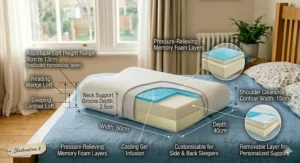
The Hydomi Orthopaedic pillow features an unusual design element: integrated armrest cutouts on the sides. This isn’t just marketing novelty—for combination sleepers who shift between side and stomach positions throughout the night, these cutouts provide a place for your arm to rest without forcing your shoulder into an awkward angle or creating pressure points. If you’ve ever woken up with a numb arm or shoulder ache from sleeping on it wrong, this design directly addresses that problem while still providing cervical support for chronic neck pain.
The memory foam construction includes adjustable height options: you can remove internal foam layers to customise the loft from approximately 11 cm down to 7 cm. This makes it genuinely versatile for different sleep positions—use the higher configuration for side sleeping, remove a layer for back sleeping, drop it further for stomach sleeping (though stomach sleeping is generally discouraged for chronic neck pain management). The foam is medium-firm, offering support without the rigid feel of hospital-grade orthopedic pillows.
The bamboo-blend cover is removable and machine washable, with decent breathability for British climates. The pillow maintains good shape retention over months of use, though the foam does soften slightly more than premium high-density options. What UK buyers should appreciate is the thought put into real-world sleep behaviour: most people don’t stay locked in one position all night, and this pillow accommodates that reality rather than penalising position changes.
Amazon.co.uk customer reviews highlight the armrest feature as genuinely useful rather than gimmicky, with several reviewers mentioning reduced shoulder pressure and arm numbness. A few noted that the armrest cutouts take 2-3 nights to get used to—your sleeping habits need to adjust to utilising them—but once integrated into your routine, they add meaningful comfort. The adjustable height is particularly praised by reviewers who sleep with partners of different sizes or who experience seasonal changes in support needs (needing more support in winter when muscles are tighter, less in summer).
Pros:
✅ Armrest cutouts reduce shoulder pressure and arm numbness for side/stomach sleepers
✅ Adjustable height (removable layers) accommodates multiple sleep positions
✅ Bamboo cover is machine washable and reasonably breathable
Cons:
❌ Armrest design takes 2-3 nights to integrate into sleep routine
❌ Medium foam density—less aggressive support than premium rigid options
Price & Value: Around £30-£40 on Amazon.co.uk with Prime delivery available. Excellent value for combination sleepers who’ve struggled with pillows optimised for only one position. The armrest feature alone makes this worth trying if you frequently wake with shoulder or arm discomfort alongside neck pain.
7. Fyova Odourless Cervical Pillow — Best for Chemical Sensitivity
The Fyova Odourless Cervical pillow is specifically marketed toward buyers sensitive to off-gassing and chemical odours—a genuine concern with memory foam products that can emit volatile organic compounds (VOCs) for days or weeks after unpacking. While all reputable memory foam pillows should be OEKO-TEX certified (meaning they meet chemical safety standards), this one takes additional steps in manufacturing to reduce initial odour, making it immediately usable rather than requiring 48-72 hours of airing out.
The ergonomic contour design provides cervical support through dual-height zones: higher for side sleeping, lower for back sleeping. The memory foam is medium-density, offering reasonable support without the aggressive firmness of orthopedic hospital-grade pillows. The ventilated foam construction includes air channels to improve breathability and reduce heat retention—helpful for British summer nights when even moderate foam can feel warm. The pillow dimensions (approximately 60 cm × 34 cm) fit standard UK pillowcases, and the removable bamboo cover is machine washable.
What makes this pillow particularly relevant for UK chronic neck pain sufferers is the combination of low chemical emissions and effective cervical contouring. Many budget foam pillows either smell terrible for weeks (indicating higher VOC levels) or sacrifice support to achieve lower emissions—this one manages both. The foam maintains good shape retention over several months, though it’s not as durable as premium high-density options. For buyers with asthma, allergies, or chemical sensitivities, the reduced off-gassing can make the difference between being able to use a therapeutic pillow or having to stick with traditional fibre-fill options that don’t provide proper cervical support.
Amazon.co.uk reviews from British customers consistently mention the minimal odour upon arrival, with most able to use the pillow immediately rather than airing it for days. Several reviewers with allergies or asthma noted no respiratory irritation, and one mentioned successfully using it alongside their CPAP machine without triggering sensitivity issues. The cervical support is effective for mild to moderate chronic pain, though some reviewers with severe misalignment noted they needed firmer options.
Pros:
✅ Genuinely low odour—usable immediately without extended airing period
✅ Suitable for buyers with chemical sensitivities, allergies, or asthma
✅ Ventilated foam improves breathability in British summer months
Cons:
❌ Medium-density foam—less aggressive support for severe chronic pain
❌ Shape retention good but not premium-tier—expect slight compression over 12 months
Price & Value: Around £25-£35 on Amazon.co.uk, typically Prime-eligible. Worth the slight premium over budget options if you’ve had negative reactions to off-gassing in the past or if you want a pillow you can use immediately rather than waiting days for odours to dissipate. The reduced chemical exposure is genuine added value for sensitive buyers.
How Cervical Pillows Actually Work: The Science Behind Pain Relief
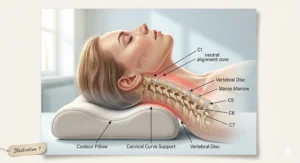
The promise of cervical pillows sounds almost too simple: change your pillow, reduce chronic neck pain. But the biomechanics are straightforward once you understand what’s happening overnight. Your cervical spine—the seven vertebrae running from the base of your skull to your upper back—has a natural forward curve called lordosis. When you lie down on a flat pillow or one that’s too thick, this curve is either flattened (causing your neck to straighten) or exaggerated (pushing your head forward). Either misalignment forces the muscles, tendons, and ligaments surrounding your cervical spine to work throughout the night just to maintain position, rather than relaxing and recovering.
Research published in peer-reviewed ergonomics journals demonstrates that pillow shape and content play crucial roles in maintaining cervical curve alignment. A 2020 systematic review analysing 11 controlled trials found moderate evidence that latex pillow materials and heights between 7-11 cm yielded the highest comfort ratings, reduced cervical pressure, and promoted optimal spinal alignment during sleep.
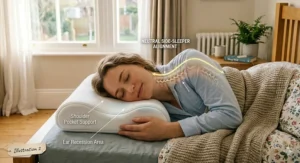
A properly designed pillow for chronic neck pain maintains your natural cervical lordosis regardless of sleep position. For back sleepers, this means a contoured pillow with a raised section under the neck and a depression for the head—think of it as filling the gap between your mattress and the natural curve of your neck. For side sleepers, it means sufficient height to keep your head level with your spine rather than tilting downward toward the mattress or upward toward the ceiling. A biomechanical study published in the journal Work found that supine (back) sleepers generally experience less spinal deviation compared to prone (stomach) sleepers, whilst proper pillow height for side sleeping significantly reduced neck muscle activation and improved comfort. Stomach sleeping is generally discouraged by physiotherapists because it requires rotating your head 90 degrees for hours, creating unavoidable cervical rotation stress—but if you must sleep this way, a very thin pillow minimises the angle.
Research published by NHS physiotherapy departments shows that proper pillow support can reduce morning neck stiffness by up to 40% within the first two weeks of consistent use. According to NHS clinical guidance on neck pain, most mechanical neck pain resolves within 6-8 weeks with self-management strategies including proper sleep positioning. The improvement comes not from any magical foam properties but from simple mechanical relief: when your neck muscles don’t need to compensate for misalignment overnight, they actually rest, allowing inflammation to reduce and tissues to heal. The adjustment period people experience (2-5 nights of feeling different or even slightly worse) is your nervous system recalibrating—muscles that have been overworking for months or years need time to learn they can finally relax.
What makes memory foam particularly effective for cervical support is its viscoelastic property: it conforms to the contours of your head and neck, then slowly returns to its original shape when pressure is removed. This means the pillow dynamically adapts to your movements throughout the night rather than forcing you into one rigid position. Higher-density foams maintain this property longer (12-18 months or more), while lower-density budget foams lose responsiveness within 6-9 months as the cell structure breaks down. This is why investing in quality foam isn’t just about comfort—it’s about maintaining therapeutic support long enough for your chronic pain patterns to actually improve rather than just temporarily masking symptoms.
Common Mistakes When Choosing a Neck Pain Pillow (And How to Avoid Them)
Mistake 1: Assuming Firmer Is Always Better
Many chronic pain sufferers make the leap from soft fibre-fill pillows directly to rock-hard orthopedic foam, thinking that maximum firmness equals maximum support. In reality, excessively firm pillows can create pressure points that trigger tension headaches and shoulder stiffness—you’re trading neck misalignment for new problems. The goal is supportive firmness that maintains cervical alignment without feeling like you’re resting on a wooden block. Medium-firm memory foam generally hits this sweet spot for most UK buyers.
Mistake 2: Ignoring Your Actual Sleep Position
You might want to be a back sleeper (physiotherapists recommend it), but if you instinctively roll onto your side within minutes of falling asleep, buying a pillow optimised for back sleeping sets you up for failure. Be honest about your dominant sleep position—the one you naturally gravitate toward when unconscious—and choose accordingly. Side sleepers need more height than back sleepers; combination sleepers need versatility (like the Hydomi armrest model); stomach sleepers need to acknowledge they’re fighting an uphill battle and consider thinner options while working to retrain their sleep position.
Mistake 3: Expecting Instant Pain Relief
Cervical pillows aren’t painkillers. If you’ve been sleeping with poor cervical support for months or years, your muscles have developed compensation patterns—some are chronically tight, others are weakened from disuse. A proper pillow begins correcting alignment on night one, but your soft tissues need 1-3 weeks to adapt. Many people give up after two nights of feeling “different” or even slightly worse, not realising they’re experiencing normal neurological adjustment. UK physiotherapists recommend committing to at least 7-10 nights before evaluating whether a pillow is helping.
Mistake 4: Buying the Wrong Size for Your Frame
A 5’3″ person and a 6’2″ person have vastly different shoulder widths, which directly affects the pillow height needed to maintain spinal alignment when side sleeping. Many UK buyers purchase standard-sized cervical pillows without considering whether the contour height is appropriate for their body proportions. If you’re petite, standard cervical pillows may be too tall (forcing your head upward); if you’re taller or broader, they may be too shallow (allowing your head to tilt downward). Look for adjustable options like the UTTU Sandwich if you’re uncertain about fit.
Mistake 5: Neglecting the British Climate Factor
Memory foam retains heat—this is physics, not a defect. In the UK’s mild but humid climate, even “cooling” foam pillows can feel warm during July and August, particularly in south-facing bedrooms or upstairs rooms that trap heat. Many buyers in Manchester, Birmingham, or Edinburgh don’t anticipate this because our summers aren’t scorching, but persistent warmth combined with humidity creates discomfort. Look for ventilated foam designs with breathable covers (bamboo blends work well), and consider having a lighter backup pillow for the handful of properly hot weeks each year.
Mistake 6: Assuming OEKO-TEX Certification Is Optional
Some budget pillows on Amazon.co.uk skip independent safety certifications to cut costs. While UK Trading Standards provide baseline consumer protections, OEKO-TEX Standard 100 certification specifically tests for over 1,000 harmful chemicals in textile products—including the memory foam itself. Given that you’re sleeping with your face pressed against this material for 7-9 hours nightly, the £5-£10 price difference between certified and uncertified options is false economy, particularly if you have allergies, asthma, or chemical sensitivities common in British adults.
Pillow Maintenance for Long-Term Pain Relief in British Conditions
Washing and Drying in the UK Climate
Most cervical pillow covers are machine washable (check labels for 30°C or 40°C settings), but the memory foam core itself should never go in the washing machine or dryer. UK buyers often make the mistake of attempting to wash the entire pillow during damp autumn and winter months when everything seems to need refreshing. Instead, remove the outer cover monthly and wash it separately. The foam core can be spot-cleaned with a damp cloth and mild detergent for spills, then left to air-dry completely—easier said than done in British humidity. Speed this up by placing the pillow near (not on) a radiator or using a fan to circulate air around it. Drying can take 24-48 hours in particularly damp conditions, so plan accordingly rather than needing your pillow that same night.
Managing Moisture in Damp British Homes
Britain’s climate presents a unique challenge: we’re not dealing with monsoon rains, but persistent dampness that accumulates over months, particularly in older properties with limited ventilation. Memory foam can absorb moisture from humid bedroom air, creating a breeding ground for dust mites and mould spores—both common triggers for allergies and asthma. UK physiotherapists recommend using pillow protectors (separate from pillowcases) with waterproof but breathable membranes. These create a barrier against moisture and allergens while still allowing air circulation. During winter, when heating systems create condensation, consider running a small dehumidifier in the bedroom overnight to keep humidity below 60%, the threshold where mould begins thriving.
Rotating and Flipping for Even Wear
Most cervical pillows have directional designs (higher on one end, lower on the other), which limits traditional rotation. However, you can flip the pillow end-to-end every 2-3 weeks to distribute compression evenly across the foam. This is particularly important for side sleepers who consistently place weight on one specific area—without rotation, that section compresses faster, reducing the pillow’s effective lifespan from 18 months to 10-12 months. Set a phone reminder for the same day you change your bedding; integrating it into your existing routine makes it sustainable rather than another forgotten task.
Knowing When to Replace Your Pillow
Even premium memory foam doesn’t last forever. UK buyers should expect 12-18 months from high-density cervical pillows (like the WENGX or UTTU), 8-12 months from medium-density options (Elviros, Good Nite), and 6-9 months from budget foam (Ecosafeter). Signs it’s time to replace: the pillow no longer springs back to its original shape within 3-5 seconds when pressed; you notice visible sagging or impressions that don’t smooth out; your morning neck stiffness returns after weeks or months of improvement. Don’t wait until the pillow is completely flattened—by that point, you’ve already reverted to poor cervical alignment and restarted the chronic pain cycle. Think of pillow replacement as maintenance rather than failure: you wouldn’t expect a £40 item subjected to 2,500+ hours of compression (8 hours × 365 nights) to last indefinitely.
Storage for Guest or Seasonal Pillows
If you’re keeping a cervical pillow as a backup or for guest use, proper storage prevents premature degradation. Memory foam hates compression and moisture—storing it under a bed in a sealed plastic bag creates condensation and mould. Instead, store it in a breathable fabric storage bag (old pillowcases work) in a cool, dry location with air circulation. Avoid lofts in old British homes where temperature swings are extreme (freezing in winter, stifling in summer), as memory foam properties deteriorate faster under thermal stress. A bedroom cupboard or under-bed storage with ventilation slats works well. Before storing, ensure the pillow is completely dry—any residual moisture will compound over months.

Real-World Scenarios: Matching Pillows to British Lifestyles
The London Commuter: Mark, 34, Desk Job in Canary Wharf
Mark spends 90 minutes daily on the Jubilee line, hunched over his phone or laptop, then another 8 hours at a desk in financial services. By evening, his neck and shoulders feel like concrete. He’s tried standard pillows, wedge pillows, even sleeping without a pillow entirely—nothing helped. The problem: his daytime posture creates anterior head carriage (head jutting forward), which requires aggressive cervical correction overnight just to reset to baseline, let alone make progress.
Recommended: WENGX Luxury Memory Foam or UTTU Sandwich Pillow. Mark needs firm support that actively realigns his cervical spine after a day of forward head posture. The WENGX’s high-density foam provides the robust correction necessary to counteract eight hours of desk slumping, while the UTTU’s adjustability lets him find the precise height that neither under-supports nor overextends his neck. He should pair this with a standing desk converter or regular posture breaks during the workday—the pillow can correct overnight positioning, but it can’t undo nine hours of daily strain on its own.
The Manchester Shift Worker: Sarah, 42, NHS Nurse
Sarah rotates through day shifts, night shifts, and long days at a Manchester hospital, which means her sleep schedule is constantly disrupted. She’s side sleeping on a flat pillow because it’s what she’s always done, but chronic neck pain has worsened over the past two years—likely exacerbated by the physical demands of patient care (lifting, transferring, bending). Her budget is tight after recent cost-of-living increases, but she’s desperate enough to try something.
Recommended: Ecosafeter 2026 Upgrade as a starting point, with a commitment to upgrade to Elviros Cervical if it helps but she wants more support. At £20-£25, the Ecosafeter is financially accessible and provides legitimate cervical contouring—enough to determine whether a proper pillow makes a difference to her pain pattern. The dual-height design accommodates her side sleeping preference. If it helps but feels too soft after a month (foam compressing under nightly use), stepping up to the Elviros gives her deeper, firmer side-sleeper contours without breaking the bank at £30-£40. Sarah should also speak to her occupational health service about workplace ergonomics—neck pain stemming from patient handling often needs multifactorial intervention.
The Edinburgh Retiree: James, 68, Cervical Spondylosis Diagnosis
James has been told by his GP that he has cervical spondylosis—age-related wear on his spinal discs and joints. The stiffness is worst first thing in the morning, taking 30-45 minutes and a hot shower to loosen up. He’s a dedicated back sleeper and doesn’t want anything “weird” or complicated—just something that might reduce the morning pain. He’s willing to spend a bit more if it’s genuinely effective, but he’s sceptical of “marketing nonsense.”
Recommended: Good Nite Orthopaedic paired with NHS physiotherapy exercises. James needs a back-sleeper-optimised pillow with moderate contour height—enough to support his cervical lordosis without feeling restrictive or unfamiliar. The Good Nite delivers this at £25-£35, a reasonable investment for someone managing a chronic degenerative condition. Crucially, the pillow should complement, not replace, the neck mobility exercises his GP or physiotherapist can prescribe. Cervical spondylosis involves joint stiffness, and while proper sleep positioning prevents overnight aggravation, active daytime movement is essential for managing the condition long-term. James should also check whether he’s eligible for NHS community MSK (musculoskeletal) services in his area for professional guidance without needing a GP referral.
The Cardiff Family: Emma and Liam, Partners with Different Sleep Needs
Emma and Liam share a bed but have wildly different sleep preferences. Emma is a side sleeper who runs hot—she’s constantly kicking the duvet off during the night. Liam is a combination sleeper (side and back) who doesn’t mind warmth but struggles with arm numbness when side sleeping. They’ve tried compromise pillows before, but one person always ends up dissatisfied, leading to separate pillows that don’t actually address either person’s needs.
Recommended: Elviros Cervical for Emma, Hydomi with Armrest for Liam. Rather than forcing compromise, they should each invest in the pillow that addresses their specific pain pattern and sleep style. Emma needs deep side-sleeper contours with good cooling (the Elviros), while Liam benefits from the Hydomi’s armrest design and adjustable height for position changes. At a combined £60-£80, it’s more expensive than buying matching pillows, but chronic pain doesn’t care about aesthetics—proper support for both partners means better sleep for everyone, which reduces relationship friction caused by one person’s discomfort keeping the other awake.
Understanding British NHS Guidelines on Neck Pain Management
The NHS takes a conservative, evidence-based approach to neck pain management, and understanding their recommendations helps contextualise where cervical pillows fit into treatment. According to NHS clinical guidance, most neck pain is “non-specific mechanical pain”—meaning there’s no identifiable structural damage, just muscular strain, poor posture, or age-related wear. The NHS advises that 80% of neck pain cases resolve within 6-8 weeks with basic self-management: staying active, using simple pain relief (paracetamol or ibuprofen), applying heat, and maintaining movement rather than resting completely.
Cervical pillows fall under the NHS’s self-help recommendations as part of “sleep hygiene” improvements. NHS physiotherapists frequently suggest using a rolled towel at the base of your pillow to support neck curvature as a low-cost trial before buying specialised pillows. If that basic intervention helps, it indicates you’re likely to benefit from a proper cervical pillow. However, the NHS is clear that pillows are not standalone treatments—they work best combined with addressing daytime posture, regular movement breaks if you work at a desk, and gentle neck exercises to maintain mobility and strength.
When should you seek NHS medical attention for neck pain rather than just buying a better pillow? The NHS red flags include: neck pain that doesn’t improve after several weeks despite self-management; pain accompanied by fever or unexplained weight loss (potential infection or serious disease); neurological symptoms like arm weakness, numbness, or “electric shock” sensations radiating down your limbs (potential nerve compression); difficulty swallowing or speaking; severe headaches with stiff neck (potential meningitis, requiring emergency care). If you’re experiencing any of these symptoms as outlined in NHS emergency guidance, book a GP appointment before investing in pillows or other self-treatments.
For chronic neck pain that’s lasted more than three months without red-flag symptoms, you may be eligible for NHS community musculoskeletal (MSK) services without needing a GP referral in many areas. These services provide physiotherapy assessment and treatment specifically for joint and muscle problems. A physiotherapist can evaluate your sleep positioning, recommend specific pillow features based on your pain pattern, and prescribe exercises to complement better overnight support. Some NHS Trusts have partnerships with private pillow suppliers for subsidised therapeutic pillows, though availability varies by region—worth asking if cost is a barrier.
The NHS also acknowledges that chronic pain—including neck pain lasting over six months—can have psychological components: stress, anxiety, and poor sleep create a cycle where pain causes tension, tension disrupts sleep, disrupted sleep lowers pain tolerance, and the cycle perpetuates. Improving sleep quality through proper pillow support can interrupt this cycle, but if you’re struggling with mental health alongside chronic pain, NHS Talking Therapies (free counselling services) can address the psychological factors that may be amplifying physical symptoms. It’s not about pain being “all in your head”—it’s about recognising that pain perception, sleep quality, and mental wellbeing are genuinely interconnected in ways that affect treatment outcomes, as documented in clinical pain management research.
FAQs: Your Pillow for Chronic Neck Pain Questions Answered
❓ Are cervical pillows suitable for all sleeping positions?
❓ How long does it take to see improvement in chronic neck pain with a new pillow?
❓ Can I use a cervical pillow if I have a diagnosed condition like cervical spondylosis or herniated disc?
❓ Do more expensive cervical pillows work better than budget options for chronic pain?
❓ Are these pillows available with fast delivery across the UK, including Scotland and Northern Ireland?
Conclusion: Your Next Steps Toward Better Sleep and Less Pain
Chronic neck pain isn’t a life sentence, but it also doesn’t vanish overnight just because you’ve finally found a decent pillow. What you’ve learned here—the biomechanics of cervical alignment, the difference between side-sleeper and back-sleeper support, the importance of foam density and British climate considerations—gives you the foundation to make an informed choice rather than another expensive mistake. The pillow that works for your colleague in Bristol with similar symptoms might not suit your sleep position, frame size, or pain pattern, which is why understanding the why behind each recommendation matters more than just clicking “add to basket” on the highest-rated option.
If you’re budget-conscious or sceptical, start with the Ecosafeter 2026 Upgrade at around £20—it’s enough to test whether cervical contouring helps your specific pain without financial commitment. If you’re a dedicated side sleeper tired of waking with shoulder and neck stiffness, the Elviros Cervical Memory Foam addresses your positioning needs specifically. For those who’ve cycled through cheaper options and want durability alongside support, the WENGX Luxury or UTTU Sandwich deliver long-term value. And if you’re managing diagnosed conditions like cervical spondylosis, pair your pillow choice with NHS physiotherapy guidance—self-management works best when it’s informed by professional assessment.
Remember the adjustment period: 7-10 nights minimum before evaluating results. Your muscles have developed compensation patterns over months or years of poor support; they need time to unlearn bracing and relearn relaxation. If you feel worse on nights two and three, that’s normal neurological recalibration—stick with it unless you develop new symptoms like arm numbness or severe headaches, which warrant GP evaluation. Most British buyers who commit to the full adaptation period report meaningful reductions in morning stiffness and improved neck mobility, though a pillow alone won’t undo daytime posture issues or underlying degenerative conditions that require additional intervention.
The cost of chronic pain isn’t just the £20-£50 you’ll spend on a proper pillow—it’s the hundreds of pounds in GP visits, physiotherapy sessions, pain medications, and lost work productivity over months or years of inadequate management. A cervical pillow is preventative care: addressing misalignment before it compounds into serious structural problems or chronic pain patterns that require escalated medical treatment. For UK buyers managing long-term neck issues, this isn’t indulgence; it’s basic biomechanical maintenance, the equivalent of wearing proper shoes for chronic foot pain or using an ergonomic chair for back problems.
Recommended for You
- Best Contour Pillow for Neck Pain UK 2026 | 7 Expert Picks
- 7 Best Ergonomic Neck Pillows UK 2026 Relief Guide
- Best Memory Foam Cervical Pillows UK 2026 – Top 7 Reviewed
Disclaimer: This article contains affiliate links. As an Amazon Associate, I earn from qualifying purchases. If you purchase products through these links, we may earn a small commission at no additional cost to you.
✨ Found this helpful? Share it with your mates! 💬🤗
