

In This Article
There’s a very specific kind of tired that comes from bad nights. Not the “stayed up too late” kind — the kind where you lie down, your chest tightens, your throat burns, or you just can’t stop sliding flat onto your back, and three hours later you’re staring at the ceiling wondering if you’ll ever sleep properly again. If that sounds familiar, you’ve probably already typed “wedge pillow under £40” into a search bar at 2am, which is exactly how most of us end up here.

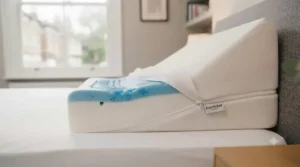
A wedge pillow is a triangular foam cushion that raises your upper body, legs, or both, using a fixed incline instead of a wobbly stack of regular pillows. It’s a simple bit of geometry doing a surprisingly complicated job: keeping gravity on your side while you sleep. For anyone managing acid reflux, snoring, post-surgery recovery, or plain old back pain, bed elevation and incline sleeping aren’t wellness fads — the NHS advises raising the head of your bed by around 10 to 20cm to help stop stomach acid travelling up towards your throat.
This guide walks through seven real wedge pillows you can actually buy on amazon.co.uk for well under (or very close to) £40, based on genuine specs and aggregated review sentiment rather than marketing fluff. No invented five-star raves, no fictional “I tested this for a month” stories — just honest analysis of what each pillow does well, where it falls short, and who it’s actually right for. Whether you’re chasing quieter nights, easier breathing, or simply a bed you don’t dread getting into, there’s a sensible option below.
Quick Comparison Table
| Product | Height/Angle | Best For | Price Range |
|---|---|---|---|
| Putnams Memory Foam Bed Wedge | 15cm (NHS-aligned) | Reflux sufferers wanting UK-made quality | Around £35-£40 |
| Kölbs Bed Wedge Pillow | ~19cm, memory foam top | Style-conscious buyers who still want support | Mid-£30s |
| GC Gaveno Cavailia Wedge Pillow | ~20cm foam | Tight budgets needing basic elevation | Under £25 |
| baibu Dual Layer Wedge Pillow | Dual density foam | Side sleepers wanting softness on top | £20s |
| Restorology Extra Large Wedge Pillow | XL 66x66cm base | Bigger bodies or shared beds | Around £30-£36 |
| Aidapt Bed Wedge Cushion | Clinical incline | Mobility and post-op recovery | Under £20 |
| EzKamfort 3-in-1 Wedge Pillow | Adjustable with headrest | Multi-use: reading, reflux, leg elevation | Around £30 |
Looking at the spread above, there’s a genuine budget-to-premium ladder here rather than seven near-identical boxes with different labels slapped on. The Aidapt Bed Wedge Cushion and GC Gaveno Cavailia Wedge Pillow sit at the accessible end for anyone who just wants to test whether incline sleeping helps before committing more cash, while the Putnams Memory Foam Bed Wedge and Kölbs Bed Wedge Pillow lean into comfort and build quality for nightly, long-term use. The EzKamfort 3-in-1 and Restorology Extra Large carve out the middle ground: more versatile shapes and sizing for people who need the wedge to do more than one job.
💬 Just one click — help others make better buying decisions too!😊
Top 7 Wedge Pillows Under £40: Expert Analysis
1. Putnams Memory Foam Bed Wedge — NHS-aligned height from a UK manufacturer
The standout here is straightforward: this is a British-made wedge built specifically to the elevation height clinicians actually recommend, not a generic import with a vague “ergonomic” label slapped on the box. Putnams has been producing sleep and positioning aids in Devon since 1979, and the bed wedge measures 15cm (6 inches) at its highest point — sitting neatly inside the 10 to 20cm range the NHS suggests for reducing nighttime acid reflux. It’s available in standard supportive foam or with a memory foam top layer for extra pressure relief, and the cover is removable and washable.
Based on the spec comparison with the mass-market alternatives further down this list, what stands out is the manufacturing provenance and the fact the foam density is chosen for sustained nightly use rather than occasional propping-up. This is a pillow for someone who’s decided incline sleeping is a long-term fix, not a one-off experiment — hiatus hernia sufferers, people managing GORD, or anyone whose GP has already suggested raising the head of the bed. Reviewers consistently report that the size is generous compared with cheaper wedges, with several noting they pair it with a separate V-shaped pillow for neck support on top.
What most buyers overlook about UK-manufactured foam products like this one is the trade-off: you’re paying a premium over imported alternatives, but you’re also getting a company that stands behind its construction with decades of specialist experience, rather than a generic private-label item.
Pros:
- ✅ Height matches NHS-recommended reflux elevation range
- ✅ UK-manufactured with washable, replaceable cover
- ✅ Reviewers describe it as noticeably larger than rivals
Cons:
- ❌ Sits near the top of the £40 budget, especially in memory foam
- ❌ Firmer standard foam may not suit those wanting a softer feel
Prices generally sit around £35-£40 depending on the foam option chosen, and given the clinical-grade positioning and UK manufacturing, this represents solid value for anyone treating bed elevation as a serious, ongoing health measure rather than a trial run.

2. Kölbs Bed Wedge Pillow — plush jacquard cover with a hotel-room feel
The standout feature here is cosmetic as much as functional: a “chic jacquard” removable cover that makes this look far less like a hospital accessory and far more like something you’d actually want visible on your bed. Underneath that styling sits a genuinely useful two-part construction — a 1.5-inch memory foam top layer bonded to a high-density medical-grade foam core, giving a wedge height of around 19cm.
Here’s what to weigh: the memory foam layer softens the initial contact point, which matters if you’re someone who finds firm wedges uncomfortable on the shoulder or hip, while the dense foam base beneath it stops the whole thing collapsing under sustained weight over months of use. Kölbs markets this explicitly for sleep apnoea, acid reflux and post-surgical positioning, and the brand (through parent company K2 Health Products) frames it as designed for structured, chronic-care elevation rather than the occasional prop-up. That’s a meaningfully different design brief to a £15 bargain-bin wedge, and it shows in the layered foam approach.
Aggregated customer sentiment across UK and US listings is generally positive on comfort and the cover quality specifically, with the main recurring criticism being that very tall sleepers find the wedge doesn’t extend far enough down the torso for full upper-body support.
Pros:
- ✅ Removable jacquard cover looks smarter than typical hospital-style wedges
- ✅ Dual-layer foam balances softness with lasting support
- ✅ Explicitly designed for chronic positioning needs, not just occasional use
Cons:
- ❌ Shorter sleepers may find it plenty; taller users may want more length
- ❌ Cover is stylish but adds slightly to the price versus plain equivalents
At a price generally in the mid-£30s on amazon.co.uk, this sits comfortably under the £40 ceiling while delivering a noticeably more premium unboxing experience than most budget wedges — worth the small premium if aesthetics matter to you as much as function.
3. GC Gaveno Cavailia Wedge Pillow — the no-frills starter option
The standout advantage is simple: this is one of the most accessible entry points into incline sleeping without spending anywhere near £40. GC Gaveno Cavailia is a well-established UK bedding brand sold widely on Amazon, and its wedge pillow uses a straightforward high-density foam block with a removable, washable cover — no memory foam layer, no headrest gimmicks, just a basic incline.
On paper, this means you’re sacrificing the plush top-layer comfort that pricier wedges offer, but you’re also removing the main failure point of cheap memory foam wedges, which is foam that softens and loses shape within a year. A solid foam block, while firmer underfoot, tends to hold its angle more consistently over time. This makes it a sensible pick for anyone who isn’t sure yet whether wedge sleeping will actually suit them — trying incline sleeping for the first time, easing a temporary bout of congestion, or testing whether it helps with pregnancy-related breathlessness before investing in a premium option.
Reviewers consistently note good value for money and describe the foam as “firmer than expected,” which several people list as a positive for stability and others flag as an adjustment period needed before it feels comfortable.
Pros:
- ✅ One of the most affordable genuine wedge pillows available
- ✅ Solid foam holds its incline shape well over time
- ✅ Washable cover keeps hygiene simple
Cons:
- ❌ No memory foam layer, so initial feel is firmer
- ❌ Basic design lacks headrest or multi-position versatility
Typically priced under £25, this is the pillow to buy if your main question right now is “will this actually work for me?” rather than “which is the nicest wedge pillow money can buy.”
4. baibu Bed Wedge Pillow (Dual Layer Memory Foam) — softness for side sleepers
The headline feature is the dual-layer build: a memory foam top bonded over a firmer support base, specifically aimed at people who sleep semi-upright rather than flat on their back. That distinction matters more than it sounds — a wedge designed purely for back-sleeping reflux relief can feel oddly unsupportive if you tend to roll onto your side during the night, whereas baibu’s layered approach gives a bit more contouring give at the shoulder.
Based on the spec sheet, the dual-density foam sits at a moderate incline suited to general “sleeping upright” use rather than the steeper angles found on dedicated post-surgery wedges, which makes it more of an everyday-comfort product than a clinical positioning tool. What the spec sheet won’t tell you, but reviewers note, is that the top memory foam layer runs slightly warmer than the firmer all-foam alternatives on this list — worth factoring in if you already sleep hot or share a bedroom that runs on the warmer side.
Aggregated review sentiment describes the washable cover as a genuine plus, since foam wedges without one are notoriously awkward to keep fresh, and several buyers specifically mention using it for reading in bed as much as for sleeping.
Pros:
- ✅ Dual-layer foam gives more cushioning for side sleepers
- ✅ Washable cover simplifies long-term hygiene
- ✅ Doubles well as a reading/sitting-up support
Cons:
- ❌ Memory foam top retains more heat than solid foam wedges
- ❌ Moderate incline may be too gentle for severe reflux cases
Sitting in the £20s on amazon.co.uk, this is comfortably within budget and represents good mid-tier value for anyone whose main goal is comfortable, softer incline sleeping rather than strict clinical elevation.
5. Restorology Extra Large Wedge Pillow — built for bigger frames and shared beds
The standout advantage is straightforward: size. At roughly 66cm wide, this wedge is noticeably broader than most of the others on this list, which matters more than people expect when they first shop for a wedge pillow. A narrow wedge on a double or king-size bed can leave you sliding off the edge as you shift position overnight, undermining the whole point of buying one.
Here’s what to weigh: a bigger foam footprint means more raw material, which typically pushes the price up slightly compared with standard-width wedges, but it also means the incline stays under your shoulders and back consistently through the night rather than only when you’re lying dead centre. This makes it a strong option for larger-framed sleepers, for anyone sharing a bed where a partner’s movement might nudge a narrower wedge out of position, or simply for people who toss and turn more than average. The zip-off cover is a practical touch for washing, something not every budget wedge includes as standard.
Reviewer feedback aggregated from UK listings consistently flags the size as the main selling point, with several buyers specifically comparing it favourably against narrower wedges they’d previously found themselves sliding off.
Pros:
- ✅ Extra-wide base reduces sliding off during the night
- ✅ Removable, washable zip cover included
- ✅ Well suited to larger beds and bigger frames
Cons:
- ❌ Bulkier shape takes up more storage space when not in use
- ❌ Slightly pricier than standard-width equivalents
Generally priced in the £30-£36 range, this sits close to the top of the budget without breaking it, and the extra width genuinely earns its keep if a standard-size wedge has let you down before.

6. Aidapt Bed Wedge Cushion — the clinical, mobility-aid choice
The standout feature is its heritage: Aidapt is a long-established UK mobility and daily-living aids brand, and its bed wedge cushion is built with the same practical, no-nonsense approach as its walking aids and bathroom equipment. Rather than being marketed primarily as a “lifestyle” sleep product, this wedge leans into post-operative recovery, circulation support, and general mobility-related positioning — the kind of product occupational therapists and community nursing teams already recognise.
Based on the spec comparison, the foam here is chosen for consistent support rather than plush comfort, which on paper means it’s better suited to therapeutic elevation — legs after surgery, reducing swelling, or supporting someone who needs a stable, predictable incline rather than a soft, sink-in feel. What most buyers overlook is that products from mobility-aid brands like Aidapt are sometimes eligible for VAT relief when purchased by someone who is chronically sick or disabled, under the rules set out in official HMRC guidance on VAT reliefs for disabled people — worth checking before you buy if that applies to you, since it can meaningfully reduce the effective price.
Aggregated reviews describe it as functional rather than fashionable, with recurring praise for firmness and stability and occasional comments that the cover styling is basic compared with lifestyle-branded competitors.
Pros:
- ✅ Trusted mobility-aid brand with clinical design intent
- ✅ Firm, stable support suited to recovery and swelling relief
- ✅ May qualify for VAT relief for eligible buyers
Cons:
- ❌ Basic cover styling compared with lifestyle-focused brands
- ❌ Firmness may feel less plush than memory foam alternatives
Typically priced under £20, this is one of the most affordable options here, and arguably the best-suited to anyone using a wedge for medical or post-surgical reasons rather than general comfort.
7. EzKamfort 3-in-1 Memory Foam Wedge Pillow — the multi-tasker with a headrest
The standout feature is versatility: a 3-in-1 design that adds a separate headrest section to the main wedge, letting you fine-tune the angle under your neck independently of the main incline under your back. That’s a meaningfully different approach to the single-slab wedges elsewhere on this list, and it shows up in how the product is marketed — for acid reflux, snoring, back pain and leg elevation all under one listing, rather than being pitched at a single use case.
On paper, the adjustable headrest addresses a common complaint with fixed-angle wedges: that the neck ends up either too flexed or too extended once the shoulders are elevated. Being able to shift the headrest independently means side sleepers and back sleepers can both find a workable position on the same pillow, which is genuinely useful in households where more than one person might use it. The washable cover keeps it practical for regular use.
Reviewers consistently report good results using it for leg elevation as well as the more typical head-and-shoulders use, with several specifically mentioning post-surgical or swelling-related use for the legs, and a smaller number noting the memory foam softens more quickly than the firmer core beneath it after extended use.
Pros:
- ✅ Adjustable headrest allows independent neck positioning
- ✅ Genuinely multi-use: reflux, snoring, back pain, leg elevation
- ✅ Washable cover suits frequent use
Cons:
- ❌ Memory foam top may soften faster than firmer alternatives
- ❌ More moving parts than a simple one-piece wedge
Priced around £30 on amazon.co.uk, this lands comfortably mid-table on both price and features, making it a sensible all-rounder if you’re not entirely sure yet which specific problem you’re solving.
Practical Usage Guide: Getting the Most From Your Wedge Pillow
Buying the right wedge is only half the job — how you set it up in the first week determines whether it actually solves your problem or ends up shoved in a cupboard by month two. Start by placing the wedge directly on the mattress rather than on top of your existing pillows; stacking pillows on a wedge (or using a wedge under a stack) tends to create an uneven, kinked angle at the neck, which is precisely the position the NHS advises against, since it can increase pressure on your belly and make symptoms worse rather than better.
For the first few nights, expect a genuine adjustment period. Sleeping at an incline uses slightly different back and neck positioning than flat sleeping, and most people report the first three to five nights feel odd before the body adapts. Common early mistakes include sliding down the wedge overnight (fixable with a fitted sheet stretched over the whole wedge-plus-mattress setup, or a non-slip mat underneath), and placing a standard head pillow on top of the wedge, which often over-elevates the neck and undoes the benefit. If you’re using the wedge specifically for reflux, timing matters as much as angle — the same evidence base behind bed elevation also points to avoiding meals in the hours before lying down, since a full stomach combined with even a good incline still leaves more material available to reflux.
Maintenance is straightforward but easy to neglect: remove and wash the cover every one to two weeks depending on use, and air the foam core itself periodically, since foam can retain moisture and odour in a way that flat pillows generally don’t. Most covers are machine washable on a cool cycle, but always check the specific product’s care label rather than assuming, since the memory-foam-topped options in this list sometimes have different washing instructions to the solid-foam budget picks.

Real-World Scenarios: Which Wedge Suits You?
The reflux sufferer on a budget: If you’re dealing with occasional heartburn and want to test whether elevation actually helps before spending much money, start with the GC Gaveno Cavailia Wedge Pillow or Aidapt Bed Wedge Cushion. Both sit comfortably under £25, hold a stable incline, and give you a genuine trial of bed elevation without a big financial commitment. If it works, you can always upgrade to a plusher option later.
The side sleeper who runs warm: If you mostly sleep on your side and tend to overheat at night, the baibu Dual Layer Wedge Pillow balances softness with better airflow than an all-memory-foam block, though it’s worth pairing with breathable bedding given memory foam’s tendency to trap heat. The Restorology Extra Large is also worth considering here purely for its width, which stops you rolling off the incline as you shift position.
The post-surgical recovery case: Anyone recovering from surgery — knee replacement, hip surgery, or abdominal procedures where a doctor has recommended leg or upper-body elevation — should prioritise stability and firmness over plushness. The Aidapt Bed Wedge Cushion and the standard-foam version of the Putnams Memory Foam Bed Wedge are both built for exactly this kind of structured, therapeutic positioning, and their firmer cores are less likely to compress unpredictably under sustained pressure than a soft memory foam top.
How to Choose a Wedge Pillow: 6 Criteria That Actually Matter
- Height and angle. For reflux specifically, aim for a wedge that gets you into the 10 to 20cm elevation range the NHS recommends; going much higher doesn’t necessarily add benefit and can make the position uncomfortable to maintain all night.
- Foam density, not just foam type. “Memory foam” sounds premium regardless of density, but a thin, soft top layer over a weak core will sag within months. Look for wedges that specify a high-density base layer underneath any memory foam top.
- Width relative to your bed size and sleep style. A narrow wedge on a double or king bed, or for anyone who moves around at night, invites sliding off the incline — check the base dimensions, not just the height.
- Cover material and washability. A removable, machine-washable cover isn’t a luxury extra; foam wedges are used nightly and need regular cleaning far more than a decorative cushion would — the same logic Which? applies when testing ordinary pillows for comfort and neck support holds just as true for a wedge you’ll be resting on every night.
- Single-purpose versus multi-use design. If you only need head elevation for reflux, a simple fixed wedge is fine. If you’re covering multiple needs — reading, leg elevation, neck support — a 3-in-1 or adjustable design like the EzKamfort earns its slightly higher complexity.
- Manufacturer transparency and origin. UK-manufactured options tend to publish clearer specifications (exact angle, foam density, CertiPUR-style certification) than some imported private-label wedges, which can make it easier to judge whether a product actually suits your specific medical or comfort need.
Wedge Pillows vs Traditional Pillow Stacks
It’s tempting to assume a stack of two or three ordinary pillows achieves the same thing as a purpose-built wedge, and it’s worth being direct about why that assumption is wrong. A pillow stack compresses unevenly under your body weight overnight, meaning the angle you fall asleep at is rarely the angle you wake up at. The NHS is explicit on this point, warning that using additional pillows instead of properly raising the bed can increase pressure on your belly and make heartburn symptoms worse rather than better, because the neck typically ends up bent at an angle that compresses rather than opens the digestive tract.
A wedge pillow solves this with a single, fixed-angle foam block that can’t shift shape mid-sleep the way loose pillows do. The trade-off is upfront cost — a decent wedge costs more than repurposing pillows you already own — but the consistency it provides is precisely the mechanism that makes elevation effective in the first place. For genuine reflux management or post-surgical positioning, the evidence and clinical guidance both point toward a proper wedge over an improvised stack; for occasional comfort while reading in bed, a pillow stack remains a perfectly reasonable free alternative.
✨ Don’t Miss These Exclusive Deals!
🔍 Take Your Sleep Setup to the Next Level. Click through on any of the picks above to check current pricing and availability on amazon.co.uk. A well-chosen wedge pillow is a small investment that can meaningfully improve incline sleeping, bed elevation for reflux, and overall night-time comfort for years to come.
Common Mistakes When Buying a Wedge Pillow
The most frequent mistake is buying based on angle alone without checking width — a steep, narrow wedge sold purely on its incline degree can still leave you sliding sideways off the mattress if your bed is a double or larger. A close second is assuming “memory foam” automatically means good quality; as covered above, a thin memory foam skin over a weak core degrades faster than a solid, well-made all-foam wedge, so it pays to check foam density specifications rather than relying on the word “memory” alone.
Another common misstep is buying a wedge angled for reflux relief when the actual goal is leg elevation, or vice versa — the two uses often benefit from different heights, and a multi-use design like the EzKamfort’s headrest system exists partly to solve this. Finally, several reviewers across the products above mention skipping the cover-washing question at purchase time and regretting it later; if you don’t check whether the cover is removable and machine washable before buying, you may end up with a wedge that’s awkward to keep hygienic through regular use.

Long-Term Cost & Value Analysis
Thinking about a wedge pillow purely as a one-off £20-£40 purchase misses the real comparison, which is cost-per-night over the product’s realistic lifespan. A well-made wedge with a high-density foam core, like the Putnams Memory Foam Bed Wedge or Kölbs Bed Wedge Pillow, can reasonably be expected to hold its shape for two to three years of nightly use, working out to just a few pence per night even at the higher end of this list’s pricing. A budget solid-foam option like the GC Gaveno Cavailia Wedge Pillow costs less upfront but may need replacing sooner if used nightly, particularly if the cover isn’t washed regularly and the foam absorbs moisture over time.
Where this calculation shifts meaningfully is for anyone eligible for VAT relief, as mentioned with the Aidapt Bed Wedge Cushion above — chronically sick or disabled buyers purchasing for personal use can potentially avoid the 20% VAT charge on qualifying items under HMRC’s disability relief scheme, which effectively drops the real-world price of an already-affordable option even further. It’s always worth checking the retailer’s declaration process before completing a purchase if you think you might qualify, rather than assuming it automatically applies.
Safety, Materials & What to Check Before Buying
Foam quality matters more for a wedge pillow than for almost any other bedding purchase, simply because you’re resting your full upper-body weight on it every single night for years. Look for foam that’s certified against harmful chemical off-gassing (certifications like CertiPUR-US or OEKO-TEX are good signals, and several budget and premium wedges alike now carry them) and check that the cover fabric is breathable rather than a fully sealed plastic-backed material, which can trap heat and moisture uncomfortably over a full night’s sleep. NHS trust guidance on reflux management, such as University Hospitals Sussex’s advice on gastro-oesophageal reflux, consistently pairs bed elevation with other lifestyle measures like earlier evening meals and left-side sleeping, rather than treating the wedge as a standalone fix.
If you’re buying specifically to manage a medical condition — reflux, GORD, sleep apnoea, or post-surgical recovery — it’s worth remembering that a wedge pillow is a supportive lifestyle measure, not a substitute for medical treatment. The NHS is clear that lifestyle changes like bed elevation should sit alongside, not replace, proper medical advice, and recommends seeing a GP if lifestyle changes and pharmacy medicines aren’t controlling symptoms, or if you notice other symptoms like food getting stuck, frequent vomiting, or unexplained weight loss. A wedge pillow can meaningfully improve comfort and reduce nighttime symptoms, but persistent or worsening issues always warrant a proper medical conversation rather than relying on sleep positioning alone.
Features That Actually Matter (And Ones That Don’t)
Marketing copy on wedge pillows loves to lean on buzzwords, so it’s worth separating genuine value from padding. Foam density and cover washability genuinely matter — they determine how long the product lasts and how hygienic it stays with regular use. Width relative to your bed size genuinely matters, since a narrow wedge on a wide bed undermines the entire point. Certification labels like CertiPUR-US or OEKO-TEX genuinely matter if off-gassing or chemical sensitivity concerns you, since they indicate independently tested foam.
On the other hand, elaborate multi-colour cover ranges, “luxury” branding language, and generic claims like “doctor recommended” without any specifics attached add very little practical value — a plain, well-made wedge in a boring grey cover will elevate your reflux symptoms exactly as effectively as one in a trendy jacquard print, provided the foam underneath does its job. Similarly, extremely steep incline angles marketed as “maximum elevation” aren’t automatically better; as covered in the buying criteria above, the NHS-referenced range of 10-20cm is the evidence-backed sweet spot for most reflux cases, and going well beyond it mostly just makes the pillow harder to stay comfortably positioned on through the night.
What to Expect: Real-World Performance
Specs on a product page rarely translate directly into how a wedge actually feels at 11pm on a Tuesday, so it’s worth setting realistic expectations. In the first week, most people notice the incline more than they expected to — even a gentle 15cm elevation changes how your weight distributes compared with flat sleeping, and it’s common to wake up once or twice in those early nights simply adjusting to the new position. By week two, the majority of aggregated reviewer feedback across these products describes the position becoming close to unnoticeable, with the original symptom (reflux, snoring, discomfort) being the more noticeable change.
Reflux relief specifically tends to show results faster than other benefits — often within the first few nights, in line with how quickly gravity-based elevation is expected to work according to the clinical literature behind the NHS’s guidance. Snoring reduction and general comfort improvements are more variable and depend heavily on your existing sleep position; back sleepers tend to notice more change than committed side sleepers, since the wedge has a more direct effect on airway position when lying flat on the back.
Buyer’s Decision Framework
If your primary concern is acid reflux or heartburn, choose a wedge that sits within the 10-20cm NHS-referenced elevation range with a firm, stable core — the Putnams Memory Foam Bed Wedge or Aidapt Bed Wedge Cushion both fit this brief well. If you’re recovering from surgery and need leg or upper-body elevation on medical advice, prioritise firmness and stability over plush comfort, again pointing toward the Aidapt option or the standard-foam Putnams. If snoring is your main issue and you mostly sleep on your back, a moderate, comfortable incline like the baibu Dual Layer or Kölbs Bed Wedge Pillow tends to work well. If you need genuine multi-use flexibility across several problems at once, the EzKamfort 3-in-1 earns its slightly higher complexity. And if you’re simply not sure yet whether wedge sleeping suits you at all, start at the budget end with the GC Gaveno Cavailia or Restorology Extra Large before committing to a pricier option.
Frequently Asked Questions
❓ Do wedge pillows actually work for acid reflux?
❓ What angle should a wedge pillow be for GERD?
❓ Can I use a wedge pillow instead of stacking regular pillows?
❓ How long does a wedge pillow last?
❓ Is a wedge pillow good for snoring?
Conclusion
Choosing the right wedge pillow under £40 comes down to matching the product to your actual problem rather than chasing the nicest-looking cover or the biggest marketing claims. For reflux and heartburn, the Putnams Memory Foam Bed Wedge and Aidapt Bed Wedge Cushion both sit inside the NHS-referenced elevation range with genuinely stable, well-built cores. For comfort-first side sleeping, the baibu Dual Layer and Kölbs Bed Wedge Pillow offer more give without sacrificing structure. For tight budgets or a first trial of incline sleeping, the GC Gaveno Cavailia Wedge Pillow gets the job done without the spend. And for anyone juggling more than one need — reading, leg elevation, reflux, and neck positioning all at once — the EzKamfort 3-in-1 and Restorology Extra Large both flex to cover more ground.
None of these seven pillows are going to replace proper medical advice if reflux, breathing, or pain symptoms are persistent or severe, but as a genuinely evidence-aligned, low-cost first step toward better bed elevation and incline sleeping, any of them is a reasonable place to start. Sleep well.
Recommended for You
- Bed Reading Wedge: 7 Best Picks for Sitting Up in Bed (2026)
- 7 Best Reading Pillow for Back Pain in 2026
- Large Reading Pillow With Arms: 7 Best UK Picks for 2026
Disclaimer: This article contains affiliate links. As an Amazon Associate, I earn from qualifying purchases. If you purchase products through these links, we may earn a small commission at no additional cost to you.
✨ Found this helpful? Share it with your friends! 💬🤗
