
In This Article
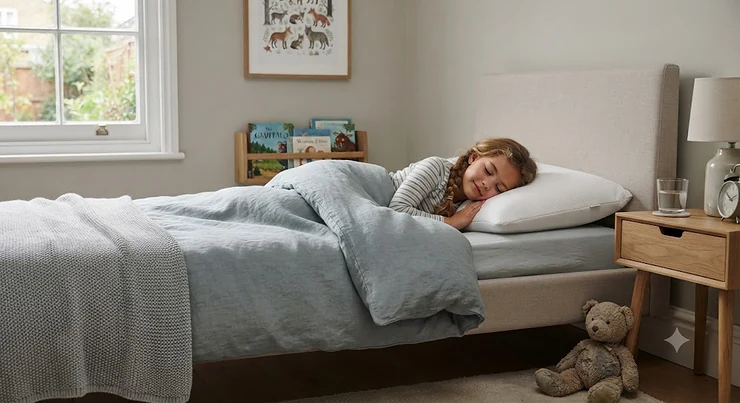
Watching a child wake up sniffling, wheezing, or scratching at their eyes every morning is one of those quietly exhausting parenting problems that rarely gets talked about until you’re deep in it. Often, the culprit isn’t the weather or a lingering cold — it’s what’s underneath their head every single night. A hypoallergenic pillow for kids is a pillow specifically designed and tested to resist the build-up of house dust mites, bacteria and mould, using either treated synthetic fibres or naturally resistant materials like wool, so that a child prone to allergies, asthma or eczema is exposed to far fewer triggers while they sleep.
This guide is built the honest way: real UK products, real specifications, and genuinely aggregated review sentiment — not invented five-star quotes or fabricated hands-on testing. What follows is commentary and analysis grounded in actual brand documentation, Allergy UK’s Seal of Approval scheme, and NHS guidance on managing dust mite allergies, so you can work out which hypoallergenic pillow for kids genuinely suits your child rather than which one simply has the loudest marketing. We’ll cover budget, mid-range and premium options, an anti allergy children’s pillow versus a standard one, and what “machine washable hypoallergenic fill” actually means in practice. All prices below are shown as ranges only, since retailer pricing changes constantly — always check the current figure before buying.
Quick Comparison Table
| Product | Age Suitability | Best For | Price Range |
|---|---|---|---|
| Silentnight Safe Nights Anti-Allergy Cot Bed Pillow | 12 months+ | Cot-to-bed transition, budget buyers | £6-£10 |
| Fogarty Little Sleepers Anti-Allergy 4 Tog Set | 12 months+ | Bundled dust mite protection (duvet + pillow) | £18-£25 |
| Silentnight Healthy Growth Breathable Anti-Allergy Pillow | 3 years+ | Extra breathability, mesh side panels | £15-£25 |
| Slumberdown Anti Allergy Pillows (2 Pack) | 4 years+ | Value two-pack, Allergy UK Seal | £10-£18 |
| Dorma Full Forever Anti-Allergy Pillow | 6 years+ | High thread count, firmer support for older kids | £14-£22 each |
| The Fine Bedding Company Breathe Standard Pillow | 8 years+ | Premium engineered hypoallergenic fill | £30-£40 |
| John Lewis Kids’ Wool Pillow | 12 months+ | Natural fibre alternative to synthetic fill | £35-£50 |
Looking at the table, age suitability matters just as much as allergy credentials here — the Silentnight Safe Nights Anti-Allergy Cot Bed Pillow and John Lewis Kids’ Wool Pillow are both cleared from 12 months, while options like The Fine Bedding Company Breathe Standard Pillow are better matched to older children and teens who need a fuller-sized pillow. Budget-conscious parents should note that the Slumberdown Anti Allergy Pillows (2 Pack) delivers genuine Allergy UK-approved protection at one of the lowest per-pillow costs on this list.
💬 Just one click — help others make better buying decisions too!😊
Top 7 Hypoallergenic Pillows for Kids: Expert Analysis
1. Silentnight Safe Nights Anti-Allergy Cot Bed Pillow — best for cot-to-bed transition
The standout feature here is the slim, softly supportive profile, purpose-built for the fact that a toddler’s head and neck need considerably less loft than an adult pillow provides. It’s filled with anti-allergy hollowfibre that carries Allergy UK’s Seal of Approval, is machine washable at 40°C, and is explicitly rated as suitable from 12 months, in line with safe sleep guidance that discourages pillows for younger babies. Based on the spec comparison with adult-sized anti-allergy pillows repurposed for children, the genuine advantage of a purpose-built cot bed pillow like this one is the reduced thickness — a full-size adult pillow can push a toddler’s neck into an unnatural angle, which this design specifically avoids.
This suits parents managing the classic cot-to-toddler-bed transition, particularly where a family history of allergies or eczema makes an anti-allergy hollowfibre fill a sensible default rather than an afterthought. Reviewers on major UK retailer sites consistently note it as good value for a first pillow, with the caveat that the slim profile some parents love is, for a small number of buyers, “too flat” once a child reaches school age and needs more support. As with any anti-allergy treated fibre, the protective effect is designed to last the lifetime of the pillow rather than wash out, per Silentnight’s own product documentation.
Pros:
- ✅ Allergy UK Seal of Approval on the anti-allergy fill
- ✅ Slim profile designed specifically for toddler neck support
- ✅ Machine washable at 40°C for easy ongoing hygiene
Cons:
- ❌ Too flat and unsupportive for children past early school age
- ❌ Not suitable for babies under 12 months per safe sleep guidance
At around £6-£10, the Silentnight Safe Nights Anti-Allergy Cot Bed Pillow is one of the most accessible entry points into hypoallergenic bedding for younger children.
2. Fogarty Little Sleepers Anti-Allergy 4 Tog Set — best bundled dust mite protection
The short standout feature is that this arrives as a matched duvet-and-pillow set rather than a standalone pillow, with both pieces sharing the same anti-allergy, anti-dust-mite and anti-microbial cotton cover treatment. The 4 tog rating keeps it lightweight and suited to milder nights or younger children who tend to overheat easily, with a soft polyester fibre filling wrapped in a breathable 100% cotton cover. What that combination means in practice is one less decision to make — rather than separately sourcing a hypoallergenic pillow and hoping the duvet matches its allergen resistance, the set standardises both.
Parents managing a child with diagnosed dust mite sensitivity, rather than general precautionary allergy-proofing, tend to rate the anti-microbial claim as the most meaningful spec here, since it addresses bacteria growth as well as dust mite allergen build-up. What most buyers overlook is that a 4 tog duvet is genuinely lightweight — families in colder parts of the UK, or with poorly insulated bedrooms, may find they need a warmer separate duvet for winter and reserve this set for spring and autumn. The set is explicitly marked suitable from 12 months only, consistent with general safe sleep advice around pillows and duvets for infants.
Pros:
- ✅ Matched duvet and pillow simplify allergen-proofing decisions
- ✅ Anti-microbial treatment addresses bacteria alongside dust mites
- ✅ Breathable 100% cotton cover reduces overheating risk
Cons:
- ❌ 4 tog duvet is too lightweight for cold UK winters alone
- ❌ Bundled pricing means less flexibility if you only need the pillow
Priced around £18-£25 for the set, the Fogarty Little Sleepers Anti-Allergy 4 Tog Set offers straightforward value for parents who’d rather solve pillow and duvet allergy-proofing in one purchase.
3. Silentnight Healthy Growth Breathable Anti-Allergy Pillow — best for extra breathability
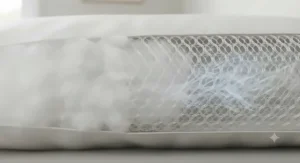
The standout feature on the heading line is the mesh side panelling, a genuinely uncommon design choice among children’s pillows that’s specifically intended to increase airflow through the pillow itself. Filled with antibacterial fibres approved by the British Allergy Foundation (now operating as Allergy UK), the pillow pairs that mesh construction with a naturally cooling cotton outer cover. On paper this means the pillow is actively working against two separate problems at once — allergen build-up through the antibacterial fill, and heat retention through the mesh sides — rather than tackling allergies alone.
This is aimed squarely at children who run hot overnight, kick off their covers, or wake up sweaty, since a standard sealed-cover pillow can trap heat regardless of how allergy-resistant its filling is. Reviewers consistently flag the breathability as the differentiator compared with Silentnight’s own simpler anti-allergy range, though a recurring theme in aggregated feedback is that some buyers find the mesh panels feel slightly less plush against the cheek than an all-cotton cover. The pillow is machine washable at 60°C, notably hotter than several rivals on this list, which is a genuine advantage for households dealing with active allergy flare-ups needing more frequent hot washing.
Pros:
- ✅ Mesh side panels genuinely improve overnight airflow
- ✅ British Allergy Foundation approved antibacterial fill
- ✅ Washable at 60°C for more thorough allergen removal
Cons:
- ❌ Mesh panelling feels less plush than an all-cotton cover
- ❌ Premium features push the price above basic anti-allergy pillows
At around £15-£25, the Silentnight Healthy Growth Breathable Anti-Allergy Pillow earns its place for children who overheat at night as much as for those managing allergies.
4. Slumberdown Anti Allergy Pillows (2 Pack) — best value two-pack
The genuinely standout feature here is that the entire Slumberdown Anti Allergy range, including this pack, has achieved the Allergy UK Seal of Approval — an independent, scientifically tested endorsement rather than a manufacturer’s own marketing claim. The unique anti-allergy filling is designed to reduce the build-up of dust mites and bacteria, and the pillows are deep-filled with a silky hollowfibre that provides firmer support than the slimmer cot-specific options on this list, making the pack better suited to slightly older children who’ve moved past a toddler pillow.
Here’s what to weigh: buying as a pack of two is genuinely useful for siblings sharing allergy-prone symptoms, or simply to have a spare ready while one pillow is being washed, and it meaningfully lowers the per-pillow cost compared with buying premium single pillows individually. What most buyers overlook is that “deep-filled” and “firm” go together here — children who prefer a very soft, flat pillow may find this pack too full initially, though hollowfibre does compress somewhat with use. Aggregated feedback from major retailer review sections consistently describes the pillows as good value relative to the Allergy UK certification they carry, which is a genuinely meaningful credential rather than a vague “hypoallergenic” label with no independent testing behind it.
Pros:
- ✅ Independently verified Allergy UK Seal of Approval
- ✅ Two-pack lowers cost per pillow for siblings or spares
- ✅ Deep-filled hollowfibre suits children needing more support
Cons:
- ❌ Firmer feel may be too full for children wanting a flat pillow
- ❌ Less specifically age-targeted than dedicated toddler ranges
At around £10-£18 for the pair, the Slumberdown Anti Allergy Pillows (2 Pack) is hard to beat on cost-per-pillow among genuinely certified anti-allergy options.
5. Dorma Full Forever Anti-Allergy Pillow — best firmer support for older kids
The short standout feature is the 233 thread count 100% cotton cover, noticeably higher than the cover density on most budget anti-allergy pillows, which manufacturers claim naturally helps resist bedbugs alongside the treated anti-allergy hollowfibre filling inside. Firm support and full retention of loft over time are the headline specs, positioning this as a pillow built to hold its shape through months of nightly use rather than flattening within weeks. Based on the spec comparison with softer, slimmer children’s pillows, the firmness here makes it a better match for side-sleeping children, since side sleepers generally need more loft under the neck than back or front sleepers.
Who should care: parents of children roughly six years and up who’ve outgrown a toddler-specific pillow but aren’t yet ready for a full adult-sized option, particularly if the child is a committed side sleeper. Reviewers consistently note the double-stitched piped edge as a durability feature that holds up well to repeated machine washing and tumble drying, which matters given how frequently allergy-conscious households tend to wash bedding. The honest trade-off is that this pillow’s firmness won’t suit every child — a front sleeper or a child who simply prefers a soft, flat pillow may find it too supportive.
Pros:
- ✅ High 233 thread count cover adds durability and bedbug resistance
- ✅ Firm support genuinely suits side-sleeping children
- ✅ Double-stitched edges hold up well to frequent washing
Cons:
- ❌ Too firm for front sleepers or children preferring a flat pillow
- ❌ Marketed primarily as an adult-size pillow, so sizing can run large
Priced around £14-£22 each, the Dorma Full Forever Anti-Allergy Pillow is a sensible step-up pick once a child has outgrown cot-specific pillow sizing.
6. The Fine Bedding Company Breathe Standard Pillow — best premium engineered fill
The standout feature is the Breathe technology itself — an engineered fill and cover system designed specifically around airflow and moisture management rather than being a standard hollowfibre pillow with an anti-allergy label added afterwards. Marketed as fully hypoallergenic, the pillow sits at the premium end of this list’s price range, reflecting The Fine Bedding Company’s positioning as a specialist bedding brand rather than a mass-market supermarket range. What that specialist focus means in practice is a pillow engineered from the ground up around temperature regulation and allergen resistance simultaneously, rather than either feature being an add-on.
This is best suited to older children and teenagers, both because of its sizing and because the price point makes more sense as an investment piece for a child who’ll use the same pillow for several years rather than one still cycling through toddler and junior sizes. Aggregated customer feedback for the Breathe range consistently highlights temperature regulation as the standout benefit reported by buyers, particularly for children who run hot or have co-existing eczema that worsens with overheating. The honest caveat: at this price point, it’s a considered upgrade rather than an entry-level purchase, and budget-conscious families may get adequate allergy protection from far cheaper Allergy UK-approved alternatives on this list.
Pros:
- ✅ Engineered fill and cover built specifically around airflow
- ✅ Well suited to children who overheat or have eczema
- ✅ Premium positioning reflects genuine specialist bedding engineering
Cons:
- ❌ Considerably pricier than supermarket anti-allergy alternatives
- ❌ Better matched to older children than toddlers or infants
At around £30-£40, the The Fine Bedding Company Breathe Standard Pillow is a premium pick best reserved for older children where the investment will be used for years.
7. John Lewis Kids’ Wool Pillow — best natural fibre alternative
The standout feature is the fill itself: pure wool rather than any form of synthetic hollowfibre, marketed as naturally hypoallergenic and temperature-regulating without any chemical anti-allergy treatment applied afterwards. Wool’s natural structure makes it inherently inhospitable to dust mites, since the fibres wick moisture away rather than retaining the humidity mites need to thrive — a genuinely different mechanism from the treated synthetic fills used across the rest of this list. The pillow is explicitly suitable from 12 months, matching the youngest age bracket alongside the Silentnight cot pillow.
Here’s what to weigh: parents specifically wary of chemical anti-allergy treatments, or managing a child with broader sensory or skin sensitivities alongside dust mite allergy, tend to be the strongest audience for a natural wool option like this one. What most buyers overlook is that wool bedding typically can’t be machine washed in the same way as synthetic anti-allergy fills — always check the specific care label, since wool-filled pillows more commonly require spot cleaning or specialist washing rather than a standard 40°C or 60°C machine cycle, which is a genuine practical trade-off against the “machine washable hypoallergenic fill” convenience of the synthetic options above.
Pros:
- ✅ Naturally hypoallergenic with no added chemical treatment
- ✅ Wool’s moisture-wicking structure genuinely deters dust mites
- ✅ Temperature-regulating for both warm and cool nights
Cons:
- ❌ Care instructions are typically stricter than machine washable fills
- ❌ Premium natural fibre pricing versus synthetic alternatives
At around £35-£50, the John Lewis Kids’ Wool Pillow is the clearest natural-fibre option here for families wanting to avoid treated synthetic fills altogether.
How to Choose a Hypoallergenic Pillow for Kids
Choosing between seven genuinely different pillows comes down to a handful of practical questions rather than which packaging says “hypoallergenic” the loudest.
- Check the age recommendation first. Pillows and duvets generally aren’t recommended for babies under 12 months, so confirm suitability before buying for a younger child.
- Look for an independent certification, such as the Allergy UK Seal of Approval, rather than relying on an unverified “hypoallergenic” label alone.
- Match firmness to sleep position. Side sleepers generally need more loft and support than back or front sleepers.
- Decide between synthetic anti-allergy fill and natural wool, since each resists dust mites through a different mechanism with different care requirements.
- Check the washing temperature. Higher-temperature washable pillows, such as 60°C options, offer more thorough allergen removal for active flare-ups.
- Consider buying a pair or set if siblings share a room or symptoms, since a spare pillow ready to use while one is being washed is genuinely useful.
- Set a realistic budget band, since prices here range from roughly £6 for a basic cot pillow to over £40 for a premium engineered option.
What to Expect: Real-World Performance for Allergy-Prone Sleepers
Packaging claims rarely tell the full story of how a pillow performs across a real winter of night-time symptoms. In practice, most anti-allergy pillows won’t eliminate a child’s symptoms outright — the honest expectation, based on NHS and Allergy UK guidance, is a reduction in exposure to dust mite allergen rather than a complete cure, since environmental factors like carpets, soft toys and room humidity all contribute too. Reviewers consistently note that the biggest noticeable difference tends to come in the first few weeks after switching from a well-used, non-allergy pillow to a fresh anti-allergy one, simply because older pillows accumulate dust mite allergen over years of use regardless of their original specification. What the spec sheet won’t tell you, but aggregated parent feedback suggests, is that pairing a new anti-allergy pillow with regular hot washing tends to matter more for symptom improvement than the specific brand chosen.
Anti Allergy Children’s Pillow vs Standard Kids Pillow: What Actually Changes
A standard children’s pillow is built around comfort and size alone — soft filling, an appropriately small profile, nothing more. An anti allergy children’s pillow adds a specific layer of protection on top of that: either a chemically treated hollowfibre fill designed to resist dust mite colonisation and bacterial growth, or a naturally resistant material like wool, plus typically a tighter-woven cover fabric that makes it harder for allergens to pass through in the first place. The practical difference shows up over months rather than overnight — a standard pillow accumulates dust mite allergen at a normal rate, while a genuinely certified anti-allergy option is independently tested to resist that build-up for the pillow’s working life.
The honest trade-off is cost and, in some cases, firmness — anti-allergy treatment and tighter weaves can add a few pounds to the price and occasionally result in a slightly less plush feel than an untreated equivalent. For a child with no diagnosed allergy, asthma or eczema, a standard pillow may be entirely adequate. For a child with any of those conditions, or a strong family history of them, the additional protection an anti allergy children’s pillow provides is generally considered worthwhile by allergy specialists.
Best Pillow for Child With Allergies: Matching Fill Type to Symptoms
There’s no single best pillow for child with allergies that suits every symptom profile, because different allergy presentations respond to slightly different features. A child whose main symptoms are nasal — sneezing, a blocked nose, itchy eyes — tends to benefit most from any independently certified anti-allergy fill, since the priority is simply reducing dust mite allergen exposure, making options like the Slumberdown Anti Allergy Pillows (2 Pack) a sensible, affordable starting point. A child whose allergies overlap with eczema or who runs hot overnight may do better with a breathable design like the Silentnight Healthy Growth Breathable Anti-Allergy Pillow or the engineered airflow system in The Fine Bedding Company Breathe Standard Pillow, since overheating is a known trigger for eczema flare-ups independent of dust mite exposure.
Children with a broader sensitivity to synthetic materials or chemical treatments, rather than dust mites specifically, are often better matched to a natural fill such as the John Lewis Kids’ Wool Pillow. As ever, for a child with diagnosed, severe or worsening allergy or asthma symptoms, a pillow change is a sensible supporting step rather than a substitute for medical advice — the NHS’s guidance on asthma is a useful starting point for understanding when symptoms warrant a GP conversation rather than a bedding change alone.
Dust Mite Proof Pillow Cover: Do You Need One As Well?
A dust mite proof pillow cover, sometimes called an encasement or protector, is a separate zip-fastened barrier that goes over the pillow itself, underneath the normal pillowcase, and is a genuinely different product from the anti-allergy pillows covered in this guide. According to guidance referenced by NHS trust dust mite advice for patients, a proper barrier cover should be breathable, completely enclose the item, and ideally be tested to confirm it actually prevents allergen escape rather than simply claiming to. Several of the brands covered in this guide, including Silentnight and Fogarty, also sell matching anti-allergy pillow protectors as companion purchases.
Here’s what to weigh: an anti-allergy pillow with treated fill reduces allergen build-up inside the pillow itself, while a dust mite proof pillow cover adds a physical barrier on top of whatever pillow you already own. For a child with a confirmed, more severe dust mite allergy, using both together — an anti-allergy pillow plus a dedicated barrier cover — is generally considered the more thorough approach, based on advice from Allergy UK and NHS allergy clinics, rather than relying on either measure alone.
Asthma Friendly Bedding: Building a Full Sleep System Around the Pillow
A single hypoallergenic pillow is one piece of genuinely asthma friendly bedding, not the whole solution. Asthma + Lung UK’s guidance on asthma triggers lists dust mites alongside mould, damp and indoor air pollution as common indoor triggers, which means a matching anti-allergy or dust-mite-resistant duvet and mattress protector generally deliver more consistent symptom improvement than an isolated pillow swap. A simple decision framework: if your child’s asthma is well controlled with occasional mild symptoms, an anti-allergy pillow alone, such as the Silentnight Safe Nights Anti-Allergy Cot Bed Pillow, is often a reasonable starting point.
If symptoms are more persistent or the child has a diagnosed dust mite allergy alongside asthma, building out asthma friendly bedding properly — anti-allergy pillow, matching duvet such as the Fogarty Little Sleepers Anti-Allergy 4 Tog Set, and a dust mite proof mattress protector — tends to be the more effective combined approach, alongside continuing any prescribed asthma medication and following medical advice on managing triggers.
Machine Washable Hypoallergenic Fill: Why Washing Method Matters
Machine washable hypoallergenic fill matters for a genuinely practical reason: anti-allergy treatments on synthetic fibres are generally designed to be permanent, but regular washing is still what physically removes accumulated dust mite allergen, skin cells and bacteria from daily use. Most of the synthetic pillows on this list, including the Silentnight Healthy Growth Breathable Anti-Allergy Pillow, are washable at 40-60°C, with the higher temperature generally removing allergens more thoroughly, based on NHS and Allergy UK dust mite guidance recommending hot washing as part of an allergen reduction routine.
What most buyers overlook is that not every “hypoallergenic” pillow is genuinely machine washable — natural fills like the wool option covered in this guide typically need spot cleaning or specialist care rather than a standard cycle, and running an unsuitable pillow through a hot wash can damage the filling or void a warranty. Always check the specific care label rather than assuming machine washable hypoallergenic fill applies universally across every product marketed as anti-allergy.
Practical Usage Guide: Caring for Your Child’s Hypoallergenic Pillow
Getting genuine long-term value from any hypoallergenic pillow comes down to a consistent washing routine rather than the pillow’s spec sheet alone. Wash synthetic anti-allergy pillows every one to two months at the highest temperature the care label allows, generally 40-60°C, and always dry thoroughly before use, since a damp pillow left partially dried actively encourages the mould growth these products are designed to resist. Common mistakes in the first few months include over-drying on high heat, which can compress and flatten hollowfibre filling prematurely, and skipping a dedicated pillow protector, which meaningfully shortens how long the anti-allergy treatment stays effective against daily wear.
Building a simple maintenance habit — rotate two pillows so one is always clean while the other airs, avoid placing pillows directly against a damp wall or window, and replace any hypoallergenic pillow roughly every one to two years regardless of visible condition, since allergen resistance and support both degrade with age — will meaningfully extend the practical benefit of whichever pillow you choose.
Common Mistakes When Buying a Hypoallergenic Pillow for Kids
The most common mistake is treating “hypoallergenic” as an independently regulated term rather than a marketing claim, when in the UK it isn’t legally defined or independently verified unless the product also carries genuine third-party certification such as the Allergy UK Seal of Approval. A second common mistake is buying an adult-sized pillow for a young child on the assumption that “anti-allergy” matters more than fit, when an oversized pillow can affect neck alignment regardless of how allergen-resistant its filling is. A third mistake is assuming a single pillow swap will resolve symptoms that are actually being driven by carpets, soft toys, or an unwashed mattress, when — per NHS and Allergy UK guidance — a combined approach across the whole bedroom tends to be needed for a noticeable improvement. Finally, some parents skip checking the age suitability label altogether; every pillow covered in this guide specifies a minimum age, and safe sleep guidance generally advises against pillows for babies under 12 months regardless of allergy credentials.
Safety and Age Guidance: What UK Parents Need to Know
Every pillow covered in this guide carries an explicit minimum age recommendation, and it’s worth taking that seriously rather than treating it as a rough guideline — pillows and duvets are not generally recommended for babies under 12 months due to suffocation and overheating risk, a position reflected consistently across the UK bedding brands referenced here. Beyond age suitability, checking for independent allergy certification, such as the Allergy UK Seal of Approval carried by several products in this guide, gives genuinely more confidence than an unverified “hypoallergenic” label alone, since the seal is only awarded after independent scientific testing against defined protocols.
If your child has a diagnosed allergy, asthma or eczema condition, a bedding change is best treated as a supporting measure alongside medical advice rather than a replacement for it — the NHS’s asthma guidance and your GP or asthma nurse remain the right first point of contact for managing symptoms, with bedding choices forming one part of a broader trigger-reduction plan.

FAQ
❓ What is a hypoallergenic pillow for kids?
❓ At what age can a child use a pillow?
❓ How often should you wash a hypoallergenic pillow?
❓ Are hypoallergenic pillows actually effective for allergies?
❓ Is wool or synthetic fill better for a child's allergies?
Conclusion
A genuinely good hypoallergenic pillow for kids isn’t about which packaging shouts “allergy-friendly” loudest — it’s about matching age suitability, firmness and certification to your child’s actual symptoms. For younger children moving out of a cot, the Silentnight Safe Nights Anti-Allergy Cot Bed Pillow or John Lewis Kids’ Wool Pillow are sensible, appropriately sized starting points. For value-conscious families or siblings sharing a room, the Slumberdown Anti Allergy Pillows (2 Pack) delivers genuine Allergy UK-certified protection without a premium price tag. For children who overheat or have overlapping eczema, breathability-focused options like the Silentnight Healthy Growth Breathable Anti-Allergy Pillow or The Fine Bedding Company Breathe Standard Pillow are worth the extra consideration.
Whichever you choose, remember a pillow swap works best as part of a wider approach — regular hot washing, a dust mite proof pillow cover where symptoms are more severe, and matching asthma friendly bedding across the whole bed — rather than a single fix on its own. Always check current pricing before you buy, since retailer prices shift throughout the year.
Recommended for You
- Best Pillow for Teenagers 2026: 7 Picks That Actually Help
- Best Junior Pillow 2026: 7 Top Picks & Size Guide for Kids
- Best Toddler Pillow 2026: 7 Safe, Comfy Picks Parents Trust
Disclaimer: This article contains affiliate links. As an Amazon Associate, I earn from qualifying purchases. If you purchase products through these links, we may earn a small commission at no additional cost to you.
✨ Found this helpful? Share it with your friends! 💬🤗
