
In This Article
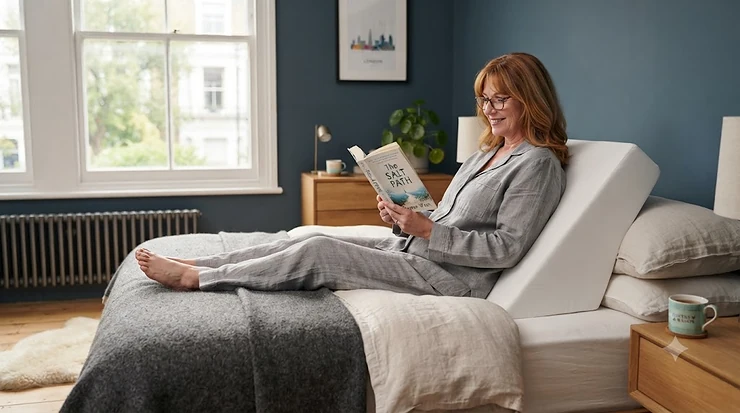
There’s a particular kind of exhaustion that comes from being woken at 2am by a burning sensation crawling up your chest, night after night. If gastro-oesophageal reflux disease has turned bedtime into something to dread rather than look forward to, you’ve probably already read that sleeping at an incline can help — and that’s exactly where a wedge pillow for GERD comes in. What is a wedge pillow for GERD? In simple terms, it’s a firm, triangular foam pillow that raises your chest and head above the level of your stomach while you sleep, using gravity to help keep stomach acid where it belongs.

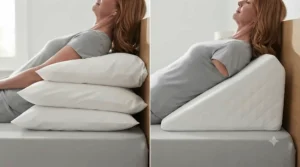
This isn’t a fringe idea. According to NHS guidance on heartburn and acid reflux, raising the head end of the bed by around 10 to 20cm so your chest and head sit above your waist can genuinely help stop stomach acid travelling up towards your throat. The same NHS page is specific that this should be a proper incline — using blocks or a wedge — rather than simply piling up extra pillows, since stacking regular pillows tends to bend the body at the waist instead of elevating it as a whole, which can make reflux worse rather than better.
This guide walks through seven real, currently available wedge pillows for GERD, gastro-oesophageal reflux, and nighttime heartburn on amazon.co.uk, with honest analysis of the height, firmness, and materials that actually matter. We’ll also look at what NHS sleep advice says about elevation, and how a wedge pillow differs from the “extra pillows” trick most of us have tried and found wanting.
Quick Comparison Table: Wedge Pillows for GERD
| Wedge Pillow | Height | Material | Price Range | Best For |
|---|---|---|---|---|
| Brillars Bed Wedge Pillow Cushion | Standard incline | Foam, washable cover | Around £25-£35 | First-time buyers on a budget |
| Brillars Premium Bamboo Bed Wedge Pillow | Standard incline | Memory foam, bamboo cover | Around £30-£40 | Hot sleepers wanting cooling |
| Welzona Wedge Pillow Support Cushion | 7.5″, 10″ or 12″ options | High-density foam + gel memory foam top | Around £30-£45 | Sleepers wanting a custom incline |
| Kolbs Bed Wedge Pillow | 19cm (7.5″) | Foam, jacquard cover | Around £25-£35 | Reading in bed as well as sleeping |
| Restorology Extra Large Wedge Pillow | Standard incline, extra wide | Foam, zip cover | Around £30-£40 | Broader shoulders, side sleepers |
| Orthologics Large Bed Wedge | Standard incline, large | High-density foam | Around £25-£35 | Straightforward, no-frills support |
| Putnams Bed Wedge | 15cm (NHS-referenced range) | UK-made foam, washable cover | Around £45-£65 | Anyone wanting a UK-handmade, clinically-informed height |
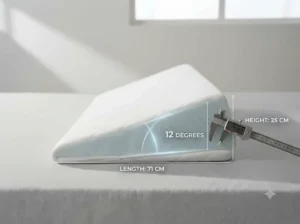
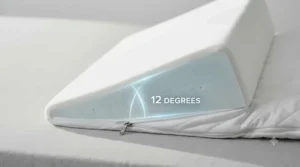
Looking at the spread above, height is really the variable that separates these products from ordinary pillows: every wedge pillow for GERD on this list sits within or close to the 10-20cm range that NHS guidance references, whereas a stack of two or three normal pillows rarely achieves a genuine, stable incline. The Putnams Bed Wedge stands out for explicitly designing its 15cm height around published NHS and clinical elevation figures, while the Welzona Wedge Pillow Support Cushion is the most flexible option if you want to experiment with a lower or steeper angle.
💬 Just one click — help others make better buying decisions too!😊
Top 7 Wedge Pillows for GERD: Expert Analysis
1. Brillars Bed Wedge Pillow Cushion — solid, affordable entry point for first-time buyers
The standout feature here is straightforward value: a genuinely firm foam incline at a price that makes it easy to try without a big financial commitment. That matters for anyone who’s never used a wedge before and isn’t yet sure whether elevation will suit their particular reflux pattern.
The foam core holds its incline shape rather than compressing flat overnight, which is the single most important quality a wedge pillow needs — a wedge that sinks under body weight stops doing its job halfway through the night. Based on the spec comparison with softer alternatives on this list, this firmer foam construction is a strong pick for back sleepers who want reliable, consistent elevation rather than a plush feel. Reviewers consistently report that it works well for post-surgical elevation and general acid reflux relief, with the cover described as easy to remove and wash, though a smaller number note the size runs on the compact side for taller sleepers.
The washable, removable cover is a genuinely practical touch, since a pillow used every single night needs to be kept clean far more than an occasional-use cushion.
Pros:
- ✅ Firm foam core holds its incline shape overnight
- ✅ Removable, washable cover for easy hygiene
- ✅ Budget-friendly entry point for first-time wedge users
Cons:
- ❌ Runs compact for taller or broader-shouldered sleepers
- ❌ No cooling technology in the standard cover
Typically priced around £25-£35, this is a sensible low-risk way to find out whether elevation genuinely eases your nighttime heartburn before spending more.
2. Brillars Premium Bamboo Bed Wedge Pillow — best for hot sleepers who also need reflux relief
The standout advantage is the antibacterial, breathable bamboo-derived cover layered over a memory foam top, which addresses a problem plenty of wedge pillow users don’t anticipate: foam inclines can trap heat against the upper back and chest, especially in warmer months. Here’s what most buyers overlook about wedge pillows generally — the material touching your skin matters just as much as the angle.
Underneath the bamboo cover sits a contouring memory foam layer over a firmer support base, giving a softer initial feel than the standard Brillars model while still maintaining the structural incline needed for reflux relief. Reviewers consistently describe the pillow as comfortable enough for extended reading or TV-watching in bed, not just sleeping, and note genuine relief from acid reflux symptoms after regular use, with one recurring theme being that it’s noticeably more comfortable than stacking multiple ordinary pillows. The most common criticism is that the firmness runs softer than some reflux sufferers expect, since the memory foam top layer prioritises comfort over the very firmest possible incline.
The side pockets are a small but genuinely useful addition for stashing a phone, glasses, or reading glasses within reach during a wakeful night.
Pros:
- ✅ Breathable bamboo cover reduces heat build-up
- ✅ Memory foam top adds comfort without losing the incline
- ✅ Handy side pockets for essentials
Cons:
- ❌ Softer than some reflux sufferers prefer
- ❌ Costs more than the standard foam Brillars model
Usually priced around £30-£40, this is the pick for anyone whose nighttime heartburn is compounded by running hot in bed.
3. Welzona Wedge Pillow Support Cushion — best for finding your own optimal incline
The standout feature is genuine choice: this wedge is available in 7.5″, 10″, and 12″ heights, which is a meaningfully different proposition to most single-height wedges on the market. Reflux severity varies hugely between individuals, and what works for a mild, occasional case may be entirely inadequate for someone with more persistent GORD symptoms.
A 10.5″ high-density foam core provides the structural stability that keeps the incline from collapsing, topped with a 1.5″ gel-infused memory foam layer aimed at improving both comfort and temperature regulation. What the spec sheet won’t tell you, but user reports suggest, is that taller wedges in the 10-12″ range can occasionally introduce mild neck strain if your pillow underneath isn’t adjusted to match the new angle, so it’s worth experimenting with your regular pillow position once the wedge is in place. Reviewers consistently praise the range of height options and the non-slip base for keeping the wedge in place through the night, with the machine-washable knit cover and side-zip design earning particular mention for convenience.
CertiPUR-US and OEKO-TEX 100 certifications on the foam are a genuinely reassuring detail for anyone concerned about off-gassing or chemical safety in a product they’ll have close to their face for eight hours a night.
Pros:
- ✅ Three height options to match your reflux severity
- ✅ CertiPUR-US and OEKO-TEX certified foam
- ✅ Non-slip base keeps the wedge in place overnight
Cons:
- ❌ Taller settings can need pillow repositioning to avoid neck strain
- ❌ Pricier than single-height alternatives
At around £30-£45 depending on the height you choose, the flexibility here genuinely justifies the premium over a fixed-height wedge.
4. Kolbs Bed Wedge Pillow — best dual-purpose pillow for sleeping and sitting up in bed
The standout feature is the 19cm (roughly 7.5″) height paired with a genuinely presentable jacquard cover, making this one of the few wedges on this list that looks equally at home used for reading or laptop work as it does for overnight elevation. That dual-purpose design is a real practical advantage if your bed doubles as a daytime resting spot.
The height sits close to the lower end of NHS-referenced elevation figures, which on paper means a gentler incline that’s easier to adjust to for first-time users, while still providing genuine postural elevation rather than the negligible lift of ordinary pillows. Reviewers consistently note comfort for both sleeping and sitting upright, with several specifically mentioning relief from acid reflux and heartburn symptoms alongside general back support, though a handful report the jacquard cover shows wear faster than plainer washable fabrics under frequent laundering. It’s a pillow that reads as “everyday comfort first, clinical incline second” — a fair trade-off for anyone who wants a wedge that doesn’t look purely medical.
The chic cover design is a small thing, but it matters if the pillow will be visible in a shared bedroom rather than tucked away.
Pros:
- ✅ Comfortable dual-purpose use for sleeping and sitting up
- ✅ Height close to NHS-referenced elevation range
- ✅ More decorative jacquard cover than typical medical wedges
Cons:
- ❌ Jacquard cover wears faster under frequent washing
- ❌ Less firm than dedicated clinical-style wedges
Typically priced around £25-£35, this is a strong pick if you want a wedge that blends into everyday bedroom life rather than looking like medical equipment.
5. Restorology Extra Large Wedge Pillow — best for broader shoulders and side sleepers
The standout feature is genuine width: this is built as an extra-large wedge, which matters more than it might sound for anyone who shifts position during the night rather than staying rigidly on their back. A narrow wedge can leave a shoulder or arm hanging off the edge, which undermines both comfort and the consistency of the incline.
Based on the spec comparison with narrower wedges on this list, the extra surface area gives genuinely more room to reposition without sliding off the elevated section entirely, which is a real advantage for side sleepers managing GORD — a position the NHS’s own patient advice, referenced by several UK hospital trusts, specifically favours for its reflux-reducing properties when combined with elevation. Reviewers consistently describe the size as accommodating for larger or broader-shouldered sleepers and appreciate the removable zip cover for washing, with the main recurring complaint being that the extra width makes the pillow noticeably bulkier to store away during the day.
If your bed is a double or larger and you don’t want to feel constrained to one exact sleeping spot, the extra surface area here is a genuinely practical difference rather than just a marketing size label.
Pros:
- ✅ Extra-wide design suits side sleepers and shoulder repositioning
- ✅ Removable, washable zip cover
- ✅ More forgiving of movement through the night
Cons:
- ❌ Bulkier to store during the day
- ❌ Takes up more mattress space, less ideal for shared beds
Usually priced around £30-£40, the extra size is worth the modest premium if you’re not a still, dedicated back sleeper.
6. Orthologics Large Bed Wedge — best no-frills, straightforward support
The standout feature is simplicity done well: a large, high-density foam wedge without cooling gel layers, jacquard covers, or adjustable heights — just a firm, stable incline built to a consistent standard. For some reflux sufferers, that’s exactly the point: fewer variables, less to go wrong, and a predictable angle every single night.
The high-density foam construction prioritises structural stability over plush comfort, meaning it’s less likely to develop soft spots or lose its incline shape over months of nightly use compared with softer memory-foam-topped alternatives. Reviewers consistently note that this model does what it says without complication, with acid reflux and GERD relief cited as the main reason for purchase, alongside general back support for sitting up in bed. The trade-off, honestly, is that a handful of reviewers find the firmness less immediately comfortable than the gel- or memory-foam-topped options elsewhere on this list, which is worth weighing if plush comfort matters more to you than pure structural consistency.
For anyone who’s tried softer wedges and found they compress too much overnight, this firmer, no-frills option is worth a look specifically because of what it doesn’t include.
Pros:
- ✅ High-density foam resists sagging over months of use
- ✅ Large size suits most adult body types
- ✅ Simple, predictable incline without extra features to fail
Cons:
- ❌ Firmer feel takes adjustment for some sleepers
- ❌ No cooling or memory foam comfort layer
Typically priced around £25-£35, this is the pick for anyone who wants a wedge pillow for GERD that just does the one job reliably.
7. Putnams Bed Wedge — best UK-handmade option built around clinical elevation guidance
The standout feature is that this wedge is handmade in Devon at a 15cm height, a figure the brand explicitly ties to the same 10-20cm elevation range referenced in NHS advice on heartburn and acid reflux. That’s a genuinely different starting point to most wedges, which are designed primarily around comfort and only secondarily reference any clinical basis for their height.
On paper this means the incline is neither so shallow it barely helps nor so steep that side sleeping becomes difficult, striking a middle ground that the brand states is comfortable enough for sleeping on either side, left being generally preferred for reflux relief. Reviewers consistently praise the UK manufacturing quality and the two-year guarantee, with several long-term reflux sufferers specifically noting it as more effective than the improvised books-and-cushions approach they’d tried previously. The genuine trade-off is price: this sits meaningfully above the other six options here, reflecting UK handmade production rather than imported mass manufacturing, so it’s one to consider if budget stretches far enough to prioritise domestic craftsmanship and a longer guarantee period.
A fitted, washable, zipped cover is included as standard, and the brand’s own product information references a 2015 study in the Journal of Allergy and Clinical Immunology examining elevation and reflux reduction — worth independently verifying if you want to dig into the underlying research yourself.
Pros:
- ✅ Height explicitly informed by NHS-referenced elevation range
- ✅ Handmade in the UK with a two-year guarantee
- ✅ Comfortable enough for side sleeping, not just flat on the back
Cons:
- ❌ Noticeably pricier than mass-manufactured alternatives
- ❌ Longer lead times possible given UK handmade production
Typically priced around £45-£65, this is the wedge to consider if you want the closest match to published clinical elevation advice and don’t mind paying for UK craftsmanship to get it.
Getting the Most From Your Wedge Pillow (Practical Usage Guide)
Buying a wedge pillow for GERD is only the first step — how you use it night to night matters just as much as which model you choose. First, give yourself several nights to adjust; sleeping at an incline is a genuine change from lying flat, and most people report the odd sensation fades within a week as the body adapts to the new position. Second, position the wedge so your chest and head are elevated as a single continuous incline, rather than adding a regular pillow underneath your head on top of the wedge, which can crimp the neck and partially undo the benefit of the elevation.
Third, pair the wedge with sensible evening habits: NHS-referenced advice consistently recommends avoiding food in the three hours before bed and lying on your left side where possible, both of which work alongside — not instead of — the elevation itself. Fourth, check the washable cover’s care instructions before your first wash, since foam cores generally cannot be machine washed and doing so can permanently damage the structure. A common first-30-days mistake is expecting instant, dramatic relief; for many people, wedge elevation is one part of a broader set of lifestyle adjustments rather than a single fix, and symptoms that persist despite consistent use are worth discussing with a GP or pharmacist rather than assuming the wedge itself has failed.
Real-World Scenarios: Which Wedge Pillow Suits You?
Picture three genuinely different sleepers dealing with nighttime heartburn. First, someone in their late 20s who’s just started noticing occasional reflux after big evening meals and wants to try elevation without a big financial commitment. For them, the Brillars Bed Wedge Pillow Cushion or Orthologics Large Bed Wedge make sense — straightforward, affordable, and enough to establish whether elevation genuinely helps before investing further.
Second, someone with diagnosed GORD who’s read the NHS sleep advice on elevation and specifically wants a height that matches the clinically referenced range, alongside UK-made durability they can rely on for years. The Putnams Bed Wedge, built around that exact elevation figure, is the natural fit here even at its higher price point. Third, a side sleeper with broader shoulders who’s found narrower wedges leave them sliding off during the night. The Restorology Extra Large Wedge Pillow solves that specific, practical problem that a standard-width wedge simply can’t. According to the Guts UK charity’s guidance on heartburn and reflux, lifestyle measures including sleep position and elevation are a genuinely useful first line of management alongside any medication a GP has prescribed.
How to Choose a Wedge Pillow for GERD
- Check the height against NHS-referenced elevation figures. A genuine incline in the 10-20cm range is what the evidence points to; wedges dramatically shorter than this may not provide meaningful reflux relief.
- Prioritise firmness over plushness. A wedge that compresses flat under body weight partway through the night stops providing the incline you bought it for — firmer foam cores tend to hold their shape longer.
- Consider your dominant sleep position. Side sleepers, particularly those who favour the left side, generally benefit from a wider wedge like the Restorology Extra Large Wedge Pillow that doesn’t constrain movement.
- Factor in temperature if you run hot. Foam wedges can trap heat against the back and chest; breathable covers like the bamboo layer on the Brillars Premium Bamboo Bed Wedge Pillow address this directly.
- Check for safety certifications. CertiPUR-US and OEKO-TEX STANDARD 100, as found on the Welzona Wedge Pillow Support Cushion, indicate the foam has been tested against harmful chemicals — a reasonable baseline to look for.
- Read aggregated review sentiment for durability, not just initial comfort. A wedge that feels great on night one but sags within months isn’t solving the underlying problem.
- Weigh UK-made options against price if elevation precision matters to you. The Putnams Bed Wedge costs more but is explicitly designed around published clinical elevation figures rather than general comfort alone.
✨ Don’t Miss These Exclusive Deals!
🔍 Take your search for the right wedge pillow for GERD to the next level with these carefully selected picks. Click on any highlighted item to check current pricing and availability. A calmer, less interrupted night’s sleep might be closer than you think!
Gastro-Oesophageal Reflux: What’s Actually Happening at Night
Gastro-oesophageal reflux occurs when the ring of muscle at the bottom of the oesophagus — the lower oesophageal sphincter — doesn’t close properly, allowing stomach acid to travel back up into the food pipe. Wikipedia’s overview of gastro-oesophageal reflux disease notes that when this happens frequently enough to cause recurring symptoms or complications, it’s classified as GORD (or GERD in American usage), rather than the occasional heartburn most people experience from time to time.
Lying flat removes the assistance gravity normally provides in keeping stomach contents down, which is precisely why gastro-oesophageal reflux symptoms so often intensify specifically at night, even in people who manage reasonably well during waking hours. This is the core mechanism a wedge pillow addresses directly: by keeping the chest and head elevated above the stomach, it restores some of that gravitational assistance that a flat sleeping position removes entirely. Reviewers consistently report that nighttime symptoms specifically — as opposed to daytime reflux triggered by meals or bending over — respond well to consistent elevation, which lines up with the underlying physiology rather than being a coincidental effect.

Nighttime Heartburn: Why It’s Different From Daytime Symptoms
Nighttime heartburn carries a particular risk that daytime episodes generally don’t: prolonged acid contact with the oesophagus while you’re asleep and not swallowing as frequently, since swallowing is one of the body’s natural mechanisms for clearing acid back down. Hospital patient guidance distributed across several NHS trusts consistently recommends avoiding food in the three hours before bed for exactly this reason — a full stomach combined with a horizontal position and reduced overnight swallowing is a fairly reliable recipe for reflux.
What most buyers overlook about nighttime heartburn specifically is that it isn’t simply “daytime heartburn that happens to occur later” — the combination of horizontal posture, reduced swallowing frequency, and often a fuller stomach from an evening meal creates genuinely different conditions to reflux triggered by, say, bending over after lunch. That’s precisely why elevation strategies that make no difference to daytime symptoms can still meaningfully reduce nighttime episodes, and why a wedge pillow for GERD is specifically marketed and used as a nighttime intervention rather than an all-day solution.
NHS Sleep Advice on Elevation and Reflux
It’s worth being precise about what NHS sleep advice actually says, because the detail matters more than the headline. The official guidance states that using wood, bricks, or books to raise the head end of the bed by 10 to 20cm — so the chest and head sit above the level of the waist — can help stop stomach acid travelling up towards the throat. Critically, the same guidance is explicit that this should not be achieved by simply adding extra pillows, since piling up pillows tends to bend the body at the waist rather than raising it as a continuous incline, which can actually increase abdominal pressure rather than relieve it.
This is exactly the gap a proper wedge pillow fills: rather than stacking soft pillows that compress unevenly and crease the body at an angle, a firm foam wedge provides the single, stable, continuous slope that NHS sleep advice on elevation actually describes. It’s a subtle but genuinely important distinction, and one that’s easy to miss if you’ve only ever tried the “extra pillows” approach and found it uncomfortable or ineffective. None of the products in this guide are a substitute for medical advice, and the University Hospitals Sussex NHS patient guidance on managing gastro-oesophageal reflux is a genuinely useful reference for the fuller picture of lifestyle measures alongside elevation.
Common Mistakes When Buying a Wedge Pillow for GERD
The most frequent mistake is choosing a wedge based on price or appearance alone without checking the actual height, resulting in an incline too shallow to make a meaningful difference to reflux symptoms. A second common error is assuming any “wedge-shaped” cushion will do, when in fact many decorative or reading-support wedges are designed for a much gentler, more comfort-focused angle than the firmer incline needed for genuine reflux relief.
Third, buyers frequently add their usual sleeping pillow directly under their head on top of the wedge, inadvertently recreating the same “bent at the waist” problem NHS guidance specifically warns against with stacked pillows. Fourth, it’s easy to overlook firmness in favour of initial comfort, buying a soft, plush wedge that feels wonderful in the shop but compresses flat within a couple of hours of actual sleeping weight. Finally, some buyers give up on a wedge pillow after just one or two uneasy nights, when the more honest picture — based on aggregated review sentiment across this category — is that a genuine adjustment period of a week or so is common before the new sleeping position starts to feel natural.
Wedge Pillows vs Extra Pillows: What’s the Real Difference?
| Factor | Wedge Pillow for GERD | Stacking Regular Pillows |
|---|---|---|
| Incline shape | Single, continuous, stable slope | Uneven, compresses at different rates |
| Height consistency | Fixed or adjustable, holds shape all night | Shifts and flattens as you move |
| Body position | Elevates chest and head as one unit | Can bend the body at the waist |
| NHS guidance alignment | Matches the 10-20cm elevation NHS references | Explicitly cautioned against in NHS advice |
| Best For | Genuine, consistent nighttime elevation | Short-term comfort, not sustained reflux relief |
The core distinction isn’t really about comfort, though a good wedge is generally more comfortable than a precarious pillow stack — it’s about whether the incline actually holds its shape and angle through a full night of movement. Reviewers consistently report that the biggest practical difference shows up around the middle of the night, when stacked ordinary pillows have typically shifted, compressed, or slid apart, while a firm foam wedge maintains the same elevation from the moment you lie down until morning. For anyone who has already tried the pillow-stacking approach and found it unreliable or uncomfortable, that structural consistency is the genuine upgrade a dedicated wedge pillow for GERD offers.
Long-Term Considerations: Living With a Wedge Pillow
Adjusting to sleeping at an incline is a genuine lifestyle change, and it’s worth setting realistic expectations for the adaptation period. Most reviewers across the products in this guide describe an initial week or two of feeling slightly unusual, particularly if you’ve slept flat your entire life, followed by the new position becoming simply normal. Partners sharing a bed sometimes need their own adjustment period too, particularly if only one person is using the wedge, since the sleeping surface is no longer perfectly level across the whole bed.
Durability is a genuinely practical long-term consideration: high-density foam wedges like the Orthologics Large Bed Wedge tend to hold their incline shape for longer under nightly use than softer memory-foam-topped alternatives, though the latter generally offer more immediate comfort. A washable, removable cover — a feature shared by every product in this guide — is worth prioritising for straightforward long-term hygiene, since a pillow used every single night accumulates sweat and skin oils considerably faster than an occasional-use cushion.
Safety, Materials & When to See a GP
When buying foam bedding products in the UK, look out for CertiPUR-US and OEKO-TEX STANDARD 100 certifications, both of which several products in this guide carry — they indicate the foam has been independently tested against a range of potentially harmful chemicals and meets recognised safety standards. It’s also worth checking that any wedge pillow you buy from a UK retailer complies with the Furniture and Furnishings (Fire) (Safety) Regulations, which apply to foam-filled bedding products sold in the UK.
It’s important to be clear-eyed about what a wedge pillow can and can’t do. A wedge pillow is a comfort and lifestyle measure that may reduce nighttime symptoms for many people, not a medical treatment, and it isn’t a substitute for proper diagnosis or prescribed medication. NHS guidance is clear that if symptoms are getting worse, or if you experience other symptoms like food getting stuck in your throat, frequently being sick, or losing weight for no reason, this warrants a conversation with a GP or NHS 111 rather than relying on sleep positioning alone. If lifestyle changes and pharmacy medicines aren’t helping your heartburn after a reasonable trial period, that’s also a clear signal to speak to a GP about further options.
FAQ
❓ How high should a wedge pillow be for GERD?
❓ Can I just use extra pillows instead of a wedge pillow?
❓ How long does it take to adjust to sleeping on a wedge pillow?
❓ Is a wedge pillow the same as an anti-snore pillow?
❓ Should I see a GP about nighttime heartburn before trying a wedge pillow?
Conclusion
There’s no single “best” wedge pillow for GERD — there’s a best one for your specific reflux severity, sleep position, and how much you want that height to align precisely with published clinical elevation figures. If you’re testing the waters, the Brillars Bed Wedge Pillow Cushion or Orthologics Large Bed Wedge offer a low-risk way to find out whether elevation genuinely helps your nighttime heartburn. If you want the most clinically-informed option and don’t mind paying more for UK craftsmanship, the Putnams Bed Wedge is built specifically around NHS-referenced elevation guidance.
What ties every recommendation in this guide together is the same principle NHS sleep advice makes clear: a genuine, stable incline — not a precarious stack of ordinary pillows — is what actually helps keep gastro-oesophageal reflux symptoms at bay overnight. Whichever of these seven you choose, you’re starting from real specs, honest analysis, and guidance grounded in NHS advice rather than guesswork.
✨ Ready for a Calmer Night’s Sleep?
🔍 Browse the full range of wedge pillows for GERD featured in this guide and check current pricing before your next restless night. Your future, better-rested self will thank you!
Recommended for You
- Wedge Pillow Under £40: 7 Best Picks for 2026
- Bed Reading Wedge: 7 Best Picks for Sitting Up in Bed (2026)
- 7 Best Reading Pillow for Back Pain in 2026
Disclaimer: This article contains affiliate links. As an Amazon Associate, I earn from qualifying purchases. If you purchase products through these links, we may earn a small commission at no additional cost to you. This article is for general information only and is not a substitute for medical advice — please speak to a GP or pharmacist about persistent or worsening reflux symptoms.
✨ Found this helpful? Share it with your friends! 💬🤗
